

Every year, thousands of children accidentally swallow medications meant for adults. In 2022 alone, over 12,800 incidents were reported in the U.S. where kids got into prescription or over-the-counter drugs - not because they were curious, but because the bottle was left within reach and child-resistant packaging failed to hold up. These aren’t rare accidents. They’re preventable - if the packaging works the way it’s supposed to.
What Exactly Is Child-Resistant Packaging?
Child-resistant packaging, or CR packaging, isn’t meant to be child-proof. That’s a common misunderstanding. No container is truly impossible for a determined child to open. Instead, CR packaging is designed to slow them down - enough to give an adult time to intervene. It’s regulated in the U.S. by the Consumer Product Safety Commission (CPSC) under the Poison Prevention Packaging Act (PPPA) of 1970. That law was passed after more than 5,000 children died from accidental poisonings between 1961 and 1966. Since then, child poisoning deaths have dropped by 45%. That’s nearly 900,000 preventable poisonings avoided each year, according to the Child Injury Prevention Alliance. CR packaging has to pass strict tests. Fifty children between 42 and 51 months old are given 10 minutes to open the container. At least 85% must fail. Then, those who couldn’t open it are given five more minutes to try again - still, most must fail. If it passes, the same container is tested on 100 adults aged 50 to 70. At least 90% must open and re-close it correctly in five minutes. That’s the balance: keeping kids out while letting adults in.How Do These Caps Actually Work?
There are a few common designs, each with a different way to make it hard for small hands. The most familiar is the push-and-turn cap. You press down on the cap while turning it - like a two-step lock. Kids can twist, but they rarely push down hard enough. This is the standard for most pill bottles. Another type is the squeeze-and-turn, where you have to squeeze the sides of the cap while twisting. It’s harder for little fingers to coordinate both motions at once. Some newer designs use interlocking mechanisms - think of it like a puzzle. You need to move the cap in two different directions at the same time. One popular system, Aptar Pharma’s Mini+cr, lets 92% of seniors open it easily but blocks 92% of children. That’s the gold standard. But not all medications use the same system. Blister packs - those plastic bubbles with foil backing - aren’t automatically child-resistant. Unless the foil requires at least 15 pounds of force to peel, it doesn’t count. And nasal spray pumps? They’re a big problem. The CPSC says the pump itself isn’t child-resistant. You need an outer cap that locks, or the pump mechanism itself must be designed to resist small fingers.Why Do Some Caps Still Fail?
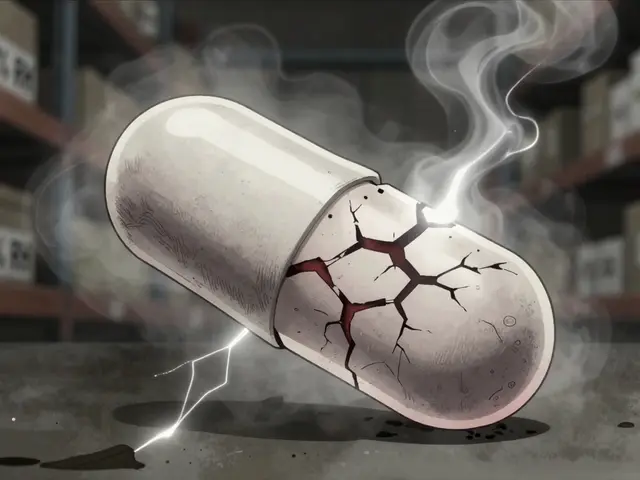
Even the best packaging fails if it’s not used right. The biggest reason? Improper re-closing. After opening a bottle, many people - especially older adults - don’t twist the cap back on tightly. They just snap it shut. That’s not enough. CPSC data shows 73% of incidents happen because the cap was never properly secured after use. Another issue is damage. If a cap is cracked, warped, or the threading is worn out from repeated use, it loses its resistance. Some bottles are opened and closed over 50 times. If the plastic isn’t high-density polyethylene (HDPE) or tough polypropylene, it breaks down. Even worse, not all brands are equal. Consumer Reports tested CR caps from major pharmacies in 2023. CVS Health’s generic caps failed child resistance tests 22% of the time. Manufacturer-specific caps - like those from Pfizer or Novartis - failed only 8% of the time. The difference? Quality control and design testing.
Who Struggles the Most With These Caps?
CR packaging was never meant to be hard for seniors. But for many older adults - especially those with arthritis or hand weakness - it’s a daily battle. A 2022 survey by the Arthritis Foundation found 68% of people with hand impairments had trouble opening medication bottles. The average force needed to open a CR cap? Over 5 pounds. The recommended maximum for seniors? 5 pounds. Many caps exceed that. On Reddit, a nurse named NurseJen87 shared that 3 out of every 10 of her 78-year-old patients need special packaging because they can’t open their pills. That’s not a small number. It’s a systemic issue. That’s why newer designs are adding senior-friendly features. Some caps have wider grips, rubberized edges, or even magnetic locks that require less grip strength. Amazon reviews for Blisterpak’s Easy-Open system are 4.2 out of 5, with users saying things like, “My 70-year-old mom can finally open her meds without help.”What About Prescription vs. Over-the-Counter Drugs?
There’s a big difference in how strictly these rules are enforced. Prescription medications are held to the highest standard. All Schedule II through V controlled substances - like opioids, ADHD meds, or anxiety drugs - must have CR packaging by DEA rules. That’s 100% compliance. Over-the-counter (OTC) drugs are different. Only those with certain active ingredients are required to use CR packaging. For example, any product with 0.08 milligrams or more of imidazoline - found in some nasal sprays - must be in CR packaging. Aspirin, acetaminophen, and ibuprofen? Not always. It depends on the dose and formulation. Liquid medications are the most problematic. They’re 38.7% more likely to be in non-compliant packaging than pills, according to FDA data. Why? Spillage, leakage, and pressure issues make it harder to design a reliable CR seal.What’s New in 2025?
Technology is stepping in. In January 2023, Aptar Pharma launched the first FDA-cleared smart CR cap - SmartDose. It looks like a regular child-resistant cap, but inside is a Bluetooth chip that records every time the bottle is opened. If your child gets into it, you get a notification. It’s not just safety - it’s adherence tracking. The CPSC is also expanding rules. In May 2023, they proposed requiring CR packaging for all THC edibles with more than 2mg of THC per serving. That’s a big deal, since gummies and chocolates are especially appealing to kids. Globally, countries are catching up. Brazil and India passed mandatory CR packaging laws in 2021 and 2022. The EU follows ISO 8317 standards, which are similar to the U.S. but with slight differences in senior testing.
What Can You Do to Keep Kids Safe?
Even the best CR cap won’t help if the bottle is sitting on the counter. Here’s what actually works:- Always re-close the cap properly - push down and twist until you hear or feel it lock.
- Store meds up high, in a locked cabinet - not on the bathroom counter or in a purse.
- Never leave pills in a child’s sight - even if they’re in a CR bottle.
- If you or a family member has trouble opening caps, ask your pharmacist for a non-CR version. They can provide it with your signed consent - but only if you understand the risk.
- Check expiration dates and replace damaged caps. A cracked bottle is no longer child-resistant.
What Happens If a Company Doesn’t Comply?
Pharmaceutical companies must prove their packaging meets CPSC standards before selling. They submit test results to the FDA as part of their drug application. If they skip this step, or if testing shows their cap fails, the FDA can issue a warning letter - or fine them up to $100,000 per violation. Even vets aren’t immune. A 2022 survey found 44% of veterinary clinics were giving out pet meds in non-CR bags or envelopes. That’s a violation of the PPPA if children live in the home. The cost to test one design? Between $8,500 and $15,000. That’s why some smaller companies cut corners. But the risk - a child’s life - is too high to ignore.Final Thoughts
Child-resistant packaging is one of the most successful public health innovations of the last 50 years. It’s not perfect. It’s not foolproof. But it works - when used correctly. The real danger isn’t the cap. It’s complacency. We think, ‘It’s child-resistant, so it’s fine.’ But safety isn’t a one-time fix. It’s a habit. Lock it. Store it. Check it. And never assume someone else’s child won’t find it.Are child-resistant caps really effective?
Yes, when used properly. Studies show CR packaging has reduced pediatric poisoning deaths by 45% since 1974. But effectiveness drops by about 15% after the first opening if the cap isn’t re-closed correctly. It’s not magic - it’s a tool that requires responsible use.
Can I get non-child-resistant medication if I have arthritis?
Yes. Pharmacists can provide non-CR packaging if you or a household member has a physical disability that makes opening standard caps difficult. You’ll need to sign a form acknowledging the increased risk. This is legal and common - especially for seniors with arthritis.
Do all OTC medicines need child-resistant packaging?
No. Only OTC products with certain active ingredients are required to have CR packaging. These include aspirin (in doses over 100mg), acetaminophen (over 100mg per unit), ibuprofen (over 100mg), and any product containing imidazoline (like some nasal sprays). Simple pain relievers in low doses may not require it.
What should I do if my child opens a CR bottle?
Call Poison Control immediately at 1-800-222-1222. Don’t wait for symptoms. Even if you think they didn’t swallow anything, it’s better to be safe. Keep the bottle handy - the label has important info for the poison control specialist.
Is child-resistant packaging required outside the U.S.?
Many countries have similar rules. The EU follows EN ISO 8317:2023, which is closely aligned with U.S. standards. Brazil and India mandated CR packaging for medications in 2021 and 2022. Canada, Australia, and Japan also require it for most prescription and high-risk OTC drugs.
josue robert figueroa salazar
December 27, 2025 AT 11:33CR caps are a joke if you leave 'em on the counter.
christian ebongue
December 29, 2025 AT 03:17lol my grandma opens hers with a butter knife. she says the cap's got a vendetta against her arthritic hands.
jesse chen
December 29, 2025 AT 20:45I’ve seen this so many times-parents think ‘child-resistant’ means ‘child-proof’… and then they leave the bottle on the coffee table next to the remote. It’s not the cap’s fault. It’s the laziness. The real danger isn’t the bottle-it’s the assumption that safety is automatic.
carissa projo
December 30, 2025 AT 22:50It’s heartbreaking how we’ve built systems to protect children from harm, yet still expect adults to remember to use them. Child-resistant packaging isn’t about locking kids out-it’s about giving us a moment to pause, to choose responsibility over convenience. And yet, we treat it like a checkbox. We don’t need more technology. We need more presence. We need to stop thinking of safety as something that happens to us, and start seeing it as something we do, every single day.
Joanne Smith
December 31, 2025 AT 11:17Let’s be real-CVS generics failing 22% of the time? That’s not an accident. That’s profit over protection. Big pharma can afford the $15K test fee. The discount chains? They skip it. And then we wonder why toddlers are getting into ibuprofen. The system’s rigged. You want safety? Pay for it. Or don’t. But don’t pretend you’re doing your part when your bottle’s cracked and your cap’s loose.
david jackson
January 1, 2026 AT 14:52Imagine this: a child, small hands, curious eyes, a bottle on the counter-push, twist, nothing. Then they see their older cousin do it-press down, twist, *click*-and suddenly it’s not a puzzle anymore, it’s a challenge. And kids? They love challenges. That’s why CR caps aren’t about strength, they’re about coordination. It’s not that kids are strong enough to open them-it’s that they’re persistent enough to figure out how. And once one kid learns? They teach the others. That’s why the real solution isn’t just better caps-it’s better education, better storage, better habits. We’re fighting human nature with plastic and pressure. We need to fight it with awareness.
Jody Kennedy
January 1, 2026 AT 21:06Y’all need to stop acting like CR caps are magic. They’re tools. Like seatbelts. Like smoke detectors. You don’t get to skip using them because they’re annoying. My mom used to leave her blood pressure meds on the kitchen counter ‘cause she couldn’t open them-so I got her those magnetic easy-open caps from Amazon. 4.2 stars, literally saved her life. If you can’t open it, ASK FOR HELP. Don’t just leave it out. Don’t just ‘snap’ it shut. This isn’t complicated. It’s just inconvenient. And inconvenience beats death every time.
Prasanthi Kontemukkala
January 3, 2026 AT 19:36From India, I’ve seen this too-parents think if the bottle has a ‘child-resistant’ label, they’re safe. But we don’t have locked cabinets in every home. Many families store meds in drawers with other things, or even under the bed. The real issue isn’t just the cap design-it’s access. We need community education, not just regulation. Maybe pharmacies could give out free locking boxes with prescriptions? Or offer free home safety checks? A little support goes a long way. Safety isn’t just about what’s on the bottle-it’s about what’s around it.