
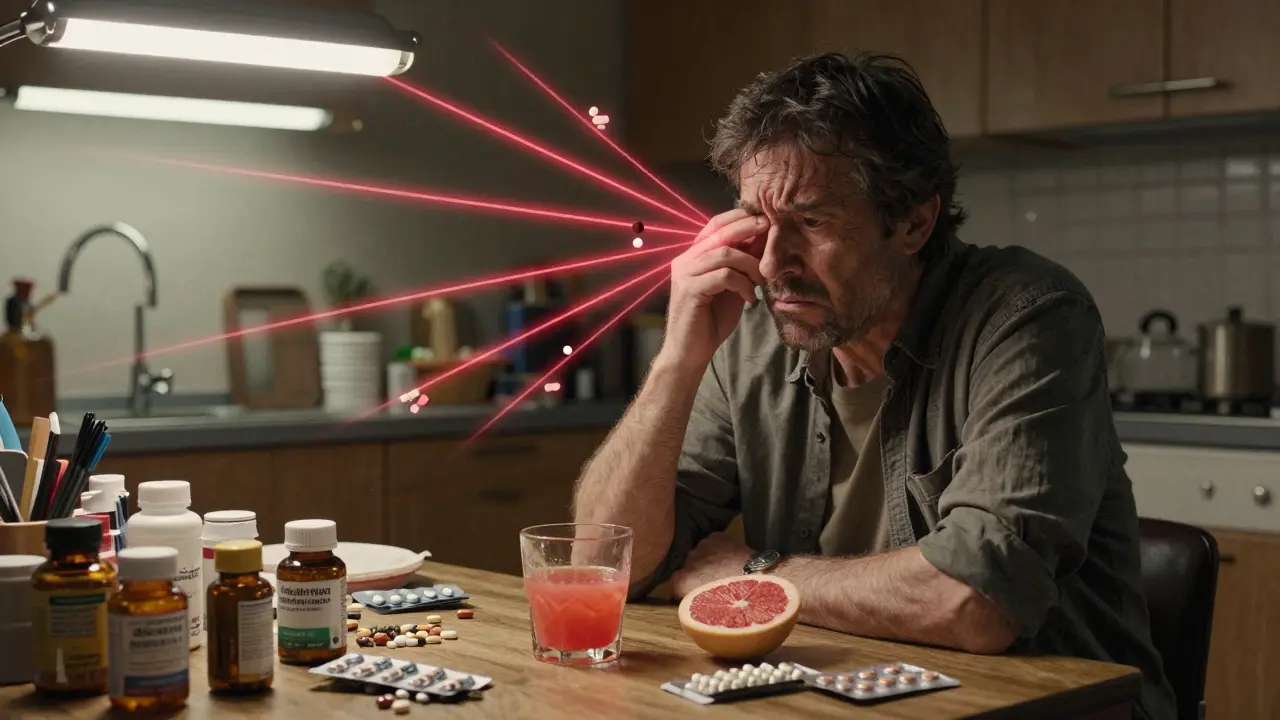
Starting a new medication can feel like a step forward in your health - but it can also open the door to hidden risks. Many people don’t realize that the medicine they’re taking for high blood pressure might make their cholesterol drug less effective, or even dangerous. Drug interactions aren’t rare accidents; they’re common, predictable, and often preventable. In fact, about 3 to 5% of all outpatient prescriptions involve a clinically significant interaction, and that number jumps to 30% if you’re taking five or more medications. If you’re over 65, you’re especially at risk - more than 40% of adults in that group take five or more drugs regularly. The problem isn’t just about mixing pills. It’s about how your body processes them, what else you’re taking, and whether you’re being monitored properly.
What Happens When Medications Clash?
Not all drug interactions are the same. They fall into two main types: pharmacokinetic and pharmacodynamic. Pharmacokinetic interactions change how your body absorbs, breaks down, or gets rid of a drug. For example, if you’re on a statin like simvastatin and start taking amlodipine for high blood pressure, your body can’t clear the statin as quickly. This builds up dangerous levels in your muscles, raising the risk of severe muscle damage. That’s why guidelines say the maximum simvastatin dose with amlodipine is 20 mg per day - any higher and the risk spikes. The same applies to diltiazem or verapamil: simvastatin must be capped at 10 mg. These aren’t suggestions. They’re safety limits backed by clinical evidence. Pharmacodynamic interactions are different. They don’t change how the drug moves through your body - they change what the drug does. Take warfarin, a blood thinner, and amiodarone, a heart rhythm drug. When you start amiodarone, it makes warfarin much stronger. Studies show you need to cut your warfarin dose by 30 to 50% right away. Without that adjustment, you could bleed internally. Another example: combining opioids with promethazine. Both make you drowsy. Together, they can slow your breathing to a dangerous level - a 200 to 300% increase in risk. These aren’t theoretical risks. They’ve caused real deaths.What You Might Not Be Telling Your Doctor
Most people think their doctor only needs to know about prescription drugs. That’s a mistake. Over-the-counter painkillers, herbal supplements, vitamins, and even recreational substances can trigger serious interactions. St. John’s Wort - a popular supplement for mood - is one of the most dangerous unreported substances. It can slash cyclosporine levels by 40 to 60%, which can lead to organ rejection in transplant patients. It also reduces the effectiveness of birth control pills, antidepressants, and HIV medications. Yet, 68% of patients never mention supplements to their providers. Even something as simple as grapefruit juice can be a problem. It blocks an enzyme in your gut that breaks down dozens of medications, including some statins, blood pressure drugs, and immunosuppressants. One glass can make a drug’s effect last longer and stronger than intended. And it’s not just food. Alcohol, caffeine, and nicotine can all interfere with how drugs work. If you’re on a new medication, assume anything you take - even a daily vitamin - could be part of the equation.Who Should Be Checking for These Risks?
Doctors aren’t always the best at spotting these problems. A 2023 study found that clinical pharmacists catch 40 to 60% more potential interactions than physicians during medication reviews. Why? Because pharmacists are trained to look at the whole picture: every pill, every supplement, every habit. At Mayo Clinic, pharmacist-led medication reviews during hospital transitions cut readmissions due to drug interactions by 22%. That’s not luck - it’s process. Pharmacists create a Personal Medication Record (PMR) within 24 hours of any change. This record includes: the name of each drug, the exact dose, why you’re taking it, when and how to take it, how long to take it, what to avoid, and what side effects to watch for. But even the best system fails if alerts are ignored. Electronic health records flood doctors with warnings - 90 to 95% of them get overridden. Why? Because most alerts are low-risk or repetitive. But here’s the key: high-severity alerts (like those requiring a 50% dose reduction or warning of a contraindicated combo) are followed 75% of the time. That means the system works - if the alert is clear and urgent. That’s why guidelines now require DDI systems to grade risk: contraindicated, major, moderate, minor. If your doctor sees a “contraindicated” alert and still prescribes the combo, they’re ignoring a clear safety boundary.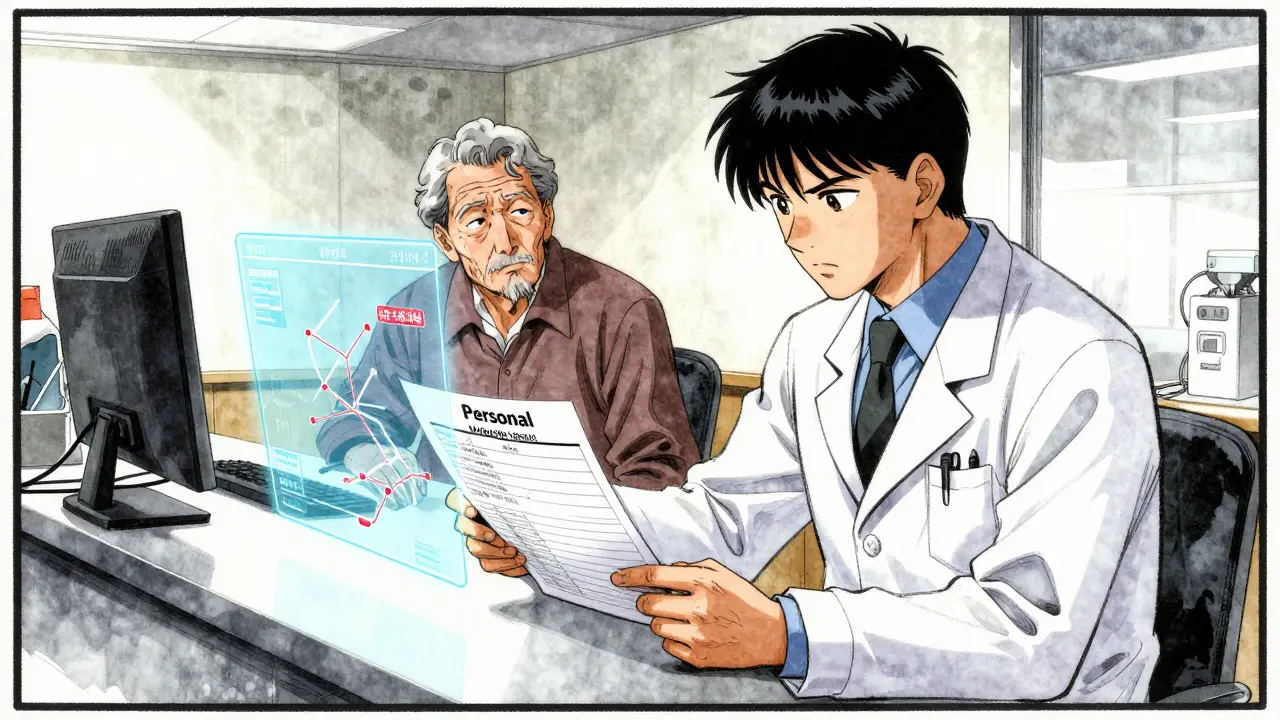
What You Can Do Right Now
You don’t need to be a medical expert to protect yourself. Here’s what actually works:- Make a full list - Write down every medication, supplement, and over-the-counter product you take. Include vitamins, herbal teas, and even CBD. Don’t forget what you take occasionally.
- Ask your pharmacist - When you pick up a new prescription, ask: “Could this interact with anything else I’m taking?” Pharmacists are legally required to review this.
- Know your high-risk combos - If you’re on warfarin, avoid amiodarone unless your INR is checked within 3 to 5 days. If you’re on simvastatin and take a calcium channel blocker, know the dose limits. If you’re on an SSRI, avoid St. John’s Wort.
- Check timing - “Take on an empty stomach” means 1 hour before or 2 hours after food. Not “don’t eat for 2 hours.” Misunderstanding this can cut drug absorption by half.
- Track changes - If you start a new drug, watch for unusual symptoms in the first week: unexplained bruising, muscle pain, dizziness, confusion, or extreme fatigue. Report them immediately.
Why Timing Matters
The first 72 hours after starting a new medication are critical. That’s when interactions are most likely to show up. The HIV Guidelines recommend a full medication review within 72 hours of any new prescription. For high-risk drugs like warfarin or digoxin, blood tests should happen within 3 to 5 days. Weekly monitoring for the next month is standard. Waiting longer means you’re flying blind. If you’re switching from one drug to another - say, from a statin to a different one - don’t assume it’s safe. The new drug might interact with something you’ve taken for years.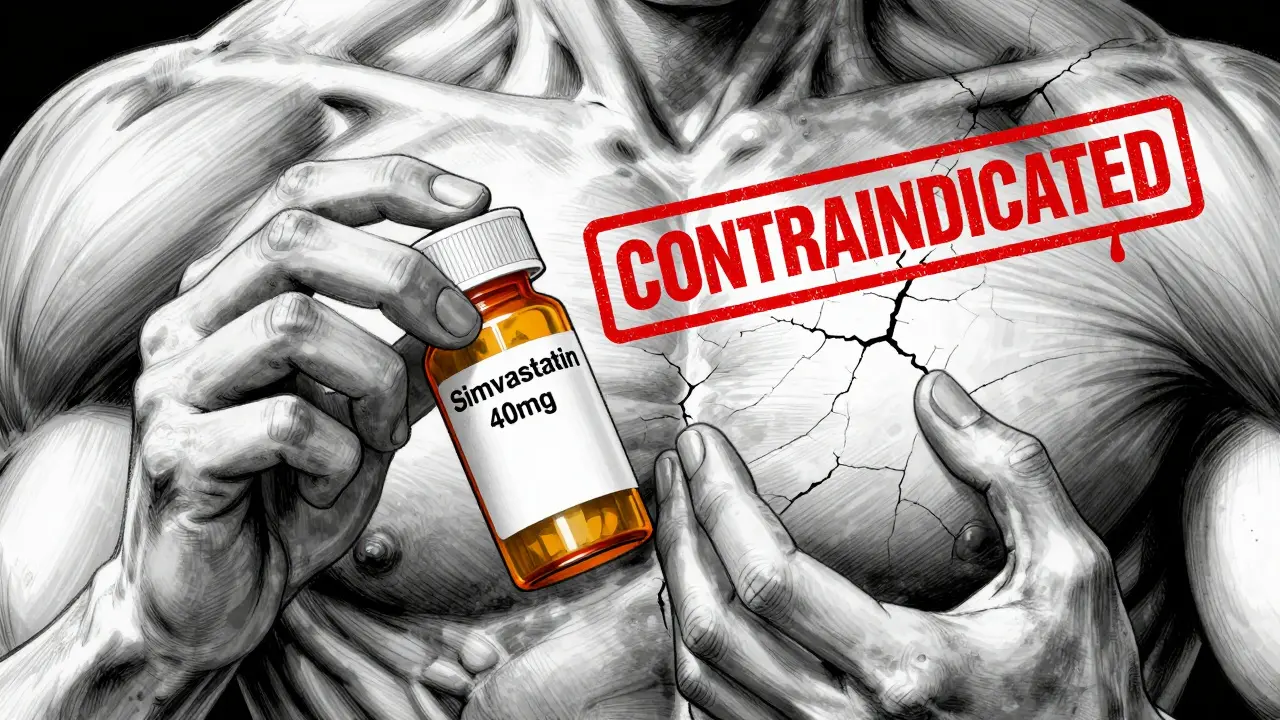
What’s Changing in 2026
The global standard for evaluating drug interactions changed in May 2024 with the ICH M12 Guideline. It now requires all new drugs to be tested for interactions with key enzymes like CYP3A4 - which affects half of all clinically significant interactions. This means future drugs will come with clearer, more accurate interaction data. But it doesn’t help you today. Right now, the best defense is you. Health systems are also moving toward mandatory pharmacist reviews for anyone on five or more medications. Medicare Part D now penalizes plans that don’t reduce high-risk combinations. But until every pharmacy and doctor follows this, you’re your own best safety net.When to Be Extra Careful
Some people are at much higher risk. If you have kidney disease (eGFR under 30), liver problems, or are over 65, your body processes drugs slower. That means interactions hit harder and faster. If you’ve been hospitalized recently or just moved to a new care team, your medication list might be incomplete. That’s when errors are most likely. In fact, 50 to 70% of medication errors happen during care transitions. If you’re seeing a new doctor, bring your full list - not just the prescriptions. Include the bottles. Let them see what you actually take.Final Thought: It’s Not About Fear - It’s About Awareness
Starting a new medication isn’t risky because of the drug itself. It’s risky because of what it’s mixed with - and whether anyone checked. You don’t need to memorize every interaction. You just need to know how to ask the right questions, keep an accurate list, and speak up when something feels off. The system isn’t perfect. But you can make it work for you.Can I stop a medication if I think it’s causing an interaction?
Never stop a prescribed medication without talking to your doctor or pharmacist first. Stopping suddenly can be dangerous - for example, quitting blood pressure or antidepressant drugs abruptly can cause rebound effects. Instead, document your symptoms, note when they started, and contact your provider. They may adjust the dose, switch the drug, or run a test to confirm an interaction.
Are natural supplements always safe?
No. Many people assume supplements are harmless because they’re “natural,” but that’s not true. St. John’s Wort, garlic, ginkgo, and even high-dose vitamin E can interfere with medications. St. John’s Wort can reduce the effectiveness of birth control, blood thinners, and HIV drugs. Garlic and ginkgo increase bleeding risk when taken with warfarin or aspirin. Always disclose supplements - even if you think they’re harmless.
Why do drug interaction alerts keep popping up in my EHR?
Electronic health record systems generate hundreds of alerts daily, most of which are low-risk or false alarms. This leads to “alert fatigue,” where providers start ignoring them. But high-severity alerts - like those warning of a 50% dose reduction or a contraindicated combo - are designed to be hard to ignore. If you’re told an alert was overridden, ask why. You have a right to know if a potential risk was dismissed.
How often should I get a medication review?
If you take three or more medications regularly, you should have a full review at least once a year. If you’re over 65, have chronic conditions, or have recently changed medications, aim for every 3 to 6 months. Pharmacists can do this during your prescription refill - it’s part of their standard care.
Can I use online tools to check for interactions?
Yes, but with caution. Tools like Medscape’s Drug Interaction Checker or the Liverpool HIV Interaction Database are reliable. But they can’t know your full medical history. Always cross-check their results with your pharmacist or prescriber. Don’t rely on them alone - they’re a starting point, not a final answer.


Dina Santorelli
February 5, 2026 AT 11:54Thorben Westerhuys
February 6, 2026 AT 11:25Phoebe Norman
February 7, 2026 AT 09:28Cullen Bausman
February 8, 2026 AT 18:43Lana Younis
February 9, 2026 AT 13:08Danielle Vila
February 10, 2026 AT 05:04Laissa Peixoto
February 11, 2026 AT 05:35Rene Krikhaar
February 12, 2026 AT 01:37Arjun Paul
February 13, 2026 AT 23:33Nancy Maneely
February 15, 2026 AT 12:10Katharine Meiler
February 15, 2026 AT 15:07Samantha Beye
February 16, 2026 AT 02:20Albert Lua
February 17, 2026 AT 19:22divya shetty
February 19, 2026 AT 08:01