
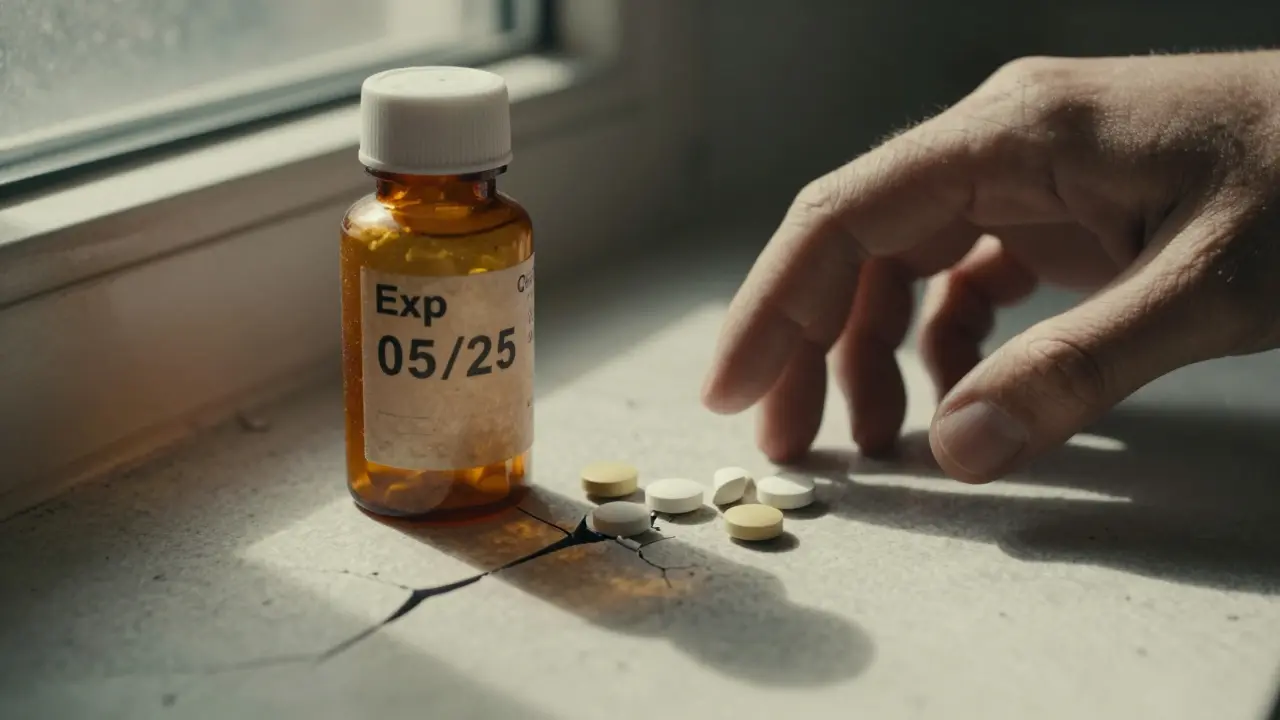
Most people don’t think twice about taking a pill past its expiration date-until something goes wrong. Maybe the headache medicine didn’t work. Or the antibiotic made you feel worse. The truth is, expiration dates aren’t just bureaucratic footnotes. They’re safety and effectiveness markers, and misreading them can have real consequences.
What an Expiration Date Actually Means
An expiration date on your medication isn’t a "use-by" date like milk. It’s the last day the manufacturer guarantees the drug will work as intended and remain safe to take-assuming it’s been stored properly. This isn’t guesswork. Drugmakers run stability tests for months, sometimes years, to see how the medicine holds up under heat, light, and humidity. If it still has at least 90% of its labeled potency and shows no harmful breakdown products by the date printed on the bottle, that’s the expiration date.
The U.S. Food and Drug Administration (FDA) has required expiration dates on all prescription and over-the-counter meds since 1979. In the EU, the format is day/month/year (e.g., 15/06/2025). In China, it’s year/month/day. In the UK, you’ll mostly see month/year or day/month/year. If you only see "08/23," that means it expires on August 31, 2023-not August 1.
Where to Find the Expiration Date
Look in three places: the original bottle, the box, and the pharmacy label. The manufacturer’s date on the original packaging is the most reliable. But here’s the catch-most of us don’t keep the box. And pharmacies often repackage pills into their own bottles with their own labels.
Pharmacies apply a "beyond-use" date, which is usually one year from when you picked up the prescription. That’s not the same as the manufacturer’s date. For example, your insulin might have a manufacturer expiration date of 2027, but the pharmacy label says "discard after 01/2026." You follow the pharmacy date. Why? Because once you open the bottle and start using it, exposure to air, temperature changes, and handling reduce its stability. Some meds, like liquid antibiotics, might only be good for 14 days after being mixed-even if the bottle says 2028.
Always check both. If you’re unsure, ask your pharmacist to write the manufacturer’s expiration date on the pharmacy label. Don’t rely on memory.
Common Expiration Date Formats (and How to Read Them)
Expiration dates come in many forms. Here’s what to look for:
- MM/YY or MM/YYYY - e.g., 04/24 or 04/2024 = expires April 30, 2024
- DD/MM/YY - e.g., 12/09/23 = expires September 12, 2023
- Exp: or Expiry: - usually followed by the date
- Use by: or Use before: - same as expiration date
- Batch/LOT: - not an expiration date, but helps track recalls
If you see "EXP 05/25," you’re safe until May 31, 2025. If you see "EXP 2025," assume it’s good until December 31, 2025. Don’t assume it’s good for the whole year unless it’s clearly stated.

Which Medications Are Dangerous After Expiration?
Most pills and capsules are still safe to take months or even years past their expiration date-if stored well. But some are not. Taking expired versions of these can be risky:
- Insulin - loses potency fast. Can lead to dangerously high blood sugar.
- Birth control pills - even slight loss of hormone potency can cause unintended pregnancy.
- Thyroid medications - inconsistent dosing can throw your metabolism out of balance.
- Antiplatelet drugs (like aspirin for heart health) - reduced effectiveness increases clot risk.
- EpiPens - if the liquid looks cloudy or discolored, or it’s expired, it may not work in an emergency.
- Liquid antibiotics - can grow bacteria after mixing. Never use past the pharmacy’s discard date.
There’s a myth that tetracycline turns toxic after expiring. That was true for old formulas in the 1960s. Modern versions don’t have that risk. But don’t take any expired antibiotic anyway-it might not kill the infection, and that can lead to antibiotic resistance.
Storage Matters More Than You Think
Your medicine’s expiration date assumes it’s been stored correctly. If you keep your pills in the bathroom cabinet, they’re exposed to steam and heat. If you leave your insulin in the car on a hot day, it’s ruined-even if the date says 2027.
Most meds should be stored at room temperature (15-25°C), away from direct sunlight and moisture. Some, like insulin, suppositories, and certain eye drops, need refrigeration. Check the label. If it says "store below 25°C," don’t put it near the oven or on a windowsill.
Even if the date hasn’t passed, if your pills are cracked, sticky, discolored, or smell weird-pitch them. Chemical changes aren’t always visible. But your body will notice.
What to Do When You Find an Expired Medication
Don’t flush it. Don’t throw it in the trash where kids or pets might get to it. Don’t give it to someone else.
Take it to a pharmacy. Most UK pharmacies have take-back bins for expired or unwanted meds. If yours doesn’t, check with your local council-they often run medication disposal events. Some areas have mail-back programs too.
For peace of mind, keep a small log of your meds with their expiration dates. Use a notebook, a notes app, or a free app like MedSafe. Mark a reminder 3 months before expiration for critical meds like insulin or heart meds. That way, you’re not scrambling at the last minute.
Why Some People Still Take Expired Pills
A 2022 study found that 68% of older adults think expired meds are immediately dangerous-not just less effective. That’s why so many people toss out perfectly good pills. But the opposite is also true: many people ignore dates entirely because they’re cheap or hard to replace.
Here’s the reality: the FDA’s Shelf Life Extension Program found that 90% of stockpiled drugs remained effective 15-66 months past their expiration date-when stored in perfect, sealed, climate-controlled conditions. That’s not your medicine cabinet. That’s a military warehouse.
For most people, the risk isn’t toxicity. It’s ineffectiveness. A weak antibiotic might not clear your infection. A degraded painkiller won’t touch your migraine. And if you’re immunocompromised, have liver or kidney issues, or are pregnant, even small drops in potency can be risky.
What’s Changing in the Future
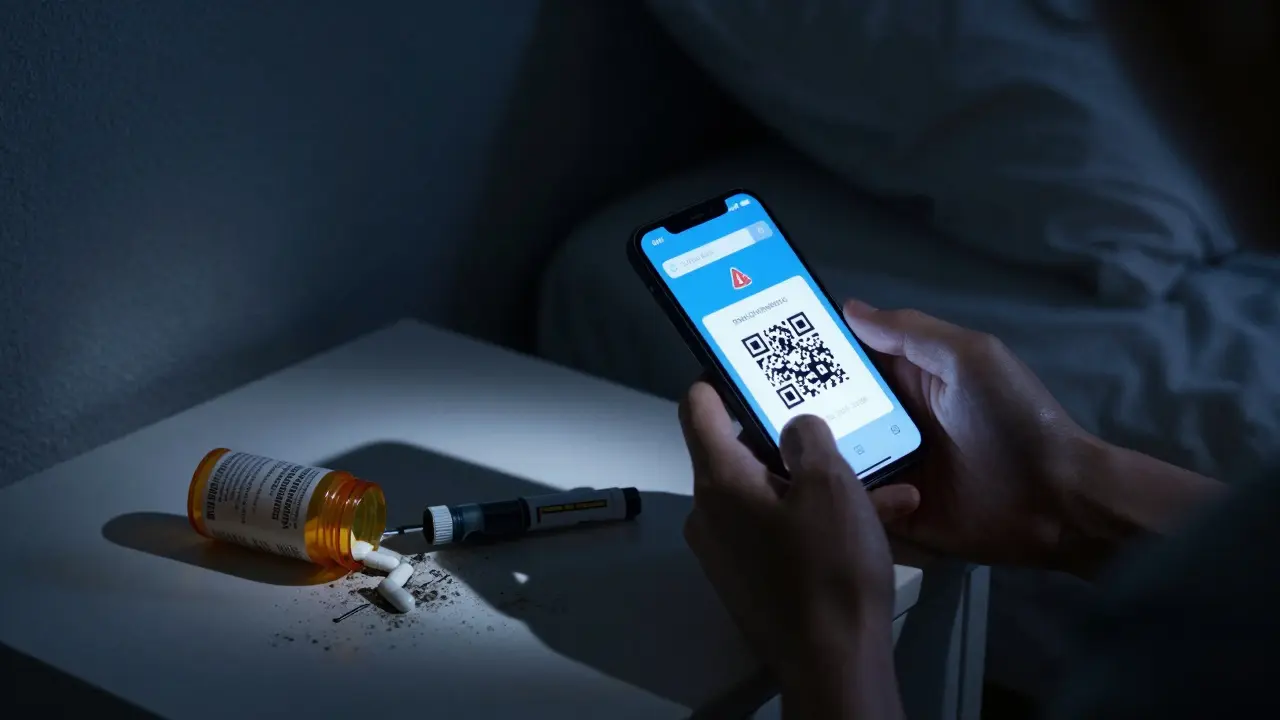
Pharmaceutical companies are starting to use smarter packaging. Some now have QR codes you can scan to check real-time expiration and storage info. Others use thermochromic ink that changes color if the drug got too hot. Merck started using this for insulin in late 2022.
The World Health Organization is pushing for a global standard: YYYY-MM-DD format on all labels, plus clear warning symbols. The EU already requires it. The UK is moving in that direction.
But until then, you’re still the last line of defense. Don’t guess. Don’t assume. Check the date. Check the storage. Check the look. And when in doubt, ask your pharmacist. They’ve seen it all.
Final Rule: When in Doubt, Throw It Out
There’s no shame in replacing a $10 pill. There’s huge risk in taking one that might not work-or worse, harm you. Expired meds aren’t always deadly. But they’re never worth the gamble.
If you’re on a fixed income and can’t afford to replace meds, talk to your pharmacist. Many offer discount programs. Some manufacturers have patient assistance plans. Your health isn’t a budget line item. Protect it.
Can I still take medicine after the expiration date?
Most solid medications like pills and capsules are still safe to take for months or even years after expiration if stored properly. But their potency may drop, meaning they won’t work as well. Some meds, like insulin, birth control, antibiotics, and thyroid drugs, should never be used past their date due to serious health risks.
What does "Exp 05/25" mean?
"Exp 05/25" means the medication expires on May 31, 2025. When only a month and year are listed, the expiration is the last day of that month.
Should I follow the pharmacy label or the original bottle date?
Always follow the pharmacy’s "discard after" date for prescription meds. That date accounts for how long the medicine is stable once opened and repackaged. The manufacturer’s date may be longer, but it doesn’t apply once the bottle is opened and handled.
How do I know if my medicine has gone bad?
Look for changes in color, texture, smell, or consistency. Pills that are cracked, sticky, or discolored. Liquids that are cloudy or have particles. Ointments that separate or smell rancid. If anything looks off, don’t take it-even if the date is still valid.
Where can I safely dispose of expired medication in the UK?
Take expired or unwanted medications to any pharmacy that offers a take-back service. Most do. If not, contact your local council-they often run collection events or provide disposal kits. Never flush pills down the toilet or throw them in the trash where children or pets could access them.

Carolyn Rose Meszaros
January 19, 2026 AT 06:03Just found an old bottle of amoxicillin from 2021 in my medicine cabinet. Guess I’m throwing it out now. Better safe than sorry, right?
Shane McGriff
January 20, 2026 AT 20:00I’ve been keeping a spreadsheet of all my meds with expiration dates and storage notes. Took me a weekend, but now I never have to guess. Pro tip: set a calendar reminder 90 days out for anything critical. Life’s too short to risk a migraine or a bad infection.
Jacob Cathro
January 21, 2026 AT 04:53LOL so now we’re treating meds like fine wine? "Oh no, my aspirin was stored at 26°C for 12 hours, it’s now a liability." Meanwhile, my grandpa took his blood pressure pills from 1998 and lived to 94. The system’s rigged. Big Pharma wants you buying new bottles every year. They don’t care if you’re broke.
Renee Stringer
January 22, 2026 AT 09:59People who keep expired meds are just one bad reaction away from becoming a cautionary tale. I’ve seen it. A friend took old antibiotics for a sinus infection. Ended up with C. diff. Don’t be that person.
Manoj Kumar Billigunta
January 22, 2026 AT 17:01My mom in India always says, "If it looks fine, it’s fine." But after reading this, I’m going to start checking the labels properly. I never realized "08/23" meant August 31st. That’s wild.
clifford hoang
January 24, 2026 AT 06:25🚨 ALERT 🚨
Did you know the FDA’s "90% potency" rule is based on lab conditions that don’t exist in the real world? They test pills in sterile, climate-controlled vaults. You? You keep your meds next to the toaster. That expiration date? A lie. A corporate lie. They’re gaslighting you into buying more. And don’t get me started on QR codes - that’s just surveillance with a side of pills.
Greg Robertson
January 24, 2026 AT 18:54Good post. I always check the pharmacy label over the bottle - I’ve had prescriptions where the original date was 2028 but the pharmacy said "discard after 6 months." Turns out, once you open it, the clock resets. Learned that the hard way with my insulin.
pragya mishra
January 25, 2026 AT 02:37Ugh. Another "follow the rules" lecture. What about people who can’t afford new meds? You think I’m gonna throw out my thyroid pills because the date says 2023? I’m not dying because some corporation decided to make a new bottle. I’ll take my chances.
Nadia Watson
January 26, 2026 AT 23:27It's important to note that in many low-income households, expired medications are often consumed out of necessity rather than negligence. While the medical guidelines are clear, the socioeconomic reality is not. A reminder to healthcare providers: compassion matters more than compliance when someone is choosing between medicine and groceries.
Courtney Carra
January 27, 2026 AT 12:37There’s a philosophical angle here, honestly. The expiration date is a metaphor for our relationship with time and control. We want certainty - a date stamped in ink that says, "This is safe." But life doesn’t work like that. Maybe the real issue isn’t the pill - it’s our fear of uncertainty. 🤔
Paul Barnes
January 28, 2026 AT 17:00Correction: "Exp 05/25" does not necessarily mean May 31, 2025. The FDA does not officially define expiration as the last day of the month unless explicitly stated by the manufacturer. Many companies use the first day of the month. Always verify with the manufacturer’s labeling guidelines.
sagar sanadi
January 30, 2026 AT 04:47Yeah right. "Don’t take expired meds." So what, the government spent billions to stockpile drugs for emergencies and they’re all still good 15 years later? But my $12 aspirin is a death trap? Sounds like a scam to me.
Andy Thompson
January 30, 2026 AT 07:35They’re lying about the expiration dates. The military has been extending shelf life for decades. They know these drugs last longer. But they don’t want you to know. Why? Because if you knew, you’d stop buying new ones. Big Pharma is a cartel. And they’re selling fear.
Crystal August
February 1, 2026 AT 06:54My pharmacist told me to toss my expired EpiPen. I asked if I could just use it in an emergency. She looked at me like I’d asked to use a broken parachute. Then she said, "If you’re allergic, you’re not taking chances. You’re buying a new one." I bought two. Better to be paranoid than dead.