
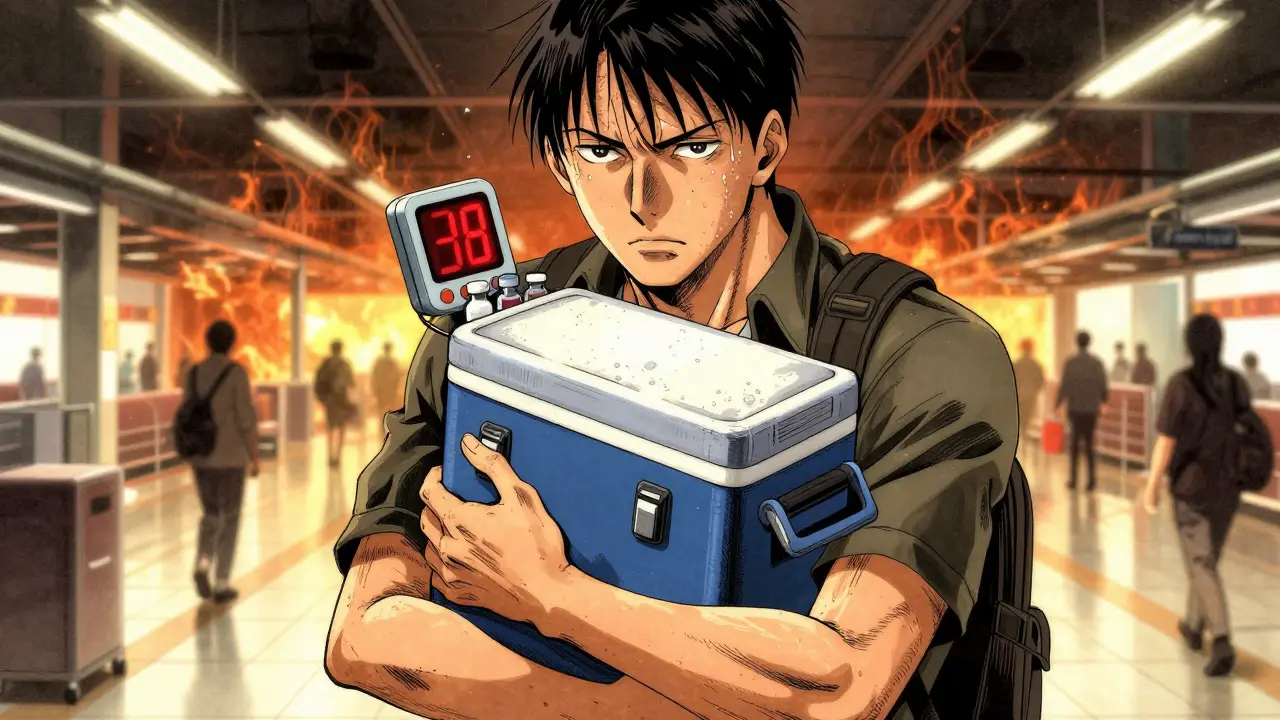
Why Temperature Matters for Your Medications
It’s not just about keeping your pills dry. If your insulin gets too hot, it can turn cloudy and stop working. If your asthma inhaler freezes, the propellant may fail. Even common pills like antibiotics can lose strength if left in a hot car. Medications aren’t like groceries-they don’t last just because they’re sealed. Every drug has a temperature range it can handle, and going outside that range can make it useless-or even dangerous.
Most tablets and capsules are fine at room temperature (15°C-25°C). But insulin, many vaccines, biologics, and some injectables need to stay cold: between 2°C and 8°C. That’s fridge temperature. Some newer mRNA vaccines, like those for COVID-19, need to stay frozen below -70°C. And if you’re traveling with any of these, you can’t just toss them in your suitcase and hope for the best.
What Happens When Medications Get Too Hot?
Heat doesn’t just make meds uncomfortable-it breaks them down. Insulin starts degrading at just 25°C, losing about 1.2% of its potency every hour. After 48 hours in a 35°C car, you might be injecting a dose that’s only half as strong. That’s not a small risk-it’s life-threatening for someone with diabetes.
Vaccines like MMR or flu shots lose potency fast above 8°C. One study found they can drop 10% in just one hour of heat exposure. Antibiotics like amoxicillin become completely ineffective after 30 minutes above 40°C. And don’t assume your medicine is fine if it looks normal. Degradation often has no visible signs. You won’t see it. You won’t smell it. But your body will feel the difference.
What Happens When Medications Get Too Cold?
Freezing is just as bad. Insulin can form clumps if it freezes, making it unusable. Some liquid medications separate into layers. Inhalers can explode if frozen. Even solid pills can crack or lose their coating if exposed to extreme cold, changing how they’re absorbed.
In winter, this isn’t just a problem in snowy places. Delivery vans, airport tarmacs, and unheated porches can drop below freezing-even in places like Bristol where snow is rare. One logistics manager at Pfizer reported a 17% spike in cold-related failures during the 2022-2023 winter because packages were left outside too long during delivery.
How to Pack Medications for Hot Weather
- Use an insulated cooler bag. A standard lunch bag with two frozen gel packs can keep insulin at safe temperatures for up to 8 hours, even in 90°F (32°C) heat.
- Never leave meds in a parked car. Even on a mild day, the inside of a car can hit 60°C in under 30 minutes. That’s hotter than an oven.
- Carry meds with you. Put them in your hand luggage on flights. Checked baggage can sit in unpressurized, unheated cargo holds where temperatures swing wildly.
- Use a temperature-monitoring device. Simple data loggers cost under £20 and record the highest temperature reached. For peace of mind, get one with real-time alerts-some connect to your phone via Bluetooth.
- Plan ahead. If you’re flying, call the airline. Ask if they have a temperature-controlled area for medications. Most do.
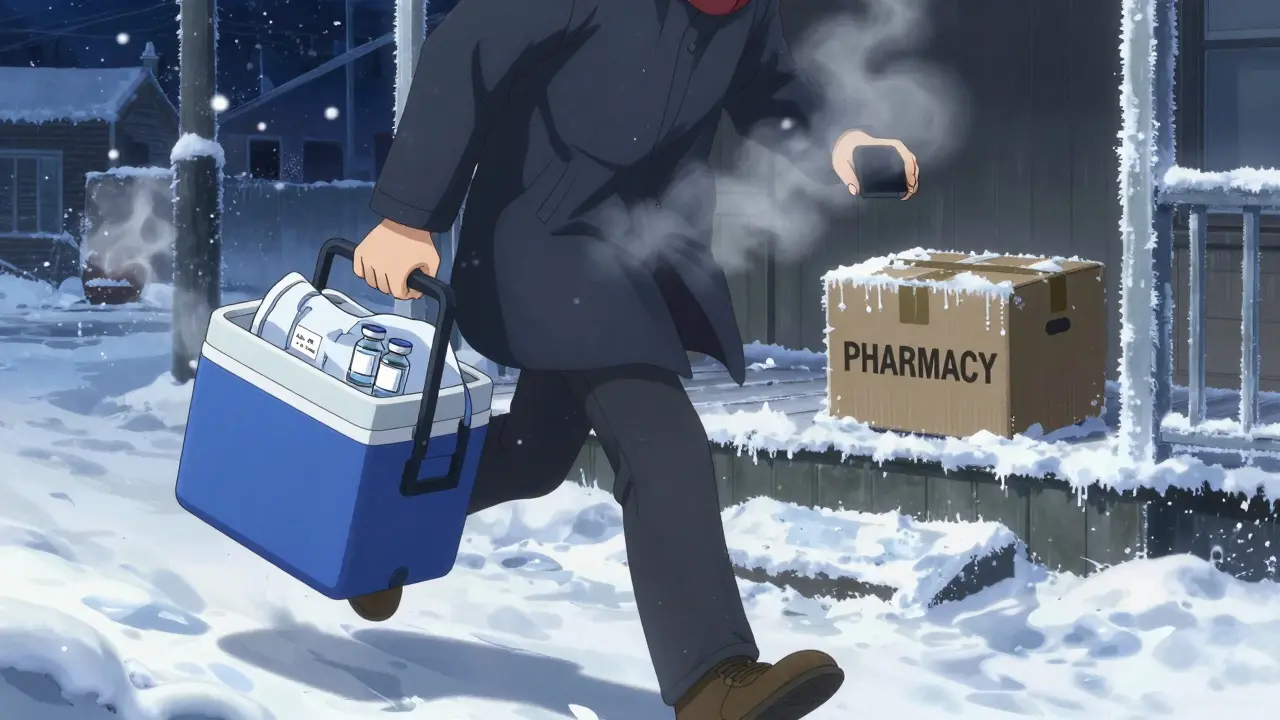
How to Pack Medications for Cold Weather
- Keep meds close to your body. Store them in an inside coat pocket or a bag you carry on your person. Body heat prevents freezing.
- Avoid direct contact with ice packs. If you’re using a cooler, wrap gel packs in a towel. Direct freezing can damage the medication.
- Don’t leave packages outside. Whether it’s your front door or a hotel lobby, don’t let meds sit in unheated areas. Even a few minutes in -5°C can be enough to ruin a vial.
- Use insulated containers with thermal blankets. For long trips in freezing conditions, wrap your cooler in an insulated blanket. It adds a buffer against cold air.
- Check delivery instructions. If you’re having meds shipped, tell the courier not to leave them unattended. Many delivery apps now let you request ‘hand-to-hand’ delivery.
What to Use: Passive vs. Active Cooling
You’ve got three main options:
- Passive containers (insulated boxes with gel packs): Cheap, no power needed. Good for short trips (up to 72 hours). Best for insulin, vaccines, and short flights.
- Active containers (battery-powered coolers): Maintain exact temperatures for days. Used by hospitals and pharmacies. Expensive-£200-£500-but worth it for long trips or critical meds.
- Hybrid solutions: Combine insulation with a small cooling element. These are becoming popular for travelers. The TempAid 2.0, for example, keeps insulin cold for 48 hours and weighs just 1.5 kg. It’s rated 4.7/5 by over 1,200 users on Amazon.
For most people, a good passive cooler with two frozen gel packs is enough. Just make sure it’s tested. Don’t guess-use a product designed for meds, not a regular lunchbox.
Traveling by Air? Do This First
Airlines have rules for meds. Here’s what you need to know:
- Always carry meds in your carry-on. Checked bags can freeze or overheat.
- Bring a doctor’s note or prescription label. Security may ask. It’s not always required, but it avoids delays.
- Declare your meds at security. Say: “I have temperature-sensitive medication.” They’ll usually let you bypass the X-ray for vials if you ask politely.
- Use a clear, resealable bag. Keep meds visible and easy to grab.
- Don’t rely on plane storage. The cargo hold isn’t climate-controlled. Even the cabin can drop below 10°C during long flights.
The Last Mile Is the Most Dangerous
Most temperature failures don’t happen in transit. They happen at the end-when the delivery driver leaves your package on the porch, or when you forget your meds in the car while running into the pharmacy.
A 2023 survey found 68% of pharmacists had at least one incident of temperature damage during summer deliveries. In winter, it’s often the same-packages left on doorsteps in freezing temps. If you’re expecting a delivery, be there. Or ask for a secure drop-off point. If you’re picking up meds, go straight home. Don’t stop for coffee.
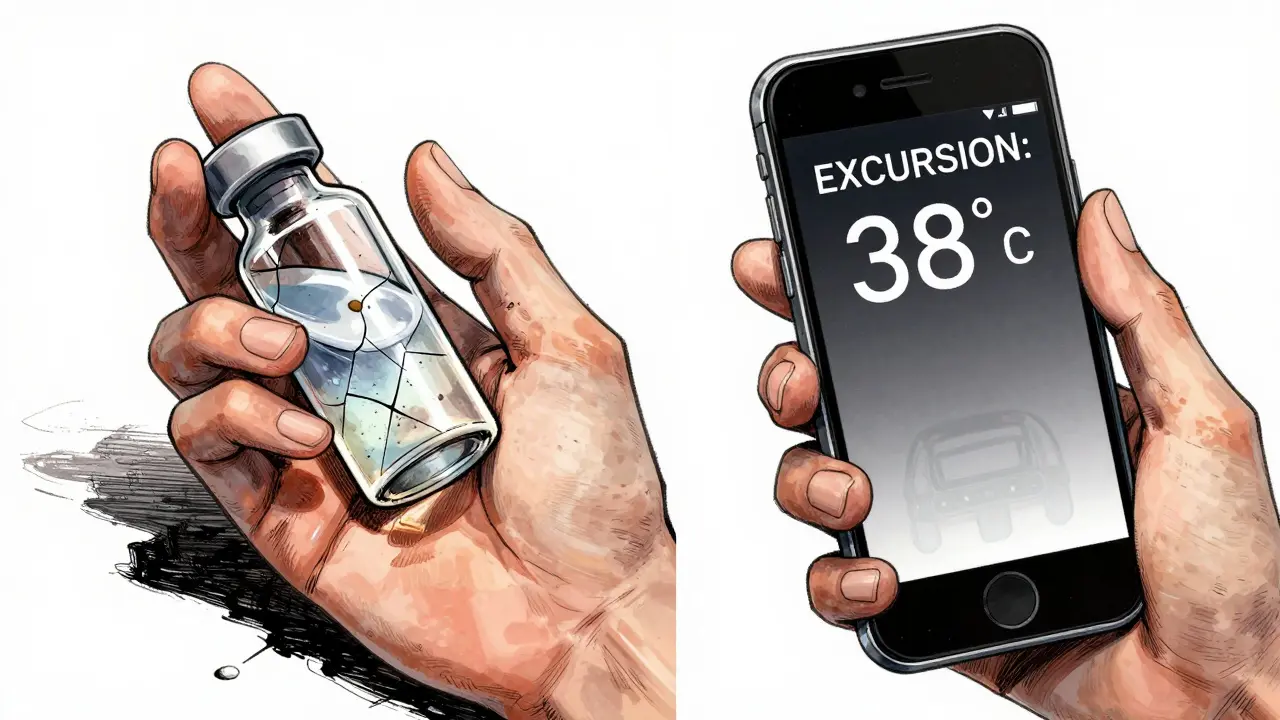
Documentation Matters More Than You Think
If your meds get damaged and you need to prove it wasn’t your fault, you need proof. That means:
- Keeping temperature logs from your monitor.
- Writing down the time and location of every transfer-airport, hotel, car, pharmacy.
- Taking a photo of the meds before and after travel.
The FDA and WHO say: no record, no validity. Even if your meds look fine, without documentation, pharmacies and insurers may refuse to replace them. Keep all records for at least three years.
What to Do If You Suspect Damage
Signs your meds may be ruined:
- Insulin: cloudy, clumpy, or has particles
- Liquid meds: separated layers, unusual color, sediment
- Pills: cracked, sticky, or smell odd
- Inhalers: no spray, or weak mist
If you see any of these, stop using the meds. Call your pharmacist. Don’t guess. They can test the batch or tell you if it’s safe. Never risk a dose if you’re unsure.
What’s Changing in 2026
Technology is catching up. By 2026, autonomous delivery vans with built-in temperature control will start rolling out. Blockchain logs will track every degree of every shipment internationally. Real-time AI monitors will predict excursions before they happen.
But for now, the rules are simple: protect your meds like you’d protect a baby’s bottle. Temperature isn’t optional. It’s part of the medicine. And if you’re traveling, you’re responsible for keeping it safe.
Can I keep insulin in my purse during hot weather?
Not without protection. A purse doesn’t insulate. Insulin needs a cooler with gel packs. Even a small insulated pouch with a frozen pack can keep it safe for 6-8 hours. If you’re out all day, bring a backup vial and store it in a cooler at your destination.
Do I need to refrigerate all my medications?
No. Only those labeled to require refrigeration-usually insulin, some biologics, vaccines, and certain liquid antibiotics. Check the label or ask your pharmacist. Most pills, inhalers, and creams are fine at room temperature.
Can I use a regular cooler from the store?
Yes, but only if it’s insulated well and you use enough frozen gel packs. A cheap cooler from a supermarket works if you pre-chill it, use two packs, and avoid opening it often. But for critical meds like insulin, use a medical-grade cooler designed for 2°C-8°C stability.
What if I forget my meds in the car overnight?
If it was below 8°C or above 30°C for more than 2 hours, assume it’s damaged. Don’t use it. Contact your pharmacist. They can advise if replacement is needed and may help with insurance claims. Always have a backup supply if you travel often.
Are there apps or devices that track medication temperature?
Yes. Devices like the TempTraq, Cold Chain Tracker, or the TempAid 2.0 connect to your phone and log temperature in real time. Some even send alerts if it gets too hot or cold. They cost between £20 and £150, but for insulin users, it’s a lifesaver.
Can I mail my medications with regular postal services?
Only if you use a courier that offers temperature-controlled shipping. Royal Mail and standard parcel services don’t guarantee temperature control. For sensitive meds, use a medical courier like DHL Healthcare or FedEx Temperature-Controlled Shipping. Always declare the contents and ask for tracking and temperature monitoring.
Final Tip: Always Have a Backup
Keep an extra vial or dose of your critical meds in a different bag. Store it at home, with a friend, or in a hotel safe. If your primary supply fails, you won’t be left without treatment. In extreme weather, being prepared isn’t just smart-it’s essential.


Gaurav Meena
January 31, 2026 AT 04:02Just got back from a trip to Goa with my insulin and this post saved my life 🙏 I used a cheap cooler with two gel packs and kept it in my backpack next to my chest. No issues at all. If you're traveling in heat, don't mess around-insulin is not something you gamble with. Also, always carry a backup. Always.
Jodi Olson
February 1, 2026 AT 07:44The fundamental issue here is not logistical but epistemological. We treat pharmaceuticals as if they are inert objects when in reality they are dynamic biological systems whose integrity is contingent upon environmental variables we persistently ignore. The body does not forgive entropy. Neither should we.
Carolyn Whitehead
February 3, 2026 AT 03:59So glad someone finally wrote this. I used to leave my asthma inhaler in the car and never thought twice until it stopped working on a hike. Now I keep it in my hoodie pocket. Feels weird but it works. Also, I always tell airport security ‘temperature-sensitive meds’ and they’re super nice about it. Just be polite lol
Amy Insalaco
February 3, 2026 AT 06:31While the passive cooling recommendations are technically adequate for the layperson, they fundamentally misunderstand the thermodynamic instability of biologics. The 2°C–8°C range is not a suggestion-it’s a thermodynamic threshold dictated by Arrhenius kinetics and protein denaturation pathways. A generic insulated cooler with gel packs has a thermal conductivity coefficient that cannot guarantee stability over 12 hours under ambient thermal flux, especially in climates with diurnal variation exceeding 25°C. You need active, PID-controlled systems with real-time telemetry, not a lunchbox with ice. The TempAid 2.0 is still underpowered; consider the VaxiCool Pro for clinical-grade transport.
Katie and Nathan Milburn
February 4, 2026 AT 04:35Thank you for this comprehensive guide. As a caregiver for an elderly relative on insulin, I’ve seen too many near-misses due to improper storage. The advice about carrying meds in carry-on and avoiding checked baggage is critical. I’ve also started using a small digital thermometer with memory logging. It costs less than a coffee and gives peace of mind. Highly recommend.
Beth Beltway
February 5, 2026 AT 08:43People who leave meds in their car are irresponsible. If you can’t manage basic temperature control, you shouldn’t be trusted with life-saving medication. This isn’t about convenience-it’s about competence. And if you’re too lazy to use a cooler, don’t blame the system when you end up in the ER. Your negligence isn’t a lifestyle choice. It’s a public health risk.
Marc Bains
February 5, 2026 AT 21:43As someone who’s traveled with insulin across 17 countries, I’ve learned this: every culture handles meds differently. In India, people keep them in cloth bags against the body. In Japan, they use tiny insulated boxes with ice chips wrapped in paper. In the US, we overcomplicate it with tech. The real lesson? Keep it close. Keep it cool. Keep a backup. And don’t assume everyone knows this. Share the info. It could save someone’s life.
Sheila Garfield
February 6, 2026 AT 02:01Just a quick note-don’t forget about humidity. I once had my pills stick together because I packed them in a sealed bag in a humid airport. They looked fine but dissolved weirdly. Always use silica packs if you can. And if you’re flying, ask for a ‘medical exemption’ at security-they’ll let you carry liquids even if they’re over 100ml if you say it’s for meds. Just say it calmly. Works every time.