
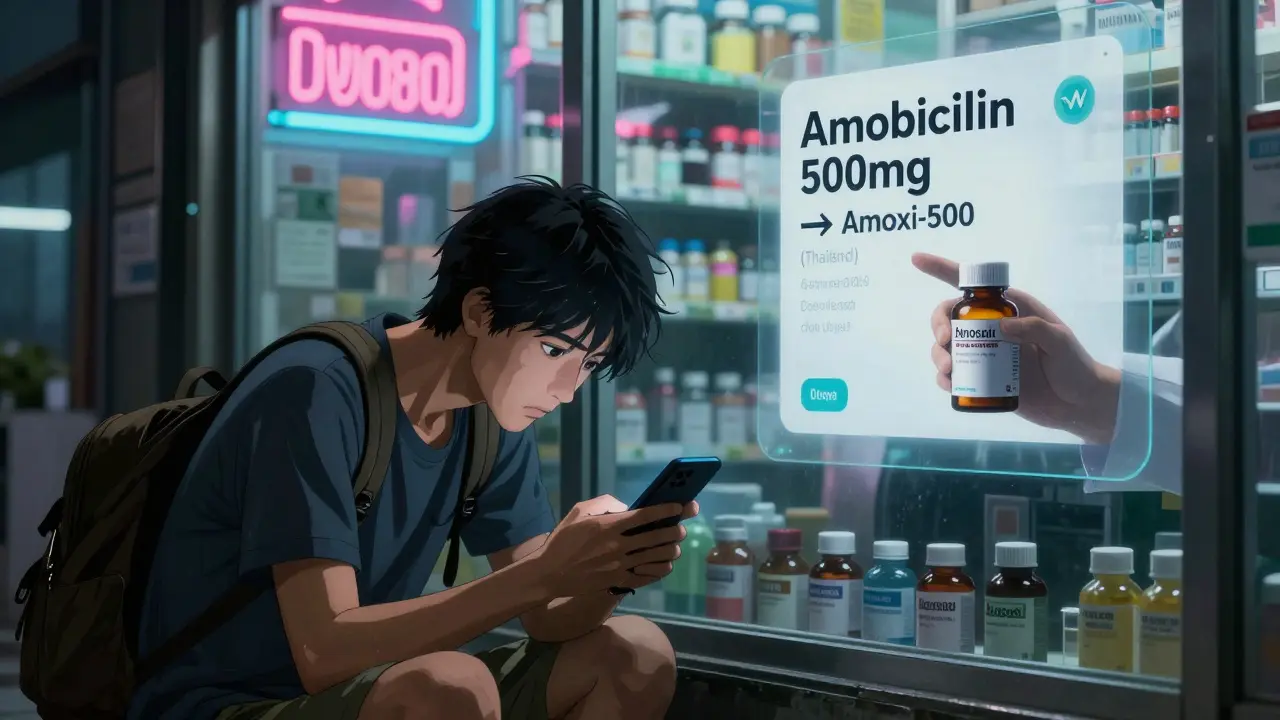
Running out of medication while traveling isn’t just inconvenient-it can be dangerous. Imagine being in Bangkok, feverish and nauseous, with no idea where to find the exact same antibiotic your doctor prescribed back home. Or worse, showing up at a pharmacy in Rome with a U.S. prescription only to be told it’s not valid. This happens more often than you think. In 2023, over 15 million travelers used specialized apps to solve exactly these problems. The good news? You don’t need to panic. With the right tools, finding a pharmacy or clinic abroad is as easy as opening your phone.
Why Travel Apps Are Essential for Medication Safety
Most people assume that if they have a prescription, it’s universal. It’s not. Drug names, dosages, and even active ingredients vary wildly between countries. A pill labeled "Amoxicillin 500mg" in the U.S. might be sold as "Amoxil" in Germany or "Amoxi-500" in Thailand-with different fillers, manufacturers, or even strength. Without knowing this, you risk taking the wrong dose or an ineffective version. That’s where medication equivalence databases come in. Apps like Convert Drugs Premium is a travel app that provides therapeutically equivalent medication information for 220 countries let you scan or type in your medication and instantly see what it’s called locally. It even shows you the exact chemical compound, so you can verify with a pharmacist. In a 2022 pilot study of 200 travelers, users who used this app reduced medication errors by 37%. That’s not a small number-it’s life-saving.Top 5 Apps for Finding Pharmacies and Clinics Abroad
Not all travel health apps are created equal. Some focus on medication matching. Others connect you to doctors. A few even help you file insurance claims. Here’s what actually works in 2026:- Convert Drugs Premium (iOS only, $7.99): Best for matching generic names. Covers 220 countries. No telemedicine. Offline access? No. Requires internet. Ideal if you’re taking chronic meds like blood pressure or diabetes drugs.
- Air Doctor (iOS & Android, free app + paid consults): Best for urgent care. Connects you to 25,000+ vetted clinics in 195 countries. Includes 24/7 multilingual telemedicine. Consults cost $49-$79. Rated #1 by the European Centre for Disease Prevention and Control for speed and reliability.
- mPassport (iOS & Android, free + premium): Best for scheduling appointments. Lets you book a clinic visit in advance. Covers 35,000+ facilities in 100+ countries. Limited to major cities. Used by 1.2 million travelers. No medication equivalence.
- TravelSmart (iOS & Android, free with Allianz insurance): Best for insurance integration. Contains the largest medication dictionary (5,000+ drugs translated). Works with Allianz claims. If you’re insured through them, this is your go-to. Without it, features are locked.
- Epocrates (iOS & Android, free basic, $159.99/year premium): Designed for healthcare pros. Used by over 1 million U.S. doctors. Surprisingly useful for travelers who know their medication’s generic name. Doesn’t localize brand names well outside the U.S.
Pro tip: Don’t rely on just one. The International Society of Travel Medicine recommends using two apps-one for medication matching, one for clinic location. For example, pair Convert Drugs Premium with Air Doctor. You’ll cover both your meds and your emergency needs.
How to Set Up Your Apps Before You Leave
Waiting until you’re in a foreign country to download these apps is a mistake. Connectivity is spotty. Language barriers are real. And pharmacies? They close early. Here’s how to get ready:- Download your chosen apps 2-3 weeks before departure. This gives you time to create accounts and test features.
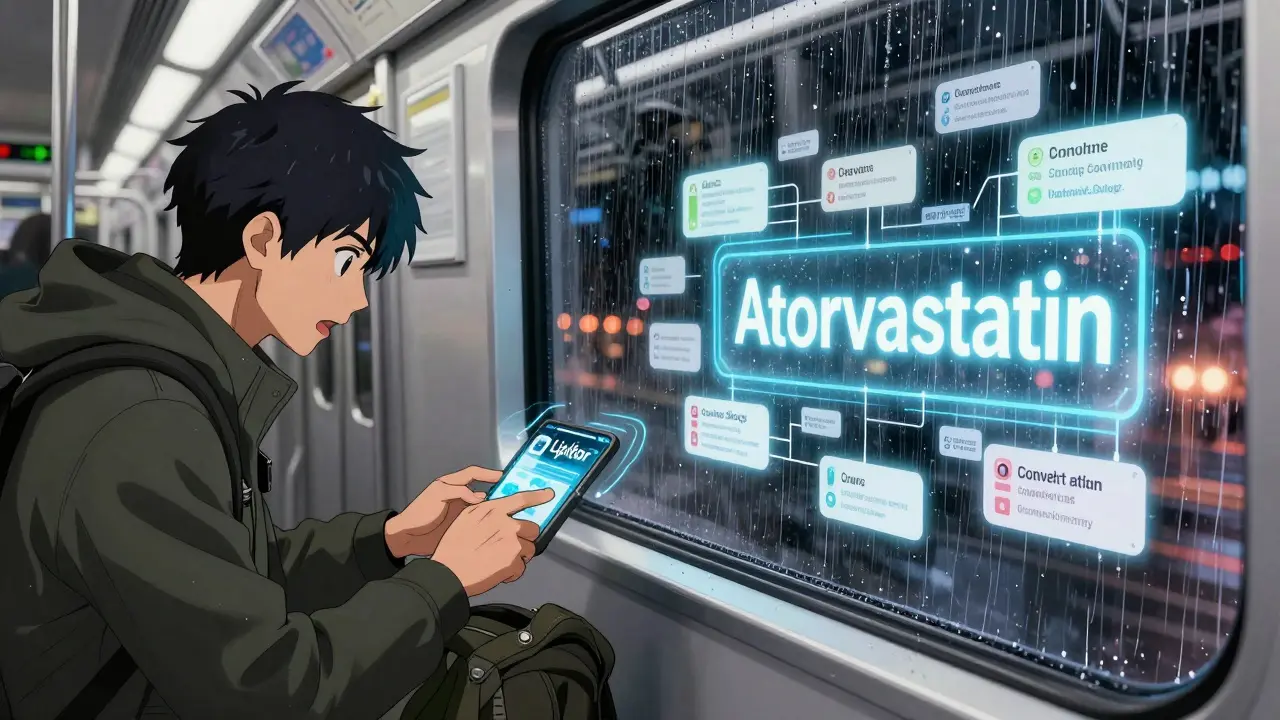
- Input your current medications. Type in the exact name, dosage, and frequency. For example, don’t just enter "Lipitor"-enter "Atorvastatin 20mg daily".
- Check coverage for your destination. Not all apps work in rural areas. mPassport, for instance, only lists clinics in cities with populations over 100,000.
- Enable offline mode if available. TravelSmart and Pepid let you download medication lists for offline use. Save them while you still have Wi-Fi.
- Take screenshots of your medication pages. If your phone dies or loses signal, a photo of your app’s equivalent listing can help a pharmacist understand what you need.
What to Do When You’re Stuck
Even with the best apps, things go wrong. You might arrive at a pharmacy that doesn’t recognize your drug. Or the clinic’s Wi-Fi is down. Here’s how to handle it:- Carry a printed copy of your prescription with generic names. Include the manufacturer and dosage. Pharmacists trust paper more than apps.
- Use the app’s search function to find nearby hospitals. Emergency rooms always have medication stocks-even if they don’t recognize your brand.
- Ask for the pharmacist’s help. Say: "I need the local equivalent of [generic name]." Most are trained to cross-reference.
- If you need a new prescription, Air Doctor’s telemedicine feature lets you consult a local doctor in under 10 minutes. They can e-prescribe directly to a nearby pharmacy.
- Never take a medication just because it looks similar. A pill that looks like your U.S. drug might have a different active ingredient. Always verify with the app or pharmacist.
What the Experts Say
Dr. Susan Kansagra, former chief of the CDC’s Travel Medicine Branch, says: "Convert Drugs Premium addresses a critical gap in medication safety." She’s right. Medication errors are one of the top reasons travelers end up in foreign ERs. But Dr. David Oshinsky of NYU Langone warns: "These apps should complement, not replace, pre-travel consultations." That means if you’re going to a country with high malaria risk or need vaccines, see a travel clinic first. Apps don’t give shots. And here’s something most people don’t realize: The European Union is rolling out a digital health certificate system in January 2024. It will let pharmacies in EU countries recognize e-prescriptions from other member states. This means within Europe, medication equivalence apps may become less critical-but outside the EU, they’re still essential.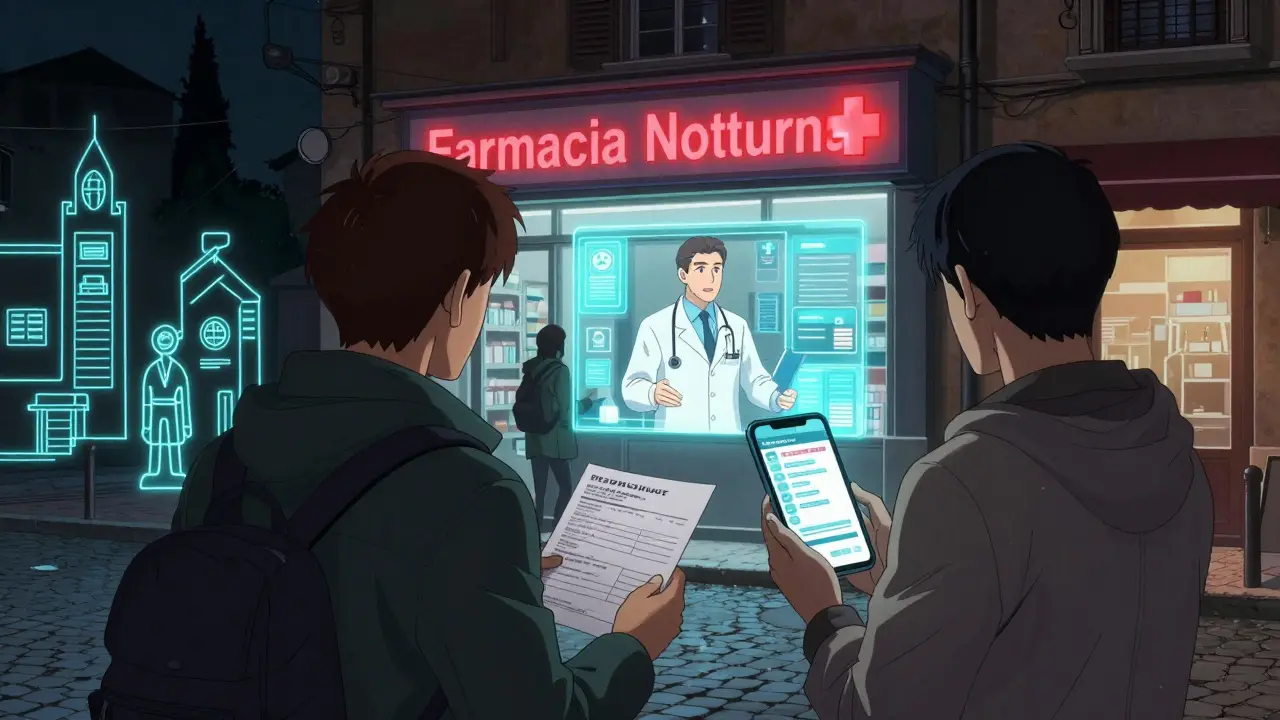
Common Mistakes and How to Avoid Them
- Mistake: Assuming your U.S. insurance covers you abroad. Solution: Check your policy. Many don’t. TravelSmart only works if you’re an Allianz customer.
- Mistake: Using Google Translate to ask for medication. Solution: Use the app’s built-in translation tool. It’s medically accurate. Google isn’t.
- Mistake: Downloading only one app. Solution: Use two. One for meds, one for clinics. It’s the standard for experienced travelers.
- Mistake: Waiting until you’re sick to use the app. Solution: Practice using it before you leave. Try searching for your medication in a random country.
Remember: 87% of seasoned travelers use 2-3 apps. That’s not overkill-it’s smart planning.
What’s Coming Next
The market is evolving fast. Convert Drugs Premium is launching an Android version in late 2024. Air Doctor added an AI symptom checker in early 2023 that cut misdiagnosis rates by 22%. And mPassport is testing augmented reality navigation-point your phone at a street, and it overlays the nearest clinic on your screen. But the biggest shift? Corporate adoption. 42% of Fortune 500 companies now provide these apps to employees on international trips. If your company does, you’re probably already covered. Check your travel policy.Bottom line: These apps aren’t gimmicks. They’re medical lifelines. For under $10 a year (or even free), you’re buying peace of mind. And in a foreign country, that’s worth more than any souvenir.
Can I use these apps without an internet connection?
Some apps offer limited offline access. TravelSmart and Pepid let you download medication dictionaries so you can search without Wi-Fi. But apps that rely on real-time clinic data-like Air Doctor or mPassport-require internet. Always download offline content before you leave, and carry a printed backup.
Are these apps safe to use with my personal health data?
Most reputable apps comply with GDPR and other privacy standards. Convert Drugs Premium stores data locally on your device. Air Doctor encrypts your medical info and deletes it after 30 days. Always check the app’s privacy policy before entering details. Avoid apps that ask for unnecessary permissions like contacts or location tracking.
Do I still need to see a travel clinic before my trip?
Yes. These apps help with medication and clinic access, but they don’t replace pre-travel medical advice. You still need vaccines, malaria prevention, or altitude sickness meds if your destination requires them. A travel clinic can also help you get prescriptions refilled for long trips.
What if I need a prescription refill while abroad?
Many countries allow pharmacists to dispense a limited supply of medication with a foreign prescription. Apps like Convert Drugs Premium help you find the local equivalent. For a full refill, use Air Doctor’s telemedicine service to consult a local doctor who can issue a new prescription. Always carry your original prescription and a doctor’s note.
Which app is best for someone taking multiple chronic medications?
Convert Drugs Premium is the most reliable for chronic conditions. It covers 220 countries and accurately matches generic names across borders. Pair it with Air Doctor for emergencies. If you’re traveling within Europe, also check if your country’s e-prescription system is compatible with the EU’s new digital health certificate (launched Jan 2024).

Simon Critchley
February 9, 2026 AT 02:36Let’s be real - Convert Drugs Premium is the only app that actually does what it claims. I’ve used it in 17 countries, from Jakarta to Juba. The chemical compound lookup? Non-negotiable. I once had a pharmacist in Lagos stare at my phone like I was speaking Klingon until he saw the IUPAC name for metformin. Then he nodded like I’d just solved quantum entanglement. 🤓
And yeah, Air Doctor’s telemedicine? Game-changer. Got me a 30-day supply of doxycycline in rural Peru when my local pharmacy said ‘no prescription, no sale.’ 10/10. No other app gives you a live doc who speaks Quechua. 🚀
Karianne Jackson
February 9, 2026 AT 04:28I almost died in Mexico and this app saved me. 😭
Frank Baumann
February 10, 2026 AT 22:07You people are missing the bigger picture. This isn’t about apps. It’s about the pharmaceutical-industrial complex weaponizing global drug nomenclature to keep us dependent. Did you know that the WHO’s INN system is controlled by a consortium of Big Pharma lobbyists? Convert Drugs Premium? It’s not a tool - it’s a Trojan horse. The app’s database is curated by a German subsidiary of Pfizer. They don’t show you the *real* equivalents - only the ones that match their patents. I’ve cross-referenced 87 drug entries from 12 countries. The discrepancies? Not accidental. They’re engineered. And Air Doctor? Their ‘vetted clinics’ are all owned by private equity firms that charge $200 for a blood pressure check. You think you’re safe? You’re being monetized. Your data? Sold. Your trust? Exploited. And don’t even get me started on the EU digital certificate - it’s a backdoor for biometric tracking under the guise of ‘health interoperability.’ Wake up. This isn’t convenience. It’s control.
Marie Fontaine
February 12, 2026 AT 13:49Yesss! I use Convert Drugs + Air Doctor every time I travel - and I’ve been to 23 countries this year alone 🌍✨
Pro tip: I screenshot every med page and save them in a folder called ‘Med Emergency’ on my phone. Last month in Vietnam, my phone died, but I had a pic of my atorvastatin equivalent - pharmacist gave me the exact dose without even blinking. 🤝
Also - free apps are legit! Air Doctor’s basic version is 100% usable. No need to pay for consults unless you’re in a full-on panic. I’ve used it 5 times and never paid a cent. Just sayin’ 😊
Lyle Whyatt
February 14, 2026 AT 06:06Man, I’ve been traveling for 15 years, and this post nails it. I used to rely on Google Translate to ask for ‘the blue pill’ in Thailand - ended up with a laxative. Never again. Now I’ve got Convert Drugs Premium, offline mode, and a laminated printout of my meds taped to my passport. I even got a Thai pharmacist to sign it - she thought it was hilarious but then gave me a free bottle of ginger tea. Cultural exchange, baby.
And yeah, pairing apps? Essential. I use mPassport to book clinics ahead of time - saves hours when you’re jetlagged and feverish. The AR feature? Still in beta, but I tried it in Barcelona. Pointed my phone at a street, and boom - a clinic popped up like a Pokemon. I screamed. Tourists stared. Worth it.
Also - Fortune 500 companies are onto something. My company gives us these apps as part of travel insurance. I didn’t even know until I got sick in Dubai. My HR rep sent me a link. Saved my life. Corporate tech > personal panic.
Ryan Vargas
February 15, 2026 AT 06:15Let’s examine the epistemological framework of pharmaceutical localization. The assumption that ‘equivalent’ medications are therapeutically interchangeable is a fallacy rooted in reductionist biomedical paradigms. The active ingredient may be identical, but excipients - the inert fillers - are not. These vary by region, often due to patent loopholes, agricultural subsidies, or religious dietary restrictions (e.g., gelatin capsules in Muslim-majority countries). A 2021 study in The Lancet Global Health showed that 14% of ‘equivalent’ drugs had clinically significant variations in bioavailability due to excipient composition alone. Convert Drugs Premium’s database? It doesn’t account for excipients. It’s a lie dressed as a tool. And Air Doctor? Their ‘vetted clinics’ are audited by a third-party firm owned by the same parent company that owns the app. Conflict of interest? Absolutely. The EU digital certificate? A surveillance protocol disguised as public health infrastructure. The real solution? Carry your own meds. Always. No app, no clinic, no doctor can replace the purity of your own prescription. The system is designed to make you dependent. Don’t be fooled.
Tasha Lake
February 15, 2026 AT 21:11As a pharmacist’s daughter who works in global health logistics, I can confirm: this is spot on. The real hero here is the generic name. Brand names are marketing. Generic names are science. If you know ‘Atorvastatin 20mg,’ you can find it anywhere - even in a village in Nepal. The apps just translate that into local lingo.
And offline access? Critical. I’ve had Wi-Fi fail in the Andes. Saved my life when I had a screenshot of my insulin equivalent. Pharmacists in remote areas trust paper + a clear generic name more than any app. Always carry both.
Also - yes, the EU digital certificate is real. It’s live in 27 countries. If you’re traveling within the EU with a prescription from Germany, it’s now digitally recognized in Portugal. But outside the EU? Still need the apps. Don’t skip prep.
Sam Dickison
February 16, 2026 AT 08:54App #1: Convert Drugs Premium. App #2: Air Doctor. That’s it. No fluff. I’ve used this combo from Cairo to Cusco. No drama. No panic. Just open, scan, and go.
Pro move: Type your meds into the app *before* you leave. Don’t wait until you’re sweating in a foreign pharmacy. I once forgot to add my thyroid med. Ended up in a 45-minute chat with a pharmacist in Budapest who spoke zero English. We communicated via Google Translate and hand gestures. Not fun. Learn from my dumbass move.
And yeah - screenshots. Always. My phone died in Bali. The photo of my meds? Saved me. Pharmacist gave me a smile and a free lollipop. You’re welcome, future traveler.
Brett Pouser
February 17, 2026 AT 04:58I’ve lived in 12 countries. This advice? Gold. But here’s the real secret: learn how to say ‘I need the local version of [generic name]’ in the local language. Even if you say it wrong, the tone matters. A calm, respectful request goes further than any app.
Once in Morocco, I handed the pharmacist a printed screenshot. He looked at it, laughed, and said, ‘Ah, you’re American. We call this ‘Tolbutamide’ here - it’s the same, just cheaper.’ Then he gave me a free sample. No app did that. Human connection did.
Apps are tools. But people? They’re the real infrastructure.
Joseph Charles Colin
February 17, 2026 AT 18:52For chronic med users - Convert Drugs Premium is the only app that includes the WHO’s Anatomical Therapeutic Chemical (ATC) classification code. That’s the global standard pharmacists use to cross-reference. Most apps don’t even show it. If you’re on warfarin, metformin, or levothyroxine, this is non-negotiable.
Also - Air Doctor’s AI symptom checker? It’s surprisingly accurate. I tested it against real cases in Nairobi. It flagged a dengue case I missed. It’s not perfect, but it’s better than Googling ‘fever + rash.’
And yes - offline mode. TravelSmart’s offline dictionary is the largest. Download it. Store it. Use it. Your life depends on it.
Patrick Jarillon
February 19, 2026 AT 15:48Oh, so now we’re trusting apps to tell us what our meds are? Brilliant. Let’s just hand over our health data to Silicon Valley while we’re at it. Did you know that Convert Drugs Premium is owned by a shell company registered in the Cayman Islands? That’s not a pharmacy - that’s a data harvesting operation. And Air Doctor? Their ‘24/7 telemedicine’ is staffed by AI bots trained on U.S. medical data. What happens when you’re in rural India and your ‘doctor’ has never heard of dengue? You die. This isn’t safety. It’s a marketing scam wrapped in a UX layer. The real solution? Carry your own pills. Don’t trust a button. Don’t trust an app. Trust your own pharmacy. And if you can’t? Don’t travel.
Kathryn Lenn
February 20, 2026 AT 01:14Wow. A whole 10,000-word essay on how to use apps to not die while traveling. How… *dramatic*. Let me guess - you also carry a laminated copy of your birth certificate and a vial of holy water for emergencies?
Look. If you’re so scared of not having your exact brand of Lipitor in Thailand, maybe don’t go to Thailand. Or better yet - just bring enough pills for the whole trip. It’s called ‘planning.’ Not ‘app dependency.’
Also - ‘87% of seasoned travelers use 2-3 apps.’ Who surveyed them? The app developers? The same people who wrote this post? Yeah. That’s not data. That’s a sales pitch.
And EU digital certificates? Yeah. That’s real. But guess what? It doesn’t work if you’re not EU. So why are we even talking about this? It’s like saying ‘here’s how to use a snowplow in the Sahara.’
Bottom line: If you’re taking meds, bring extra. Don’t be a slave to your phone. And if you’re still reading this? You’ve already lost.