
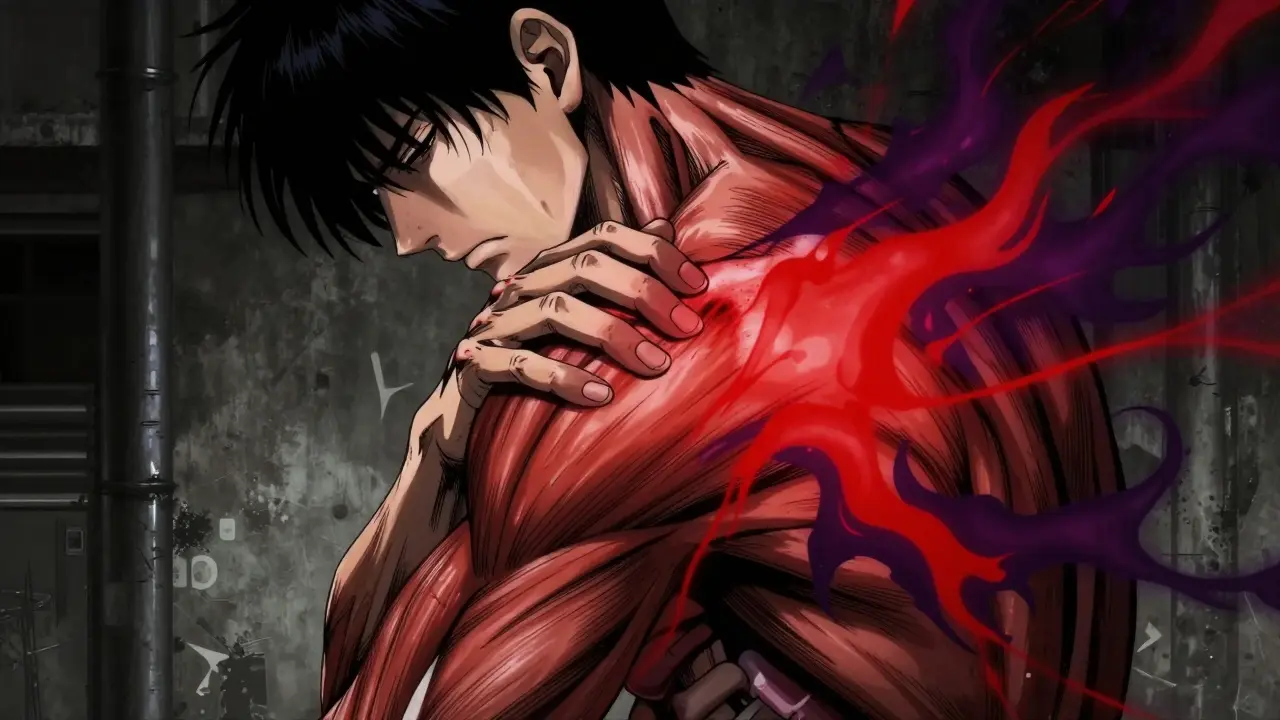
That nagging ache in your shoulder that won’t go away? Or the tension headache that feels like a vice grip around your temples? You might be dealing with Myofascial Pain Syndrome, a chronic condition defined by hyperirritable spots in your muscles known as trigger points. These aren't just random knots; they are specific physiological disruptions that can cause significant discomfort and limit your daily movement.
Understanding what these trigger points are and how to release them is crucial for long-term relief. This guide breaks down the science behind myofascial pain, how to identify it accurately, and the most effective techniques-from manual pressure to clinical interventions-to finally break the pain cycle.
What Exactly Are Trigger Points?
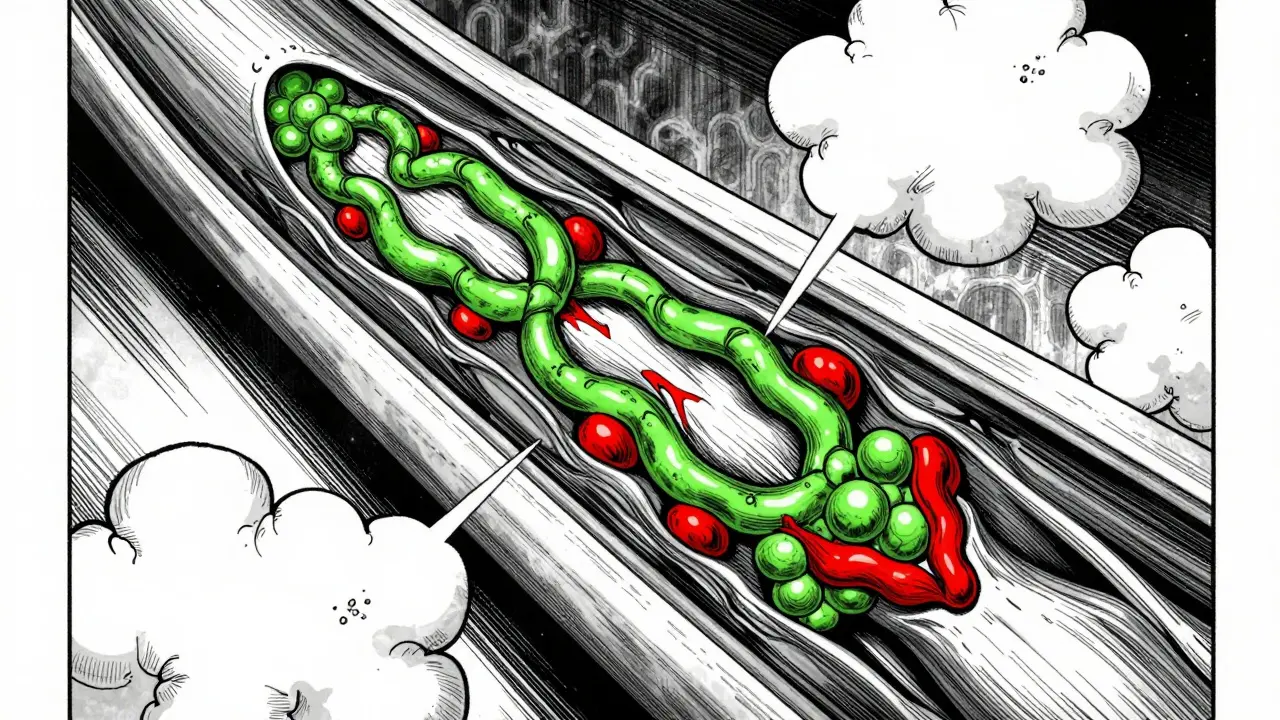
To understand myofascial pain syndrome (MPS), you first need to understand the culprit: the myofascial trigger point. These are discrete, hyperirritable spots located within a taut band of skeletal muscle. Think of them as tiny, knotted sections of muscle fibers that have contracted and refused to relax.
According to foundational research by Dr. Janet Travell and Dr. David Simons, these points are not just sore muscles. They possess distinct biochemical characteristics. Inside a trigger point, there is a significantly higher concentration of acetylcholine-often 10 to 100 times normal levels-along with elevated noradrenaline and serotonin. The pH level drops to approximately 4.3, compared to the normal muscle pH of 7.0. This acidic environment creates sustained contraction of sarcomeres (the basic unit of muscle contraction), which compresses local blood vessels. This leads to ischemia (lack of oxygen) and the release of sensitizing substances that stimulate pain nerves.
Trigger points are classified into two types:
- Active Trigger Points: These produce spontaneous pain even when you are resting. They cause both local tenderness and referred pain patterns.
- Latent Trigger Points: These do not hurt on their own but become painful when compressed. They can still restrict range of motion and weaken the muscle.
Identifying Myofascial Pain Syndrome vs. Other Conditions
Misdiagnosis is common. Many patients visit clinics thinking they have nerve issues or arthritis, only to find out later it’s MPS. It is essential to distinguish MPS from similar conditions like fibromyalgia.
| Feature | Myofascial Pain Syndrome (MPS) | Fibromyalgia |
|---|---|---|
| Pain Location | Regional, often unilateral (one side) | Widespread, symmetrically distributed |
| Pain Type | Local and referred pain patterns | Generalized tenderness without referral |
| Physical Findings | Taut bands, palpable nodules (2-10 mm) | Tender points at specific anatomical sites |
| Response to Pressure | Local twitch response (LTR) may occur | No local twitch response |
A key diagnostic sign for active trigger points is the local twitch response (LTR). When a trigger point is stimulated, the muscle fibers involuntarily contract. This occurs in about 70-85% of active cases. Additionally, MPS often mimics nerve compression. Approximately 30% of patients initially diagnosed with radiculopathy (pinched nerve) actually suffer from MPS with referred pain patterns that feel like nerve symptoms.
Common Causes and Risk Factors
Why do some people develop these painful knots while others don’t? Several factors contribute to the formation of trigger points:
- Acute Trauma: Injuries like whiplash have a 50-70% incidence of subsequent MPS development.
- Chronic Postural Stress: Forward head posture increases the prevalence of trapezius trigger points by 3-5 times. Sitting at a desk all day is a major contributor.
- Structural Abnormalities: Leg length discrepancies greater than 1 cm increase MPS risk by 40%.
- Systemic Conditions: Vitamin D deficiency (serum levels below 20 ng/mL) correlates with a 60% higher MPS incidence. Hypothyroidism is also present in 15-25% of chronic MPS cases.
The upper trapezius, levator scapulae, and temporalis muscles are among the most commonly affected areas, accounting for a significant portion of musculoskeletal pain complaints in clinical settings.
Effective Trigger Point Release Techniques
Treating MPS requires a multi-faceted approach. No single technique works for everyone, but combining methods often yields the best results. Here are the most evidence-based release techniques.
Ischemic Compression
This manual therapy technique involves applying sustained, direct pressure to the trigger point until the pain subsides. Typically, this pressure is held for 30-90 seconds. The goal is to restore blood flow to the ischemic area. Studies show 60-75% short-term efficacy in randomized controlled trials. You can perform this yourself using your fingers, a tennis ball, or a foam roller.
Dry Needling
Dry needling involves inserting thin filiform needles directly into the trigger point without injecting any substance. This mechanical stimulation often elicits a local twitch response, which helps reset the muscle fiber. Meta-analyses indicate that dry needling provides pain relief for 4-12 weeks in 65-80% of patients. It is particularly effective for deep-seated trigger points that are difficult to reach with manual pressure.
Trigger Point Injections
In a clinical setting, healthcare providers may use trigger point injections containing 0.5-1% lidocaine (without epinephrine). These injections show 70-85% immediate pain reduction, with effects lasting 2-8 weeks. However, recent Cochrane Reviews note no significant difference between lidocaine injections and dry needling at 4-week follow-ups, suggesting the mechanical disruption of the needle may be more important than the anesthetic itself.
Spray-and-Stretch Technique
This method uses a vapocoolant spray (like ethyl chloride) over the referred pain zone followed immediately by stretching the affected muscle. The cold sensation gates the pain signal, allowing for deeper stretching. It demonstrates 50-65% effectiveness in cervical MPS cases.
Emerging Therapies
Newer approaches include instrument-assisted soft tissue mobilization (IASTM) and low-level laser therapy (LLLT). IASTM uses specialized tools to break up scar tissue and adhesions, showing 55-70% efficacy. LLLT, using wavelengths of 808-905 nm, shows 40-60% pain reduction by reducing inflammation at the cellular level.
Home Management and Prevention
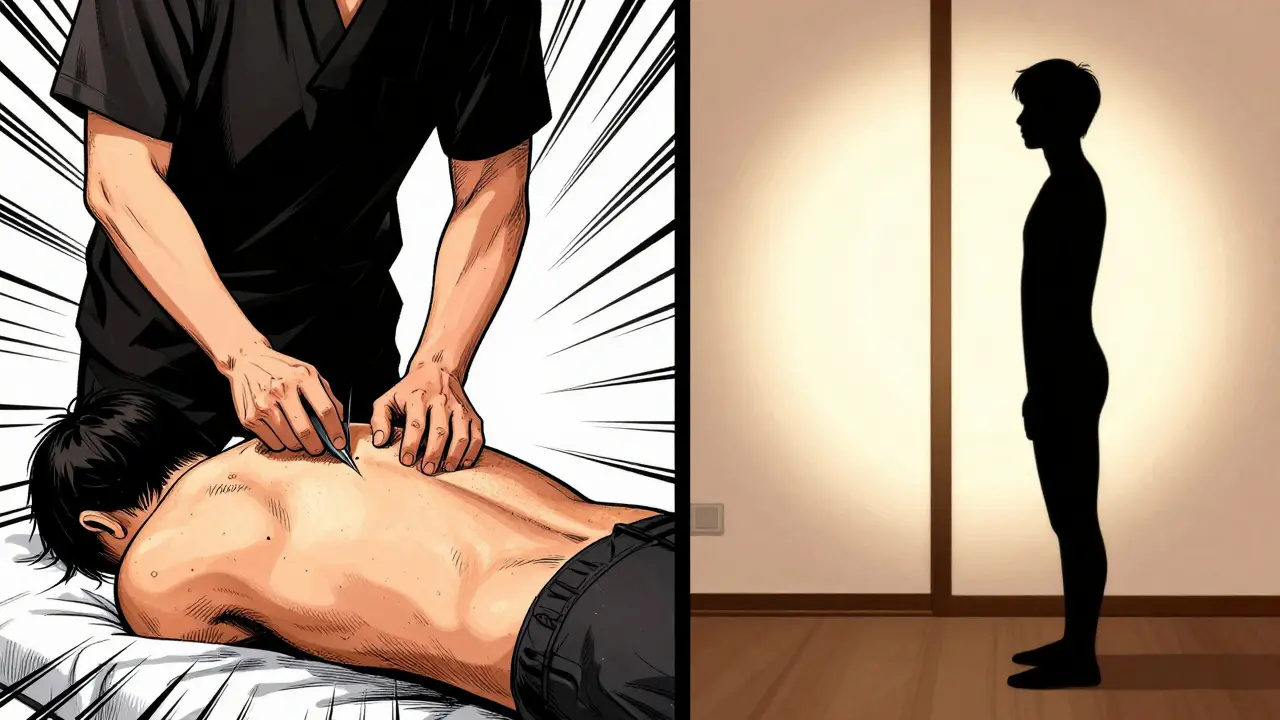
Clinical treatment is only half the battle. Without home maintenance, recurrence rates remain high, with 40-60% of patients reporting symptom return within 6 months. Here is how you can manage MPS at home:
- Self-Ischemic Compression: Use a tennis ball or foam roller against a wall for 15-20 minutes daily. Focus on areas of tightness, holding pressure on tender spots for 30-90 seconds.
- Posture Correction: Perform posture correction exercises 3 sets of 10 repetitions, twice daily. Pay special attention to strengthening your rhomboids and lower trapezius to counteract forward head posture.
- Heat Therapy: Apply heat (40-45°C) for 15 minutes before stretching. This increases blood flow and makes the muscle more pliable.
- Ergonomics: Adjust your workstation. Ensure your monitor is at eye level and your chair supports your lower back to reduce chronic postural stress.
Compliance with home programs is critical. Studies show compliance rates of only 45-60% at 6 weeks, so integrating these practices into your daily routine is essential for long-term success.
When to See a Specialist
If self-care does not alleviate your pain within a few weeks, or if the pain interferes with sleep and daily activities, consult a healthcare provider. Look for practitioners trained in manual therapy or physical medicine. Accurate identification of trigger points has a learning curve of 6-12 months of supervised practice, so expertise matters. Misdiagnosis can lead to unnecessary imaging and treatments, adding to healthcare costs and patient frustration.
Remember, myofascial pain syndrome is manageable. By understanding the nature of trigger points and employing a combination of professional release techniques and consistent home care, you can break the pain-spasm-pain cycle and regain your quality of life.
How long does it take for trigger points to go away?
The duration varies depending on the chronicity of the condition and the treatment used. With consistent treatment such as dry needling or ischemic compression, many patients experience significant relief within 4-12 weeks. However, without maintenance therapy and posture correction, symptoms can recur within 6 months in 40-60% of cases.
Can trigger points heal on their own?
While minor acute trigger points may resolve with rest and gentle stretching, chronic myofascial pain syndrome rarely heals completely without intervention. The biochemical environment inside the trigger point (low pH, high acetylcholine) sustains the contraction. Active release techniques are usually necessary to break this cycle.
What is the difference between dry needling and acupuncture?
Although they use similar needles, the underlying principles differ. Dry needling targets myofascial trigger points based on Western anatomy and physiology to elicit a local twitch response and relieve muscle tension. Acupuncture is based on Traditional Chinese Medicine and aims to balance energy flow (Qi) along meridians. Both can be effective for pain, but dry needling is specifically focused on musculoskeletal dysfunction.
Are trigger point injections painful?
Patients often report a brief sting or burning sensation during the injection, similar to a bug bite. However, many experience immediate relief afterward due to the numbing effect of the lidocaine and the mechanical disruption of the trigger point. The pain is typically short-lived compared to the chronic pain being treated.
Can vitamin D deficiency cause myofascial pain?
Yes, there is a strong correlation. Serum vitamin D levels below 20 ng/mL are associated with a 60% higher incidence of myofascial pain syndrome. Correcting vitamin D deficiency through supplementation and sunlight exposure can support overall muscle health and aid in pain management.