
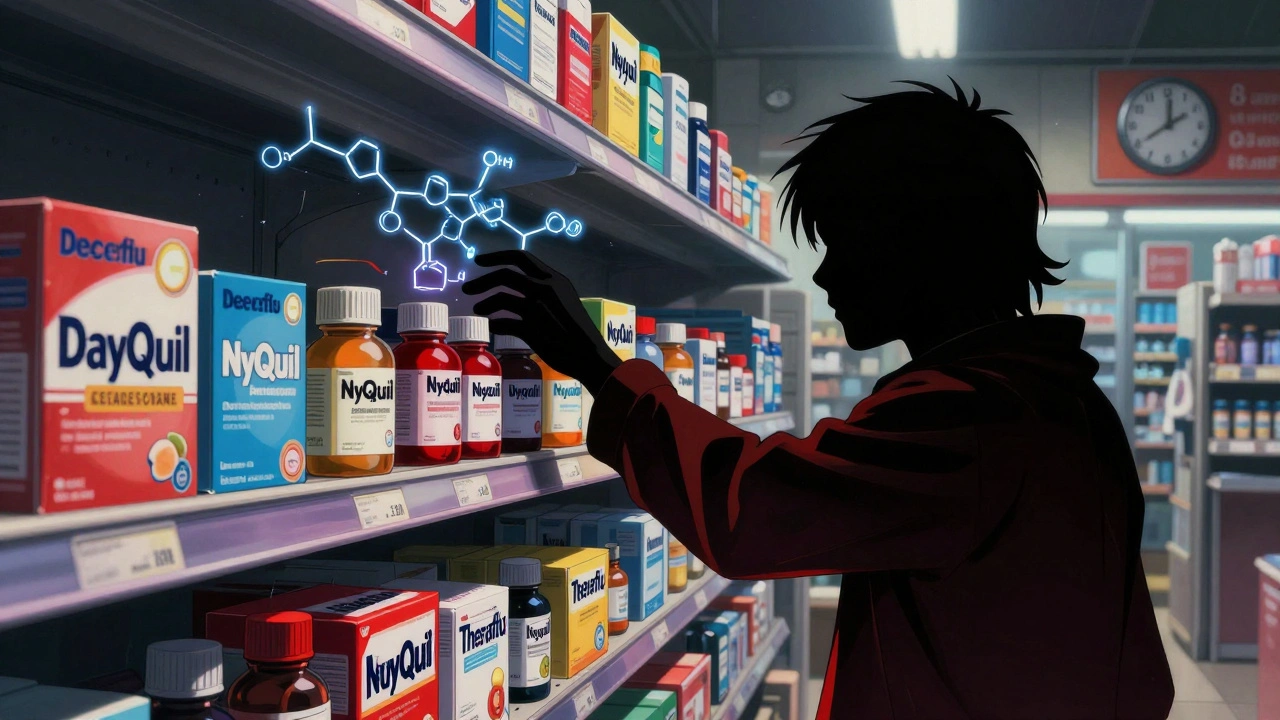
Every winter, millions of people reach for those colorful boxes of OTC cold and flu medicine, thinking they’re doing the smart thing-grabbing one pill to fix everything. Fever? Check. Cough? Check. Stuffy nose? Check. But here’s the truth: that one bottle might be藏着 three different drugs you didn’t know you were taking. And if you’re also popping Tylenol for a headache, or grabbing a sleep aid because you can’t rest, you could be on track for a liver injury you never saw coming.
What’s Really in Your Cold Medicine?
Most OTC cold and flu combos pack at least three active ingredients into a single tablet or liquid. The usual suspects? Acetaminophen (also called paracetamol or APAP), dextromethorphan (for cough), and phenylephrine or pseudoephedrine (for congestion). Nighttime versions often add an antihistamine like doxylamine or chlorpheniramine to make you sleepy. Let’s break it down with real numbers:- Acetaminophen: Usually 325mg per dose in products like Tylenol Cold & Flu, DayQuil, or Theraflu. That’s the same amount as one regular Tylenol tablet.
- Dextromethorphan: Found in doses of 10-30mg. It’s the cough suppressant in NyQuil and Robitussin DM.
- Phenylephrine: 10mg per dose. Marketed as a decongestant, but recent FDA data shows it doesn’t work at this dose.
- Doxylamine: 12.5mg in NyQuil. Strong sedative. Can leave you groggy the next day.
How Easy Is It to Overdose?
The safe daily limit for acetaminophen is 4,000mg. Sounds like a lot? It’s not. Imagine this: You take one caplet of Tylenol Cold & Flu at 8 a.m. (325mg). At noon, you feel your head pounding, so you take two regular Tylenol tablets (650mg). At 6 p.m., you grab a dose of NyQuil for your cough and runny nose (another 325mg). By bedtime, you’ve taken 1,300mg of acetaminophen-just from three products. Now add a nighttime pain reliever you keep under the sink? You’re at 2,000mg. And you haven’t even hit the 12-hour mark. By the next day, you’ve easily crossed 4,000mg. And that’s when things get dangerous. Acetaminophen overdose doesn’t cause vomiting or screaming pain right away. It quietly damages your liver. You might feel fine for 24-48 hours. Then-suddenly-your skin turns yellow, your belly hurts, and you’re rushed to the ER. In 2022, over 14,000 calls to U.S. poison control centers were about acetaminophen overdose from OTC cold meds alone.Why Do People Keep Making This Mistake?
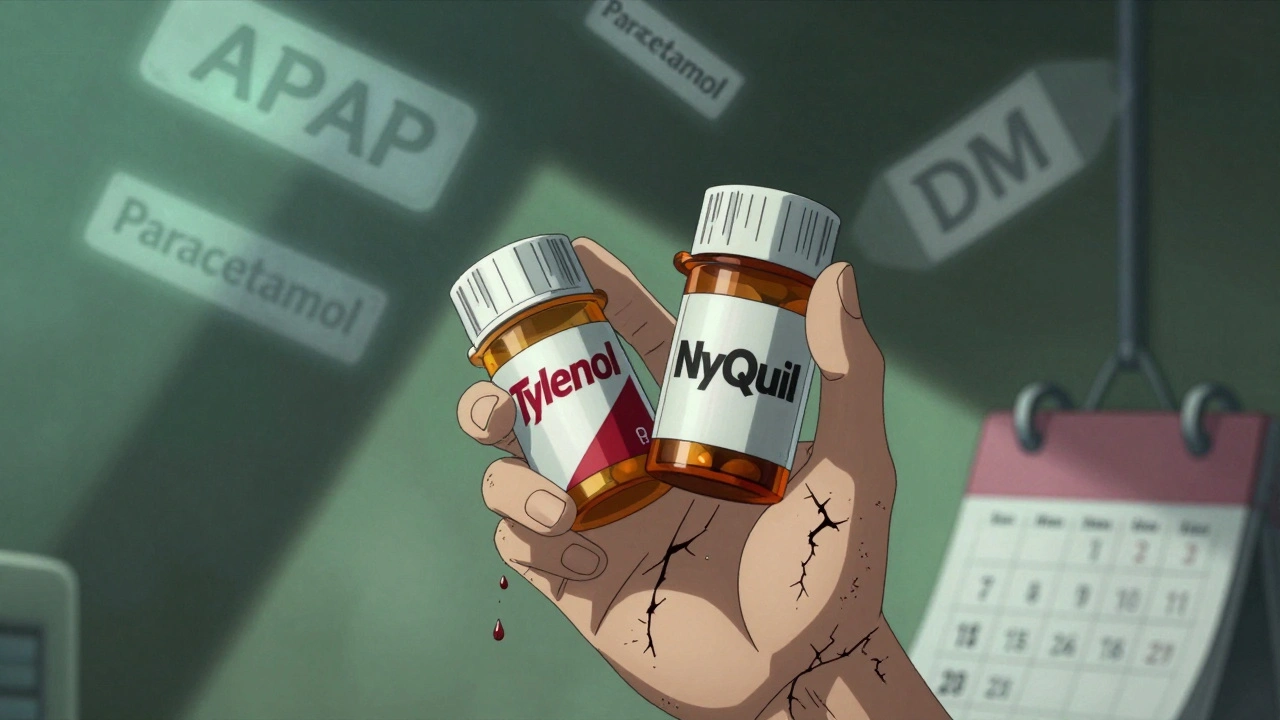
It’s not laziness. It’s confusion. Many people don’t realize that:- “APAP” on a label means acetaminophen.
- “Paracetamol” is the same thing (common on imported brands).
- “DM” stands for dextromethorphan.
- Doxylamine and diphenhydramine (Benadryl) both cause drowsiness-but they’re not the same drug. Taking both can lead to dangerous sedation.
What Experts Actually Recommend
Pharmacists and doctors don’t hate combination cold meds. They hate unintentional overdoses. The American Medical Association and the American Academy of Family Physicians both say the same thing: treat only the symptoms you have. If you have a fever and body aches? Take plain acetaminophen or ibuprofen. No need for cough syrup or decongestants. If you have a dry cough? Use dextromethorphan alone. Skip the stuff with antihistamines-they’ll make you drowsy and dry your mouth out more. If you’re congested? Try a saline nasal spray first. If you need something stronger, get pseudoephedrine (behind the pharmacy counter). It works. Phenylephrine doesn’t-at the doses in OTC products. In fact, the FDA proposed removing phenylephrine from OTC cold products in November 2024 because studies show it’s ineffective at 10mg. That means manufacturers will have to reformulate soon. But until then, you’re still paying for a placebo.How to Stay Safe: A Simple 3-Step Rule
You don’t need a pharmacy degree to avoid a dangerous mistake. Just follow this:- Read the Drug Facts label-every time. Don’t just look at the brand name. Scroll down to “Active Ingredients.” Write them down if you have to.
- Never mix two products with the same active ingredient. If one has acetaminophen, don’t take another Tylenol, Excedrin, or even some sleep aids (like Unisom).
- Use single-ingredient meds when possible. It’s cheaper, safer, and you know exactly what you’re taking. A bottle of plain acetaminophen costs less than half of a combo pack.
What to Do If You Think You’ve Taken Too Much
If you’ve taken more than one cold medicine in a day and you’re worried:- Call Poison Control immediately: 1-800-222-1222. It’s free, confidential, and available 24/7.
- Don’t wait for symptoms. Liver damage from acetaminophen can take hours to show up.
- Bring the medicine bottle with you if you go to the ER. The exact ingredients matter.
The Bigger Picture: Why This Keeps Happening
Big pharma makes billions selling these combo packs. Vicks DayQuil/NyQuil alone made over $900 million in 2023. Marketing tells you “one pill does it all.” But the truth? You’re paying extra for ingredients you don’t need. And the trend is shifting. Sales of single-ingredient acetaminophen rose 12.7% in 2023, while combo cold medicine sales grew just 2.3%. More people are waking up to the risk. Workplaces are catching on too. Eighty-seven percent of Fortune 500 companies now stock only single-ingredient cold remedies in their first aid kits. Why? Liability. They’ve seen the ER visits.Final Thought: Convenience Isn’t Worth the Risk
You don’t need a magic bullet to feel better. You just need to know what’s in the bottle. Next time you reach for a cold and flu combo, pause. Look at the label. Ask yourself: Do I really need all of this? If you only have a cough, take a cough syrup. If you have a fever, take acetaminophen. If you’re congested, try a nasal spray. Your body doesn’t need a cocktail. It needs the right medicine-nothing more, nothing less.Can I take Tylenol with a cold medicine that already has acetaminophen?
No. If your cold medicine already contains acetaminophen (check the label for “acetaminophen,” “APAP,” or “paracetamol”), taking extra Tylenol can push you over the 4,000mg daily limit. This can cause serious liver damage. Always assume the cold medicine has it unless the label says otherwise.
Is phenylephrine still in cold medicines?
Yes-for now. But the FDA proposed removing it from OTC products in November 2024 because studies show it doesn’t work at the 10mg dose found in most cold medicines. Manufacturers have 18 months to reformulate if the rule is finalized. For now, it’s still in products like Sudafed PE, DayQuil, and Theraflu-but it’s ineffective.
What’s the difference between doxylamine and diphenhydramine?
Both cause drowsiness and are used in nighttime cold medicines. Doxylamine (in NyQuil) lasts longer-up to 8 hours-and can leave you groggy the next day. Diphenhydramine (in Benadryl or some store brands) wears off faster but can still cause next-day sleepiness. Never take both together-they’re too similar and can over-sedate you.
Are combination cold medicines safe for seniors?
They’re riskier. Seniors are more sensitive to antihistamines like doxylamine and chlorpheniramine, which can cause confusion, dizziness, urinary retention, and falls. Many older adults also take other medications that interact with acetaminophen or decongestants. Single-ingredient options are safer and easier to manage.
Where can I find a checklist to avoid double dosing?
The American Lung Association offers a free “Cold Medication Safety Checklist” online. It walks you through reading labels, identifying active ingredients, and avoiding common mistakes. Your local pharmacist can also give you a printed version. Just ask.

Noah Raines
December 8, 2025 AT 15:48Bro i just took NyQuil and Tylenol last week and thought i was being smart. Then i read this and nearly threw my medicine cabinet out the window. 🤯
Michael Robinson
December 8, 2025 AT 19:42we think we’re fixing ourselves but we’re just stacking risks. it’s not medicine, it’s a gamble with your liver. why do we keep doing this?
precious amzy
December 9, 2025 AT 09:28One must question the epistemological foundations of pharmaceutical marketing-how the commodification of symptom relief has been ritualized into a pseudo-scientific sacrament, wherein the consumer is not merely a patient but a supplicant to the altar of convenience. The acetaminophen-laden elixirs are not remedies; they are neoliberal opiates for the masses.
Tejas Bubane
December 11, 2025 AT 03:10phenylephrine is a joke. 10mg? please. i’ve taken it for years and still got a clogged nose. big pharma just wants your cash. no one cares if it works. also, why are you all still using dayquil like it’s a goddamn miracle?
Lisa Whitesel
December 11, 2025 AT 09:44you people are idiots. you don’t read labels. you just grab the shiny bottle. your liver doesn’t care how busy you are. you’re not special. you’re just dead inside and too lazy to check the back of a box.
Larry Lieberman
December 13, 2025 AT 08:09OMG this is so important 😭 i just realized my ‘nighttime cold relief’ had acetaminophen AND doxylamine… and i’ve been taking it with Benadryl?? 🤦♂️😭
Sabrina Thurn
December 14, 2025 AT 12:22From a clinical pharmacy perspective, the core issue is polypharmacy risk amplification in OTC self-medication. The cognitive load required to parse active ingredients across multiple formulations exceeds baseline health literacy thresholds for a significant portion of the population. Single-agent formulations reduce interaction entropy and improve adherence safety profiles. The FDA’s proposed phenylephrine removal is a necessary, albeit overdue, pharmacovigilance intervention.
Courtney Black
December 15, 2025 AT 03:47It’s not about the medicine. It’s about the myth of control. We buy the bottle because we think we’re fixing the problem. But we’re not. We’re just trying to silence the noise-the cough, the fever, the headache-because we don’t want to sit with the discomfort. We don’t want to rest. We don’t want to admit we’re sick. So we take three pills and call it a day. And then we wonder why we feel worse.
iswarya bala
December 16, 2025 AT 22:11thank u so much for this!! i always thought tylenol and cold med was fine… now i’m checking every label 😅 i’m from india and we do this all the time here too… hope this helps more ppl!
Brianna Black
December 17, 2025 AT 02:02As a global citizen raised in both New York and Nairobi, I find this topic profoundly revealing of Western medical consumerism. In many cultures, rest is medicine. Here, we treat illness like a software bug to be patched with a cocktail of chemicals. This isn’t healing-it’s performance optimization at the cost of biological integrity.
Iris Carmen
December 18, 2025 AT 13:50yo the fact that phenylephrine is still on shelves is wild. it's like they're selling sugar water labeled as decongestant. and doxylamine? that stuff turns you into a zombie for 12 hours. i used to take it with my coffee just to feel normal. dumb as hell. also, if you're not reading the 'active ingredients' section, you're basically playing russian roulette with your liver. lol.
Ruth Witte
December 19, 2025 AT 06:17THIS CHANGED MY LIFE 💪🏻 I switched to single meds and now I actually sleep better and don’t feel like a robot the next day. You don’t need a magic bullet-you just need to read the tiny print. Go check your cabinet right now!!
Rich Paul
December 20, 2025 AT 14:37actually the real problem is that most people don’t know APAP = acetaminophen. and if you’re taking anything with ‘DM’ you’re getting dextromethorphan. and if you’re taking NyQuil and then Unisom? congrats, you just doubled your sedative load. i’m a pharmacist’s assistant. i see this every day. it’s not a coincidence-it’s predictable. and it’s preventable. why do people not learn?