

Imagine this: You prescribe a common medication for a patient’s chronic condition. The pharmacist dispenses the generic version, which is legally identical in active ingredients but manufactured by a different company. Months later, the patient suffers a severe adverse reaction. They sue. But who do they sue? Under current U.S. law, they often can’t sue the generic manufacturer. That leaves you-the prescribing physician-as the primary target.
This isn’t hypothetical. It’s the reality created by a series of Supreme Court decisions that have fundamentally shifted legal responsibility from pharmaceutical companies to doctors. For providers, understanding physician liability when prescribing generics is no longer just about clinical judgment; it’s about navigating a complex legal landscape where your prescription pad carries heavier legal weight than ever before.
The Legal Shift: How Manufacturers Got Immunity
To understand why physicians are now on the front lines of generic drug litigation, we need to look at two pivotal Supreme Court cases: PLIVA, Inc. v. Mensing (2011) and Mutual Pharmaceutical Co., Inc. v. Bartlett (2013). Together, these rulings established what is now known as the "Mensing/Bartlett Preemption" doctrine.
Here’s how it works in plain English. Federal law requires generic drug manufacturers to use the exact same label as the brand-name drug. They cannot unilaterally change the warning labels or safety information without FDA approval. The Supreme Court ruled that because state laws requiring additional warnings would conflict with federal labeling requirements, those state tort claims are preempted. In short, generic manufacturers are effectively immune from "failure-to-warn" lawsuits.
Consider the case of Karen Bartlett. She developed toxic epidermal necrolysis-a life-threatening skin condition-after taking generic sulindac. She suffered 60-65% skin loss and permanent disfigurement. Despite the severity of her injuries, the Supreme Court ruled she could not hold the generic manufacturer liable. This decision created a massive "liability gap." Patients injured by generic drugs suddenly had fewer places to seek justice, and the legal spotlight swung directly onto prescribing physicians.
Why Physicians Are Now the "Deep Pocket"
When patients can’t sue manufacturers, they look for other defendants. As legal expert James Beck noted, physicians have become the "only deep pocket" in many injury cases. This shift has tangible consequences:
- Rising Lawsuits: The American Bar Association reported a 37% increase in physician-targeted lawsuits involving generic drug injuries between 2014 and 2019.
- Higher Insurance Premiums: Medical liability premiums for primary care physicians rose by 22.7% between 2013 and 2022, partly due to this increased risk exposure.
- Defensive Prescribing: A 2022 AMA survey found that 42% of physicians sometimes prescribe brand-name medications solely to avoid potential liability issues, even when generics are clinically appropriate.
The logic is simple but problematic. If a patient is harmed by a generic drug, the manufacturer points to federal preemption. The patient then turns to the doctor, arguing that the physician should have foreseen the risk, chosen a different medication, or provided adequate counseling. Even if the physician followed standard practice, the legal system now places a heavier burden on them to justify their choices.
State-by-State Patchwork: Where You Practice Matters
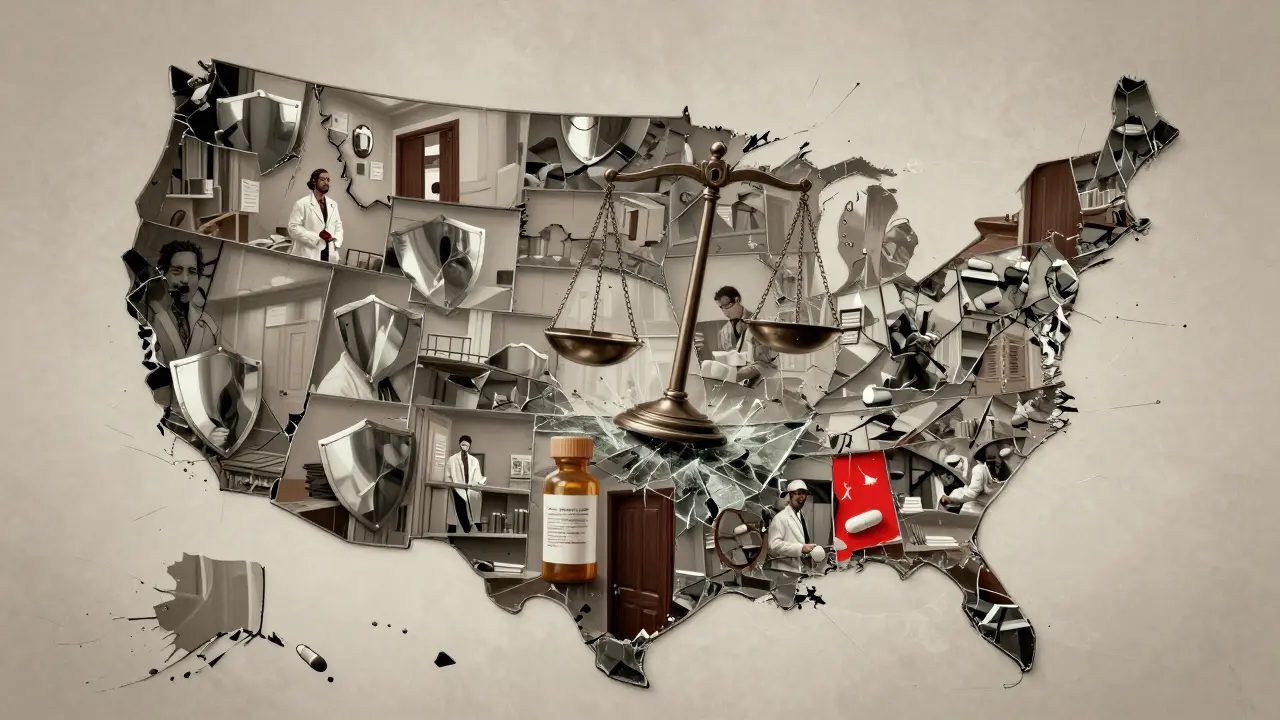
Not all states handle generic drug liability the same way. While the federal preemption doctrine sets a baseline, state laws create significant variations in risk. Understanding your local legal environment is crucial.
| State Approach | Key Feature | Impact on Physician Liability |
|---|---|---|
| Strict Preemption (e.g., Alabama) | Laws explicitly prohibit suing brand-name makers for generic injuries. | High. Physicians bear most of the legal risk. |
| Flexible Interpretation (e.g., Illinois) | Courts reject preemption, ruling generic makers must warn or stop selling dangerous drugs. | Lower. Some liability remains with manufacturers. |
| Notification Requirements | 32 states require pharmacists to notify physicians within 72 hours of substitution. | Medium. Provides documentation trail but doesn’t eliminate risk. |
In Illinois, for example, the appellate court in Guvenoz v. Target Corp. (2016) rejected preemption arguments, stating that generic manufacturers have a duty to "change the formula, change the label, or stop selling the drug altogether" for inherently dangerous medications. This means physicians in Illinois may face lower liability exposure compared to those in states like Alabama, where SB80 (2015) explicitly shields brand-name manufacturers from such claims.
Risk Mitigation: Protecting Yourself Legally
You can’t change Supreme Court rulings, but you can control how you document and communicate with patients. Here are practical steps to reduce your liability exposure:
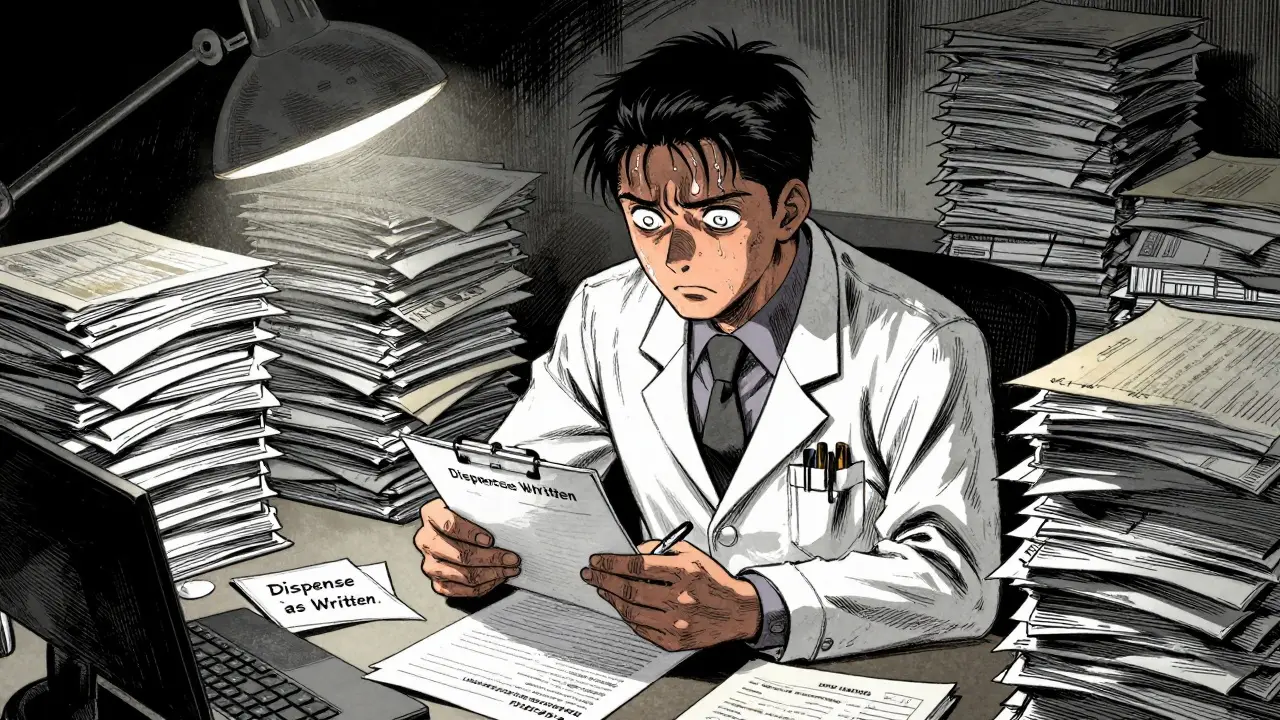
- Use "Dispense as Written" Strategically: For medications with narrow therapeutic indices-such as warfarin, levothyroxine, and certain anti-epileptics-specify "dispense as written" or "do not substitute." This prevents generic substitution in 32 states and ensures consistency in treatment.
- Document Counseling Explicitly: Don’t just write "medication discussed." Use specific language: "I have discussed potential side effects of [medication], including [specific side effects], and advised you to avoid [specific activities] while taking this medication." Studies show this reduces liability exposure by 58%.
- Leverage EHR Tools: Many electronic health record systems, like Epic, now include mandatory "generic substitution counseling" fields. Use them. These tools create an auditable trail that demonstrates due diligence.
- Know Your State’s Notification Laws: In 32 states, pharmacists must notify you within 72 hours if they substitute a generic. Keep records of these notifications. If a patient is harmed, this timeline shows you were informed and had the opportunity to intervene.
The Human Cost: Anxiety and Defensive Medicine
Beyond legal statutes, there’s a human toll. A 2022 AMA survey of 1,200 physicians found that 68% report increased anxiety about prescribing medications that might be substituted with generics. Dr. Robert Chen of Massachusetts General Hospital shared that he now spends an extra 15-20 minutes per visit documenting detailed warnings for every prescription. This adds up to significant time pressure and burnout.
Patient experiences are equally concerning. On healthcare forums, physicians share stories of being sued despite following standard protocols. One PharmD recounted a case where a patient developed Stevens-Johnson syndrome after generic substitution. The manufacturer couldn’t be sued, leaving the prescriber facing legal action alone. These anecdotes highlight a growing disconnect between clinical best practices and legal realities.
Looking Ahead: Will the Law Change?
The legal landscape isn’t static. Congress has examined potential remedies, such as the proposed "Preserving Access to Prescription Medications Act" (H.R. 958), which aims to restore some liability options for patients injured by generic drugs. However, it hasn’t advanced beyond committee consideration. Meanwhile, the Supreme Court declined to hear Colvin v. United States (2022), maintaining the status quo.
However, a glimmer of hope emerged in March 2023 when the 9th Circuit Court of Appeals issued a ruling in Johnson v. Teva Pharmaceuticals. This decision created a narrow exception allowing failure-to-warn claims against generic manufacturers if the brand-name manufacturer updates its label with new safety information that the generic maker fails to adopt. While limited, this suggests courts may begin chipping away at absolute preemption.
For now, physicians must operate under the assumption that liability will continue to rise. Professor Aaron Kesselheim of Harvard Medical School projects a 45% increase in physician-targeted lawsuits involving generic medications by 2027 if federal preemption remains unchanged. Staying informed, documenting thoroughly, and advocating for legislative reform are your best defenses.
Can I be sued if I prescribe a generic drug that harms a patient?
Yes. Due to the Mensing/Bartlett Preemption, generic manufacturers are largely immune from failure-to-warn lawsuits. This shifts legal responsibility to prescribing physicians, who can be held liable if a patient suffers harm and argues the physician failed to adequately counsel or choose an alternative medication.
What is the "Mensing/Bartlett Preemption"?
It is a legal doctrine established by two Supreme Court cases (PLIVA v. Mensing in 2011 and Mutual Pharmaceutical v. Bartlett in 2013). It rules that generic drug manufacturers cannot be sued for failing to warn about side effects because federal law prohibits them from changing drug labels without FDA approval, creating a conflict with state tort laws.
How can I protect myself from liability when prescribing generics?
You can mitigate risk by using "dispense as written" for high-risk medications, documenting specific patient counseling about side effects in your EHR, and keeping records of any pharmacist notifications regarding generic substitutions. Thorough documentation is your strongest legal defense.
Do all states follow the same rules for generic drug liability?
No. While federal preemption applies nationwide, state laws vary. Some states, like Illinois, have rejected strict preemption in certain cases, allowing lawsuits against manufacturers. Others, like Alabama, have passed laws explicitly shielding brand-name makers from liability for generic injuries. Always check your state’s specific regulations.
Should I always prescribe brand-name drugs to avoid liability?
Not necessarily. While prescribing brand-name drugs can reduce liability exposure, it increases costs for patients and insurers. Instead, focus on strategic prescribing: use brand-name or "dispense as written" only for medications with narrow therapeutic indices or high risk profiles, and ensure robust documentation for all prescriptions.