
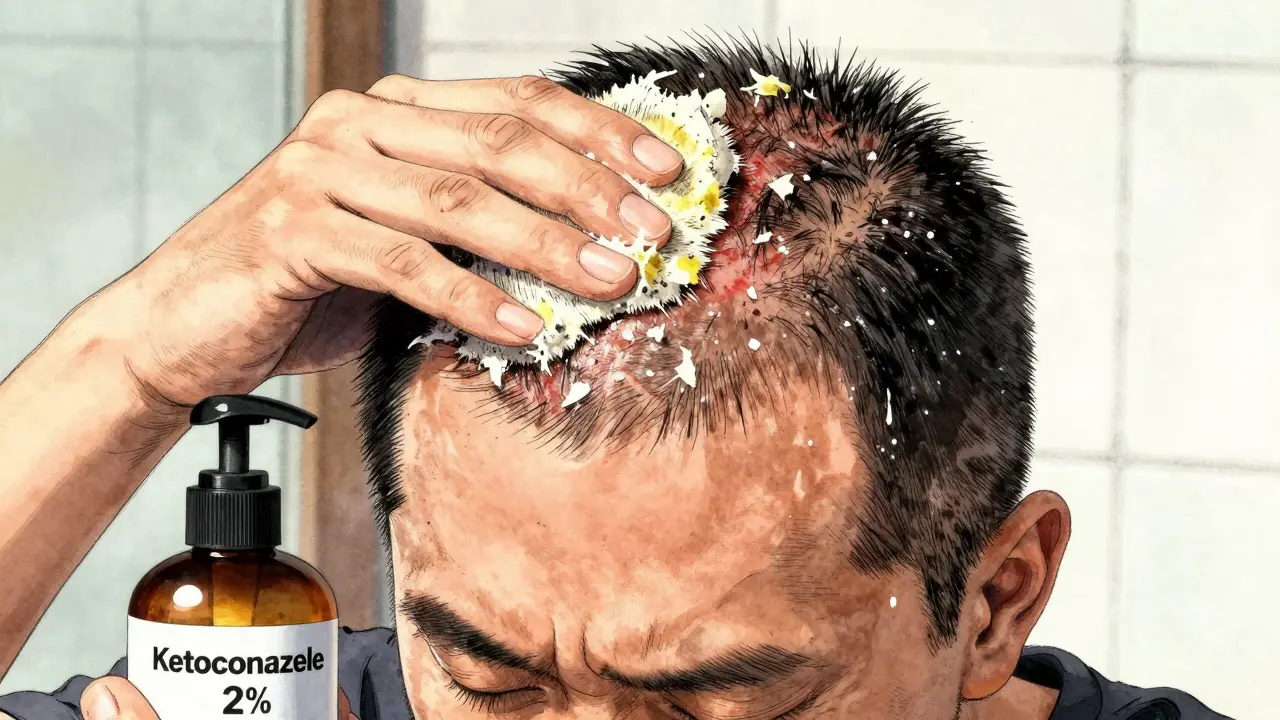
Flakes on your scalp that won’t quit? It’s not just dry skin. If you’ve been scrubbing harder, switching shampoos every week, or wondering why your hair feels like straw after every wash - you might be dealing with seborrheic dermatitis. This isn’t a sign of poor hygiene. It’s a common, chronic skin condition that affects about 50% of adults at some point in their lives. And when it hits the scalp, it’s often mistaken for simple dandruff. But the difference matters - because treating it like regular dandruff usually doesn’t work.
What’s Really Going On With Your Scalp?
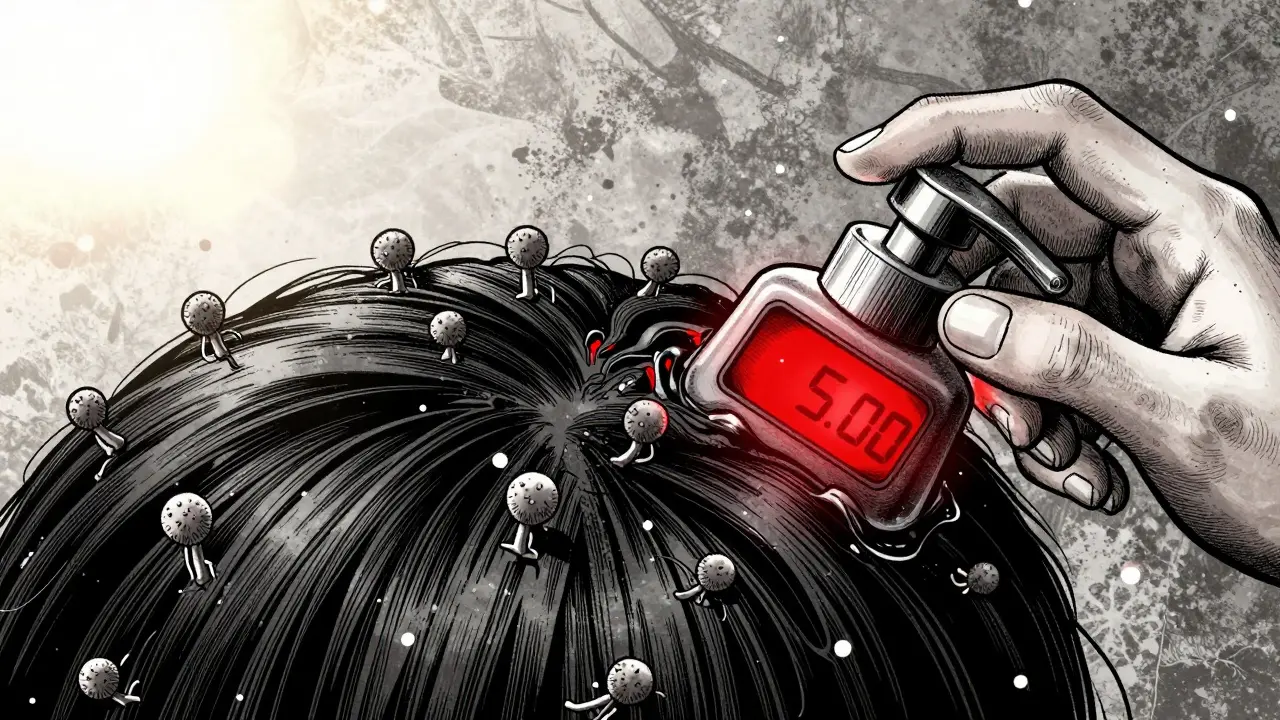
Seborrheic dermatitis isn’t caused by dirt, stress alone, or even bad shampoo. It’s triggered by a yeast called Malassezia - a tiny organism that lives on everyone’s skin. Normally, it’s harmless. But in some people, it overgrows, especially in oily areas like the scalp, eyebrows, or sides of the nose. When this happens, the yeast releases fatty acids that irritate the skin. That irritation causes skin cells to multiply too fast and shed in clumps - which is what you see as white or yellowish flakes.
The condition isn’t contagious. You can’t catch it from your roommate or your dog. And while stress, cold weather, or hormonal changes can make it worse, they don’t cause it. Genetics play a big role too. If your parent had it, you’re more likely to deal with it. People with Parkinson’s disease are at especially high risk - up to five times more likely than the general population.
It’s also seasonal. About 65% of people notice their scalp gets worse in winter. Dry air, indoor heating, and less sunlight all contribute. Sunlight actually helps suppress the yeast, which is why some people see improvement in summer.
Where Else Does It Show Up?
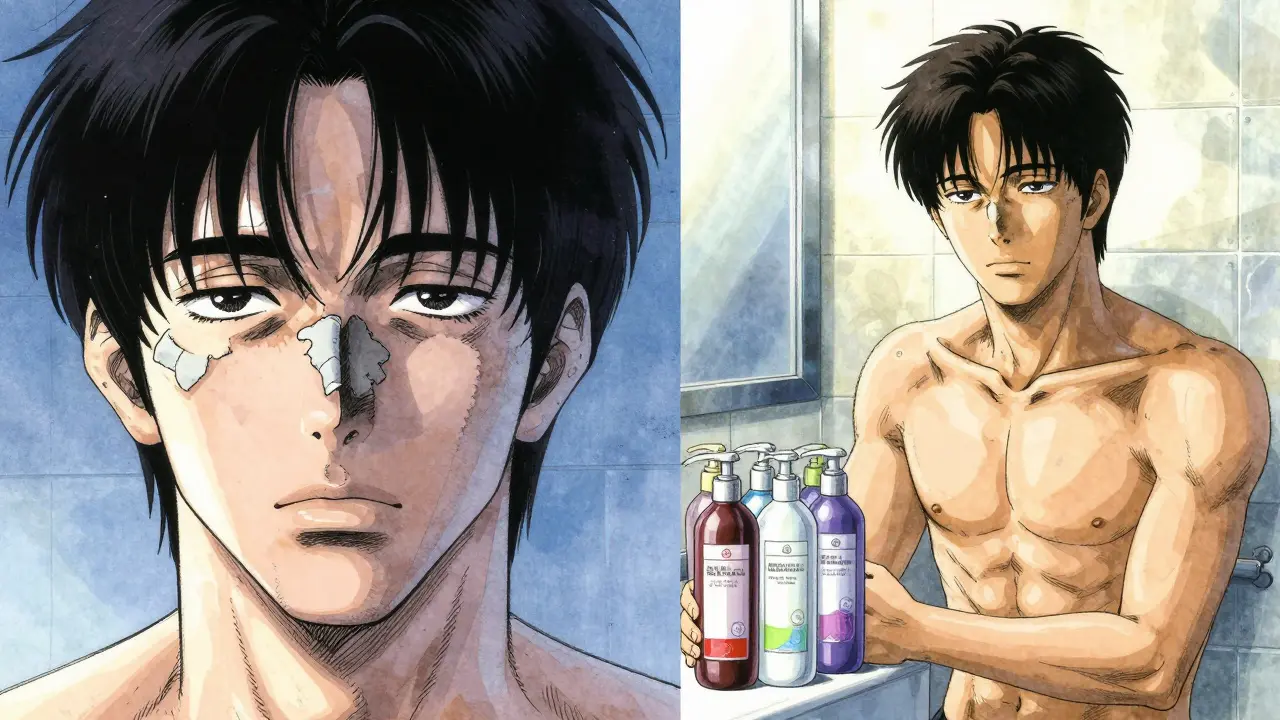
While the scalp is the most common spot - affecting 90% of people with this condition - it doesn’t stop there. You might notice greasy, flaky patches on your eyebrows, behind your ears, around your nose, or even on your chest. In men with beards, it can look like stubborn dandruff in the facial hair. Infants get it too, but in babies, it’s called cradle cap. That’s usually mild and goes away on its own. For adults, though, it’s persistent.
Itching isn’t always present, but when it is, scratching makes it worse. That’s because scratching damages the skin barrier, letting more yeast in and triggering more inflammation. The result? A cycle of flaking, itching, and redness that feels impossible to break.
Medicated Shampoos: The First Line of Defense
Here’s the truth: there’s no cure for seborrheic dermatitis. But there are treatments that work - and medicated shampoos are the most reliable. These aren’t your regular drugstore shampoos. They contain active ingredients that target the yeast and calm the inflammation.
The most effective ones include:
- Ketoconazole (2%) - A powerful antifungal. Often prescribed, but also available over the counter. Works well for moderate to severe cases.
- Zinc pyrithione (1-2%) - Great for mild cases. Also found in many anti-dandruff shampoos. Less irritating, good for sensitive scalps.
- Selenium sulfide (2.5%) - Slows down skin cell turnover and kills yeast. Can stain fabrics, so be careful.
- Ciclopirox (1%) - Antifungal and anti-inflammatory. Often used when other shampoos fail.
- Coal tar (0.5-5%) - Slows skin cell growth. Smells strong, but many people swear by it. Often used in rotation with other shampoos.
- Salicylic acid (1.8-3%) - Helps peel off flakes. Good for thick scales, but can be drying.
Using these right matters more than which brand you pick. Don’t just lather and rinse. You need to leave the shampoo on your scalp for 5 to 10 minutes before rinsing. That’s how long it takes for the active ingredients to work. If you’re rushing through your shower, you’re wasting your time.
How Often Should You Use Them?
Start strong. Use the shampoo every other day, or even daily, until the flaking and redness improve. That usually takes 2 to 6 weeks. Once things calm down, switch to maintenance: once or twice a week. Stop too soon, and the flakes will come back - often within 2 to 4 weeks.
Many people find that rotating shampoos works best. Why? Because the yeast can become less responsive to one ingredient over time. A common strategy is:
- Use ketoconazole twice a week.
- Use zinc pyrithione twice a week.
- Use a coal tar shampoo once a week.
Some people also use a salicylic acid shampoo to loosen thick scales before applying another medicated shampoo. It’s not about finding one magic product - it’s about building a routine that keeps the yeast in check.
What About Topical Creams?
For the scalp, shampoos are the main tool. But if you have flaking on your face - like around your nose or eyebrows - you might need a cream. Over-the-counter hydrocortisone (0.5% or 1%) can help calm redness and itching for short-term flare-ups. But don’t use it daily. Long-term use can thin the skin.
For beard areas, some men find that shaving reduces symptoms by 37%. It removes the environment where yeast thrives. Combine that with a medicated shampoo applied to the skin, and you’ll often see big improvement.
What Doesn’t Work - And What to Avoid
Not all shampoos are created equal. Avoid products with heavy fragrances, sulfates, or alcohol. They dry out your scalp and make irritation worse. Even “natural” shampoos without active ingredients won’t touch the yeast. You can’t out-clarify your way out of this.
Also, don’t expect miracles overnight. The first week of treatment can feel worse. That’s because the yeast is dying off, and your skin is reacting. Flaking might increase before it improves. Stick with it. Most people see real results by week 3.
And yes - your hair might get dry. That’s normal. Use a light, fragrance-free conditioner on the ends, not the scalp. Avoid heavy oils or styling gels. They feed the yeast and clog pores.
When to See a Dermatologist
If you’ve tried 2-3 different medicated shampoos for 8 weeks and still have flaking, redness, or itching, it’s time to see a dermatologist. They can prescribe stronger formulations, like oral antifungals in rare cases, or recommend combination therapies.
Also, if you notice crusty, oozing, or very red patches - especially if they’re painful - it could be infected. That needs medical attention.
Long-Term Management Is the Goal
This isn’t a one-and-done fix. Seborrheic dermatitis is like high blood pressure: you manage it, you don’t cure it. The yeast is always there. Your job isn’t to eliminate it - it’s to keep it under control.
Think of your medicated shampoo like toothpaste. You don’t brush once and call it quits. You do it regularly to prevent buildup. Same here. Keep using your shampoo, even when your scalp looks fine. That’s how you avoid flare-ups.
And remember - it’s not your fault. You didn’t do anything wrong. Stress, weather, hormones, genetics - none of it is under your control. But the routine? That you can control. And that’s enough to take back your confidence.
Is seborrheic dermatitis the same as dandruff?
In adults, seborrheic dermatitis on the scalp is often called dandruff - but not all dandruff is seborrheic dermatitis. Regular dandruff is mild flaking without redness or itching. Seborrheic dermatitis includes inflammation, greasy scales, and sometimes red patches. If your flakes are thick, oily, and accompanied by redness, it’s likely seborrheic dermatitis - and needs stronger treatment than regular anti-dandruff shampoos.
Can I use medicated shampoo every day?
Yes, during the initial treatment phase - especially if your scalp is very flaky or itchy. Daily use helps bring symptoms under control faster. Once things improve, reduce frequency to once or twice a week for maintenance. Overuse can dry out your scalp, so adjust based on how your skin responds.
Why does my scalp get worse in winter?
Cold, dry air strips moisture from your skin and reduces sunlight exposure. Sunlight helps suppress the Malassezia yeast, so less sun means more yeast activity. Indoor heating also dries the scalp, making flaking worse. That’s why many people see flare-ups between November and March.
Do I need to stop using hair products?
You don’t need to quit everything, but avoid heavy oils, gels, and sprays that sit on your scalp. These feed the yeast and block the active ingredients in your shampoo. Stick to lightweight, water-based products. Wash them out thoroughly before applying medicated shampoo.
Will this ever go away completely?
For most people, seborrheic dermatitis is a lifelong condition with periods of improvement and flare-ups. It doesn’t disappear on its own. But with consistent use of medicated shampoos and smart lifestyle adjustments - like managing stress and avoiding triggers - you can keep it under control for months or even years at a time.
Can stress cause seborrheic dermatitis?
Stress doesn’t cause it, but it’s one of the top triggers for flare-ups. About 60% of people report worse symptoms during stressful periods. That’s because stress affects your immune system and skin barrier, making it easier for the yeast to trigger inflammation. Managing stress won’t cure it, but it can reduce how often it comes back.

Sam Pearlman
February 18, 2026 AT 05:17Steph Carr
February 18, 2026 AT 11:28Brenda K. Wolfgram Moore
February 19, 2026 AT 12:31Oliver Calvert
February 20, 2026 AT 11:34Kancharla Pavan
February 22, 2026 AT 03:40PRITAM BIJAPUR
February 22, 2026 AT 06:52Dennis Santarinala
February 24, 2026 AT 03:18Haley DeWitt
February 24, 2026 AT 21:12