
Steroid Psychosis Risk & Protocol Assessor
Patient Data Entry
Calculated Equivalency
Prednisone Equiv.
Risk Stratification
--
Clinical Management Protocol
Watch for "Red Flag" Progression
Symptoms typically appear within first 72 hours:
- Days 1-2: Restlessness, Sleep disruption
- Days 3-5: Agitation, Irrational anger
- Days 5+: Full psychosis, Delusions, Hallucinations
When Steroids Trigger a Mental Crisis
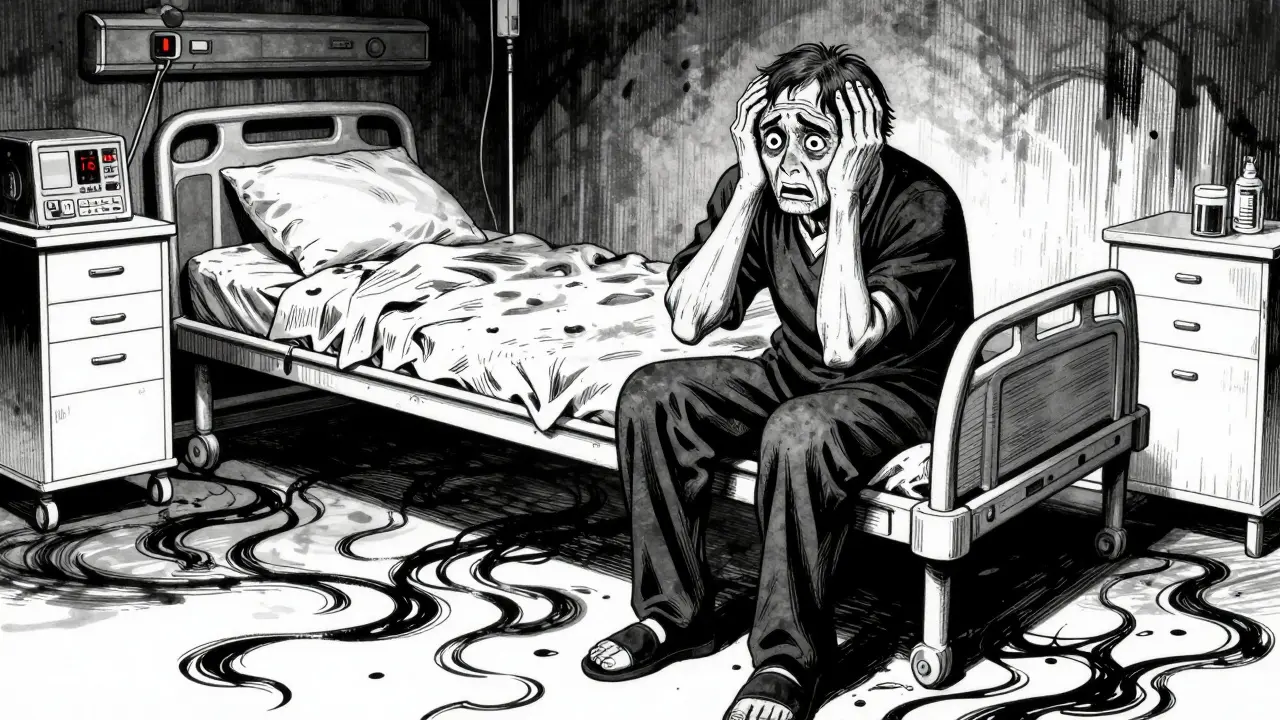
Steroid-induced psychosis strikes suddenly in 18.4% of patients taking high-dose prednisone (>80 mg/day). Imagine a 55-year-old rheumatoid arthritis patient on dexamethasone becoming convinced hospital staff are stealing their medical charts within 72 hours of starting treatment. This isn't paranoia-it's a documented psychiatric emergency requiring immediate action.
Corticosteroids save lives in autoimmune crises but disrupt brain chemistry. Early detection prevents dangerous escalations. Let's cut through medical jargon: what signals demand ER intervention, how to stabilize safely, and why 92% of cases resolve when caught early.
Recognizing the Red Flags
Corticosteroid exposure typically triggers symptoms within the first five days of treatment initiation. Watch for these escalating patterns:
- Day 1-2: Restlessness, sleep disruption, confusion
- Day 3-5: Agitation, irrational anger, memory lapses
- Day 5+: Full psychosis-delusions, hallucinations, mania
A 2019 meta-analysis reveals stark dose dependence: 4.6% incidence at 40 mg prednisone/day vs 18.4% above 80 mg. Risk spikes further in patients with prior mood disorders, rapid dose escalation, or IV bolus administration.
The Emergency Protocol
How do I distinguish steroid psychosis from other causes?
DSM-5 mandates ruling out 10+ alternatives before diagnosis: electrolyte imbalances, hypoglycemia, drug interactions, infections, and primary psychotic disorders. Critical labs: serum glucose, sodium/potassium, BUN, TSH, and toxicology screen.
Emergency teams follow four non-negotiable steps:
- Behavioral de-escalation: Low-stimulation room, trained staff presence
- Rapid medication history: Confirm timing between steroid initiation and symptom onset
- Rule out mimics: Targeted lab testing within 60 minutes
- Taper immediately: Reduce to <40 mg prednisone equivalents unless medically contraindicated
| Medication | Starting Dose | Daily Max | Key Monitoring |
|---|---|---|---|
| Olanzapine | 2.5 mg oral | 20 mg/day | Glucose levels |
| Risperidone | 0.5 mg IM | 4 mg/day | Falls risk assessment |
| Haloperidol | 0.5 mg slow IV | 1 mg/day | QTc interval monitoring |
Low-dose principles matter: 2023 ACEP guidelines recommend doses 50-75% lower than standard psychosis protocols. Overmedication risks respiratory depression, especially with benzodiazepines.

Tapering Without Complications
Stabilization hinges on careful dose reduction. Sudden withdrawal from chronic therapy precipitates adrenal insufficiency-a lethal trap. Dr. Laura Grey (Massachusetts General Hospital) notes: "The 92% resolution rate comes from balanced tapering over 7-14 days." Key strategies:
- Bridge therapy: Add hydrocortisone 20 mg/day initially during taper
- Monitor cortisol: Morning serum levels weekly
- Mood tracking: Daily PHQ-9 assessments until stable
When full discontinuation fails (e.g., lupus nephritis requiring sustained immunosuppression), add lithium 300-450 mg/day-but only after psychiatry consultation due to narrow therapeutic index.
Why Guidelines Get Ignored
A shocking 2022 survey revealed only 43% of ER physicians followed taper protocols. Why? Fear of uncontrolled inflammation outweighs psychiatric risks. Dr. Steven Dubovsky explains: "Clinicians see visible organ damage, not hidden neural pathways." This bias costs lives-untreated cases escalate to violence or self-harm in 11% of incidents.

Prevention Is Possible
Newer tools promise proactive care. The American Psychiatric Association launches its Decision Support Tool in Q2 2025, integrating three variables: cumulative steroid dose, baseline neurocognitive scores, and genetic markers (NCT04876321). Meanwhile, clinicians can implement simple safeguards:
- Patient screening: Mood disorder history checklist before starting therapy
- Start low/go slow: Gradual dose increases with mandatory mental health checks
- Family education: Recognize early agitation as medical-not behavioral-crisis
| Corticosteroid | Equivalent Potency | Psychosis Incidence Rate |
|---|---|---|
| Prednisone | 1x reference | Baseline risk |
| Dexamethasone | 25x potency | 3.2x higher risk |
| Betamethasone | Similar to dexamethasone | High risk at >4 mg/day |
Aftermath Care
Post-psychosis recovery requires dual vigilance. Physical rehabilitation addresses steroid myopathy while psychiatric follow-up monitors relapse risk. Document everything: patients often face disability claims needing precise incident records. Most regain baseline cognition within 6 weeks when steroids normalize, but 7% retain subtle attention deficits months later.
Quick Reference
Keep this emergency card in your pocket:
- Call 911 for aggression or suicide threats
- Never restrain physically-use chemical sedation first
- Always obtain pre-treatment weight/blood pressure baselines
Can mild steroid psychosis go unnoticed?
Yes-subtle irritability or insomnia often precedes acute episodes. Family members report noticing changes first. Always ask caregivers: "Has their personality shifted since starting steroids?"
Do inhalers cause steroid psychosis?
Inhaled fluticasone carries minimal risk below 1000 mcg/day. Systemic absorption becomes problematic only with chronic high-dose regimens exceeding asthma guidelines.
Is long-term lithium safe with steroids?
Only under strict monitoring. Requires monthly kidney function tests and blood lithium levels-never combine with NSAIDs without specialist oversight.
What about pediatric steroid psychosis?
Children show earlier mania signs: hyperactivity, school refusal, impulsive aggression. Dosing must account for lower metabolic clearance rates compared to adults.
Does gender affect susceptibility?
Women demonstrate 1.8x higher mania susceptibility, possibly linked to estrogen-glucocorticoid receptor interactions. Men more commonly present with severe depressive features.