Every day, roughly 165 children under the age of five end up in emergency rooms because they swallowed something they shouldn't have. Most of these incidents involve medication. It is not always a case of a toddler wandering into an unlocked cabinet while parents are asleep. Often, it happens during routine moments-when a parent is handing out vitamins or refilling a prescription bottle. The gap between 'I am watching them' and 'they just grabbed that' is often less than two minutes. Understanding how to store medications away from children requires more than just buying a plastic lock; it demands a shift in mindset regarding accessibility and habit.
The core principle guiding modern safety protocols is simple yet powerful: keep medicines up and away. This phrase comes from the CDC's long-running safety initiative, but its application goes beyond mere height. It involves creating physical barriers, managing behavioral routines, and understanding that child-resistant packaging is not foolproof. Let’s look at exactly how to secure your home against accidental ingestion.
The Myth of Child-Resistant Packaging
Many parents rely entirely on the safety caps provided by pharmacies. These caps are designed to withstand manipulation by toddlers, but they are not impenetrable. Testing protocols require these containers to resist opening by children aged 42 to 51 months for about ten minutes. However, real-world data tells a different story. Research indicates that half of all children can open standard safety caps within one minute if left unsupervised. Furthermore, once a cap is opened, many adults do not close it properly, rendering the safety feature useless.
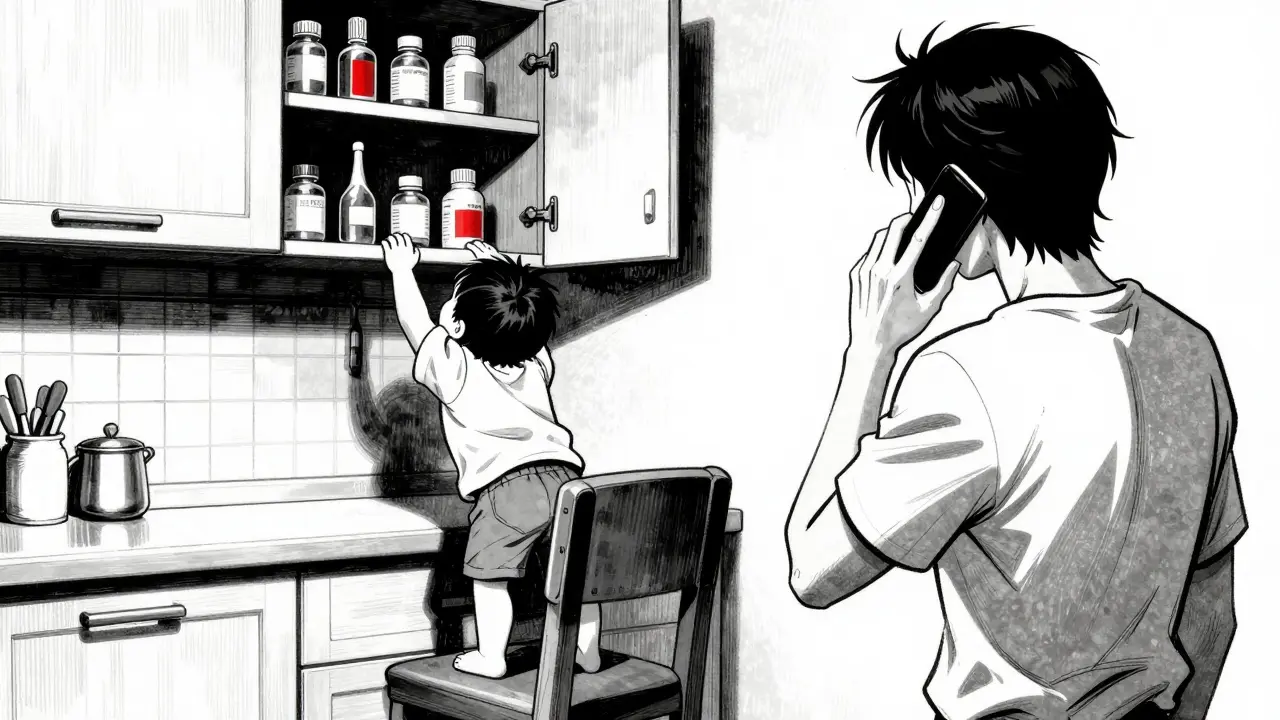
Consider this scenario: you pop off a cap to give your child a fever reducer, set the bottle down on the counter to answer a phone call, and forget to twist the cap back tightly. In those few seconds, a curious two-year-old can access the contents. This is why relying solely on packaging is risky. You need a secondary layer of protection. A locked container provides a barrier that no amount of twisting or pulling will bypass.
| Storage Method | Effectiveness Rate | Risk Factor |
|---|---|---|
| Locked Cabinet/Safe | 98% | Low (if key is hidden) |
| High Shelf (Unlocked) | 72% | Medium (climbing risk) |
| Child-Resistant Cap Only | 50% | High (cap may be loose) |
| Weekly Pill Organizer | 45% | Very High (looks like candy) |
Physical Barriers: Where and How to Store
If you want to stop access, you must remove visibility and reach. The 'Up and Away' guideline suggests storing medications in cabinets or drawers positioned at or above counter height, which is typically 36 inches or higher. However, height alone is not enough. Toddlers are surprisingly adept at using chairs, boxes, or even furniture as stepping stones. Therefore, the ideal storage location is a locked cabinet located in a room where young children rarely play, such as a bedroom closet or a high kitchen cupboard.
Avoid the bathroom. It sounds convenient since that is where we often take our morning pills, but bathrooms are prime targets for exploration. They are small, enclosed spaces with plenty of surfaces to climb on. Additionally, humidity can degrade certain medications over time. Instead, choose a dry, cool area. For refrigerated items like insulin, ensure they are stored in the back of the fridge, behind other food items, and never near the door where temperatures fluctuate.
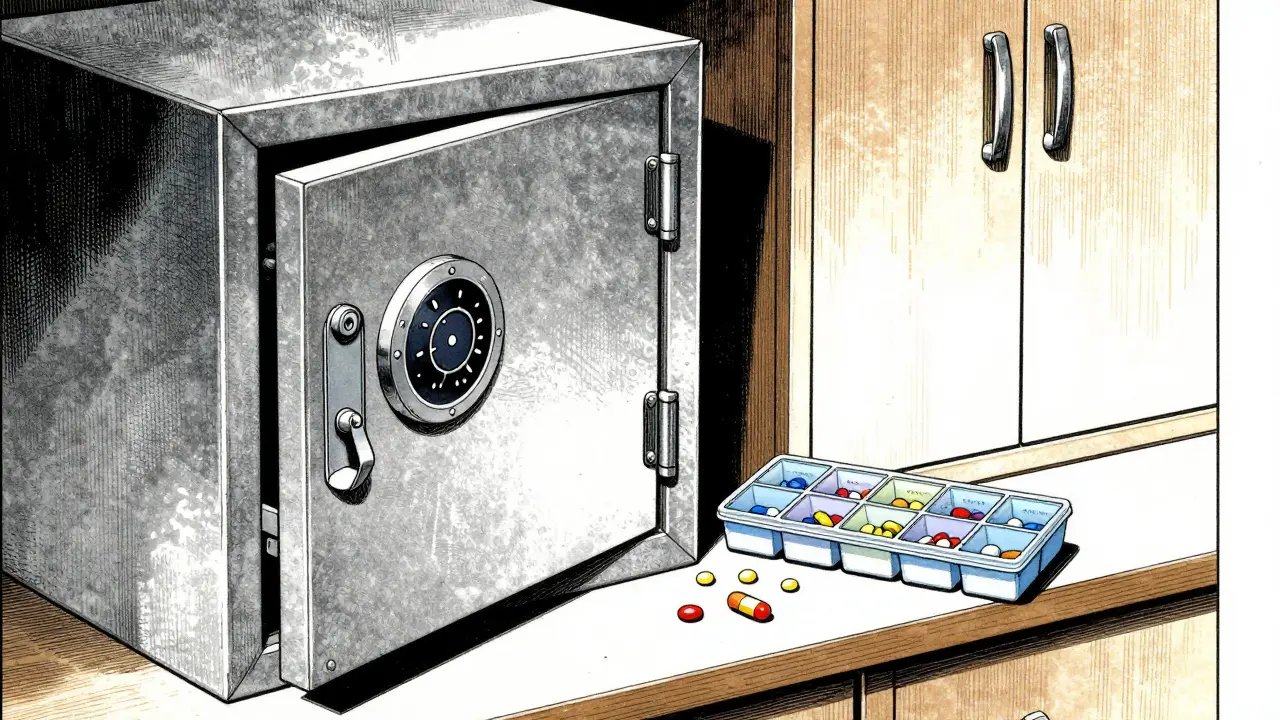
For maximum security, consider specialized medication safes. These units, often made of steel or hardened plastic, range in price from $45 to $120. Some models feature biometric locks, which offer quick access for adults (around 5 to 8 seconds) while remaining completely inaccessible to children. While traditional key locks are faster to open (2 to 3 seconds), they require you to hide the key securely. If you use a key, do not leave it in the lock or attached to a nearby belt loop. Hide it in a separate, secure location known only to responsible adults.
The Two-Minute Rule and Behavioral Habits
Storage is only part of the equation. Behavior plays a huge role in safety. The CDC’s 'Two-Minute Rule' states that medications should never remain unsecured for more than 120 seconds during administration. This means that when you take a pill organizer out of its locked box, or open a prescription bottle, you must administer the dose immediately and then return the container to its secure place. Do not leave bottles on counters, nightstands, or dining tables.
This rule also applies to travel. Incidents spike when families are on the move because normal routines break down. When traveling, use a portable lockbox that fits inside a hotel safe. Never leave medications in overnight bags or suitcases within reach of children. There have been documented cases of toddlers accessing opioids from unsecured luggage, leading to severe hospitalizations. Treat your travel kit with the same rigor as your home storage system.
Another critical habit is avoiding comparisons between medicine and candy. Experts warn that telling a child 'this tastes like candy' creates dangerous associations. Chewable medications, such as Tums or aspirin, often resemble popular sweets like SweeTarts or Skittles. This visual similarity contributes to a significant portion of accidental ingestions among children aged 2 to 4. Always refer to medications as 'medicine' and emphasize that they are only taken when an adult gives them.
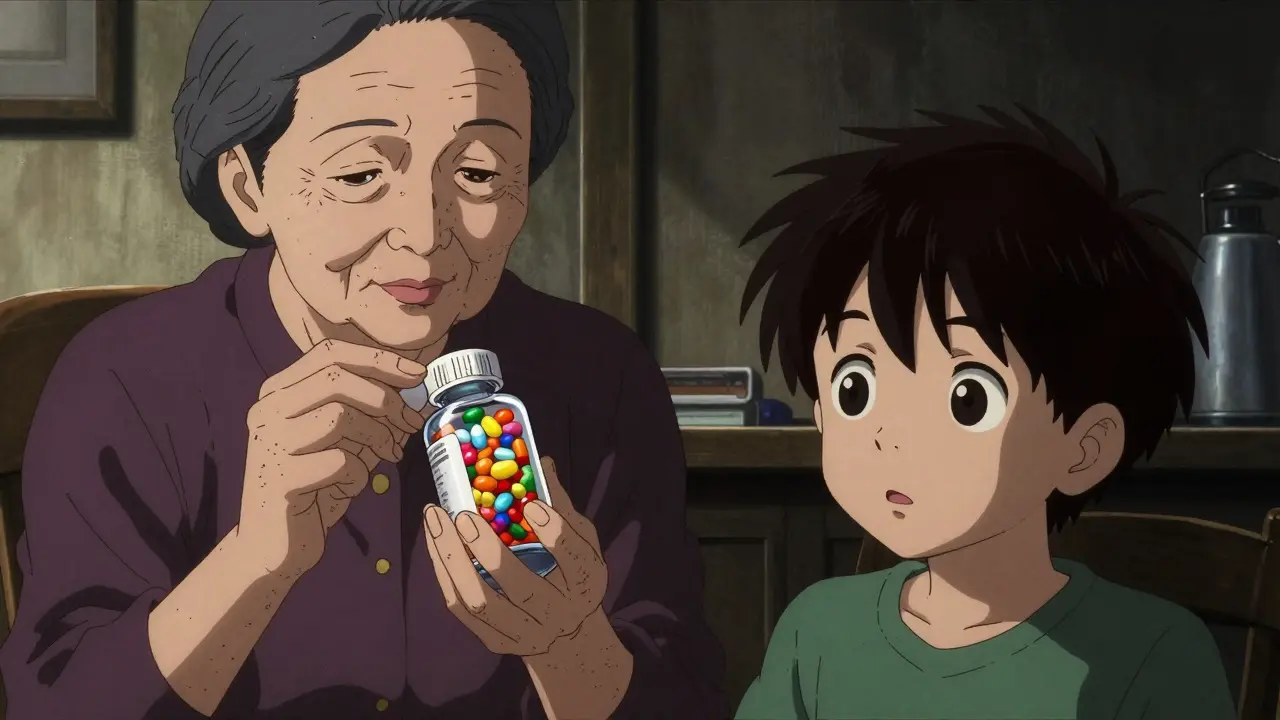
Special Considerations for Grandparents and Visitors
A surprising number of accidental ingestions occur in grandparents' homes. Surveys show that nearly 76% of grandparents fail to lock up medications when grandchildren visit, often believing their older grandchildren 'know better.' This assumption is risky. Even teenagers can misuse prescription drugs if they are easily accessible. Households with adolescents should implement monitored systems where teens document doses with adult verification.
If you host children regularly, treat their visits as a trigger to reset your storage habits. Ensure that any medications you take daily are locked away before the children arrive. Weekly pill organizers, which are common among older adults, are particularly dangerous because they lack child-resistant features and sit openly on counters. Consider switching to a locked weekly dispenser or keeping the main supply in a secure location and transferring doses manually.
Disposal and Emergency Preparedness
Safety also extends to what you do with unused medications. Flushing drugs is generally discouraged due to environmental impact, unless specifically instructed by a label. Instead, mix unwanted pills with an undesirable substance like coffee grounds or cat litter in a sealed bag before throwing them in the trash. Many pharmacies now offer permanent disposal kiosks, providing a safe and easy option for getting rid of expired prescriptions.
Finally, prepare for emergencies. Keep a list of all medications, dosages, and your doctor’s contact information in your locked storage unit or nearby. If an ingestion occurs, call Poison Control immediately. In the US, the number is 1-800-222-1222. Having this information readily available can save crucial minutes during a crisis. Remember, the goal is not just to prevent accidents but to respond effectively if they happen despite your best efforts.
Is a high shelf enough to keep medications safe?
No, a high shelf is not sufficient on its own. While storing items above 36 inches helps, toddlers can climb using chairs or furniture. Locked cabinets provide 98% effectiveness compared to 72% for high shelves alone. Always combine height with a physical lock.
How quickly can a child open a child-resistant cap?
Research shows that 50% of children can open standard safety caps within one minute if unsupervised. These caps are designed to delay access, not prevent it entirely. They should never be your only line of defense.
What is the 'Two-Minute Rule'?
The Two-Minute Rule states that medications should never remain unsecured for more than 120 seconds during administration. Open the container, give the dose, and immediately return it to its locked storage. Do not leave bottles on counters or tables.
Where should I store refrigerated medications?
Store refrigerated medications like insulin in the back of the fridge, behind other food items. Avoid the door, where temperature fluctuations are greater. Ensure the fridge itself is out of reach or that the child cannot access the interior without help.
Why are weekly pill organizers dangerous?
Weekly pill organizers often lack child-resistant features and are frequently left in plain sight on counters. They also make medications look like colorful candies, increasing the risk of accidental ingestion, especially in grandparents' homes.
How should I dispose of unused medications?
Mix unused pills with an undesirable substance like coffee grounds or cat litter in a sealed bag before discarding in the trash. Alternatively, use permanent disposal kiosks available at many pharmacies. Avoid flushing unless specifically instructed.