
Dong Quai & Warfarin Safety Checker
URGENT WARNING
Dong Quai combined with warfarin or other blood thinners can cause life-threatening bleeding. INR can increase by 82% or more, potentially leading to hospitalization.
If you're taking warfarin to prevent blood clots, and you're also using Dong Quai for menopause, cramps, or general "women's health," you're playing with fire. Not metaphorically. Literally. This isn't a "maybe" or "could be risky." It's a well-documented, potentially life-threatening combo that has sent people to the ER with uncontrolled bleeding. And yet, most people have no idea it’s happening.
What Is Dong Quai?
Dong Quai, or Angelica sinensis is a root used in Traditional Chinese Medicine for over 2,000 years. It’s often called "female ginseng" because it’s commonly taken for menstrual pain, PMS, and menopausal symptoms. You’ll find it in teas, capsules, tinctures, and even some beauty products marketed for hormonal balance. It’s sold in health food stores, online retailers, and Chinese herbal shops - often labeled as "natural" or "safe." But "natural" doesn’t mean harmless, especially when mixed with prescription drugs.
The active compounds in Dong Quai include coumarins like ferulic acid and osthole. These aren’t just random plant chemicals. They directly interfere with how your blood clots. In fact, warfarin itself is a synthetic version of a coumarin compound originally discovered in spoiled sweet clover. So when you take Dong Quai, you’re essentially adding more of the same kind of substance your body is already trying to regulate with a precise dose of warfarin.
How Warfarin Works - And Why It’s So Sensitive
Warfarin is one of the most prescribed blood thinners in the world. Over 30 million prescriptions are filled in the U.S. each year. It works by blocking vitamin K, which your liver needs to make clotting factors. Too little, and you bleed. Too much, and you clot. The sweet spot - your target INR (International Normalized Ratio) - is usually between 2 and 3. A single point above that, and your risk of bleeding jumps sharply.
Here’s the catch: warfarin has a narrow therapeutic window. That means even small changes in how your body processes it can push you out of safety. And Dong Quai doesn’t just nudge the needle - it slams it.
The Science Behind the Interaction
The interaction between Dong Quai and warfarin isn’t just theoretical. It’s been observed in animals, in test tubes, and in real patients.
First, Dong Quai has its own antiplatelet effects. Platelets are the sticky cells that start clotting. Warfarin doesn’t touch them. Dong Quai does. So you’re getting a double hit: one drug slows down clotting proteins, the other slows down platelets. Together? It’s like turning off both brakes and steering on a car going downhill.
Second, some studies suggest Dong Quai might inhibit liver enzymes - specifically CYP2C9 and CYP3A4 - that break down warfarin. If those enzymes are blocked, warfarin sticks around longer. That means your dose, which was perfectly balanced last week, suddenly becomes too strong. One case study in the Journal of Clinical Pharmacy and Therapeutics documented a patient whose INR jumped from 2.8 to 5.1 after starting Dong Quai. That’s a 82% increase in bleeding risk. She ended up in the hospital.
And it’s not rare. A 2013 review in PLOS ONE found that Dong Quai was among the top 10 herbs with the most documented interactions with anticoagulants. Out of 306 verified herb-drug interactions involving blood thinners, nearly 85% were rated moderate to severe. Dong Quai was right there.
What the Experts Say
The Cleveland Clinic, University of California San Diego, Memorial Sloan Kettering, and the American Heart Association all agree: avoid Dong Quai if you’re on warfarin.
The Cleveland Clinic’s 2022 Anticoagulation Guidelines say it plainly: "It is recommended to avoid Dong Quai in warfarin-treated patients due to lack of data." That’s not a "be careful." That’s a "don’t do it."
Dr. Catherine Ulbricht, a top clinical pharmacist and co-founder of the Natural Standard Research Collaboration, says: "The additive antiplatelet effects of Dong Quai could push a patient’s INR from a therapeutic range of 2.5 to potentially dangerous levels above 4.0." And that’s not speculation. She’s seen it happen.
Even the American College of Cardiology’s 2023 guidelines list Dong Quai in the same risk category as ginkgo, St. John’s wort, and garlic - all substances known to dangerously boost bleeding risk.
Real Patient Stories - Because Numbers Don’t Tell the Whole Story
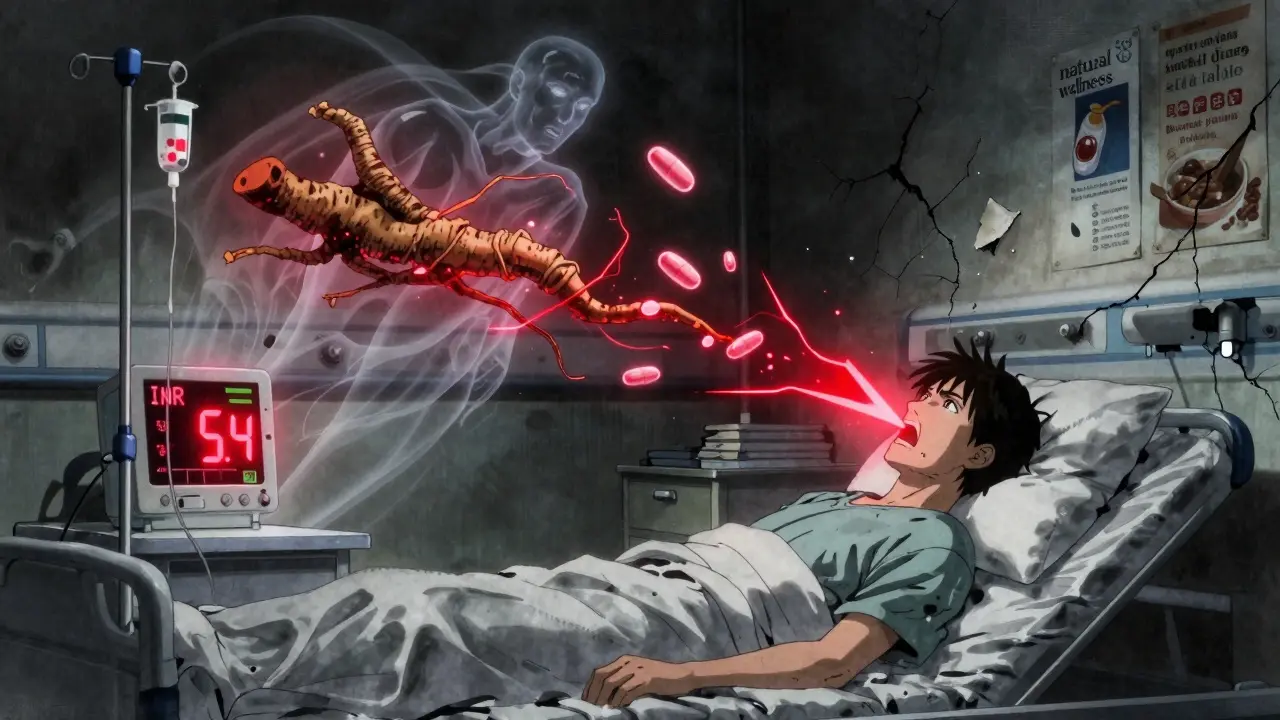
Reddit’s r/anticoagulants subreddit has dozens of threads where people share their near-misses. One user wrote: "I started Dong Quai for hot flashes. Two weeks later, I started bruising like crazy. My INR was 5.4. They told me I was one nosebleed away from a stroke." Another said: "My doctor didn’t even ask about supplements. I only found out after my INR spiked. Now I avoid everything."
A 2022 survey by the National Center for Complementary and Integrative Health found that 68% of people on warfarin had no idea herbal supplements could interfere with their medication. But 82% said they’d stop immediately if warned. That’s the problem: they’re not being warned.
Why This Isn’t Just About "One Pill"
Dong Quai isn’t standardized. One bottle might have 10 mg of active coumarins. Another might have 80 mg. The United States Pharmacopeia found up to an 8-fold difference in potency between brands. So even if you think you’re being "careful" by taking a low dose, you have no way of knowing what you’re actually getting.
And it’s not just Dong Quai. Many herbal products contain multiple ingredients. A "women’s balance" capsule might have Dong Quai, black cohosh, and red clover - all of which can affect estrogen and clotting. You’re not just adding one risk. You’re stacking them.
What Should You Do?
If you’re on warfarin:
- Stop taking Dong Quai immediately. Don’t wait. Don’t "try a little." Just stop.
- Let your doctor or anticoagulation clinic know you were using it. They need to check your INR within 3-5 days of stopping.
- Don’t assume "natural" equals safe. Just because it’s sold in a health food store doesn’t mean it’s harmless.
- If you’re using it for menopause or cramps, ask your doctor about safer alternatives. There are FDA-approved options for hot flashes, like low-dose estrogen patches or non-hormonal meds like gabapentin.
- Keep a written list of every supplement, herb, tea, and OTC product you take. Bring it to every appointment.
If you’re not on warfarin but thinking of starting Dong Quai: ask your doctor first. Especially if you have a history of bleeding, liver disease, or are taking any other medications - even aspirin or ibuprofen.
The Bigger Picture
This isn’t just about one herb and one drug. It’s about how we think about medicine. We treat prescription drugs like precision tools - and herbal supplements like harmless snacks. But the body doesn’t care what label something has. It reacts to chemistry.
The global market for Dong Quai is growing. Sales hit $342 million in 2022. Yet, the FDA only received 142 adverse event reports involving herbal products and anticoagulants between 2018 and 2022 - and Dong Quai was only in 8% of those. That’s not because it’s safe. It’s because most people don’t connect the dots.
Regulators are catching up. The European Medicines Agency now requires warning labels on all Dong Quai products sold in the EU - effective January 2025. In the U.S., there’s no such requirement. The Dietary Supplement Health and Education Act of 1994 lets these products fly under the radar.
So if you’re on warfarin, you can’t rely on labels. You can’t rely on store clerks. You can’t rely on Google. You have to rely on your doctor - and you have to be the one to bring it up.
Can I take Dong Quai if I’m not on warfarin but taking other blood thinners?
No. Dong Quai interacts with all anticoagulants and antiplatelet drugs, not just warfarin. This includes apixaban (Eliquis), rivaroxaban (Xarelto), dabigatran (Pradaxa), clopidogrel (Plavix), and even daily aspirin. The risk of bleeding is real regardless of the drug. Always check with your provider before adding any herbal supplement.
How long after stopping Dong Quai does the risk go away?
It can take up to 7-10 days for Dong Quai to fully clear from your system. During that time, your INR may still be elevated. That’s why doctors recommend checking your INR 3-5 days after stopping - and again at 7-14 days - to make sure it’s returning to your target range. Don’t assume it’s safe just because you stopped taking it.
Is there a safe dose of Dong Quai if I’m on warfarin?
There is no proven safe dose. Even small amounts have been shown to raise INR levels. Because Dong Quai products vary wildly in potency, and because individual responses differ, there’s no way to predict how your body will react. The only safe approach is complete avoidance.
What are the signs I might be bleeding too much?
Watch for: unexplained bruising, nosebleeds that won’t stop, blood in urine or stool, unusually heavy periods, headaches or dizziness (which could signal brain bleeding), or gums that bleed easily. If you notice any of these, get your INR checked right away. Don’t wait for symptoms to get worse.
Why do doctors not always warn patients about this?
Many doctors don’t ask about supplements. Patients don’t always volunteer the information. A 2022 survey found that nearly 70% of patients on warfarin didn’t know herbal supplements could interfere. But the risk is real, and the consequences can be deadly. It’s up to you to bring it up. Keep a list. Ask specifically: "Is this supplement safe with my blood thinner?"

Davis teo
February 19, 2026 AT 13:05Bro. I took Dong Quai for 3 months for my cramps. One morning I woke up with a black eye I didn’t earn. Went to the doc-INR was 5.9. They pumped me full of vitamin K like I was a vampire at dawn. Now I just drink chamomile tea and pretend I’m a zen monk. Don’t be me.
Chris Beeley
February 20, 2026 AT 20:18Let me unpack this with the precision of a neurosurgeon dissecting a synapse. The pharmacokinetic interplay between Angelica sinensis and warfarin isn't merely an interaction-it’s a biochemical cascade of regulatory failure. The coumarin derivatives in Dong Quai-particularly osthole and ferulic acid-act as competitive inhibitors of CYP2C9 and CYP3A4 isoforms, thereby suppressing hepatic metabolism of S-warfarin, the more potent enantiomer. Concurrently, its antiplatelet activity synergizes with warfarin’s anticoagulant effect, effectively creating a pharmacological double-blind grenade. The clinical implications? A 2013 PLOS ONE meta-analysis of 306 herb-drug interactions identified Dong Quai as the 3rd most common culprit in major hemorrhagic events among anticoagulated patients. And yet, the FDA continues to classify it as a dietary supplement. This isn’t negligence. It’s a systemic betrayal of public health.
Jeremy Williams
February 21, 2026 AT 09:31I’ve worked in integrative medicine for over 15 years. I’ve seen patients stop statins for turmeric, insulin for cinnamon, and warfarin for... well, you name it. The tragedy isn’t that people take supplements-it’s that we’ve created a culture where ‘natural’ means ‘unregulated’ and ‘unmonitored.’ We need to stop treating herbs like candy and start treating them like medicine. Because they are. And if you’re on warfarin? You don’t get to pick and choose which rules apply to you. Your liver doesn’t care if it’s labeled ‘organic’.
Maddi Barnes
February 21, 2026 AT 18:47Oh honey. You took Dong Quai because ‘it’s natural’? Sweetie, if ‘natural’ meant safe, we’d all be snorting foxglove for heart health. 😅 I once had a client who thought ‘herbal’ meant ‘no side effects.’ She ended up in the ER with a subdural hematoma. Now she takes a low-dose estrogen patch and says ‘thank you’ to science every morning. 🙏
PS: If your herbalist says ‘it’s fine’-run. They’re probably selling it.
Jonathan Rutter
February 22, 2026 AT 11:38Look. I don’t care if it’s from China, India, or your grandma’s garden. If it’s a plant and you’re on warfarin, you’re playing Russian roulette with your internal organs. I’ve seen too many people think ‘I’m healthy, I’m young, I’ll be fine.’ Then they start bleeding out in a parking lot. No one talks about this because no one wants to be the buzzkill. But someone has to be. So here I am. Stop. Just stop. Your hot flashes aren’t worth a stroke.
Jana Eiffel
February 23, 2026 AT 03:04The regulatory vacuum surrounding herbal supplements in the United States represents a profound epistemological failure in public health policy. The Dietary Supplement Health and Education Act of 1994 established a framework predicated on post-market surveillance rather than pre-market validation, thereby shifting the burden of risk from manufacturers to consumers. This paradigm is not merely outdated-it is ethically indefensible when applied to pharmacologically active agents such as Dong Quai, which exhibit documented, dose-dependent interactions with life-sustaining medications. The absence of mandatory labeling, standardized dosing, or physician notification protocols constitutes a structural vulnerability in the American healthcare ecosystem.
aine power
February 24, 2026 AT 23:37Don’t take it. Done.
Irish Council
February 25, 2026 AT 03:55They say natural but they dont say who owns the patent on Dong Quai extract. Big Pharma lets it fly because they know if you bleed out on a herbal mix they dont get sued. Meanwhile your doc is too busy to ask. Thats not luck thats a system.
Robin bremer
February 26, 2026 AT 10:19Bro i took dong quai for like 2 weeks and i started bleeding from my gums like a horror movie. went to the er and the nurse looked at me like i just told her i bathed in garlic. "you took what?" i said "for my vibes?" lol. they gave me vitamin k and a lecture. now i just do yoga and cry into my chamomile. 🙃
Jayanta Boruah
February 26, 2026 AT 18:24As a pharmacologist trained in both Western and Ayurvedic traditions, I must emphasize that the assumption of safety based on traditional use is a fallacy. Traditional Chinese Medicine systems themselves often warn against combining Dong Quai with blood-moving agents. The modern formulation, however, lacks context. Standardization is nonexistent. Potency varies by harvest season, soil pH, and drying method. A 2021 study from the University of Delhi showed a 7.3-fold difference in coumarin content between brands sold in New Delhi and Chicago. There is no safe dose. Only avoidance.
Courtney Hain
February 28, 2026 AT 11:16Think about it. The FDA doesn’t regulate supplements. The WHO doesn’t track adverse events from herbs. The supplement industry spends $50 billion a year marketing these as "wellness" products. Meanwhile, hospitals are filled with people who didn’t know their tea was a blood thinner. This isn’t an accident. It’s a business model. They profit from your ignorance. They don’t want you to know. That’s why you never see ads saying "Dong Quai may cause fatal hemorrhage." They can’t say it. But they don’t have to. They just sell it. And you? You’re the experiment.
Robert Shiu
March 1, 2026 AT 16:44Hey. I get it. You’re trying to feel better. You’re tired of hot flashes. You want something gentle. I’ve been there. But here’s the thing-you don’t have to choose between feeling good and staying alive. There are safe, effective, FDA-approved options for menopause symptoms now. Low-dose patches. Non-hormonal meds. Even cognitive behavioral therapy works wonders. Talk to your doctor. Bring them this article. They’ll help you. You’re not alone. And you don’t have to risk your life for a supplement that’s basically a plant with a fancy name. You’re worth more than that.
Greg Scott
March 3, 2026 AT 16:35I was on warfarin for AFib. Took Dong Quai because my yoga teacher said it "cleanses the womb." Two weeks later I blacked out on the toilet. Turned out I had a GI bleed. They had to transfuse me. I didn’t know supplements could do that. Now I keep a list of everything I take. And I show it to my doctor. No judgment. Just facts. Don’t be like me.
Scott Dunne
March 4, 2026 AT 08:22The American healthcare system is a graveyard of misplaced trust. We allow unregulated substances to be sold as health products while demanding scientific rigor for pharmaceuticals. This hypocrisy is not merely negligent-it is a form of institutionalized violence against the vulnerable. The fact that the EU now mandates warning labels while the U.S. does nothing speaks volumes. We are not a nation that values life. We are a nation that values profit.