
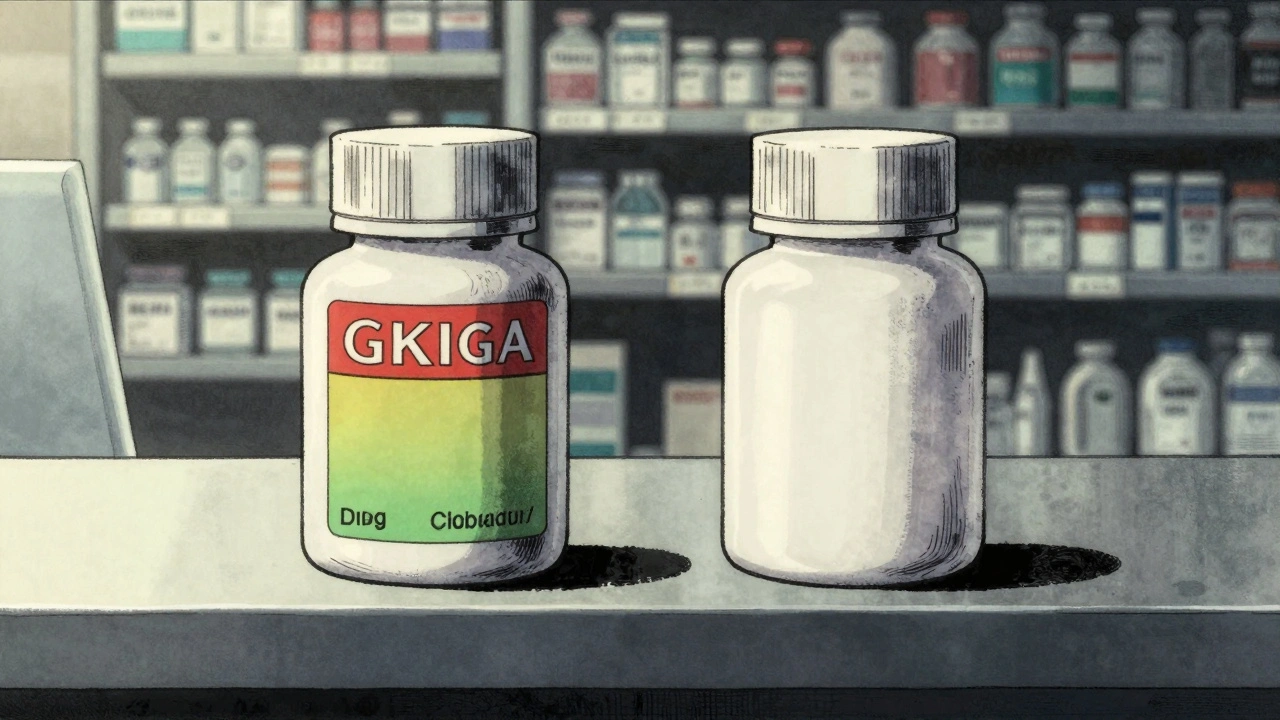
When you pick up a prescription, you might see two options: the familiar brand name you’ve heard on TV, or a cheaper generic with a plain label. It’s natural to wonder - is the generic just as safe? Does it work the same? The short answer: generic drugs are just as safe and effective as brand-name drugs for the vast majority of people. But there are exceptions - and they matter.
What makes a generic drug "the same"?
A generic drug isn’t a copy. It’s required by law to contain the exact same active ingredient, in the same strength, same form (pill, injection, etc.), and same route of delivery (oral, topical, etc.) as the brand-name version. That’s not a suggestion - it’s a legal requirement enforced by the FDA and similar agencies worldwide. The real test is bioequivalence. That means your body absorbs the generic drug at nearly the same rate and to nearly the same extent as the brand. Regulators don’t just take manufacturers’ word for it. They require rigorous testing. For most drugs, the amount of medicine in your bloodstream (measured as AUC and Cmax) must fall within 80% to 125% of the brand’s levels. That’s a tight window. It’s not perfect, but it’s close enough for nearly all conditions. Even the inactive ingredients - things like fillers, dyes, or preservatives - are reviewed. They don’t affect how the drug works, but they can cause rare allergic reactions. That’s why you might notice a different pill color or shape with a generic. But the active ingredient? Identical.What does the science say?
Large, real-world studies show generics work just as well - and sometimes better. A 2020 study published in Nature Scientific Reports tracked over 1 million Austrians on generic versus brand-name versions of 17 common drugs. The results were surprising: people taking generics had fewer heart attacks, strokes, and deaths. For heart medications like beta-blockers and statins, generic users had 40% fewer major cardiac events. The researchers didn’t find any evidence that generics were less safe. In fact, they were safer in most cases. Another analysis by the FDA looked at adverse event reports from 2018 to 2022 across 15 widely used drugs. The number of reported side effects per million prescriptions was almost identical between generics and brands - 12.7 vs. 13.2. No meaningful difference. And let’s not forget the numbers: 90% of all prescriptions filled in the U.S. are for generics. That’s over 6 billion pills a year. If generics were dangerously ineffective, we’d see a public health crisis. We don’t.When should you be cautious?
There’s a small group of drugs where even tiny differences in absorption can matter. These are called narrow therapeutic index (NTI) drugs. A little too much? Risk of toxicity. A little too little? Risk of treatment failure. The big ones are:- Levothyroxine (for hypothyroidism)
- Warfarin (a blood thinner)
- Phenytoin and carbamazepine (for seizures)
- Cyclosporine (for transplant patients)

Why do some people say generics don’t work for them?
You’ve probably heard stories. Someone switched from Lipitor to generic atorvastatin and felt worse. Or they tried a generic seizure drug and had a breakthrough seizure. These aren’t myths. They happen. But they’re rare - and often misunderstood. A 2021 survey of U.S. pharmacists found 67% had seen patients report side effects or reduced effectiveness after switching. But here’s the catch: many of these cases involved NTI drugs. Others were psychological. If you’ve been on a brand-name drug for years, your brain expects it to work a certain way. Switching to a different-looking pill can trigger nocebo effects - where you feel worse because you believe the new version won’t work. A Drugs.com user wrote: “I took Lipitor for 10 years. Switched to generic. No difference in cholesterol or side effects.” That’s the norm. But for the 11% of users who report issues, it’s real - even if the drug is technically equivalent. That’s why doctors and pharmacists now ask: “Have you switched meds recently?” before assuming a new symptom is unrelated.Who decides if a generic can be swapped?
In the U.S., pharmacists can substitute a generic unless the doctor writes “Dispense as Written” or “Brand Medically Necessary.” But many doctors don’t know how to use the FDA’s Orange Book, which lists which generics are rated as therapeutically equivalent (AB-rated). Only 43% of physicians routinely check these ratings, according to a 2021 study. That means a lot of switches happen without full awareness of the risks - especially for NTI drugs. If you’re on warfarin, levothyroxine, or an anti-seizure drug, ask your doctor to specify “do not substitute.” If you’re on a statin or blood pressure pill, you’re likely fine with a generic - but always monitor how you feel.
What should you do?
Here’s what works in real life:- For most drugs - statins, antibiotics, antidepressants, blood pressure meds - generics are safe and effective. Save the money.
- For NTI drugs - stick with one version. Don’t switch between brand and generic unless your doctor says it’s okay.
- If you feel worse after switching - tell your doctor. Don’t assume it’s "all in your head."
- Keep the same pharmacy. They track your meds and can flag if a new generic is being dispensed.
- Ask for a copy of your lab results. If you’re on levothyroxine or warfarin, get your TSH or INR checked a few weeks after switching.
The bottom line
Generic drugs are not second-rate. They’re the same medicine, tested, approved, and monitored. For 9 out of 10 people, they work just as well - and cost far less. The rare cases where people feel different after switching aren’t proof that generics are unsafe. They’re a reminder that medicine isn’t one-size-fits-all. Some bodies react to tiny changes. Some conditions need extra care. The science is clear: generics are safe. But your body knows your history. Listen to it. Talk to your doctor. And don’t let fear cost you access to care.Are generic drugs as effective as brand-name drugs?
Yes, for the vast majority of medications. Generic drugs must meet strict FDA standards for bioequivalence, meaning they deliver the same active ingredient at the same rate and extent as the brand. Large studies show they work just as well for conditions like high blood pressure, cholesterol, infections, and depression. Only a small group of drugs - like levothyroxine or warfarin - require extra caution due to narrow therapeutic windows.
Can generic drugs cause more side effects?
Not usually. The active ingredient is identical, so the side effect profile is the same. But inactive ingredients (fillers, dyes) can differ, and in rare cases, these may trigger allergies or intolerance. Some people also report feeling worse after switching due to psychological factors - expecting a cheaper drug to be less effective. If you notice new or worsening side effects after switching, tell your doctor. It’s not always the drug - but it’s worth checking.
Why do some doctors say not to switch to generics?
For drugs with a narrow therapeutic index - like levothyroxine, warfarin, or anti-seizure medications - even small changes in how the body absorbs the drug can affect treatment. While generics are approved as bioequivalent, switching between brands and generics can cause instability in blood levels. Some doctors recommend staying on one version to avoid this risk. It’s not because generics are unsafe - it’s because precision matters more in these cases.
Are generic drugs made in the same facilities as brand-name drugs?
Yes - and sometimes the exact same ones. Many brand-name manufacturers also produce generic versions of their own drugs. The FDA inspects all facilities, whether they make brand or generic drugs, using the same standards. In fact, about half of all generic drugs in the U.S. are made by companies that also produce brand-name versions. Quality control isn’t determined by the label - it’s determined by the factory.
How do I know if my generic is approved?
Look for the FDA’s Orange Book, which lists all approved generic drugs and their therapeutic equivalence ratings. Most generics you get at the pharmacy are rated "AB," meaning they’re considered interchangeable with the brand. Your pharmacist can tell you if your generic has this rating. If you’re on a critical medication, ask your doctor to specify "Dispense as Written" on the prescription to avoid switches.


dave nevogt
December 2, 2025 AT 10:44It’s fascinating how we’ve built this entire cultural narrative around brand names as if they carry some kind of metaphysical guarantee of quality. We’ve been conditioned to equate price with efficacy, and yet the chemistry doesn’t care about marketing budgets. The active molecule doesn’t know if it’s in a pill labeled Lipitor or atorvastatin-it just binds to receptors. The real difference isn’t in the drug, it’s in our perception. And that’s where the nocebo effect lives-in the quiet dread of a pill that looks wrong, even when it’s chemically identical. We’re not just treating disease; we’re treating anxiety dressed up as pharmacology.
It’s ironic, really. We’ll spend thousands on a branded drug because we’re afraid of the generic, yet we’ll happily swallow a $2 bottle of ibuprofen from a store brand without a second thought. The inconsistency isn’t logical-it’s emotional. And until we confront that, we’re not really talking about medicine. We’re talking about identity, fear, and the illusion of control.
Also, the fact that half of all generics are made in the same factories as brand names? That’s the quietest revolution in modern healthcare. The label changed. The factory didn’t.
So yes, generics are safe. But more importantly, our fear of them isn’t.
It’s time we stopped treating medicine like a luxury brand and started treating it like science.
Steve World Shopping
December 2, 2025 AT 15:09The bioequivalence paradigm is fundamentally flawed. 80–125% AUC/Cmax window is not ‘close enough’-it’s a regulatory loophole masquerading as scientific rigor. For NTI drugs, this margin is pharmacodynamically catastrophic. The FDA’s AB-rating system is a statistical illusion. Real-world pharmacokinetic variance exceeds 15% in 12% of elderly patients on levothyroxine. That’s not bioequivalence-that’s therapeutic roulette. And don’t get me started on the lack of post-marketing pharmacovigilance for generics. The VA system alone reports 3x more dose titration events after generic switches. This isn’t anecdotal-it’s systemic.
Lynn Steiner
December 3, 2025 AT 21:57I switched to generic levothyroxine and my anxiety went through the roof. I felt like I was drowning in slow motion. My doctor said it was ‘all in my head.’ But I know my body. I went back to Synthroid and suddenly I could breathe again. They want you to believe it’s the same, but it’s not. They’re cutting corners and we’re paying with our health. I hate that they think we’re stupid enough to believe this nonsense. #GenericScam
Alicia Marks
December 5, 2025 AT 08:44You’ve got this! If your doctor says it’s safe, trust the science. Generics save lives-and wallets. Keep going 💪
Elizabeth Grace
December 6, 2025 AT 15:52Okay but like, I tried a generic for my antidepressant and I just felt… numb? Like my emotions were on mute. I didn’t even cry at my dog’s funeral. I switched back and boom-felt human again. So yeah, maybe it’s ‘the same’ on paper, but my soul knew the difference. 😔
Steve Enck
December 7, 2025 AT 23:39It is axiomatic that the regulatory framework governing bioequivalence is predicated upon a reductionist epistemology that fundamentally misapprehends the phenomenological experience of pharmacological intervention. The AUC/Cmax metric, while statistically robust, is ontologically inadequate to capture the complex interplay between pharmaceutical formulation, patient expectation, and neurochemical homeostasis. Consequently, the assertion that generics are ‘equivalent’ constitutes a category error-a conflation of quantitative sameness with qualitative identity. The patient’s subjective experience is not noise-it is data. And to dismiss it as ‘nocebo’ is not scientific; it is epistemic violence.
Jay Everett
December 9, 2025 AT 02:38Bro, I’ve been on generic statins for 7 years. Cholesterol? Down. Energy? Up. No weird side effects. I even saved $400 a year. Meanwhile, my buddy’s still paying $200 a month for the brand name like it’s a Rolex. 🤡 The system’s rigged for profit, not health. Switch to generic, check your labs, and live your life. Science doesn’t care about your brand loyalty. 💉💊
मनोज कुमार
December 11, 2025 AT 00:09Joel Deang
December 12, 2025 AT 00:06so i switched to generic warfarin last year and my INR went nuts. like, i had to go to the er. my pharmacist said ‘oh it’s fine’ but no it wasn’t. now i only get the brand and i’m not even mad. just… tired. 😔
Roger Leiton
December 13, 2025 AT 06:47Just want to say thank you for this post. I’ve been on generic levothyroxine for 3 years and was scared to switch back after my doctor suggested it. I checked my TSH-same as before. My energy’s back. I’m not afraid anymore. 🙌
Laura Baur
December 13, 2025 AT 14:52Let us not forget the structural violence embedded in the pharmaceutical industrial complex. The deliberate obfuscation of manufacturing origins, the commodification of patient vulnerability, and the normalization of therapeutic instability under the guise of cost-efficiency-these are not accidental outcomes. They are features of a system designed to extract profit from bodily fragility. The generic drug debate is not about chemistry. It is about power. Who gets to decide what ‘equivalent’ means? Who bears the risk when the margin is 80%? And why are patients expected to be grateful for being allowed to survive on a version of their own medicine? We are not consumers. We are subjects of a medical-industrial apparatus that has forgotten its ethical foundation. The pill may be chemically identical-but the system that produces it is not.