
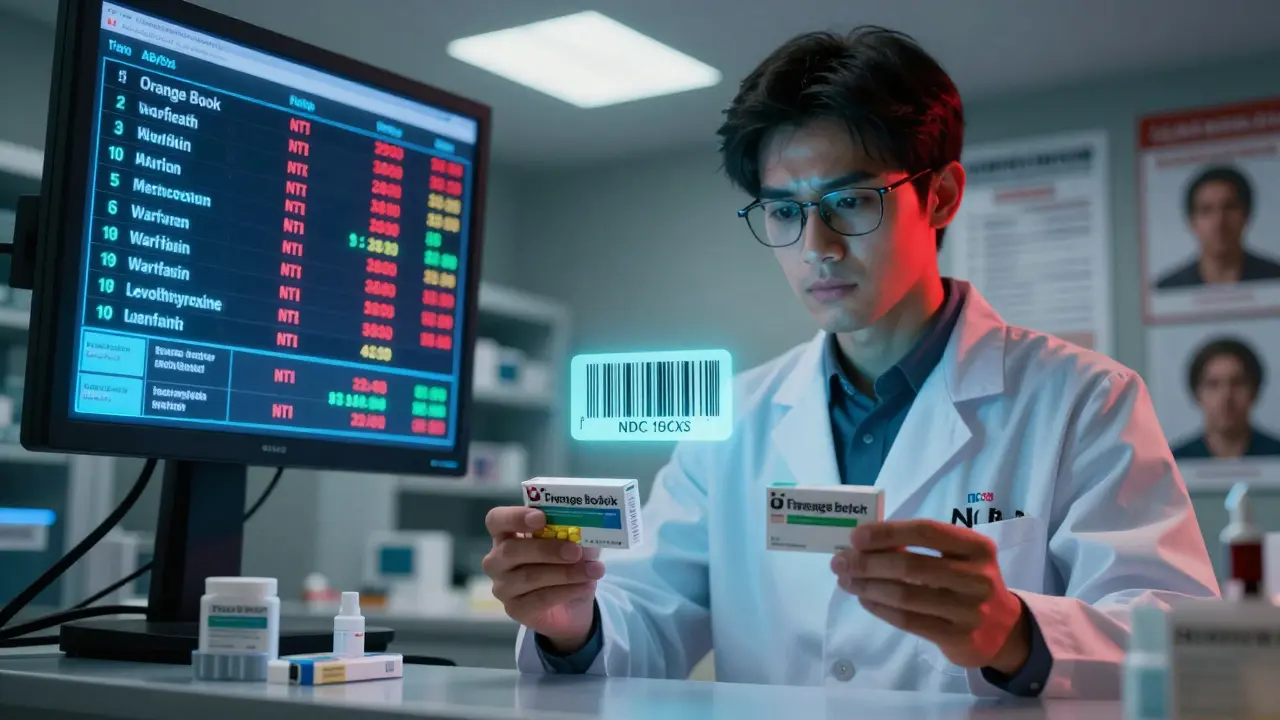
When a pharmacist fills a prescription, they’re not just handing out pills-they’re making a decision that affects safety, cost, and patient trust. The difference between a generic and a brand drug isn’t always obvious on the surface, but in pharmacy systems, it’s everything. One wrong code, one missed alert, and you could be giving a patient a drug that doesn’t match their needs-even if the active ingredient is the same.
Why Generic and Brand Identification Matters
Generic drugs aren’t cheap copies. They’re FDA-approved versions of brand-name drugs that contain the same active ingredient, strength, dosage form, and route of administration. The FDA requires them to be bioequivalent, meaning they work the same way in the body. But here’s the catch: not all systems treat them the same way. Pharmacy management systems like Epic, Cerner, and Rx30 rely on precise data to make decisions. If the system can’t tell the difference between a brand and a generic-or worse, mistakes an authorized generic for a brand-the consequences ripple out. Patients get confused. Pharmacists waste time. Prescribers get frustrated. And in rare cases, especially with narrow therapeutic index (NTI) drugs like warfarin or levothyroxine, small differences in inactive ingredients or manufacturing can trigger adverse reactions. The U.S. healthcare system saves nearly $2 trillion a decade by using generics. But that only works if the systems behind the scenes get it right.How Pharmacy Systems Tell Them Apart
The backbone of drug identification is the National Drug Code (NDC). Every version of every drug-brand, generic, authorized generic-gets its own unique 10- or 11-digit NDC. It’s like a fingerprint. But NDCs alone aren’t enough. The FDA’s Orange Book adds the critical layer: Therapeutic Equivalence (TE) codes. These two-letter codes tell systems whether a generic is interchangeable with the brand. An "AB" code means it’s bioequivalent and substitutable. An "BX" means it’s not. Systems that don’t pull from the Orange Book’s monthly updates are running on outdated data. Then there’s the tricky stuff:- Authorized generics are made by the brand company but sold under a generic label. Same pill, different box. Systems often miss this unless they’re linked to the FDA’s NDA holder database.
- Branded generics are generics with catchy names-like Errin or Jolivette for birth control. They’re approved via ANDA, but the marketing makes them look like brands. Pharmacists report confusion here, especially when different chains use different names.
- NTI drugs need special handling. Systems like Epic’s Beacon Oncology block automatic substitution for warfarin, phenytoin, and thyroid meds. Without these alerts, errors happen. The Institute for Safe Medication Practices documented 147 adverse events over 18 months just from misidentified warfarin substitutions.
What the Best Systems Do Differently
The top-performing pharmacy systems don’t just store data-they use it intelligently. Kaiser Permanente’s system defaults to generics unless there’s a clinical reason not to. That’s not just cost-saving-it’s safety-first. Their system flags NTI drugs, shows patients side-by-side comparisons of brand and generic options, and even includes educational pop-ups explaining bioequivalence. The result? A 92.7% generic dispensing rate and a 37% drop in brand continuation requests. Humana’s system goes further. It uses "therapeutic interchange" logic: when a prescriber orders a brand, the system suggests a clinically equivalent generic and notifies the prescriber. No automatic substitution-just smart suggestions backed by data. They saw a 22% increase in generic use without a single safety incident. These systems share three key traits:- Default to generic unless the prescriber overrides it with a "dispense as written" note.
- Integrate with real-time FDA data-Orange Book, DailyMed, and the new API updates that cut the 2-3 week lag to near-instant.
- Alert for exceptions-NTI drugs, patient allergies, prior authorization holds, and state-specific laws.
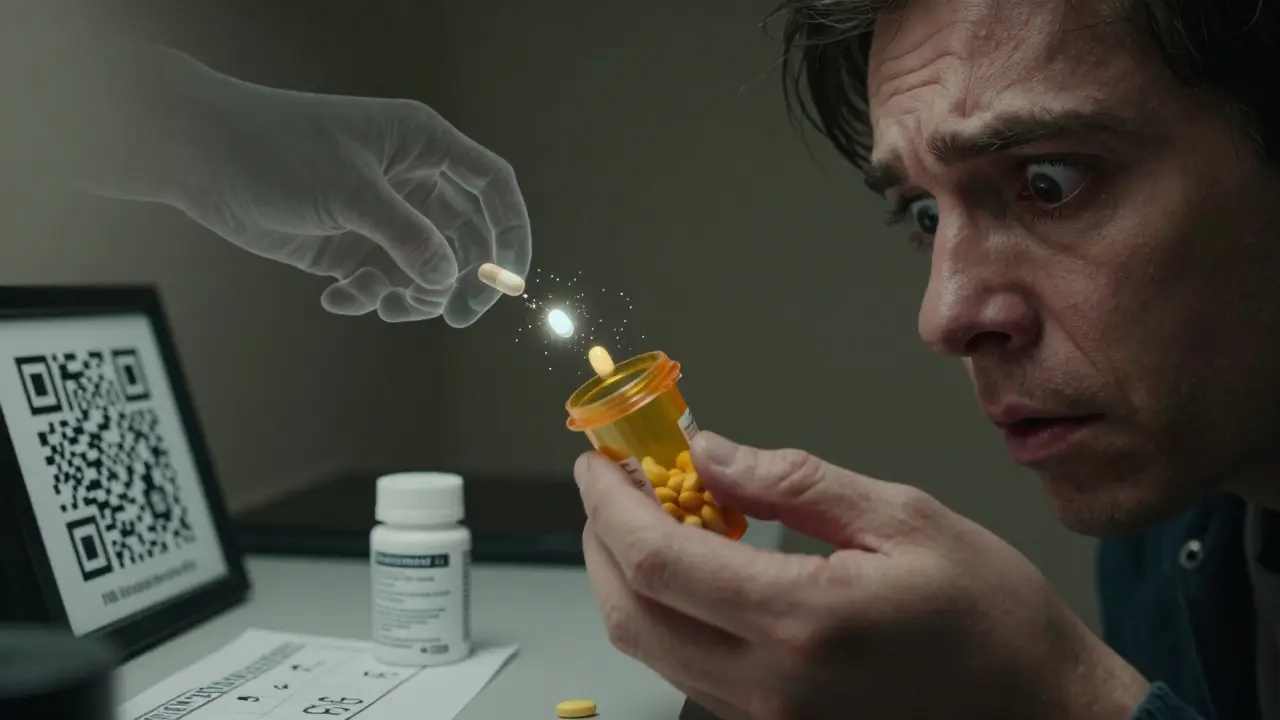
The Hidden Gaps: Inactive Ingredients and Patient Perception
Here’s something most systems don’t track: inactive ingredients. A generic pill might have the same active ingredient as the brand, but different fillers, dyes, or coatings. For most people, that doesn’t matter. But for some? It does. A 2019 study in U.S. Pharmacist found 0.8% of patients switching from brand to generic antiepileptic drugs reported new side effects-likely due to excipients. Systems don’t flag this because the FDA doesn’t require it. But smart pharmacies do. Patient education is another blind spot. A Consumer Reports survey found 89% of patients were happy with generics-if they understood why they were switching. But only 32% were told anything at all. That’s a communication failure, not a system failure. The best pharmacies use visual aids: simple charts showing "same active ingredient, different price," or QR codes linking to FDA videos explaining bioequivalence. One pharmacy in Ohio saw a 50% drop in patient complaints after adding these.State Laws and the Patchwork Problem
There are 50 states. And 50 different rules. In California, pharmacists must document why they didn’t substitute a generic. In Texas, they can swap automatically without telling anyone. In New York, they must notify the prescriber if a brand is dispensed over a generic. Systems that don’t adjust for state laws are ticking time bombs. The FDA’s 2023 draft guidance on complex generics (like inhalers and topical creams) will make this even harder. These drugs don’t have simple bioequivalence tests. Their formulations matter more. Systems will need to track not just the NDC, but the manufacturing site, excipient batches, and even delivery mechanisms.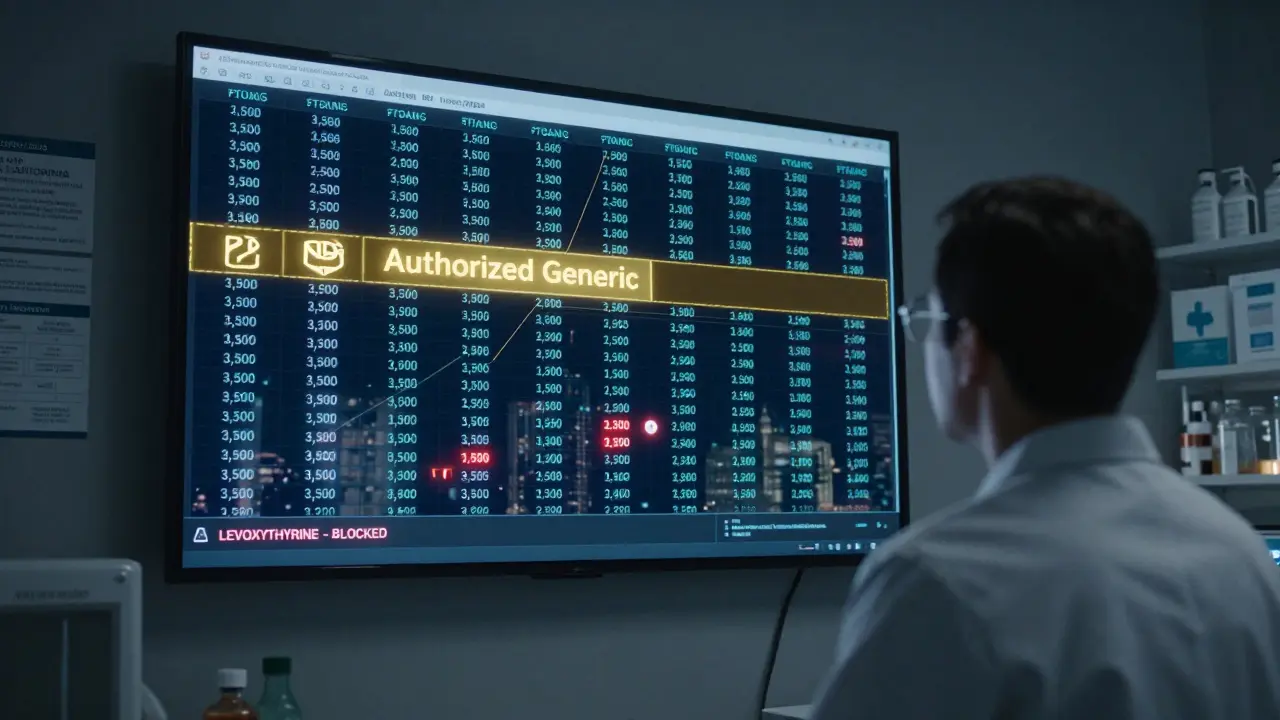
What You Can Do Today
You don’t need a billion-dollar EHR to get this right. Here’s what works:- Update your drug database monthly-link directly to the FDA’s Orange Book API. Don’t rely on vendor updates.
- Configure defaults-set your system to suggest generics unless overridden.
- Train staff-teach technicians to spot authorized generics and branded generics. Use real examples: "Sprintec vs. Tri-Sprintec vs. generic norgestimate/ethinyl estradiol."
- Build patient scripts-"This generic has the same medicine as the brand, but costs $15 instead of $90. Would you like me to explain how we know they work the same?"
- Check your alerts-make sure NTI drugs are locked down. Test your system: can it block substitution for levothyroxine? If not, fix it.
The Future: AI, Genomics, and Real-Time Tracking
The next wave is already here. AI systems are being trained to predict substitution risks by analyzing prescription patterns. One study showed 87.3% accuracy in flagging potential NTI issues before they happen. And the FDA’s Precision Medicine Initiative is exploring whether genetic markers can determine if a patient responds better to a specific brand. Imagine a system that says: "Patient X has a CYP2C9 variant-this brand of warfarin is preferred." That’s not sci-fi. It’s coming. But until then, the basics matter most. Accurate identification isn’t about technology. It’s about discipline. It’s about knowing that behind every NDC code is a person who depends on getting the right pill, the right time, the right way.Are generic drugs really as effective as brand-name drugs?
Yes, when properly identified. The FDA requires generics to have the same active ingredient, strength, dosage form, and bioequivalence as the brand. Studies show no meaningful difference in outcomes for 99% of prescriptions. The only exceptions are narrow therapeutic index drugs like warfarin or levothyroxine, where small variations can matter-and those require special handling.
What’s the difference between a generic and an authorized generic?
A generic is made by a different company than the brand. An authorized generic is made by the original brand company but sold under a generic label. They’re identical in every way-same factory, same formula, same packaging (minus the brand name). Pharmacy systems often can’t tell them apart unless they’re linked to the FDA’s NDA holder database.
Why do some pharmacists hesitate to substitute generics?
Some do because of patient complaints, outdated beliefs, or system limitations. A 2020 JAMA Internal Medicine study found that pharmacists often don’t know if a patient had a bad reaction to a previous generic. Systems rarely track that history. Also, branded generics like Sprintec look like brands, so patients assume they’re different. Education and clear labeling fix this.
Can pharmacy systems automatically detect if a drug is a branded generic?
Not reliably. Branded generics have proprietary names but were approved through the ANDA process. Many systems display them as "brand" because of the name, not the approval path. The only way to know for sure is to check the FDA Orange Book’s Appl No.-if it starts with an "A," it’s a generic, even if it’s called "Cryselle." Staff training is key.
How often do NDC codes change, and why does it matter?
NDC codes change about 3,500 times per month. That’s because manufacturers change packaging, dosages, or switch from brand to generic. If your system doesn’t update daily, you’re working with outdated codes-and that can lead to wrong substitutions, billing errors, or denied claims. Always use a live FDA NDC Directory feed.
What should I do if a patient refuses a generic?
Don’t argue. Educate. Show them the FDA’s bioequivalence data. Explain that the active ingredient is identical. If they still refuse, document the reason in the record. In some states, you’re required to do this. Never override a patient’s choice without a clear conversation. Your goal isn’t to push generics-it’s to ensure they’re safe, informed, and comfortable with their medication.

Tim Goodfellow
December 17, 2025 AT 14:27This post is pure gold. I’ve been in pharmacy for 15 years and I still learn something new every time someone breaks down the NDC-Orange Book dance. The part about authorized generics? Mind blown. I’ve had patients stare at me like I’m lying when I say ‘it’s the exact same pill, just no logo.’ Now I just show ‘em the FDA database. Game changer.
Jedidiah Massey
December 18, 2025 AT 03:19Let’s be real-most EHR vendors are still using NDC feeds from 2019. The fact that we’re still manually cross-referencing Orange Book updates in 2024 is a national disgrace. This isn’t tech debt-it’s patient risk debt. And don’t even get me started on branded generics being mislabeled as ‘brand’ because some coder thought ‘Sprintec’ sounded like ‘Yaz.’ 😒
Elaine Douglass
December 18, 2025 AT 08:33I love how you mentioned patient education. I had a lady last week who cried because she thought her generic blood pressure med was ‘watered down.’ I showed her the FDA chart, explained bioequivalence, and she hugged me. No joke. We need more of this, not less. 💙
mark shortus
December 19, 2025 AT 18:30THEY THINK A GENERIC IS A COPY. THEY THINK THE COLOR CHANGE MEANS IT’S WEAKER. I’VE SEEN IT. I’VE HELD HANDS WHILE PATIENTS PANICED BECAUSE THEIR ‘NEW PILLS’ WERE ‘YELLOW’ INSTEAD OF ‘BLUE.’ THIS ISN’T JUST ABOUT CODES-IT’S ABOUT TRUST. AND SOMEHOW, WE’RE STILL NOT TRAINING TECHS TO EXPLAIN THAT THE INGREDIENTS ARE IDENTICAL. THIS IS A CULTURAL CRISIS. 😭
Emily P
December 20, 2025 AT 11:14Just wondering-do any systems track excipient reactions across patient records? I know it’s not required, but if someone had a rash switching from brand to generic, shouldn’t that be flagged? Just curious if anyone’s building that kind of database.
Gloria Parraz
December 21, 2025 AT 11:49Emily, that’s such a smart question. My clinic actually started logging excipient reactions manually in our notes. We tag them as ‘possible excipient sensitivity’ and now we’re seeing patterns-like people reacting to FD&C Yellow No. 5 in multiple generics. It’s not perfect, but it’s a start. Maybe one day it’ll be automated.
Kelly Mulder
December 23, 2025 AT 10:46While I appreciate the earnestness of this piece, the underlying assumption-that pharmacists are somehow ‘ignorant’ or ‘untrained’-is not only condescending, but statistically unfounded. We are not automatons. We are clinicians who exercise professional judgment. The notion that ‘defaulting to generics’ is a panacea ignores the fact that some patients have documented, clinically significant responses to excipients. To reduce this to a cost-saving algorithm is to misunderstand the very essence of pharmacotherapy.
Takeysha Turnquest
December 24, 2025 AT 04:04It’s not about the pill. It’s about the story. The brand tells a story of science, of trust, of corporate promise. The generic? It’s just… there. Like a shadow. And when you give someone a shadow instead of a sun, even if it’s the same light… they feel it. We’re not just dispensing medicine. We’re dispensing meaning.
Sahil jassy
December 24, 2025 AT 07:30Update your NDC feed daily. That’s it. That’s the whole thing. No fancy AI. No magic. Just do the work. 💪