
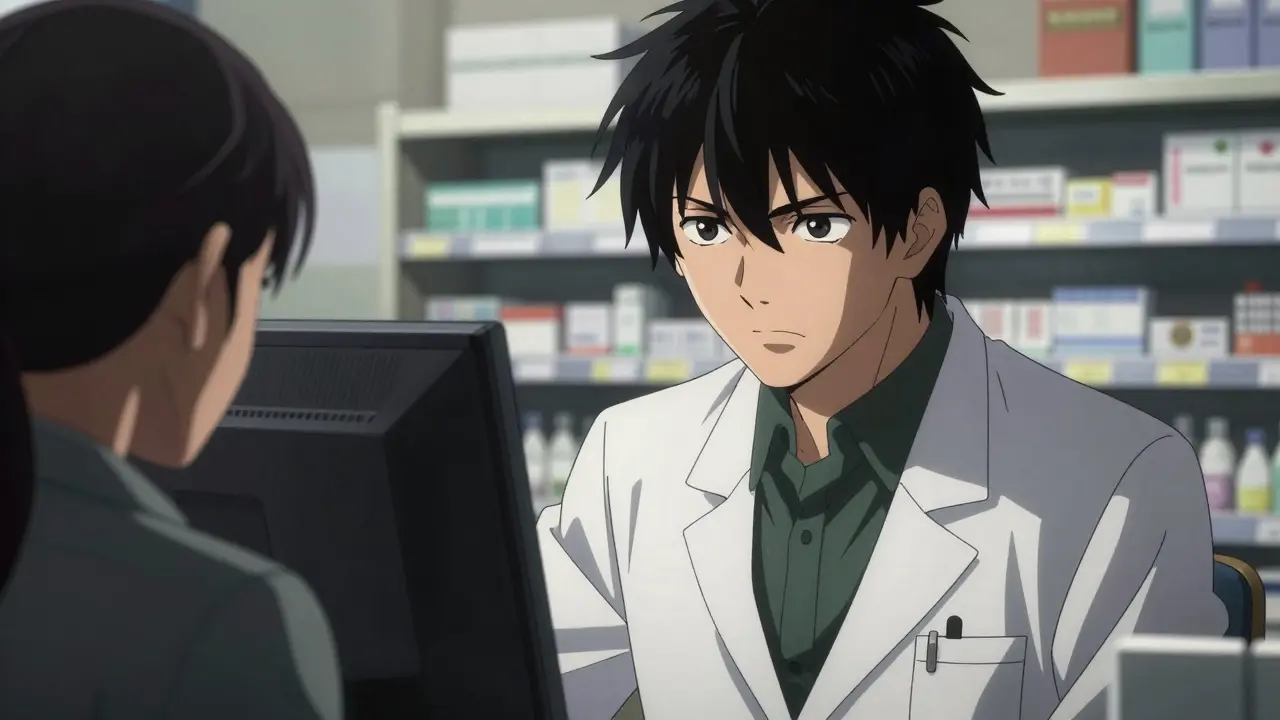
Walking up to the pharmacy counter might seem like a simple transaction, but for the pharmacist, it's the final line of defense against a potentially life-threatening mistake. A 2022 study in JAMA Internal Medicine found that adverse drug events (ADEs) account for about 6.7% of all hospital admissions. Many of these errors happen because a patient's allergy list was outdated or a drug-drug interaction was missed. When a pharmacist asks, "Are you still allergic to penicillin?" they aren't just making small talk-they are performing a high-stakes safety check.
The goal of the pickup process is to ensure that the medicine being handed over is safe for drug interaction check and specifically tailored to the patient's current health status. This isn't just about the active ingredients; it's about dyes, fillers, and how a new pill might clash with a supplement you've been taking for years. Here is a look at how this verification process actually works and how you can help make it foolproof.
The Digital Safety Net: How EHRs and PMS Work
Most modern pharmacies rely on a combination of Electronic Health Records (EHR), which are digital versions of a patient's chart, and Pharmacy Management Systems (PMS), the software used to process prescriptions. These systems talk to each other using a standard called HL7 (Health Level Seven), which allows data to flow between the doctor's office and the chemist.
When a prescription is entered, the system automatically scans for conflicts. There are two main ways this happens. Some systems use NDC (National Drug Code) matching, which looks at every single ingredient in a pill, including the inactive ones. While thorough, this often triggers "nuisance alerts"-like flagging a dye that isn't actually dangerous. Other systems use drug name concept screening, which focuses on the active ingredients. Research from Wolters Kluwer shows that concept screening is about 3.2 times more likely to find clinically relevant alerts than NDC matching, though it takes the pharmacist a bit longer to review.
The Four-Step Verification Protocol
To prevent errors, the American Society of Health-System Pharmacists (ASHP) recommends a tight workflow. Ideally, a pharmacist should complete these four steps within 90 seconds of receiving the prescription to keep the line moving without sacrificing safety:
- Verify Recency: They check if your allergy list has been updated in the last 12 months. If your record says you were allergic to something in 2012 but hasn't been touched since, it's a red flag.
- Run Interaction Checks: The medication is screened against massive databases like Lexicomp or Micromedex to see if it reacts poorly with other drugs you're taking.
- Screen Inactive Ingredients: For patients with severe sensitivities, the pharmacist checks for fillers or dyes that might trigger a reaction.
- Time-Stamped Documentation: The pharmacist logs that the check was performed, ensuring there is a legal and clinical trail of the verification.

Why "Alert Fatigue" is a Real Danger
You might wonder why errors still happen if these systems are so advanced. The answer is "alert fatigue." Pharmacists are bombarded with warnings all day. A 2024 study in BMJ Quality & Safety found that pharmacists override about 68.4% of all allergy alerts. Most of these are safe to ignore-like a warning about a harmless dye-but about 12.7% of those overrides are potentially dangerous.
This is why the human element at the pickup window is so critical. A computer can flag a "penicillin allergy," but it can't tell if you've since had a skin test that proved you're actually fine with it. In fact, Dr. Carla Davis from the Baylor College of Medicine notes that only 10-20% of people labeled as penicillin-allergic actually have a true IgE-mediated allergy. This means many patients are denied the best possible antibiotic because of an old, inaccurate label in their digital file.
| Method | What it Tracks | Pro | Con |
|---|---|---|---|
| NDC Matching | All ingredients (Active + Inactive) | Catches rare filler allergies | High false-alert rate (12.7%) |
| Concept Screening | Active therapeutic ingredients | More clinically relevant | Requires more manual review time |
| Patient Interview | Real-time self-reporting | Catches undocumented changes | Dependent on patient memory |
Common Pitfalls and How to Avoid Them
Errors often slip through the cracks when there is a gap between what the computer knows and what the patient knows. For instance, some systems can't "read" an allergy if it's listed as a medical condition rather than a specific drug allergy. If your chart says "Penicillin Allergy" as a diagnosis instead of a drug alert, the software might not trigger a warning when the pharmacist types in a beta-lactam antibiotic.
Another common issue is the "mislabeled allergy." Many of us are told we are allergic to a drug as children, but we never get re-tested. If you suspect your allergy might be outdated, ask your doctor for a graded drug challenge or skin testing. According to the American Academy of Allergy, Asthma & Immunology (AAAAI), this can open up better treatment options for up to 93% of mislabeled patients.
Taking Control of Your Pickup
You are the most important part of the safety loop. To ensure your pharmacist has the best information, try these strategies during your next visit:
- Bring a Full List: Don't just mention your prescriptions. Include vitamins, herbal supplements (like St. John's Wort), and over-the-counter meds. Some of these have massive interactions with prescription drugs.
- Be Specific About Reactions: Instead of saying "I'm allergic to that," describe the reaction. Did you get hives? Did your throat close? Did you just feel nauseous? This helps the pharmacist decide if a drug is truly dangerous or just unpleasant.
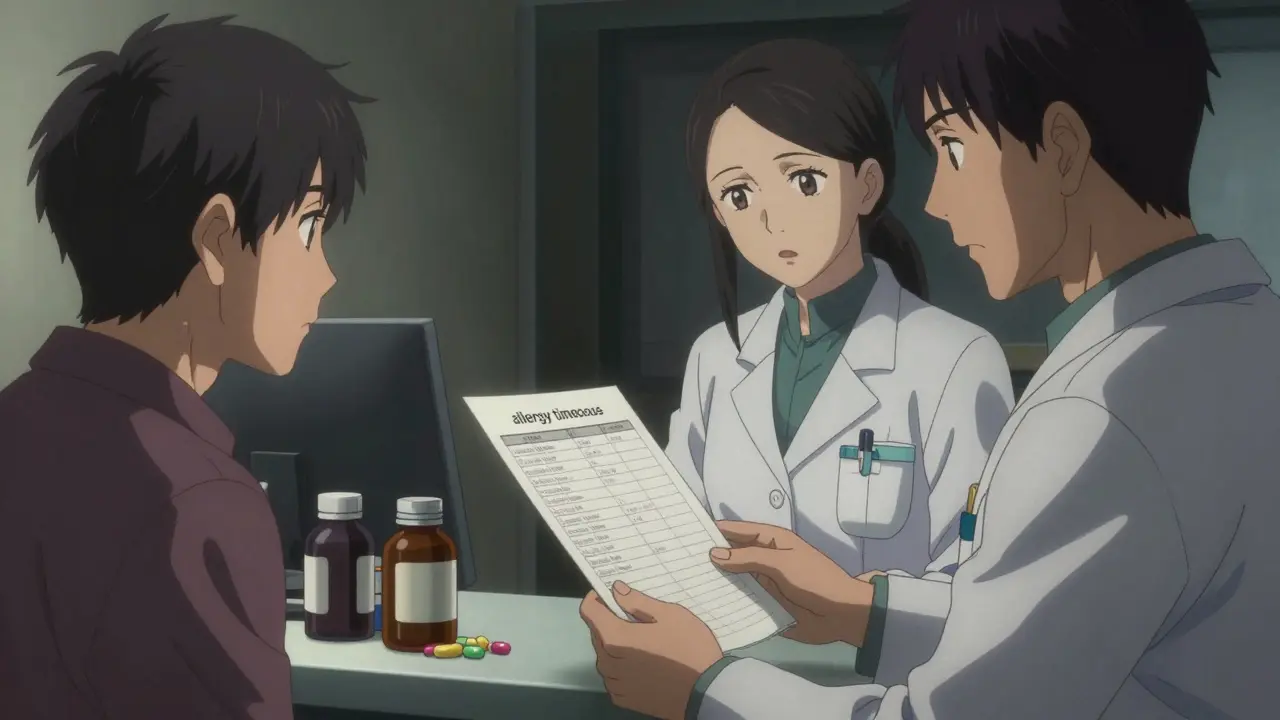
- Ask for the "Timeout": If you have a complex history of allergies, tell the pharmacist. Some clinics, like the Mayo Clinic, use an "allergy timeout" where they pause the dispensing process to double-check everything, which has been shown to reduce errors by nearly 25%.
- Question the Override: If the pharmacist mentions they are overriding a system warning, it's okay to ask, "Why is that alert appearing, and why is it safe to ignore?"
What is an ADE and why does it matter at pickup?
An ADE, or Adverse Drug Event, is an injury resulting from medical intervention with a drug. This includes allergic reactions or dangerous interactions between two medicines. Confirming these at pickup is the last chance to stop a mistake from reaching the patient, which is vital since ADEs cause thousands of hospitalizations every year.
Why does the pharmacist ask me about allergies if they have my records?
Digital records are often outdated. A University of Michigan study found that over 32% of patient profiles contained allergy info that was more than five years old. A quick verbal confirmation ensures that new allergies are caught and old, incorrect ones can be questioned.
Can inactive ingredients really cause an allergic reaction?
Yes. While the active drug does the healing, fillers, dyes, and preservatives (like aspartame or certain lactose derivatives) can cause reactions in sensitive people. Some pharmacy systems specifically screen for these to protect high-risk patients.
What should I do if I think my penicillin allergy is wrong?
Speak with your doctor or an allergist about skin testing or a graded challenge. Many people are mislabeled as allergic to penicillin, and confirming you aren't actually allergic can give you access to more effective antibiotics.
How long does a proper allergy check take?
According to ASHP standards, a pharmacist should be able to run through the primary EHR and database checks within 90 seconds. However, if your history is complex, it may take several minutes of discussion to ensure total safety.
Next Steps for Patient Safety
If you are managing multiple chronic conditions, the best move is to use a single pharmacy. When you jump between different chemists, your medication history becomes fragmented, increasing the risk that a drug interaction is missed. If you must use multiple pharmacies, keep a digital list of your medications and allergies on your phone to share with every provider.
For those with severe allergies, request that your pharmacy use a "hard stop" alert in their system. This means the software will not allow the medication to be dispensed until a pharmacist manually reviews the allergy and documents a specific reason for the override, adding an extra layer of protection to your healthcare routine.

william wang
April 17, 2026 AT 20:39It is really worth noting that the difference between NDC matching and concept screening is huge for clinical safety. I've seen cases where concept screening caught a cross-sensitivity that a simple code match totally missed because the drug was a generic with a different manufacturer. It's definitely a bit slower for the pharmacist, but that extra minute of manual review is literally a lifesaver in a busy retail environment.
Maggie Graziano
April 19, 2026 AT 17:14digital records just mean they track you better 👁️ no wonder the alerts are ignored they want us on meds
Nikki Grote
April 20, 2026 AT 21:04The pharmacological relevance of the pharmacokinetics involved in drug-drug interactions cannot be overstated, especially regarding cytochrome P450 enzyme induction or inhibition. When we talk about
Nell O'Leary
April 21, 2026 AT 12:32Totally agree with the point on pharmacokinetics! The bioavailability of the active moiety is so critical here :-)
Randall Barker
April 23, 2026 AT 00:05The absolute failure of our healthcare system is laid bare here. We have the technology to prevent these disasters, yet we allow
Nathan Berlin
April 24, 2026 AT 22:09India has way better pharmacists than the US 🇮🇳 imagine needing a 90 second protocol for basic common sense 🙄 absolute clowns 🤡
Anmol Garg
April 25, 2026 AT 16:57It's interesting to think about how much trust we place in these digital systems. Maybe the real solution isn't just better software, but a more mindful connection between the provider and the patient. When we slow down and actually listen, we find the nuances that a database simply cannot capture. It's a human problem, not a tech problem.
Theresa Griffin MEP
April 26, 2026 AT 17:56Precise documentation is mandatory. One must maintain an updated list at all times.
ira fitriani
April 26, 2026 AT 18:18OH MY GOSH!! 😱 I had no idea that just a dye could cause a reaction! I'm literally shaking thinking about how many times I've just blindly taken pills without checking the fillers! We need to be SO much more careful with our bodies! ✨💖
Rock Stone
April 27, 2026 AT 13:37Just keep it chill and double check your meds. It only takes a second to be safe.
Autumn Bridwell
April 28, 2026 AT 06:58I once had a pharmacist tell me my medication might interact with a supplement I didn't even tell him I was taking! How did he know?! Was he looking through my bags?! It was the most invasive experience of my life!
Richard Moore
April 30, 2026 AT 04:23The alert fatigue is the real killer here 😡 we can't just keep ignoring warnings and hope for the best! 🛑
Jon lee
May 1, 2026 AT 17:09If anyone is feeling overwhelmed by their medication list, just remember you can take it one step at a time. Start by listing your meds on a simple piece of paper and bring it in. Your pharmacist is there to help you, not judge you!
Colleen Tankard
May 2, 2026 AT 07:11Love seeing people take charge of their health 🌸✨