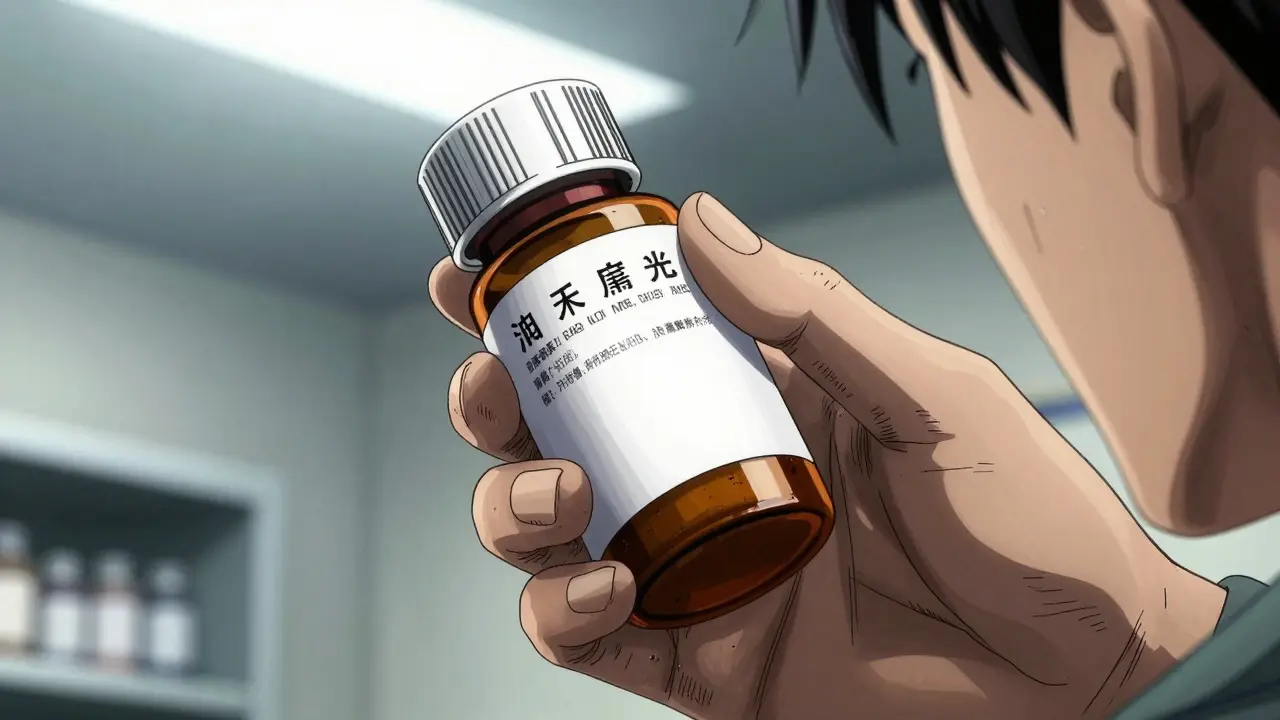
Have you ever picked up a new bottle from the pharmacy and felt a sudden wave of confusion? You stare at the small white sticker, filled with tiny text and cryptic codes, wondering if you're actually supposed to take this pill. It happens to more people than you might think. In fact, reading your prescription medication label correctly is not just a chore; it is a critical safety step that prevents serious health errors.
Prescription medication labels are standardized informational panels affixed to medication containers by pharmacies that provide critical instructions for safe and effective medication use. According to data from the National Academies of Sciences, Engineering, and Medicine, medication errors account for approximately 67% of the 1.5 million preventable adverse drug events occurring annually in the United States. A significant portion of these errors stems from patients simply misunderstanding the directions on the label. This guide breaks down every part of that label so you can take control of your health with confidence.
The Critical Components of a Prescription Label
When you look at your prescription bottle, you aren't just seeing a receipt; you are looking at a safety document. There are twelve specific components on this label, each serving a distinct purpose. Understanding them helps you verify that you have the right medication, the right dose, and the right instructions.
- Patient Name: This should be your full name. If you share a household with someone who has a similar name or takes similar medications, double-check this first. It is the primary defense against accidental mix-ups between family members.
- Medication Name: You will see two names here: the brand name (like Lipitor) and the generic name (like atorvastatin). In many regions, including Canada, the generic name appears first. Knowing both helps you recognize the drug even if your doctor switches brands due to insurance coverage.
- Prescription Number (Rx#): This unique alphanumeric code is your ticket for refills. When you call the pharmacy, this number is faster and more accurate than describing the pill. Keep this number handy.
- Prescriber Name: This identifies the healthcare provider who ordered the medication. It could be your primary care physician, a specialist, a nurse practitioner, or even a dentist. If you have questions about why you were prescribed this drug, this tells you who to ask.
- Medication Strength: This specifies the dosage per unit, such as "20 mg tablets." This is crucial because the same medication often comes in multiple strengths. Taking a 40 mg pill when you were prescribed 20 mg can lead to an overdose.
- Medication Quantity: This indicates the total number of dosage units dispensed. For liquids, it might be in milliliters; for creams, in grams. This helps you track how much you have left and when you need to refill.
- Discard or Expiration Date: Most medications lose efficacy over time. Unless otherwise noted, this date is typically one year from dispensing. Never take medication past this date, as it may no longer work or could potentially be harmful.
- Instructions: This is the most important section. It details dosage frequency and administration, such as "Take 1 tablet by mouth twice daily." Research shows that 79% of patients misinterpret one or more common prescription label instructions, particularly those using vague time references.
- Refill Information: This tells you how many additional fills are authorized before requiring a new prescription. If it says "0 Refills," you must contact your prescriber for a new order once you run out.
- Auxiliary Labels: These are special instruction stickers added by the pharmacist, such as "Take with food," "Avoid sunlight," or "Refrigerate." Ignore these at your peril, as they address specific interactions or storage needs.
- Drug Identification Number (DIN) or NDC: The DIN is an eight-digit code used in Canada, while the National Drug Code (NDC) serves this purpose in the U.S. These unique identifiers ensure that the exact formulation matches what was ordered.
- Pharmacy Information: This includes the pharmacy's name, address, and phone number. It also often contains a barcode for verification. Use this contact info if you have any doubts about the medication.
Decoding Dosage Instructions: Avoiding Common Pitfalls
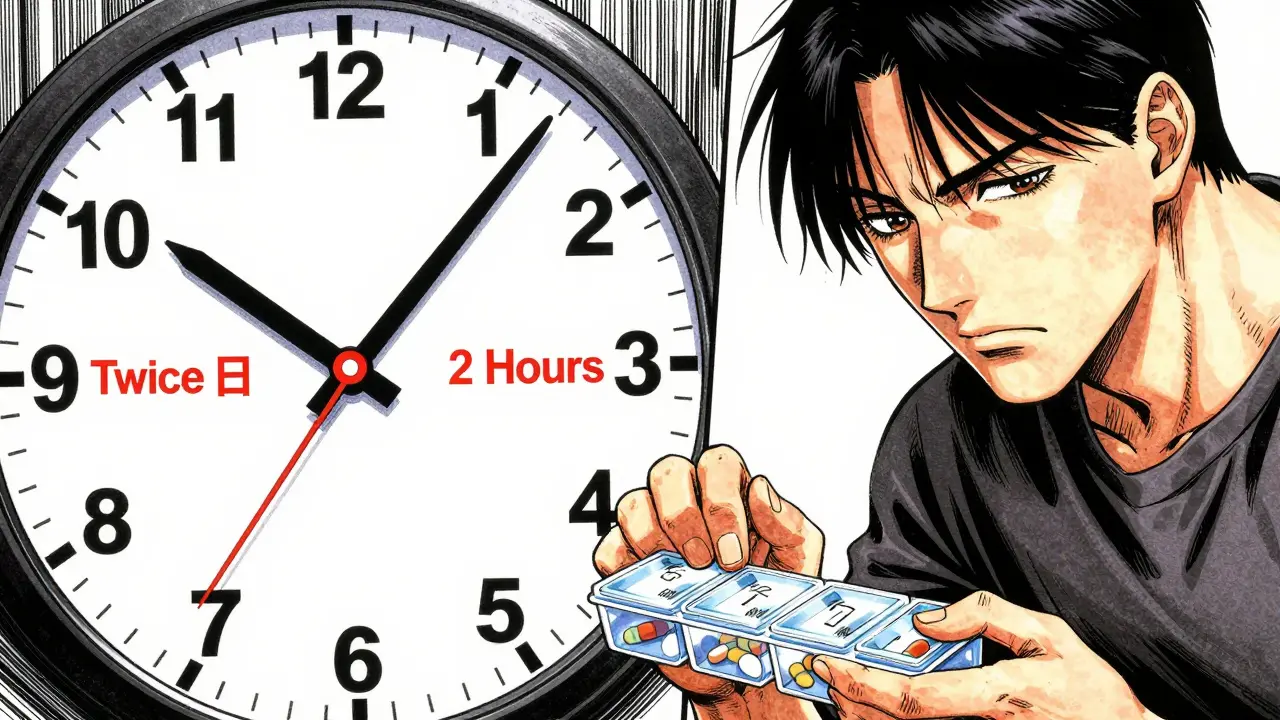
The biggest hurdle in reading a prescription label is understanding the timing and frequency of doses. Vague language leads to dangerous mistakes. For example, Consumer Med Safety reports that 23% of patients with limited health literacy interpret "twice daily" as "every two hours." That is a massive difference in dosage intake.
To avoid this, look for explicit time periods. Instead of relying on memory, set alarms on your phone for specific times. If the label says "take every 8 hours," that means exactly 8 hours apart, regardless of meals. If it says "take with meals," it means within 30 minutes of eating. Dr. Michael Wolf, lead researcher on an NIH study regarding patient comprehension, concluded that explicit language instructing patients when to take medicine using time periods was significantly better understood than vague hourly intervals.
Here is a quick translation guide for common terms:
- Bid / Twice Daily: Take two times a day, usually morning and evening.
- Tid / Three Times Daily: Take three times a day, spaced evenly throughout waking hours.
- Qd / Once Daily: Take one time a day.
- Qhs / At Bedtime: Take right before going to sleep.
- Prn / As Needed: Take only when symptoms occur, not on a fixed schedule.
The Seven-Step Verification Checklist
Before you swallow your first pill, take two to three minutes to perform a safety check. Pharmacists recommend reviewing each new prescription label thoroughly before leaving the pharmacy. Here is your seven-step checklist:
- Confirm Patient Name: Does the name on the bottle match yours exactly?
- Verify Medication Name: Does the name match what your doctor told you? Check both brand and generic names.
- Check Strength: Does the strength (e.g., 10 mg) match your previous prescriptions or what you expect?
- Understand Dosage Instructions: Can you explain exactly when and how to take it? If not, ask the pharmacist immediately.
- Note Special Instructions: Are there auxiliary labels like "shake well" or "keep refrigerated"?
- Check Expiration Date: Is the medication fresh?
- Identify Pharmacy Contact: Do you have the pharmacy's phone number if you discover a discrepancy later?
The most critical safety practice is verifying that the name of the medication and strength of the dosage match your prescription. Incorrect medications reach patients in approximately 1 out of every 5,000 prescriptions according to FDA tracking data. While rare, the consequences are severe.
| Label Instruction | Common Misinterpretation | Correct Action |
|---|---|---|
| Twice Daily | Every 2 hours | Two times per day (approx. 12 hours apart) |
| Take with Food | Take after finishing meal | Take during or within 30 mins of eating |
| Empty Stomach | Take whenever hungry | 1 hour before or 2 hours after meals |
| PRN | Take regularly | Only when symptoms arise |
Health Literacy and Label Clarity
It is not just about being careful; it is about systemic clarity. The National Assessment of Adult Literacy found that only 12% of U.S. adults have proficient health literacy. This means 88% of people struggle to understand complex medical texts, including prescription labels. The FDA recognized this barrier and mandated clearer formatting for prescription drug labels in 2014 to improve patient comprehension.
If you find yourself struggling with the language on your label, you are not alone. The Pharmacy Quality Alliance tracks medication adherence rates and reports that patients who correctly understand their prescription labels have 28% higher medication adherence rates compared to those with comprehension difficulties. If the instructions are unclear, do not guess. Ask your pharmacist to review them with you. They are legally required to ensure you understand how to take the medicine before you leave the counter.
Future Trends: Digital Integration and QR Codes
The way we read labels is evolving. Recent developments include the FDA's 2022 draft guidance on "Patient-Focused Drug Development," which recommends incorporating patient input into label design. Furthermore, digital integration is becoming a reality. Express Scripts piloted QR codes on prescription labels that link to video instructions in multiple languages. In 2022 trials, this showed a 40% reduction in misinterpretation among limited-English-proficiency patients.
Experts predict that by 2025, 60% of U.S. pharmacies will offer supplemental digital labeling through pharmacy apps. However, challenges remain for vulnerable populations. Even with explicit labeling, patients with limited literacy still misinterpret 37% of instructions compared to 12% for patients with adequate literacy. Until digital tools become universal, mastering the physical label remains your best defense.
Why This Matters: The Cost of Errors
Misreading a label isn't just an inconvenience; it has real financial and health costs. The Institute of Medicine reported that medication errors harm at least 1.5 million people annually in the U.S., costing the healthcare system $3.5 billion in additional medical costs. Improper labeling comprehension contributes significantly to this statistic. By taking the time to read and verify your label, you reduce the chance of unnecessary visits to the emergency room or hospital readmission. The Agency for Healthcare Research and Quality concludes that improved prescription labeling represents one of the highest-impact, lowest-cost interventions available to reduce medication errors, with an estimated return of $7 for every $1 invested through avoided hospitalizations.
What is the most important thing to check on a prescription label?
The most important things to check are your name, the medication name (both brand and generic), and the dosage strength. Ensuring these match your expectations prevents accidental ingestion of the wrong drug or dose.
What does "PRN" mean on a medication label?
"PRN" stands for "pro re nata," which is Latin for "as needed." It means you should only take the medication when you experience specific symptoms, rather than on a fixed schedule.
Why is there a discard date on my prescription?
The discard date indicates when the medication loses its efficacy or stability. Typically, this is one year from the dispensing date. Taking medication after this date may result in reduced effectiveness or potential harm.
What is the difference between brand and generic names?
The brand name is the proprietary name given by the manufacturer (e.g., Tylenol), while the generic name is the active ingredient (e.g., acetaminophen). Both contain the same active drug, but the brand name is often more recognizable to patients.
What should I do if I don't understand the instructions?
Do not guess. Ask your pharmacist to review the instructions with you before leaving the pharmacy. They can clarify timing, food interactions, and side effects to ensure you understand how to take the medicine safely.