
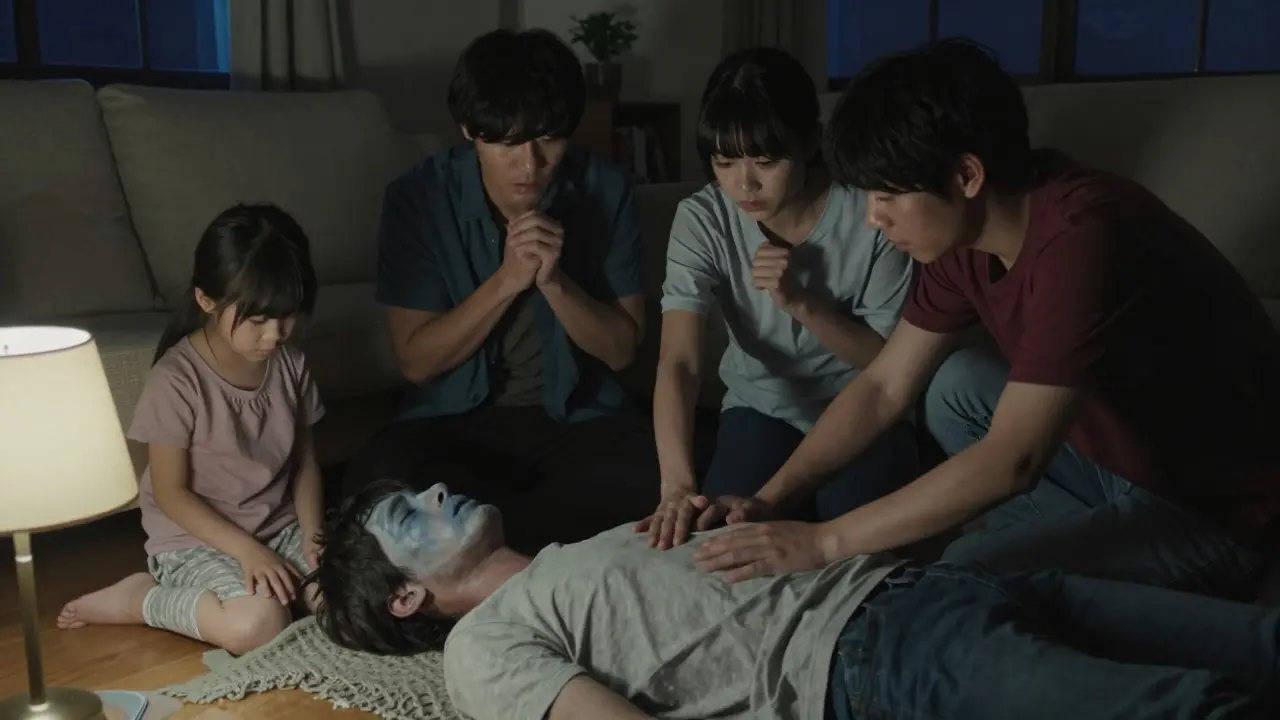
Every year, more than 100,000 people in the U.S. die from drug overdoses-and most of those happen at home. If someone you love uses drugs, even occasionally, knowing how to spot an overdose could save their life. You don’t need to be a doctor. You just need to know what to look for, what to do, and how to stay calm when it matters most.
What an Overdose Really Looks Like
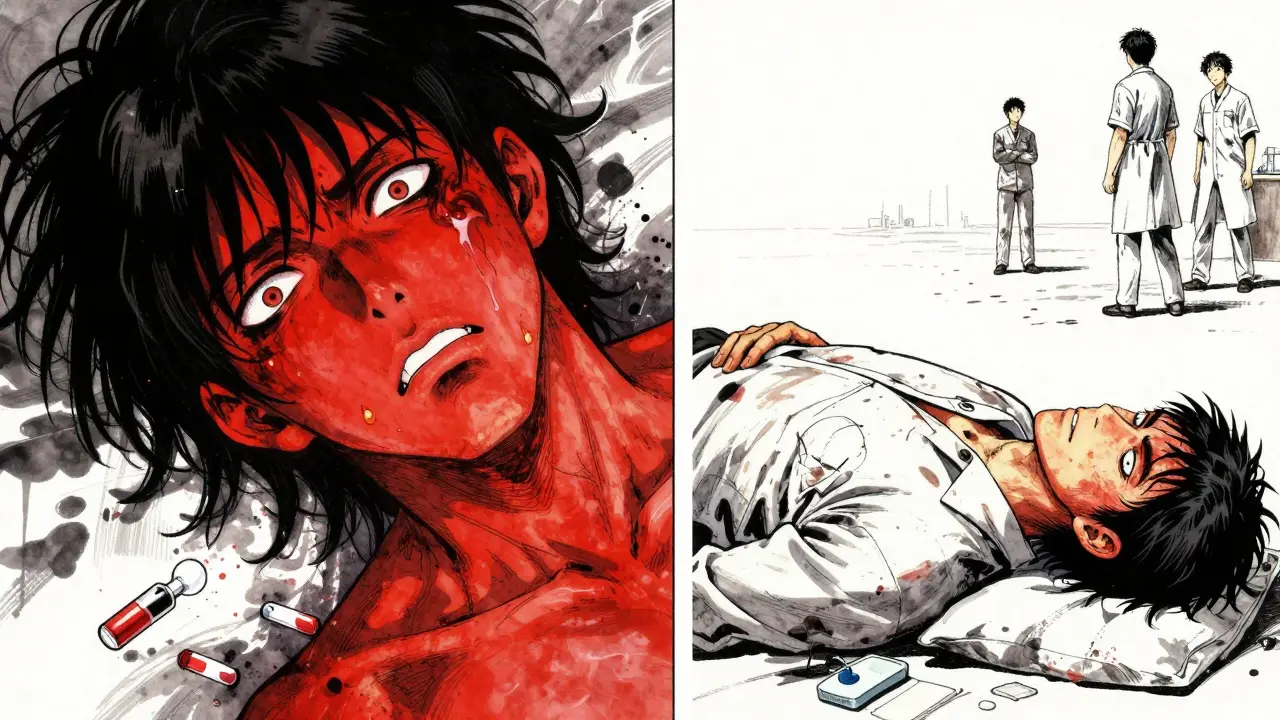
People often think an overdose means someone is passed out or shaking. But it’s not that simple. Many overdoses start quietly. The person might be breathing too slowly, their skin might look gray or blue, and they won’t wake up no matter how much you shake them or call their name. For opioid overdoses-which include heroin, fentanyl, oxycodone, and even some prescription painkillers-there are three key signs, known as the opioid triad:- Unresponsive: They don’t react when you shout their name or rub your knuckles hard on their sternum (the bone in the middle of their chest). If they’re just high, they’ll usually stir. If they’re overdosing, they won’t move at all.
- Slow or stopped breathing: Less than one breath every five seconds. Or no breathing at all. This is the most dangerous sign. Without oxygen, brain damage starts in minutes.
- Blue or purple lips and fingernails: This is cyanosis. It means their body isn’t getting enough oxygen. For people with darker skin, this might look like grayish or ashen lips and nails, not bright blue.
- Limp body, like a ragdoll
- Clammy, cold skin
- Slow, gurgling breaths-like they’re drowning in their own saliva
- Pupils that look like pinpoints
- Extreme high body temperature (over 104°F)
- Seizures
- Chest pain or racing heartbeat
- Agitation, confusion, or hallucinations
Teaching Family Members: What Actually Works
Reading a pamphlet or watching a video isn’t enough. Studies show that families remember 73% more when they practice. You need to train like you’re preparing for a fire drill. Start with a simple framework: Recognize-Respond-Revive.- Recognize: Go through the signs together. Use photos or videos of real people (not actors). Show examples of different skin tones-blue lips on pale skin look different than gray lips on darker skin. Many people miss overdoses because they’re looking for the wrong color.
- Respond: Teach them to call 911 immediately. Don’t wait. Don’t think they’ll wake up. Say: ‘I think they’re overdosing.’ Paramedics won’t arrest someone for having drugs. Their job is to save lives.
- Revive: Show them how to use naloxone (Narcan). It’s not a magic cure, but it can reverse an opioid overdose in minutes if given fast enough.
How to Use Naloxone (Narcan) for Family Members
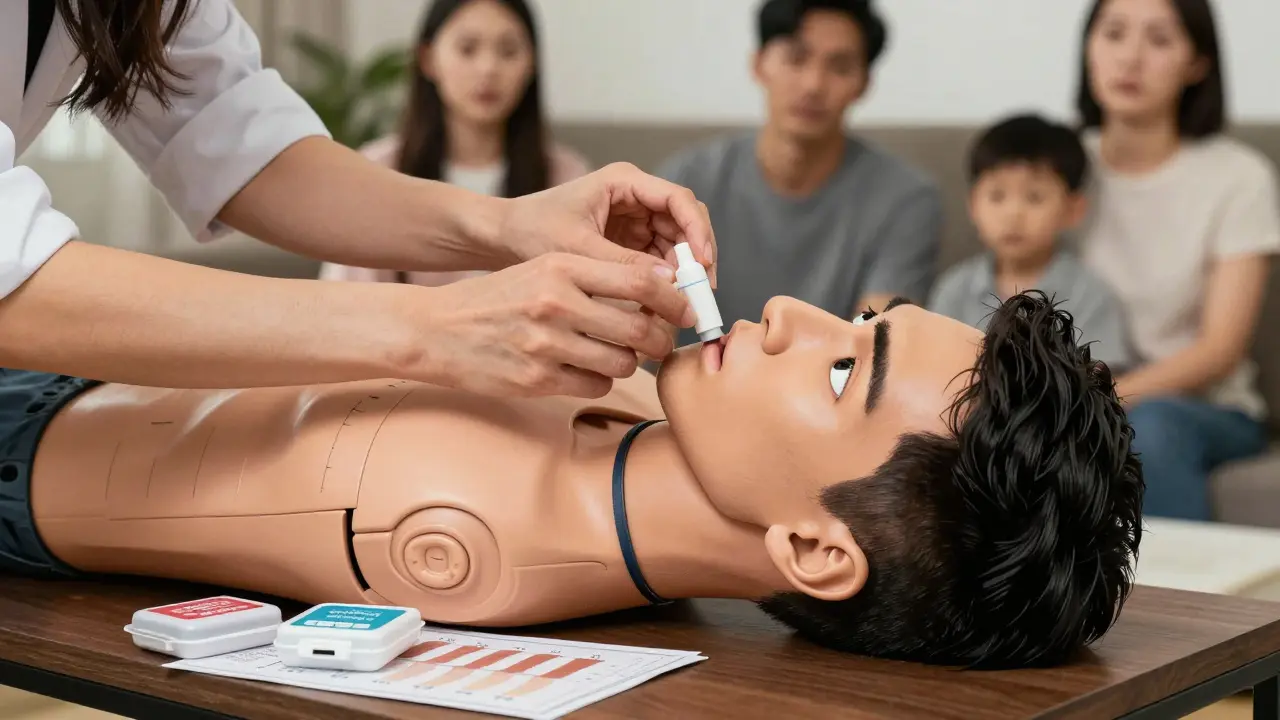
Naloxone is safe. It won’t hurt someone who didn’t take opioids. It’s not addictive. It’s not a drug you take for fun. It’s a lifesaver. Here’s how to use it:- Call 911 first. Even if you give naloxone, they still need medical help.
- Check breathing. If they’re not breathing or breathing very slowly, give naloxone right away.
- For nasal spray: Tilt their head back, insert the nozzle into one nostril, and press the plunger all the way in. One spray is enough.
- Wait 2-3 minutes. If they don’t wake up or start breathing normally, give a second dose in the other nostril.
- Turn them on their side. This keeps their airway open in case they vomit.
- Stay with them until EMS arrives. Naloxone wears off in 30-90 minutes. The drug they took might still be in their system.
What to Do After You Give Naloxone
Some people think once naloxone works, the crisis is over. It’s not. Naloxone only lasts 30 to 90 minutes. Many opioids, especially fentanyl, last longer. That means the person can stop breathing again after the naloxone wears off. That’s why you must:- Keep them on their side
- Watch their breathing constantly
- Stay with them until paramedics arrive
- Tell the EMTs what you gave them and when
Why This Training Feels Hard-And Why You Should Do It Anyway
Many families avoid this training because it feels scary. Some worry it’ll ‘jinx’ their loved one. Others feel guilty, like they’re assuming the worst. But here’s what the data says:- 78% of overdose deaths happen at home.
- Family members are the first responders in 9 out of 10 cases.
- When naloxone is given within 4 minutes, 98% of opioid overdoses are reversed.
- One study found that families who trained were 40% more likely to save a life than those who didn’t.
Where to Get Free Training and Supplies
You don’t have to pay for this. Most public health programs offer free training and free naloxone kits.- Your local pharmacy (ask for ‘overdose prevention program’)
- Your city or county health department
- Community centers and needle exchange programs
- Online: SAMHSA’s ‘Stop Overdose’ curriculum is free and available in 28 languages
- YouTube: Search ‘Overdose Lifeline Family Training’-their video has helped over 1,200 people save lives
What to Do If You’re Still Unsure
If you’re still not sure whether it’s an overdose, act like it is. When in doubt:- Call 911
- Give naloxone if you have it
- Start rescue breathing if they’re not breathing
- Don’t leave them alone
Overdose isn’t a moral failure. It’s a medical emergency. And the people who save lives aren’t the ones with the most training-they’re the ones who were ready when it mattered.
Can I give naloxone to someone who didn’t take opioids?
Yes. Naloxone only works on opioids. If someone didn’t take them, it won’t hurt them. It won’t wake them up if they’re drunk or on stimulants, but it won’t cause harm either. When in doubt, give it.
What if I’m scared to call 911?
Paramedics are trained to help, not judge. In most places, calling 911 during an overdose is protected by Good Samaritan laws. They won’t arrest the person. Their goal is to save a life. Waiting for permission to call delays help-and time is the most critical factor.
How long does naloxone take to work?
Naloxone usually starts working in 2 to 5 minutes. If the person doesn’t respond, give a second dose. Don’t wait longer than 3-5 minutes. Keep doing rescue breathing while you wait.
Can I use naloxone more than once?
Yes. Each nasal spray is single-use, but you can use multiple doses. Most kits come with two sprays. If the person doesn’t wake up after the first, use the second one in the other nostril. You can even use more if needed.
Is this training only for opioids?
The core skills-recognizing unresponsiveness and slow breathing-apply to all overdoses. But naloxone only works for opioids. For stimulant overdoses (like cocaine or meth), focus on calling 911, cooling the person down, and keeping them calm until help arrives.
Gloria Parraz
December 19, 2025 AT 23:20I trained my whole family last month after my cousin nearly died. We practiced with the training kit, watched the video, and kept the Narcan in the fridge next to the butter. It felt weird at first-like we were expecting the worst-but now it’s just part of our routine. Like checking smoke alarms. I’d rather look silly for being prepared than lose someone because I was too scared to act.
My mom still says, ‘What if we’re wrong?’ And I say, ‘Then they wake up mad we woke them up.’ Better than the alternative.
Don’t wait for a crisis to learn this. Do it now. Today.
And no, you don’t need to be a doctor. You just need to care enough to learn.
And yes, I’ve used it. Once. It worked. He’s alive. I’m not proud-I’m just glad I didn’t freeze.
Anyone else here have a story like this? I need to hear it. We’re not alone in this.
It’s not morbid. It’s love in action.
Stop waiting for permission to save a life.
You’ve got this.
William Storrs
December 20, 2025 AT 15:56This is the most important thing I’ve read all year. Seriously. I used to think overdoses were something that happened to ‘other people.’ Then my brother OD’d on fentanyl-laced pills he thought were oxycodone. We didn’t know what to do. We waited. We panicked. We called 911 too late.
He survived. But not because we were smart. Because an EMT was nearby and had Narcan in his bag.
I bought three kits this week. One for my house. One for my sister’s car. One for my mom’s purse. We practiced last Sunday. My niece thought it was a game. She laughed. Now she knows how to open the nasal spray. That’s all it takes.
Don’t let guilt stop you. Don’t let fear win. This isn’t about addiction-it’s about oxygen. And if you can breathe, you can save someone.
Do it. Now. Before it’s too late.
Alisa Silvia Bila
December 21, 2025 AT 20:02My dad used to say, ‘If you don’t know what to do, do something.’ That’s all this is.
Recognize. Respond. Revive.
That’s it.
No fancy terms. No judgment. Just action.
I keep Narcan in my wallet. My sister laughs. I don’t care.
It’s cheaper than a funeral.
Dorine Anthony
December 23, 2025 AT 04:13I’ve been meaning to do this for years. My cousin’s been using for a while. I didn’t want to make it weird. But reading this? It’s not weird. It’s necessary.
I’m ordering the training kit this week. No more waiting.
Thanks for writing this. It gave me the nudge I needed.
Marsha Jentzsch
December 24, 2025 AT 09:37THIS IS A GOVERNMENT TRAP. Naloxone? It’s just a band-aid. They don’t want you to stop using-they want you to keep using and keep coming back for more. The pharmaceutical companies make billions off this. They’re the ones pushing Narcan. They know people will keep using if they know they can just get revived.
And why are they giving it away for free? So you don’t question the system. So you don’t ask why fentanyl is in everything. So you don’t demand real solutions.
This isn’t help. It’s control.
And don’t tell me ‘it saves lives’-I’ve seen the stats. The overdose numbers keep going up. They’re not fixing the problem. They’re managing it. Like a cattle herd.
Wake up. This is all part of the plan.
They don’t want you sober. They want you dependent. On drugs. On Narcan. On the system.
Who profits? Always ask who profits.
I’m not giving my family Narcan. I’m teaching them to walk away. That’s the real solution.
Henry Marcus
December 25, 2025 AT 09:01They’re lying to you. Naloxone doesn’t reverse overdoses-it just resets the body for another dose. It’s a chemical leash. The CDC, the DEA, Big Pharma-they all push this because they want you to think you’re safe. But the truth? Fentanyl is so potent that Narcan wears off before the drug does. That’s why people die after they ‘wake up.’
They don’t tell you that. They don’t tell you that the second dose is often too late.
And who gives out these kits? Same people who profit from rehab centers. Same people who fund the ‘war on drugs’ while letting synthetic opioids flood the streets.
This isn’t prevention. It’s a revolving door.
And why is everyone so eager to give Narcan but never talk about harm reduction beyond this? Because the system doesn’t want real change. It wants compliance.
Save your money. Learn CPR. That’s the only real tool they can’t control.
They’re selling you hope. But hope doesn’t stop a lethal dose.
Question everything. Even this.
William Liu
December 25, 2025 AT 19:55I was skeptical at first. Thought this was just another ‘feel-good’ post. But then I remembered my cousin. He was 21. We found him in the bathroom. Didn’t know what to do. Called 911. Waited. He didn’t make it.
I bought two Narcan kits last week. One for my house. One for my car. I showed my kids how to use it. They’re 10 and 12. They think it’s like a fire extinguisher.
They’re right.
It’s not about fear. It’s about being ready.
If you’re reading this, do it. Today.
It’s the most important thing you’ll do this year.
Mike Rengifo
December 26, 2025 AT 08:53My sister’s been sober for two years now. She told me she wishes we’d known how to use Narcan before she OD’d in 2020.
She didn’t die. But she was in the hospital for a week.
I got the kit. We practiced. Now it’s in the drawer next to the first aid stuff.
It’s not scary. It’s just… normal.
Like having a spare tire.
Don’t wait until it’s too late.
Meenakshi Jaiswal
December 26, 2025 AT 15:32In India, we don’t have Narcan widely available-but the signs are the same. Slow breathing. Blue lips. Unresponsive.
We teach this in community health workshops. Even in villages. We use local examples-someone who passed out after drinking spiked liquor, someone who took too many painkillers for back pain.
It’s not about drugs. It’s about breathing.
Call for help. Keep them breathing. Turn them on their side.
That’s all.
Simple. Human.
And it saves lives.
Don’t overcomplicate it. Just act.
bhushan telavane
December 27, 2025 AT 15:02My cousin in Delhi OD’d on tramadol last year. We didn’t know what to do. We called the hospital. They said, ‘Bring him.’ We waited an hour. He didn’t make it.
Now I tell everyone: if someone’s not breathing, don’t wait. Don’t call first. Start breathing for them. Use your mouth. Blow air. Push on the chest.
Narcan? Nice if you have it. But breathing? That’s free.
Don’t wait for a kit. Learn CPR. That’s your real power.
Mahammad Muradov
December 29, 2025 AT 01:25This is all nonsense. People who use drugs deserve what they get. You’re enabling them. You think giving them Narcan is kindness? It’s not. It’s prolonging the destruction. Let them die. Then maybe the rest will learn.
My brother used for 12 years. We tried everything. He died anyway.
Now I know: you don’t save people who don’t want to be saved.
Stop wasting time on this. Focus on your own life.
Drugs are a choice. Death is the consequence.
Stop romanticizing addiction.
It’s not a medical emergency. It’s a moral failure.
Connie Zehner
December 29, 2025 AT 19:56OMG I JUST REALIZED MY BROTHER HAS NARCAN IN HIS VAN!! I’VE BEEN SCARED TO ASK BECAUSE I THOUGHT HE WAS STILL USING!! BUT NOW I KNOW HE’S PREPARED!! 😭😭😭
AND DID YOU KNOW NARCAN CAN BE STOLEN?? I HEARD A STORY ON TIKTOK THAT PEOPLE ARE STEALING NARCAN KITS TO SELL THEM ON THE DARK WEB!!
AND WHAT IF YOU GIVE IT TO SOMEONE WHO’S JUST DRUNK?? I HEARD IT CAN CAUSE SEIZURES!!
AND WHY IS IT ONLY FOR OPIOIDS?? WHAT ABOUT COCAINE?? WHAT IF THEY’RE ON MIXED DRUGS??
AND WHY DO THEY ALWAYS SAY ‘CALL 911’ BUT THEN THEY NEVER COME?? MY FRIEND’S BROTHER WAITED 45 MINUTES AND THEY NEVER SHOWED!!
THIS IS A TRAP. I’M NOT GIVING NARCAN TO ANYONE. I’M KEEPING IT LOCKED IN A SAFE. AND I’M TELLING EVERYONE TO JUST STAY AWAY FROM DRUGS.
THEY’RE ALL JUST USING THIS TO GET FREE MEDS.
AND WHY IS THIS POST SO LONG?? WHO HAS TIME TO READ THIS??
IT’S TOO MUCH.
TOO MUCH.
TOO MUCH.
holly Sinclair
December 30, 2025 AT 15:00It’s fascinating how this post frames overdose as a purely physiological event, as if the social, economic, and psychological dimensions of addiction can be reduced to a checklist of symptoms and a nasal spray.
What does it mean that we’ve normalized the idea that the most effective intervention for a systemic crisis is a pharmacological quick fix? We’ve turned a public health catastrophe into a personal responsibility exercise-‘train your family, keep Narcan in your purse’-as if the solution lies in individual preparedness rather than decriminalization, universal healthcare, or housing for the unhoused.
And yet… I get it.
Because while we wait for systemic change, people are dying on living room floors.
So I do both.
I advocate for policy reform. And I keep Narcan in my glovebox.
Because moral clarity doesn’t mean moral paralysis.
One doesn’t cancel the other.
It’s not either/or.
It’s both/and.
And maybe that’s the most uncomfortable truth of all.
We must hold the contradiction: this is not enough-and yet, it is everything.
So I practice. I teach. I call 911.
And I keep fighting for a world where this isn’t necessary.
Because saving a life today doesn’t mean we stop demanding justice tomorrow.
Ashley Bliss
December 31, 2025 AT 15:59I used to think this was all about drugs. But now I see it’s about love. Real love. Not the kind that says ‘I’m proud of you’-the kind that says ‘I’m not leaving you alone.’
My mom didn’t believe in this training. Said it was ‘giving up on God.’ Then she found my brother unconscious. She didn’t pray. She grabbed the Narcan. She gave it. She held his hand. She didn’t stop breathing for him until the ambulance came.
He’s alive.
She doesn’t talk about it much. But I saw her. She didn’t cry. She didn’t scream. She just… did what had to be done.
That’s the quietest kind of courage.
And it’s not about being brave.
It’s about being there.
Even when it’s ugly.
Even when it’s scary.
Even when you’re terrified you’ll fail.
That’s love.
Not the kind you post about.
The kind you do.
And if you’re reading this and you haven’t trained yet?
You’re not ready.
But you can be.
Today.
Right now.
Go get the kit.
And don’t wait for permission.
They won’t give it to you.
You have to take it.
Gloria Parraz
December 31, 2025 AT 21:24Just saw someone say ‘it’s a trap’ and ‘they want you to keep using’… I’m not mad. I’m sad.
Because I’ve held my cousin’s hand while he came back to life after Narcan. He looked at me and said, ‘I’m sorry.’
He didn’t say, ‘Thanks for enabling me.’
He said, ‘I’m sorry.’
That’s not a trap. That’s a human being.
And if you think saving a life is enabling, you’ve never held someone’s hand while they gasped for air.
I’m not here to defend the system.
I’m here because I saw what happens when you wait.
And I won’t let that happen again.
Not to anyone I love.
Not to anyone at all.