
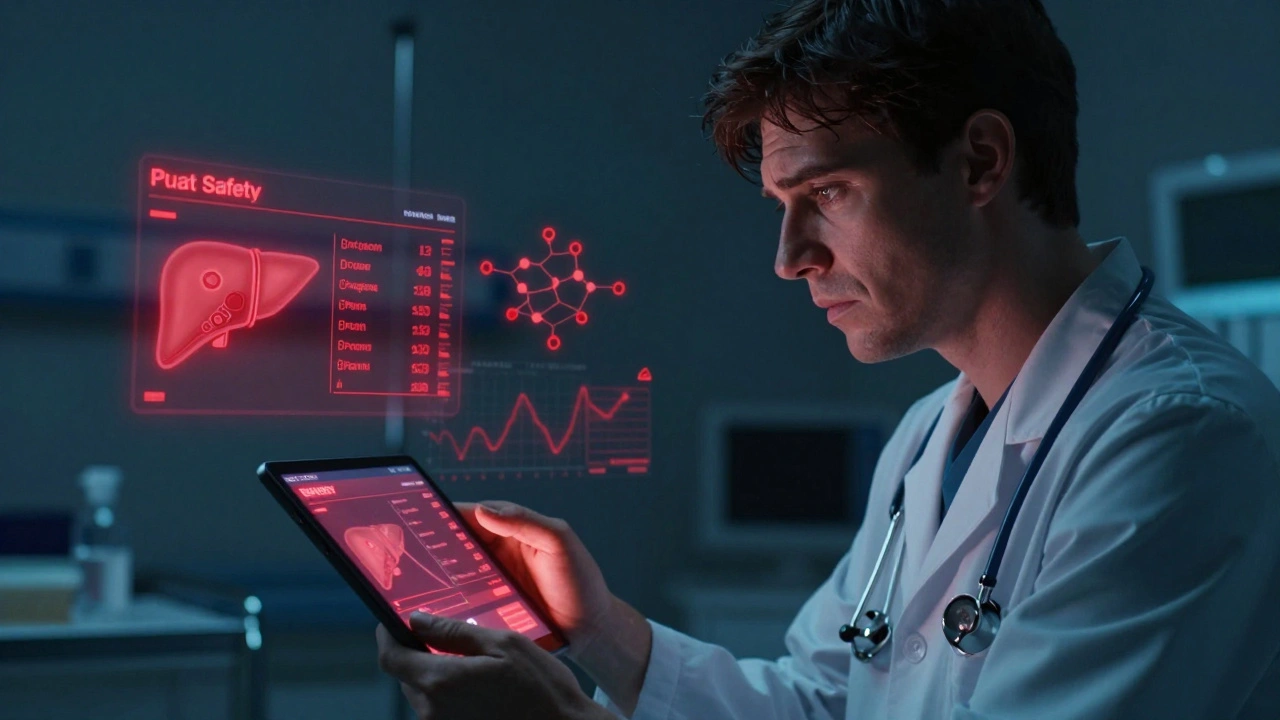
Every time a patient takes a new medication, there’s a risk-sometimes small, sometimes serious-that something unexpected will happen. A rash. A drop in blood pressure. Liver damage. These are adverse drug reactions, and they’re not always caught in clinical trials. That’s where clinician portals and apps for drug safety monitoring come in. They’re not fancy gadgets. They’re practical tools that help doctors, pharmacists, and safety officers spot danger before it becomes a crisis.
Why Traditional Reporting Falls Short
For decades, drug safety relied on paper forms, slow email chains, and sporadic reports from hospitals. A patient in rural Kenya might have a bad reaction to an antibiotic. The clinic fills out a form. It sits in a drawer for weeks. By the time it reaches a national regulator, the same drug might have harmed dozens more. In the U.S., a similar delay happens when a hospital forgets to report an unusual side effect to the FDA. These gaps are dangerous. Modern clinician portals fix this by turning safety reporting into part of the daily workflow. Instead of waiting for a form to be mailed, a doctor sees a warning pop up while writing a prescription. A pharmacist gets an alert when a patient’s lab results show signs of kidney stress after starting a new drug. The system doesn’t just collect data-it connects it to real-time clinical decisions.What These Tools Actually Do
These apps and portals don’t replace clinical judgment. They amplify it. Here’s what they do in practice:- Automatically flag unusual patterns in patient data-like a spike in elevated liver enzymes across multiple patients taking the same drug.
- Link adverse event reports directly to electronic health records (EHRs), so the full clinical picture is visible.
- Use standardized coding systems like MedDRA to classify reactions consistently, so data from different hospitals can be compared.
- Generate real-time dashboards that show emerging safety signals before regulators even ask for them.
- Allow clinicians to report reactions in under two minutes, right from their EHR interface.
Take Cloudbyz’s platform, used in clinical trials. When a patient’s blood pressure drops after taking a new experimental drug, the system doesn’t just log it. It checks against thousands of other cases, cross-references lab values, and surfaces similar patterns from past trials. That’s how a rare but dangerous interaction gets caught early-before it affects hundreds more.
Choosing the Right Tool for Your Setting
Not all tools are built the same. Your choice depends on where you work and what you need.If you’re in a hospital in the U.S. or Europe: Tools like Wolters Kluwer’s Medi-Span are common. They’re embedded in EHRs like Epic and Cerner. When you prescribe a drug, the system checks for interactions with other medications the patient is taking. One hospital reported 187 prevented adverse events in six months just from these alerts. But there’s a catch: too many false alarms. Clinicians start ignoring them. That’s called alert fatigue. The best systems let you tune sensitivity-fewer, smarter alerts.
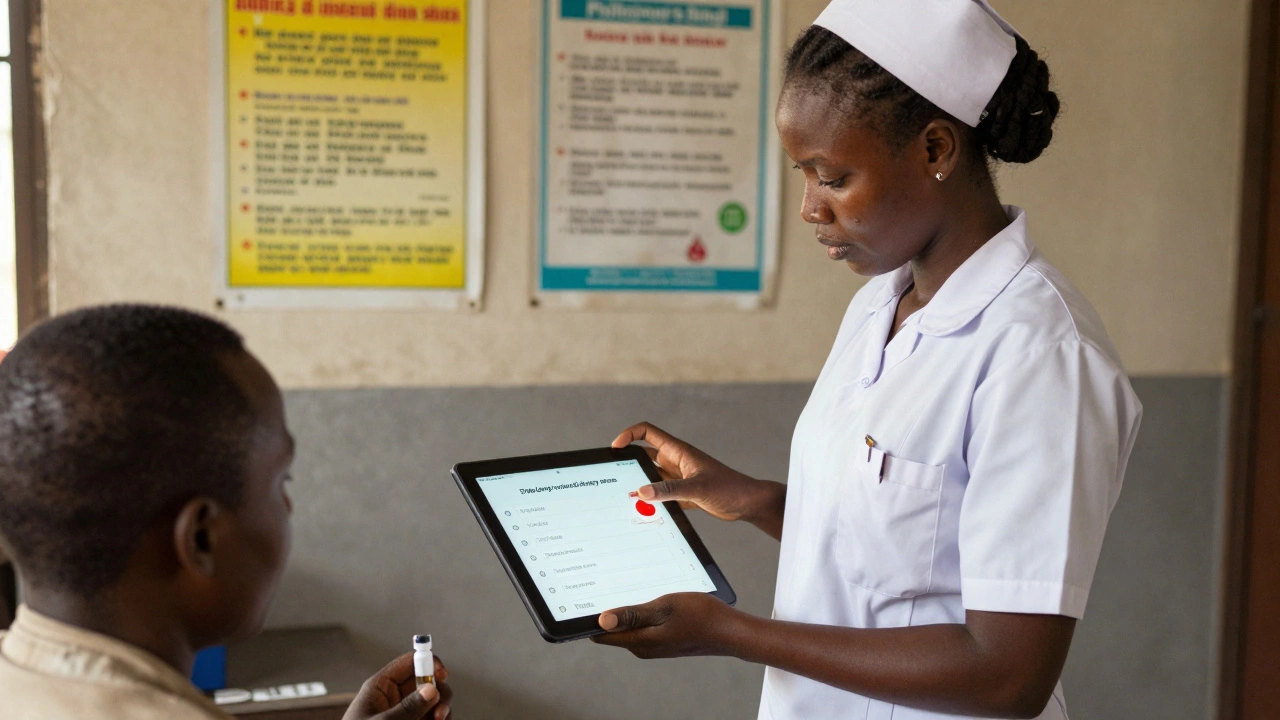
If you’re in a clinic in Kenya, Nepal, or Bangladesh: The PharmacoVigilance Monitoring System (PViMS) is the go-to. It’s free, works on basic laptops, and doesn’t need high-speed internet. It uses simple dropdown menus instead of complex forms. A nurse can report a reaction in under 90 seconds. Adoption rates hit 95% in 17 countries because it’s designed for people who aren’t tech experts. But it doesn’t do AI analysis. You won’t get predictive alerts. You get reliability, not sophistication.
If you’re running a clinical trial: Cloudbyz or IQVIA’s AI tools are standard. They integrate with trial data systems, map to CDISC standards, and cut signal detection time by 40%. But they’re expensive-$185,000 a year-and take months to set up. You need data specialists to map fields from your EDC system to safety databases. If you’re a small biotech, this isn’t practical. But if you’re testing a new cancer drug across 50 sites, you can’t afford not to use them.
If you’re a researcher or regulator: Open-source tools like clinDataReview offer total control. Built in R, they generate fully reproducible reports that meet FDA 21 CFR Part 11 standards. Every step is documented. Every analysis can be repeated. But you need to know how to code. Training takes days. For most frontline staff, it’s overkill.
What You Need to Use Them Well
It’s not enough to install the software. You need the right people and habits.- Clinical pharmacology knowledge is non-negotiable. You can’t tell if a reaction is drug-related if you don’t understand how the drug works in the body.
- Data literacy matters. You need to read dashboards, spot outliers, and question why a number looks off.
- Regulatory awareness is mandatory. Reporting timelines, required fields, and coding standards vary by region. Missing one detail can delay approval or trigger a regulatory audit.
Most organizations find staff need 80 to 120 hours of training before they’re confident using these tools. That’s not a one-time workshop. It’s ongoing coaching. A safety officer in a mid-sized biotech told Reddit users it took 11 weeks just to map their trial data to Cloudbyz’s system-with constant vendor support. Don’t underestimate the time investment.
AI Is Helping-But Not Replacing Humans
AI tools like IQVIA’s now reduce false positives by 85%. Instead of 100 alerts a day, you get 15 that actually matter. That’s huge. But here’s the truth: AI still misses context. A patient’s fall after taking a new blood pressure drug might look like a side effect. But maybe they had a seizure. Or their cane broke. The AI doesn’t know. Only the clinician does.The FDA found that 22% of safety signals flagged by automated systems in 2023 were false-because the system didn’t understand the full story. That’s why every major platform still requires human review. AI is a co-pilot, not the pilot. Dr. Elena Rodriguez from IQVIA says it best: “LQPPVs remain indispensable as strategic stewards of these tools.”

What’s Next?
The next wave is predictive safety. Cloudbyz’s new version uses machine learning to predict which patients are most at risk based on their age, genetics, lab results, and medication history. It’s not magic. It’s statistics. But it’s powerful. Early tests show 40% faster detection of hidden risks.The FDA’s 2026 guidance will require AI models to be explainable. No black boxes. If the system says a drug is dangerous, it must show you why-step by step. That’s good. It means less guesswork, more trust.
But here’s the real challenge: integration. Forrester predicts platforms that don’t connect smoothly to clinical workflows will see 40% higher abandonment rates within three years. If your safety tool is a separate log-in, a separate screen, a separate headache-it won’t be used. The winners will be those that slip quietly into the EHR, like a second pair of eyes.
Getting Started
If you’re ready to use these tools:- Start small. Pick one drug or one type of reaction to monitor-like liver toxicity or sudden dizziness.
- Map your data. Know what’s in your EHR. What fields capture lab values? Medication lists? Allergies?
- Choose a tool that fits your setting. Don’t buy a Ferrari if you drive on dirt roads.
- Train your team. Not once. Regularly. Safety monitoring is a skill, not a checkbox.
- Review reports weekly. Don’t wait for a quarterly audit. Look for patterns. Ask: Is this a fluke-or the start of something bigger?
Drug safety isn’t about catching every single bad reaction. It’s about catching the ones that matter-before they hurt more people. These tools make that possible. But they only work if you use them, understand them, and trust them enough to act.
Can I use these apps if I don’t have high-speed internet?
Yes, but your options are limited. The PViMS platform is designed for low-resource settings and works on basic internet connections. It can even store data locally and sync when connectivity returns. Other platforms like Cloudbyz or Medi-Span require stable connections. If your clinic has frequent outages, PViMS is your best bet.
Are these tools only for large hospitals or pharmaceutical companies?
No. While enterprise platforms like Cloudbyz are for big players, tools like Medi-Span are used in hospitals of all sizes, and PViMS is used in clinics across 28 low- and middle-income countries. Even small practices can use EHR-integrated safety alerts if their system supports them. The key is matching the tool to your scale and needs-not your budget.
Do these apps replace the need for pharmacovigilance experts?
Absolutely not. These tools give you faster data and better alerts, but they can’t interpret context. A drop in platelets could mean a drug reaction-or a viral infection. Only a trained pharmacovigilance professional can make that call. AI and portals are assistants, not replacements. Regulatory agencies still require human review for all serious adverse event reports.
How long does it take to implement one of these systems?
It varies. For hospitals using EHR-integrated tools like Medi-Span, setup takes 4 to 6 weeks. For clinical trial platforms like Cloudbyz, expect 8 to 12 weeks because of complex data mapping. PViMS can be up and running in 3 to 5 weeks in LMICs. The biggest delays come from integrating with existing systems and training staff-not the software itself.
What’s the biggest mistake people make when using these tools?
Treating them as passive data collectors. The most common error is ignoring the alerts or setting them too high. If you get 50 alerts a day and just click through them, you’ll miss the real signals. The best users review reports weekly, question outliers, and talk to clinicians about why a reaction happened. Safety isn’t automated-it’s observed, questioned, and acted on.

Krys Freeman
December 5, 2025 AT 09:59These apps are just another government-backed surveillance tool disguised as safety. Next thing you know, they’ll track your coffee intake and flag you for ‘caffeine-induced hypertension.’
Craig Ballantyne
December 6, 2025 AT 06:13The structural integrity of these systems hinges on interoperability with existing EHRs. Without standardized HL7 FHIR interfaces, you’re just aggregating siloed noise. The real bottleneck isn’t the AI-it’s the legacy infrastructure clinging to 1990s data paradigms.
Robert Altmannshofer
December 6, 2025 AT 10:36Man, I’ve seen so many clinics buy these fancy dashboards and then let ‘em collect dust because no one had time to learn them. It’s like giving a chef a Michelin-star kitchen but no training. The tech’s cool, but if your nurse is drowning in paperwork, they ain’t gonna click ‘report’ on a pop-up. Keep it simple. Like PViMS. Works on a potato and a WiFi signal from next door.
Lyn James
December 7, 2025 AT 02:42Let’s be honest-this entire paradigm is a corporate illusion dressed in clinical garb. We’re told these tools are saving lives, but what we’re really doing is outsourcing moral responsibility to algorithms. Who decides what constitutes a ‘signal’? Who audits the auditors? The FDA’s 22% false positive rate isn’t a bug-it’s a feature of a system designed to generate anxiety, not understanding. We’ve turned medicine into a spreadsheet, and now we’re surprised when humans stop trusting it. Where’s the empathy? Where’s the bedside wisdom? We’ve replaced intuition with automation, and in doing so, we’ve severed the sacred thread between healer and patient.
Victor T. Johnson
December 8, 2025 AT 20:28AI is a co-pilot?? Bro. It’s not even a co-pilot it’s a confused intern who just got handed a manual written in Mandarin. I’ve seen these systems flag a patient for ‘possible liver toxicity’ because they ate garlic bread. 😑 The real danger isn’t the drug-it’s the people who think the app knows better than the clinician. We’re not robots. We’re humans with brains. Use the tool. Don’t worship it. 🤖🩺
Kathleen Koopman
December 10, 2025 AT 01:37Does anyone know if PViMS works with Android tablets? My clinic uses them and we’re trying to go paperless 😊
Bethany Hosier
December 10, 2025 AT 19:41These platforms are being quietly funded by pharmaceutical conglomerates to create a false sense of security. Did you know that the FDA’s adverse event database is only 1% of actual incidents? These portals aren’t designed to protect patients-they’re designed to shield corporations from liability by creating an audit trail that says, ‘We tried.’ The real solution? Ban all proprietary EHRs. Mandate open-source, non-profit systems. No more corporate data hoarding. No more profit-driven safety metrics. If they truly cared about patients, they’d make these tools free, open, and auditable by the public. But they won’t. Because money talks. And safety? It’s just a buzzword with a price tag.
gladys morante
December 11, 2025 AT 10:11Ugh. Another tech solution pretending to fix human problems. I’ve seen this movie. We get shiny new tools, then everyone acts like the problem’s solved. Meanwhile, the same nurses who report 12 reactions a week are being told they’re ‘over-reporting.’ They’re burnt out. They’re ignored. And now we’re adding more screens to their day? No. Just no. This isn’t progress. It’s punishment wrapped in a dashboard.
Precious Angel
December 12, 2025 AT 18:23Let me tell you something about these ‘safety tools’-they’re not tools. They’re traps. They’re designed to make you feel safe while quietly eroding your autonomy. You think you’re in control? You’re not. You’re clicking ‘confirm’ on alerts you don’t understand, signing off on reports you didn’t write, and trusting algorithms that don’t know your patient’s name. And when something goes wrong? Who gets blamed? You. The frontline worker. Not the vendor. Not the regulator. YOU. They’ve turned your conscience into a checkbox. And you’re okay with that? You’re okay with being a cog in a machine that reduces human suffering to a CSV file? Wake up. This isn’t innovation. It’s institutional betrayal.
Robert Asel
December 14, 2025 AT 13:15It is imperative to underscore that the efficacy of pharmacovigilance platforms is contingent upon the fidelity of data input. Without rigorous adherence to MedDRA terminology and CDISC standards, the entire analytical architecture collapses into a state of semantic entropy. Furthermore, the notion that ‘low-resource settings’ benefit from simplified interfaces ignores the fundamental requirement for longitudinal data integrity. One cannot optimize for usability at the expense of regulatory compliance. The trade-off is not merely technical-it is ethical.
Nancy M
December 15, 2025 AT 06:12My cousin works in a rural clinic in Nigeria. They use PViMS. No internet for 3 days? No problem. She logs the reaction on her phone, syncs when the generator’s running. No fancy AI. No alerts. Just a simple form. And guess what? They caught a deadly interaction between an antimalarial and a local herb. No one else saw it. Because it wasn’t in some database. It was in her head. She knew the patient. She knew the family. She knew the village. Tech helps. But it doesn’t replace the human who shows up every day, rain or no signal.