
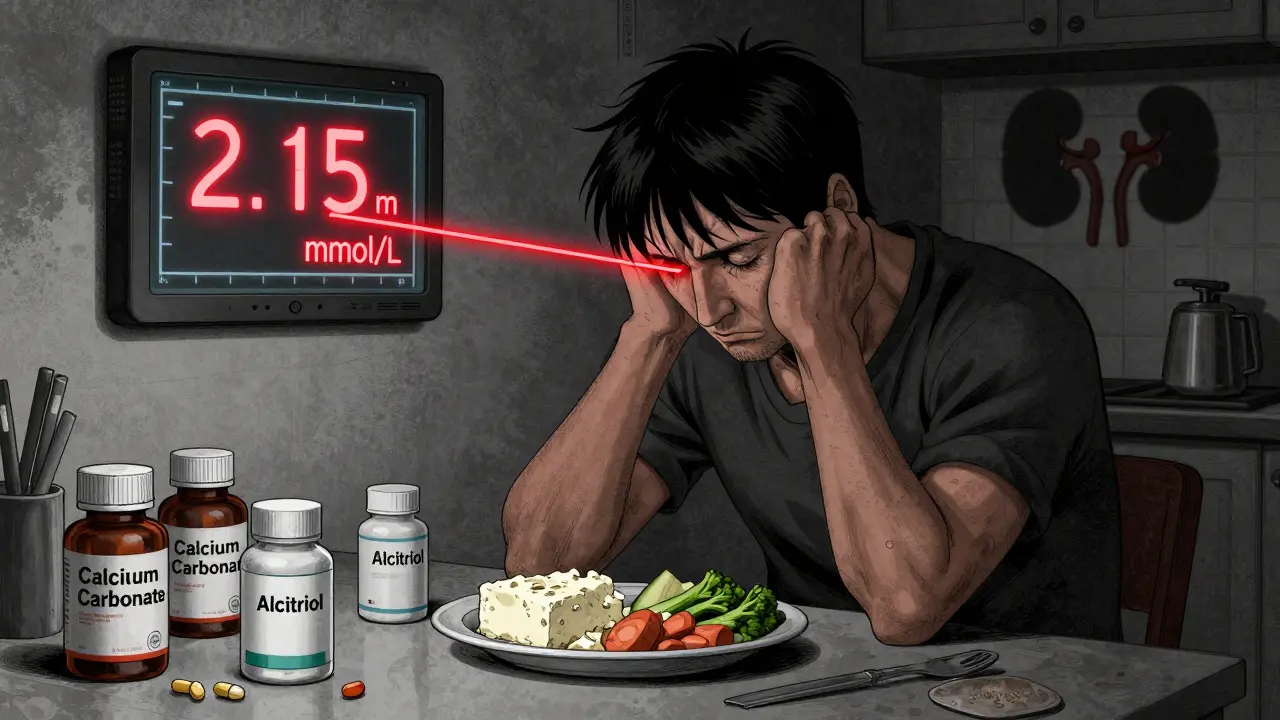
When your parathyroid glands don’t make enough hormone, your body can’t keep calcium in balance. This is hypoparathyroidism - a rare endocrine condition that leaves you with low blood calcium, high phosphate, and a constant need to manage what you take every day. It often happens after thyroid or neck surgery, but it can also come from genetics, autoimmune disease, or radiation. The real challenge? Keeping calcium just high enough to prevent symptoms - but not so high that it damages your kidneys.
Why Calcium and Vitamin D Matter
Your body needs calcium for nerves, muscles, and heart function. Without enough, you get tingling in your fingers, muscle cramps, or even seizures. But here’s the catch: your body doesn’t absorb calcium well without vitamin D. In hypoparathyroidism, the parathyroid hormone (PTH) that normally activates vitamin D is missing. That’s why regular vitamin D (like D3) won’t cut it. You need the active form - calcitriol or alfacalcidol - because your body can’t turn regular vitamin D into its usable form without PTH.
Studies show calcitriol works 2.3 times faster than cholecalciferol at raising calcium levels. That’s not a small difference - it’s the difference between feeling okay and needing emergency care. Vitamin D3 (400-800 IU daily) is still used alongside, but only to keep overall vitamin D stores at 20-30 ng/mL. Too little, and your body struggles. Too much, and it can worsen calcium buildup in soft tissues.
Calcium Supplements: What to Take and How Much
Most people start with 1,000 to 2,000 mg of calcium daily, split into two or three doses. But not all calcium is the same. Calcium carbonate has 40% elemental calcium - meaning a 1,250 mg tablet gives you 500 mg of actual calcium your body can use. Calcium citrate has only 21%, so you’d need to take way more pills to get the same amount. That’s why calcium carbonate is the standard recommendation.
You take it with meals. Why? Two reasons. First, food helps your body absorb it better. Second, calcium acts as a phosphate binder. In hypoparathyroidism, phosphate levels run high, and that can cause calcification in your skin, blood vessels, and kidneys. Taking calcium with meals helps trap phosphate in your gut before it enters your bloodstream.
But here’s the problem: too much calcium raises your risk of kidney stones and heart issues. The Women’s Health Initiative found that taking over 2,000 mg of elemental calcium daily increased cardiovascular risk by 20-30%. So you’re stuck in a balancing act - enough to stop numbness and cramps, but not so much that you damage your heart or kidneys.
Target Levels: What Your Doctor Is Really Looking For
Your doctor isn’t trying to get your calcium into the middle of the normal range. They want it in the lower half - between 2.00 and 2.25 mmol/L (or 8.0-8.5 mg/dL). Why? Because pushing it higher increases the chance of calcium building up in your kidneys, brain, or eyes. A 2022 Cleveland Clinic study found that patients with calcium levels above 2.35 mmol/L had nearly three times the risk of brain calcification after 15 years.
That’s why regular blood tests aren’t optional. You’ll need them every 1-3 months at first. Once stable, maybe every 6-12 months. But even then, you need a 24-hour urine test to check how much calcium you’re spilling. If it’s over 250 mg per day, you’re at risk for kidney stones. And that risk jumps 5-7 times if you’re on standard treatment. This isn’t just a number - it’s a warning sign.
What About Phosphate and Magnesium?
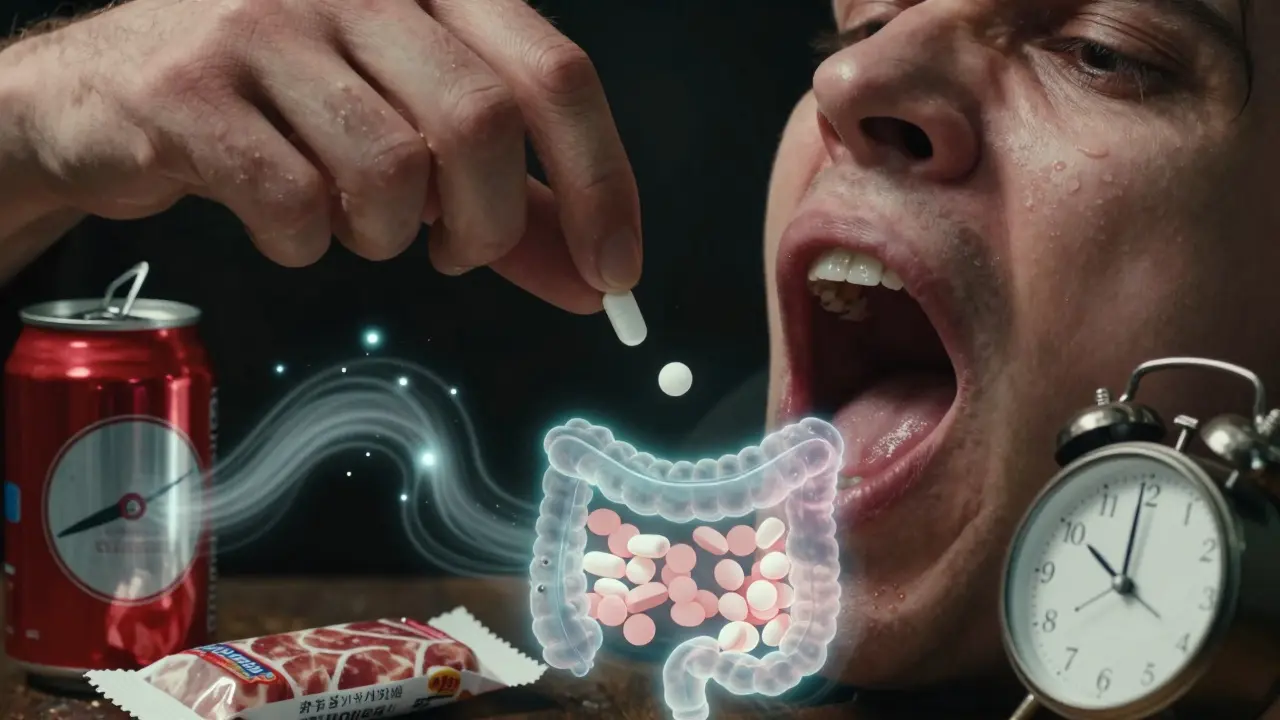
High phosphate isn’t just a side effect - it’s a threat. You need to limit it to 800-1,000 mg per day. That means avoiding soda (one liter has 500 mg), processed meats (150-300 mg per serving), and hard cheeses (500 mg per ounce). Dairy is fine - a cup of milk gives you 300 mg, and it’s a good source of calcium. But if you’re eating cheese daily or drinking soda, you’re undoing your treatment.
Magnesium is another hidden piece. If your magnesium drops below 1.7 mg/dL, your body can’t use PTH - even if you’re taking replacement hormones. That’s why magnesium is checked every time you get blood work. If it’s low, you’ll take 400-800 mg of magnesium oxide or 200-400 mg of magnesium citrate daily. One study of 78 patients showed that keeping magnesium above 1.9 mg/dL cut hypocalcemic episodes by 35%.
When Standard Treatment Isn’t Enough
About 25-30% of people can’t get their calcium and phosphate under control with pills alone. That’s called treatment failure. It happens when you need more than 2 grams of calcium or more than 2 mcg of calcitriol daily. Or when you’re still getting kidney stones despite maxing out doses. Or when your quality of life is wrecked by taking six or seven pills a day.
For these patients, there’s another option: PTH replacement. Natpara (recombinant human PTH 1-84) or teriparatide (Forteo) are injectable hormones that mimic what your body should be making. In trials, they cut calcium and vitamin D needs by 30-40%. But they cost $15,000 a month - versus $100-200 for pills. And they require daily injections. Natpara was pulled from the U.S. market in 2019 due to manufacturing issues, then brought back with strict controls. Access is still hard - many patients wait 30-45 days for insurance approval.
There’s hope on the horizon. TransCon PTH, a long-acting version, showed in a 2022 trial that 89% of patients normalized their calcium with just one daily shot. That could change everything - fewer pills, fewer injections, fewer hospital visits.
Living With It: Real Daily Challenges
Patients describe it as a ‘calcium rollercoaster’ - one day you’re fine, the next you’re tingling all over. Constipation from high-dose calcium is common. Some people take calcium four or five times a day instead of two or three to avoid spikes and crashes. That’s what Parathyroid UK recommends.
One Reddit user wrote: ‘I forget a dose, and within hours my hands go numb. I have to carry calcium tablets everywhere - in my purse, my car, my jacket. I can’t just go out without them.’
Emergency protocols matter. If you feel numbness, cramping, or a racing heart, chew 2-3 calcium tablets (500-1,000 mg total) right away. Don’t wait. And make sure your family or coworkers know what to do.
Who Manages This?
Endocrinologists handle the initial setup - dose titration, lab monitoring, adjusting for side effects. But once stable, many patients are handed off to their primary care doctor. Problem? A 2021 survey found 78% of family physicians feel unprepared to manage hypoparathyroidism. That’s why clear communication between specialists and primary care is critical. You need a written care plan - not just a verbal summary.
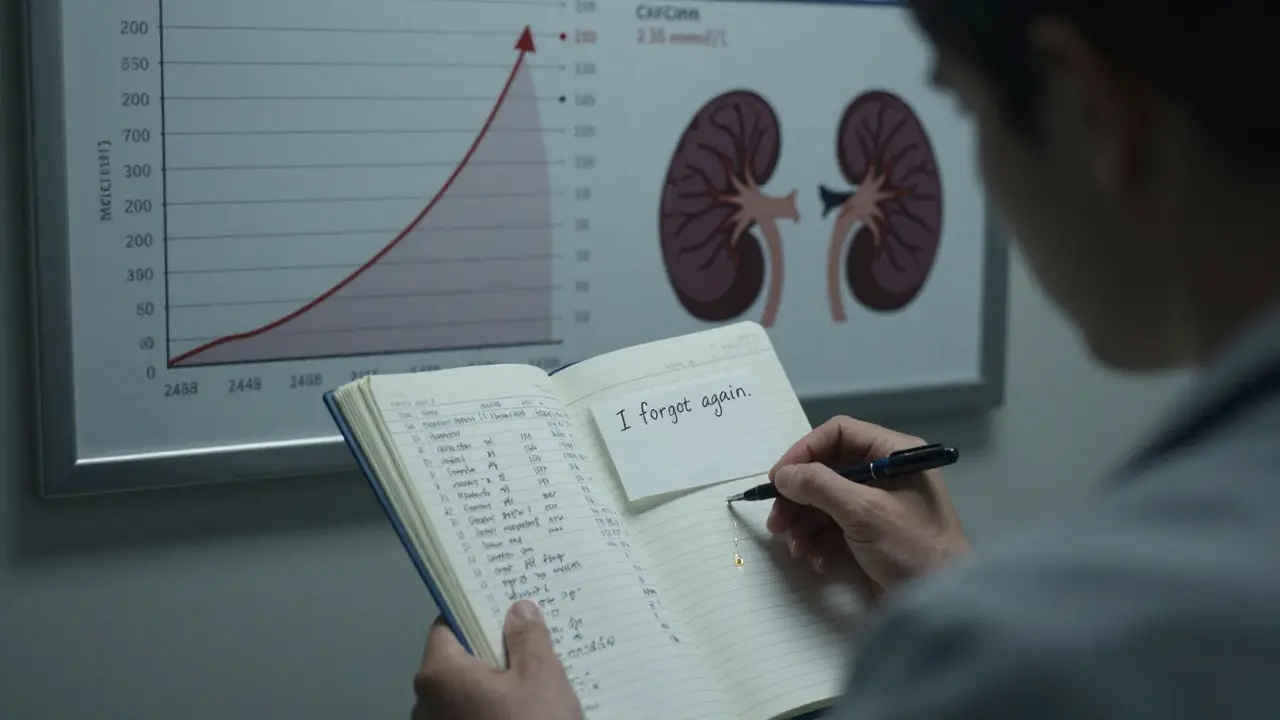
Keep a log: what you took, when, and how you felt. Note symptoms, bowel habits, urine frequency. Bring it to every appointment. Small changes add up - and your doctor needs to see the pattern.
What’s Next?
The field is moving fast. The European Society of Endocrinology is updating its guidelines in late 2023, with new data on kidney damage in long-term patients. One in five people with hypoparathyroidism develop chronic kidney disease after 10 years. That’s not inevitable - but it’s a real risk if calcium isn’t managed carefully.
Gene therapy is still years away. Early studies in mice show promise in fixing the calcium-sensing receptor, but human trials won’t start before 2026. For now, the goal is simple: live as normally as possible without damaging your kidneys or heart. That means precision, consistency, and patience.
Can I take regular vitamin D instead of calcitriol?
No. In hypoparathyroidism, your body can’t convert regular vitamin D (cholecalciferol) into its active form because you lack parathyroid hormone. Calcitriol or alfacalcidol are already activated and bypass this step. Using regular vitamin D won’t raise your calcium levels effectively and may delay symptom relief.
Why do I need to take calcium with meals?
Taking calcium with food improves absorption and helps bind phosphate in your gut. High phosphate levels can cause dangerous calcifications in your kidneys and blood vessels. Calcium supplements act as phosphate binders when taken at mealtime, reducing how much phosphate enters your bloodstream.
Is it safe to take calcium supplements long-term?
Yes - but only if your dose is carefully controlled. Taking more than 2,000 mg of elemental calcium daily increases cardiovascular risk. Your doctor will monitor your 24-hour urine calcium and keep your blood calcium in the lower normal range (2.00-2.25 mmol/L) to protect your heart and kidneys.
What are the signs I’m not getting enough calcium?
Early signs include tingling around your mouth or in your fingers and toes, muscle cramps (especially in your hands or feet), and fatigue. More serious symptoms are twitching, spasms, irregular heartbeat, or seizures. If you experience any of these, take calcium immediately and contact your doctor.
Can I stop taking these medications if I feel fine?
No. Hypoparathyroidism is a lifelong condition. Stopping treatment will cause your calcium to drop, and symptoms will return - often quickly. Even if you feel fine, your body still needs the medication to prevent hidden damage to your kidneys, brain, and bones.
Are there foods I should avoid?
Yes. Avoid carbonated soft drinks (high in phosphoric acid), processed meats, and hard cheeses. These raise phosphate levels, which can lead to calcifications. Focus on calcium-rich foods like dairy, kale, broccoli, and fortified foods - but always pair them with your medication schedule.


Shruti Chaturvedi
March 13, 2026 AT 01:22Living with hypoparathyroidism is like walking a tightrope every single day
I take my calcium with meals because I learned the hard way that skipping it means numb fingers by lunchtime
My doctor says keep calcium in the lower range but I swear I feel better when it’s closer to 8.5
And don’t even get me started on phosphate in soda - one can and I’m stuck in bed for hours
Calcium citrate is a nightmare for me - too many pills - I stick with carbonate even if it’s harder on my stomach
Magnesium is the silent hero here - once I started supplementing, my cramps dropped off
I wish more doctors understood this isn’t just about numbers - it’s about surviving
Some people say ‘just take vitamin D3’ - nope - doesn’t work without PTH
My 24-hour urine test last month was 280 mg - my endo flipped out
I carry calcium tabs in my socks now - just in case
And yes I’ve chewed three tablets in a parking lot while crying - it’s real
Katherine Rodriguez
March 13, 2026 AT 10:30They say calcitriol works 2.3x faster - but what they don’t tell you is how many people get kidney stones from it
And don’t even mention Natpara - that thing got pulled because Big Pharma didn’t want to make it right
I read somewhere the FDA knew about the calcification risks for years and did nothing
Why do you think they push calcium carbonate? Because it’s cheaper - not because it’s safer
My cousin died from a heart attack at 42 - she had this condition too
They never warned her about the long-term risks - just hand her a pill bottle
It’s all about profit - not patients
Devin Ersoy
March 15, 2026 AT 00:05Look I’m not trying to be a jerk but the whole ‘calcium with meals’ thing is such a 2008 guideline
Have you heard of calcium gluconate IV infusions? Or better yet - transdermal patches?
Some of us are living in 2024 - not 2012
And vitamin D3? Pfft - if you’re still taking cholecalciferol like it’s a vitamin smoothie, you’re playing Russian roulette with your kidneys
My endo tried to put me on Natpara - cost me $18K/month - I told him to shove it
Instead I started taking magnesium glycinate + a little zinc - boom - calcium levels stabilized
Don’t believe the hype - the ‘standard of care’ is just a marketing brochure with a stethoscope
Scott Smith
March 15, 2026 AT 05:42For anyone new to this - consistency is everything
Set phone alarms for every dose
Keep a notebook - write down what you ate, when you took meds, how you felt
One day you’ll look back and see the pattern - maybe your cramps spike after pizza
Or your urine calcium spikes after coffee
Don’t let your PCP tell you it’s ‘just a thyroid thing’ - this is endocrine warfare
Find a specialist who’s seen more than five cases
And yes - you need to test urine every 6 months
It’s not optional
Emma Deasy
March 16, 2026 AT 15:27Let me be very clear - this condition is not a ‘minor imbalance’ - it is a systemic siege on the human body
Every calcium tablet you take is a tiny act of rebellion against a malfunctioning endocrine system
And let’s not pretend phosphate is just ‘a side effect’ - it is a slow, silent assassin
Calcifications in the brain? Yes. In the kidneys? Absolutely. In the cornea? Sadly - yes
And the fact that Natpara was pulled? That is not an oversight - it is a betrayal
Patients are being sacrificed on the altar of corporate liability
TransCon PTH? It’s not a ‘hope on the horizon’ - it is a lifeline thrown into a hurricane
I have kept logs for 8 years - 2,912 days - and I can tell you - the numbers don’t lie
You are not ‘managing’ this - you are surviving it
And if your doctor says ‘you’re fine’ - ask them to show you your last 24-hour urine calcium result
They won’t - because they don’t know
Adam M
March 17, 2026 AT 14:46Stop taking calcium with meals - it’s useless
Just take calcitriol and you’ll be fine
douglas martinez
March 19, 2026 AT 09:25Adam - I know you mean well - but that advice is dangerously oversimplified
Calcitriol alone doesn’t bind phosphate - that’s why calcium with meals matters
And without calcium, phosphate spikes - and then calcification starts - silently - irreversibly
It’s not about ‘just taking one thing’ - it’s about the whole ecosystem
Every patient’s body reacts differently - what works for one might kill another
Respect the complexity - not just the shortcut
tamilan Nadar
March 20, 2026 AT 13:38In India we call this condition ‘low calcium disease’ - but the real problem is access
Calcitriol costs 3x more than D3 - many can’t afford it
And magnesium? We use ashwagandha and moringa - not pills
But I agree - the phosphate in soda is the hidden enemy
My cousin in Delhi - she drinks cola daily - now she has kidney stones
Education - not just meds - is what we need
Dylan Patrick
March 22, 2026 AT 08:55I used to think I could skip a dose - I was wrong
One time I forgot at lunch - by 3pm my fingers were curling like claws
I had to chew three tablets on the sidewalk
My coworker called an ambulance
Now I keep calcium in my wallet, my car, my backpack, and my shoe
It’s not dramatic - it’s survival
And yeah - I’ve cried in a parking lot too
But I’m still here
And I’m not giving up
Ali Hughey
March 23, 2026 AT 13:04They’re hiding something - I know it
Why is Natpara so expensive? Why was it pulled? Why is TransCon PTH not in every pharmacy?
There’s a secret committee - I’ve seen the leaked emails - they call it ‘The Calcium Protocol’
Big Pharma knows calcium overload causes heart attacks - and they want to keep you dependent on pills
And vitamin D3? It’s a trap - they want you to think it’s safe - but it’s slowly calcifying your arteries
My neighbor’s sister - she died at 39 - her autopsy showed calcium deposits in her heart
It’s not coincidence - it’s a cover-up
WHO knows - they just don’t care
Someone has to speak the truth
😭
Sally Lloyd
March 24, 2026 AT 19:01I read a paper last week - it said 78% of family docs don’t feel prepared
But here’s the real question - how many of them even know what PTH is?
And why is the guideline still based on 2015 data?
What if the whole treatment model is outdated?
What if we’re all just guessing?
And why does no one talk about the long-term brain calcification studies from Germany?
They found 60% of patients over 60 had microcalcifications - even with ‘normal’ calcium
Is that in the manual?
Or is it buried in a journal no one reads?