

When you’ve had a kidney, liver, or heart transplant, your life changes in ways most people never think about. One of those changes? Taking the same pills every single day - not because you feel sick, but because if you don’t, your body might reject the new organ. Two drugs make that possible: cyclosporine and tacrolimus. They’re powerful, precise, and unforgiving. And now, most people get them as generics. That saves money - a lot of it. But it also comes with risks that aren’t always talked about.
Why These Drugs Are So Tricky
Cyclosporine and tacrolimus don’t just suppress your immune system. They do it in a very specific way - by blocking a protein called calcineurin. That stops your T-cells from attacking the new organ. Sounds simple, right? But here’s the catch: the difference between a dose that works and one that’s dangerous is tiny. That’s what makes them narrow therapeutic index drugs. Too little? Rejection. Too much? Kidney damage, tremors, high blood sugar, even seizures. Tacrolimus works at 20 to 100 times lower doses than cyclosporine. A typical daily dose? Around 5 mg twice a day. Cyclosporine? Around 150 mg twice a day. But both need their blood levels checked every few weeks. For tacrolimus, the sweet spot is 5-15 ng/mL in the first few months after transplant. For cyclosporine, it’s 100-200 ng/mL. Go outside those numbers, even by a little, and things can go wrong fast.Brand vs. Generic: The Cost vs. Control Trade-Off
Branded versions - Prograf for tacrolimus, Neoral for cyclosporine - used to cost over $1,200 a month. Now, generic versions cost $300-$500 for tacrolimus and $150-$300 for cyclosporine. That’s a huge win for patients and insurers. In the U.S., over 92% of prescriptions for both drugs are now generic. Medicare Part D pushed that change hard. But here’s the problem: not all generics are the same. Generic drugs must be “bioequivalent” to the brand - meaning they absorb into the blood at roughly the same rate and amount. The FDA says that’s fine if the difference is within 80-125%. Sounds reasonable. But for drugs like these, even a 10% shift in absorption can mean the difference between safety and rejection. Cyclosporine is especially messy. Older versions were oil-based and absorbed unpredictably. The newer microemulsion form (like Neoral) fixed that - but generic versions of that still vary in how they’re made. Some use different oils, fillers, or coating agents. Those small differences change how your body takes in the drug. One patient might switch from Generic A to Generic B and see their blood levels drop 30% overnight.What Happens When You Switch Generics
Real stories from transplant patients tell the real story. One Reddit user, u/KidneyWarrior, switched from brand Prograf to a generic tacrolimus. Two weeks later, their blood level fell from 8.5 to 5.2 ng/mL. They had a mild rejection episode. Had to go to the hospital. Another user, u/OrganRecipient99, said their nephrologist won’t let them try generic cyclosporine because the first one they tried made their levels swing wildly. A 2022 survey of 1,247 transplant patients found that 42.7% noticed new or worse side effects after switching to generic tacrolimus. Almost 1 in 5 needed a dose change because their levels became unstable. The American Society of Transplantation says medication non-adherence is 15.3% higher among people on generics - not because they’re forgetful, but because they’re scared. If your levels dropped last time you switched, you’re not going to want to do it again.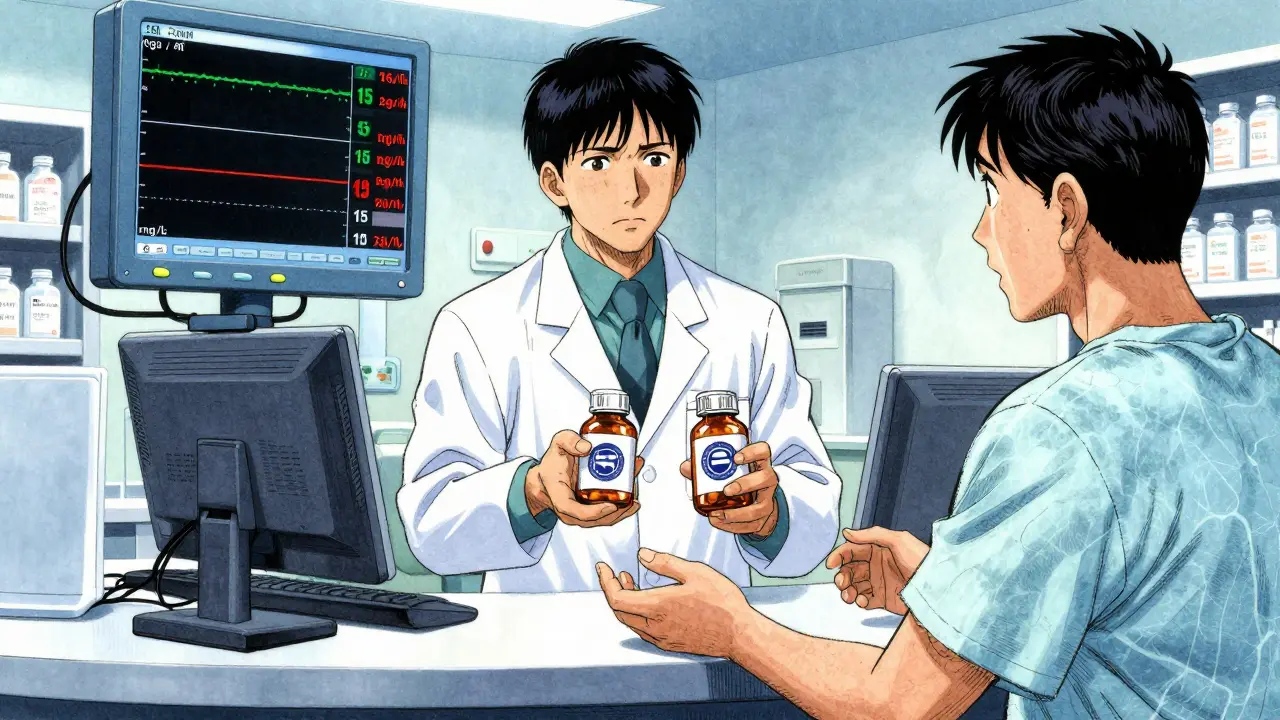
How Doctors and Pharmacies Are Trying to Fix This
Transplant centers didn’t ignore this. They adapted. Now, when a patient switches from one generic to another - even if it’s still “tacrolimus” - most centers require weekly blood tests for the first month. That’s not standard for most medications. It’s a safety net. Some hospitals now only use one generic manufacturer for each drug. That’s called a “single source” contract. By 2023, nearly 70% of major transplant programs in the U.S. had done this. No switching. No surprises. Pharmacists now play a bigger role. Instead of just filling the prescription, they’re calling the clinic to confirm: “Is this the same generic they were on?” If not, they flag it. Some even keep a log of which generic each patient uses - and refuse to swap it without approval. The European Medicines Agency updated its guidelines in February 2024. They now say generic bioequivalence studies should include actual transplant patients, not just healthy volunteers. That’s a big deal. Healthy people absorb drugs differently. Transplant patients? Their bodies are altered by surgery, other meds, and organ function. Testing only on healthy people doesn’t tell the full story.What You Can Do to Stay Safe
If you’re on cyclosporine or tacrolimus - generic or brand - here’s what matters:- Stick to one generic brand. If your pharmacy switches it without telling you, ask why. You have the right to know.
- Never skip blood tests. Even if you feel fine, levels can drift. Missing one test can be dangerous.
- Avoid grapefruit. It messes with how your liver breaks down both drugs. One grapefruit can spike your levels.
- Take your dose at the same time every day. Within an hour, if possible. These drugs don’t like inconsistency.
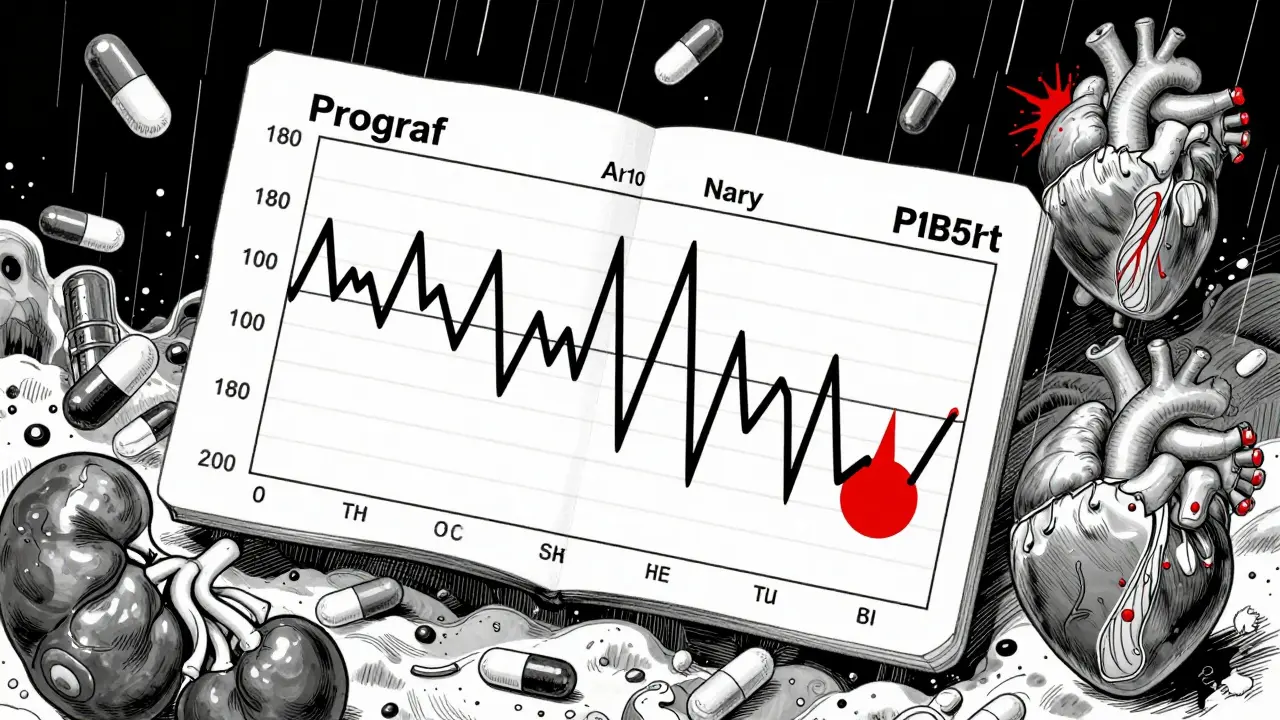
- Keep a log. Write down your dose, the generic name (check the label), and your blood level each time. Bring it to every appointment.
The Future: Better Tools, But Still Risky
There’s hope on the horizon. In December 2023, the FDA approved a new extended-release version of tacrolimus called LCP-tacrolimus. It releases the drug slowly, so levels stay steadier. That could mean fewer fluctuations - and fewer problems when switching generics. Also, doctors are starting to use genetic testing. About 20% of people have a gene variant (CYP3A5) that makes them break down tacrolimus faster. If you’re one of them, you might need a much higher dose. Testing for this before starting treatment can cut the time to reach safe levels by 63%, according to a 2023 JAMA study. But here’s the truth: no matter how good the science gets, these drugs will always need careful handling. They’re not like blood pressure pills. You can’t just refill and forget.Final Thoughts
Generic cyclosporine and tacrolimus are saving lives - literally - by making transplant care affordable. But affordability shouldn’t mean risk. The fact that so many patients have had rejection episodes after switching generics isn’t a fluke. It’s a warning. The system is trying to catch up. Hospitals are locking in single sources. Regulators are demanding better data. Patients are speaking up. But the biggest protector of your health? You. Know your drug. Know your level. Know your pharmacy. And never let someone switch your medication without asking questions.Transplant isn’t a one-time surgery. It’s a lifelong balance. And these two drugs? They’re the tightrope.
Can I switch between different generic versions of tacrolimus safely?
Not without close monitoring. Switching between different generic manufacturers of tacrolimus can cause your blood levels to drop or spike, increasing the risk of rejection or toxicity. Most transplant centers require weekly blood tests for at least a month after any switch. Always talk to your transplant team before allowing a generic change.
Why is cyclosporine more unpredictable than tacrolimus in generic form?
Cyclosporine’s absorption depends heavily on the formulation - especially the oil base and coating used in the pill. Different generic makers use different ingredients, which can change how much of the drug enters your bloodstream. Even small changes can cause big swings in blood levels. Tacrolimus is more consistent, but still not risk-free.
Are brand-name immunosuppressants better than generics?
For most people, generics work just fine - if they’re consistent. The brand versions (Prograf, Neoral) are more predictable because they’re made the same way every time. But if you’re on a single generic brand and your levels are stable, there’s no medical reason to switch back to brand. The key isn’t brand vs. generic - it’s consistency.
What should I do if I notice new side effects after switching to a generic?
Call your transplant team immediately. New tremors, headaches, nausea, or changes in urine output could signal a drug level change. Don’t wait. Your doctor will likely order a blood test right away. Keep a record of when you switched and what symptoms started - it helps them figure out what’s happening.
Can my pharmacy switch my generic without telling me?
In many states, yes - unless your doctor writes “dispense as written” or “no substitution” on the prescription. But even if it’s legal, it’s not always safe. Always check the label when you pick up your pills. If the name or logo looks different, ask the pharmacist if it’s the same generic you’ve been taking. You have the right to request your usual brand.
Is there a way to avoid generic switches altogether?
Yes. Ask your doctor to write “dispense as written” or “brand necessary” on your prescription. Some insurance plans require prior authorization for brand-name drugs - but if you’ve had instability with generics, your doctor can appeal based on medical necessity. Many transplant centers help patients with this process. Don’t assume you have to accept every switch.

Beth Templeton
January 6, 2026 AT 17:15Generics save money until you’re in the hospital for rejection
Rachel Wermager
January 8, 2026 AT 13:03The bioequivalence window of 80–125% is statistically acceptable for antihypertensives, but for calcineurin inhibitors with a narrow therapeutic index, this is pharmacologically indefensible. CYP3A4/5 polymorphisms, P-glycoprotein expression variability, and enterohepatic recirculation differences in post-transplant patients render healthy volunteer PK studies grossly inadequate for risk stratification.
EMA’s 2024 guideline shift is long overdue-transplant recipients aren’t healthy adults. Their gut motility is altered, their renal clearance is compromised, and they’re on polypharmacy regimens that induce/inhibit CYP enzymes. You can’t extrapolate AUC and Cmax from a 25-year-old male smoker to a 58-year-old female with chronic allograft nephropathy.
And don’t get me started on cyclosporine’s microemulsion generics. The excipient matrix (castor oil vs. PEGylated glycerides) dictates micelle formation kinetics. One study showed 22% inter-batch variability in Cmax between two FDA-approved generics. That’s not bioequivalence-that’s Russian roulette with immunosuppression.
Leonard Shit
January 10, 2026 AT 01:38my doc switched me to a generic tacrolimus last year and i didn’t notice anything til i started getting dizzy and my hands shook like i’d had three espressos. turned out my level dropped to 4.1. i had to go back to brand and now i just check the label every time like its a bomb defusal. also grapefruit is evil. dont even look at it.
Wesley Pereira
January 11, 2026 AT 00:38Single-source contracts are the only sane approach. Why would a transplant center risk patient survival for a $200 pharmacy rebate? The system is broken when the cheapest option is the most dangerous one. Pharmacists who call clinics before substituting? That’s the gold standard. If your pharmacy doesn’t do that, find a new one.
Also-CYP3A5 expressers need 1.5–2x the dose. If your doc didn’t test for that before starting you on tacrolimus, they’re operating on 2010 protocols. Get tested. It’s a simple SNP chip. Saves months of dose titration and near-rejection episodes.
Stuart Shield
January 12, 2026 AT 13:25It’s wild how we treat these drugs like they’re ibuprofen. You wouldn’t swap brands of insulin without checking glucose, right? So why do we treat cyclosporine like it’s a discount toilet paper? These aren’t pills-they’re lifelines wrapped in gelatin. And the fact that pharmacies can swap them without a peep? That’s not capitalism. That’s negligence with a barcode.
Isaac Jules
January 13, 2026 AT 08:52LOL people are acting like this is news. Of COURSE generics are dangerous here. The FDA approves them based on data from people who don’t even have organs. You think a healthy 22-year-old’s liver processes tacrolimus the same as a 60-year-old with a 3-year-old kidney transplant on 12 other meds? Please. This is why transplant centers are in crisis. Because the FDA lets corporations profit off people’s organs while pretending the math adds up.
And now we’re supposed to be grateful for ‘extended-release’ versions? That’s just a bandaid on a severed artery. They still don’t test on actual transplant patients. Still. Always. Still. #PharmaLies
Molly McLane
January 15, 2026 AT 07:11I’ve been on tacrolimus since my liver transplant in 2018. I’ve been on three different generics. Each time, my levels dipped. I had to go back to the same brand every time. I keep a little notebook with the pill name, dose, and my blood level. I show it to every doctor. I tell my pharmacist: ‘This is my life. Don’t switch it.’ I know it sounds obsessive. But if you’ve ever had an organ rejection, you know obsession is just survival.
And yes-grapefruit is the devil. I don’t even smell it anymore. I wear gloves when I wash dishes if there’s citrus nearby. I’ve learned the hard way. Don’t let anyone tell you it’s ‘just a fruit.’
If you’re on one of these meds, you’re not just a patient. You’re a scientist. You track, you ask, you push back. And if your doctor doesn’t listen? Find a new one. Your new organ deserves better than a cost-cutting algorithm.
Gabrielle Panchev
January 16, 2026 AT 18:00Okay, but have you considered that maybe the problem isn’t the generics-it’s the fact that transplant centers aren’t doing enough to standardize dosing protocols across populations? And that the FDA’s bioequivalence standards were designed for drugs that don’t have life-or-death consequences when fluctuating by 10%? And that the pharmaceutical industry has lobbied for decades to keep generic manufacturers from having to conduct post-marketing surveillance in transplant populations? And that insurance companies are incentivizing switches because they don’t bear the cost of rejection hospitalizations? And that the average patient doesn’t even know what ‘CYP3A5’ means, let alone how it affects their tacrolimus metabolism? And that pharmacists are overworked and undertrained in transplant pharmacology? And that the EMA’s new guidelines still don’t mandate real-world outcome data? And that the extended-release tacrolimus is still 3x the cost of generic? And that the JAMA study on genetic testing only included 120 patients? And that nobody’s talking about how racial disparities in CYP3A5 expression mean Black and Hispanic patients are at higher risk for under-dosing? And that Medicare Part D doesn’t cover genetic testing for immunosuppressants? And that there’s no national registry tracking generic switch outcomes? And that the American Society of Transplantation’s 15.3% non-adherence stat doesn’t even account for patients who stop taking meds because they’re terrified of switching? And that the entire system is built on the assumption that patients are passive recipients rather than active partners in their care? And that nobody in Congress has ever had a transplant? And that if this were a cancer drug, we’d have a national task force?
Katelyn Slack
January 17, 2026 AT 09:33i just started on generic cyclosporine last month and my levels were fine until last week. i didn’t even know they could switch it without telling me. now i check the bottle every time. also i write everything down now. sorry for the typos, i’m typing with one hand because i’m holding my coffee and my transplant meds.
Melanie Clark
January 17, 2026 AT 14:28They’re hiding the truth. The FDA and Big Pharma are in bed together. You think these generics are safe? They’re testing them on homeless people in clinical trials. Your organ is being used as a guinea pig. The government doesn’t care if you die. They just want to save money. I saw a video on TikTok-someone’s liver turned black after switching generics. They deleted it. But I saved it. I’m not crazy. I’m awake. The pills are poisoned. The labels lie. The blood tests are rigged. You think your doctor is helping you? They’re paid by the pharma reps. I’ve been tracking the batch numbers. They all come from the same factory in India. They use sawdust as filler. You’re not taking medicine. You’re taking poison. Call your senator. Burn your pills. Save yourself.