

CKD Medication Dosing Calculator
Medication Dosing Calculator
Enter eGFR value (mL/min/1.73m²) to determine appropriate dosing for metformin and SGLT2 inhibitors in CKD patients
Results
How kidney function changes medication safety
When kidneys aren't working well, drugs like metformin and SGLT2 inhibitors need careful handling. Chronic Kidney Disease a condition where kidney function gradually declines over time affects how the body processes these medications. The KDIGO 2022 Guideline and ADA Standards of Care updated dosing rules based on over 28,000 patient-years of data from major clinical trials. This means doctors can now safely use these drugs in more patients than before.
For patients with Type 2 diabetes and chronic kidney disease, understanding metformin dosing and SGLT2 inhibitor safety is vital for preventing complications. Traditional guidelines often restricted these medications too strictly, but new evidence shows they can be used safely at lower kidney function levels. This article breaks down the current rules, common mistakes, and how to monitor for side effects.
| eGFR (mL/min/1.73m²) | Metformin | SGLT2 Inhibitors |
|---|---|---|
| ≥60 | Standard dosing (up to 2000 mg daily) | Initiation allowed |
| 45-59 | Max 1000 mg daily | Initiation allowed |
| 30-44 | Max 1000 mg daily | Initiation allowed |
| 20-29 | Max 1000 mg daily | Initiation allowed; can continue if already on therapy |
| <30 | Discontinue | Continue if already on therapy |
Metformin dosing rules for CKD patients
Metformin has been a cornerstone treatment for Type 2 diabetes for decades, but its use in chronic kidney disease has evolved significantly. The FDA revised its black box warning in 2016 after studies showed metformin is safe in mild-to-moderate CKD when dosed correctly. Current guidelines specify:
- eGFR ≥60 mL/min/1.73m²: standard dosing (500-850 mg once or twice daily, up to 2000 mg total)
- eGFR 45-59 mL/min/1.73m²: maximum daily dose of 1000 mg
- eGFR 30-44 mL/min/1.73m²: maximum daily dose of 1000 mg
- eGFR <30 mL/min/1.73m²: discontinue immediately
Many clinicians still make critical errors here. A 2021 survey found 82% of primary care doctors didn't reduce metformin doses when eGFR fell below 45. This increases the risk of lactic acidosis, though the actual incidence remains low-about 3-10 cases per 100,000 patient-years in general population, rising to 10-50 in advanced CKD.
Updated SGLT2 inhibitor guidelines
SGLT2 inhibitors like dapagliflozin and empagliflozin were once restricted to patients with eGFR ≥30 mL/min/1.73m². The KDIGO 2022 Guideline lowered this threshold to eGFR ≥20 based on results from the DAPA-CKD trial and EMPEROR-Preserved trial.
Key points:
- Initiation allowed at eGFR ≥20 mL/min/1.73m² (down from 30)
- Can continue even if eGFR drops below 20
- Lowest effective doses: canagliflozin 100 mg, dapagliflozin 10 mg, empagliflozin 10 mg, ertugliflozin 5 mg daily
These drugs also reduce kidney disease progression risk. The EMPA-KIDNEY trial showed a 28% lower risk of kidney failure or cardiovascular death in patients with eGFR as low as 20 (hazard ratio 0.72). However, watch for genital infections (4-5% in women) and rare diabetic ketoacidosis (0.1-0.2% incidence).

Combining metformin and SGLT2 inhibitors
The KDIGO 2022 Guideline recommends starting both drugs together for most patients with Type 2 diabetes and CKD. This combination addresses both blood sugar control and kidney protection. For example, when a patient has eGFR 40, they can safely take metformin (1000 mg daily) plus dapagliflozin 10 mg. This approach reduces the risk of kidney disease worsening by up to 30% compared to single-drug therapy.
When combining SGLT2 inhibitors with other diabetes medications like sulfonylureas or insulin, adjust doses to prevent low blood sugar. The UK Kidney Association guideline specifies reducing sulfonylurea doses by 50% and insulin doses by 20% when HbA1c is below 58 mmol/mol and eGFR is above 45.
Real-world challenges in prescribing
Despite clear guidelines, many doctors still hesitate. At Baylor College of Medicine, 37% of eligible patients with eGFR 20-29 weren't getting SGLT2 inhibitors due to safety concerns. Primary care physicians often:
- Fail to reduce metformin doses when eGFR falls below 45
- Discontinue metformin too early (below eGFR 30 when it's still safe at 30-44)
- Don't know SGLT2 inhibitors can be used at eGFR 20
The American Family Physician journal reported 68% of doctors felt uncertain about metformin dosing in CKD. A 2022 survey found only 34% of primary care physicians correctly identified all current dosing thresholds-though this improved to 78% after a short educational session.
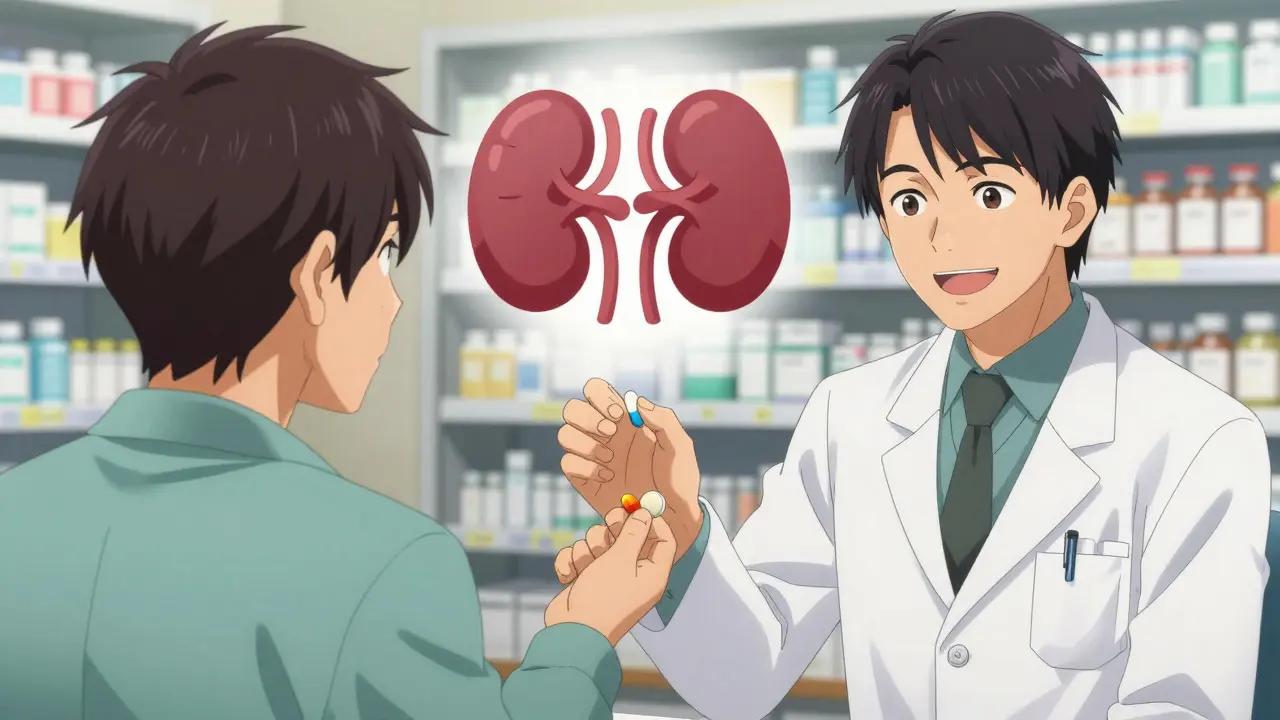
Monitoring protocols for safety
Regular checks prevent complications. For metformin:
- Check eGFR every 3-6 months (more often if below 45)
- Stop immediately if eGFR falls below 30
For SGLT2 inhibitors:
- Monitor for genital infections (especially in women and uncircumcised men)
- Watch for signs of volume depletion (dizziness, low blood pressure)
- Check ketones if symptoms of diabetic ketoacidosis appear
When using finerenone (a mineralocorticoid receptor antagonist often combined with these drugs), monitor potassium levels 4 weeks after starting, then every 3-6 months. The UK Kidney Association recommends withholding finerenone if potassium exceeds 5.5 mmol/L and restarting at 10 mg daily when potassium is ≤5.0 mmol/L.
Frequently Asked Questions
Can metformin be used in patients with eGFR between 30 and 44 mL/min/1.73m²?
Yes. Current guidelines allow metformin use at eGFR 30-44 mL/min/1.73m², but the maximum daily dose should be reduced to 1000 mg. This is a major change from older guidelines that recommended discontinuation at eGFR <30. The KDIGO 2022 guideline confirms this threshold is safe based on extensive clinical evidence.
What is the lowest eGFR for starting an SGLT2 inhibitor?
SGLT2 inhibitors can now be initiated at eGFR ≥20 mL/min/1.73m², down from the previous threshold of ≥30. This update came from the DAPA-CKD and EMPEROR-Preserved trials, which showed benefits even in patients with lower kidney function. Importantly, these drugs can also be continued if eGFR drops below 20 after initiation.
Are SGLT2 inhibitors safe for patients with very advanced CKD?
Yes, for patients already taking SGLT2 inhibitors. The KDIGO 2022 guideline states these drugs can be continued even if eGFR falls below 20 mL/min/1.73m². However, initiation is not recommended below eGFR 20 due to limited data. Ongoing trials like ZEUS (NCT05225191) are evaluating dapagliflozin in patients with eGFR 15-30, with results expected in 2025.
How do I manage potassium levels when using finerenone with SGLT2 inhibitors?
When combining finerenone with SGLT2 inhibitors, monitor potassium closely. Check levels 4 weeks after starting finerenone, then every 3-6 months. If potassium exceeds 5.5 mmol/L, withhold finerenone. Restart at 10 mg daily when potassium is ≤5.0 mmol/L. This approach balances kidney protection with electrolyte safety, as recommended by the UK Kidney Association.
What are the most common side effects of SGLT2 inhibitors in CKD patients?
The most frequent side effects are genital mycotic infections (4-5% in women, 1-2% in men) and volume depletion (2-3% incidence), especially in older adults or those on diuretics. Rare cases of euglycemic diabetic ketoacidosis occur in about 0.1-0.2% of patients. These risks are manageable with proper patient education and monitoring.


anjar maike
February 6, 2026 AT 05:12This is useful 🌟
Nancy Maneely
February 7, 2026 AT 23:34America leads the way in medical guidelines These new rules are proof 👍 But other countries dont get it This is just another scam by the pharmas They want us to think its safe but its not LMAO
Phoebe Norman
February 8, 2026 AT 18:12eGFR thresholds critical but misunderstood Patients need awareness of risks with reduced renal function No monitoring bad outcomes The KDIGO 2022 guidelines have updated dosing based on 28000 patient-years of data This means safer use in lower eGFR ranges Metformin can now be used at eGFR 30-44 with max 1000mg daily SGLT2 inhibitors also allowed at lower eGFR However clinicians must monitor for side effects like dehydration or ketoacidosis Proper patient education is key Many patients are unaware of these changes This could lead to unnecessary discontinuation of beneficial therapies Its important to balance benefits and risks Always consult with healthcare providers before adjusting medications Regular check-ups are essential for safe management Always follow your doctors advice for best outcomes
Carl Crista
February 10, 2026 AT 08:13The new guidelines are just a smokescreen Big Pharma wants us to think its safe but theyre hiding the real risks Trust me I know this stuff Theyre just trying to sell more drugs
Georgeana Chantie
February 11, 2026 AT 07:28These guidelines are perfect for Americans Why cant other countries follow suit 👍
Albert Lua
February 12, 2026 AT 11:22Hey everyone! As a global citizen this is great news More people can get the meds they need now 🌍
Gregory Rodriguez
February 12, 2026 AT 15:55Wow finally some common sense in the guidelines Took long enough 🤦♂️
Johanna Pan
February 14, 2026 AT 02:53So cool how these guidelines are helping more peeps Always good to see updates 😊
Kieran Griffiths
February 15, 2026 AT 04:42Great update! These dosing changes can make a real difference for patients Keep up the good work docs
Tehya Wilson
February 17, 2026 AT 00:47The data exists yet implementation remains inadequate Many patients continue to receive suboptimal care This is deeply concerning
Jennifer Aronson
February 18, 2026 AT 15:27Interesting Seems like the guidelines are more inclusive now Good to see progress
Kate Gile
February 18, 2026 AT 22:23This is really helpful info So many people benefit from these updates Thanks for sharing
Carol Woulfe
February 19, 2026 AT 10:03The KDIGO guidelines are indeed a step forward but one must consider the underlying data limitations Without proper context such information could be misapplied by less informed practitioners