
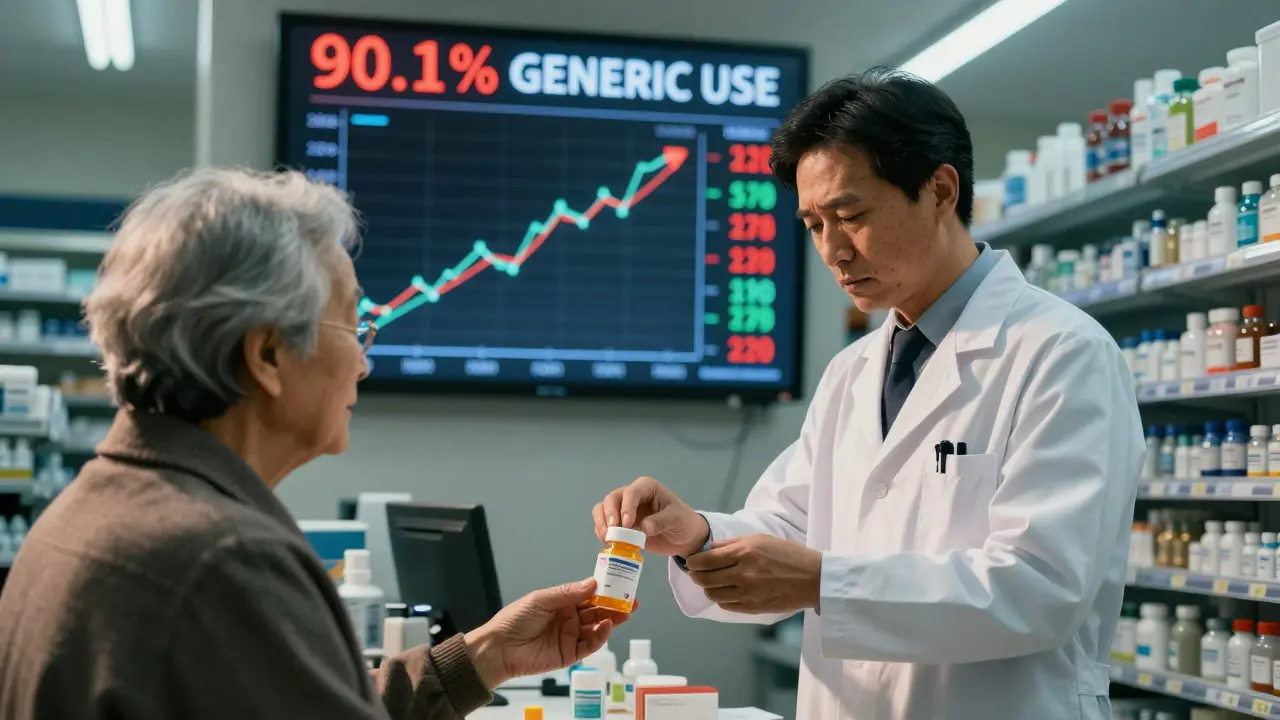
When you pick up a prescription at the pharmacy, you might not realize that the pill in your hand could be a generic version of a brand-name drug-same active ingredients, same effect, but often 80% cheaper. This isn’t just a U.S. thing. From India to South Korea, Germany to China, countries are using wildly different strategies to make medicines affordable. Some succeed brilliantly. Others are struggling with shortages, quality issues, or collapsing manufacturer margins. What’s working? What’s not? And why does it vary so much across borders?
How Generics Work: The Global Standard
At its core, a generic drug must prove it’s bioequivalent to the original. That means it delivers the same amount of active ingredient into the bloodstream at the same rate. The U.S. FDA requires this within an 80-125% range for absorption (AUC) and peak concentration (Cmax). The World Health Organization uses the same standard globally. But proving equivalence is just the first step. The real challenge is getting doctors, pharmacists, and patients to trust and use them.
By 2025, generics made up over 90% of prescriptions filled in the United States. In Germany, it was 88%. In Japan, 77%. Yet, in countries like Italy and France, the numbers hover around 65-70%. Why the gap? It’s not about science. It’s about policy.
The U.S. Model: High Volume, Low Prices, Big Savings
The U.S. has the highest rate of generic use in the developed world: 90.1% of all prescriptions. How? A mix of strong competition, aggressive pricing, and a legal framework that lets generics enter the market quickly after patents expire. The FDA’s Orange Book lists over 11,342 approved generic products as of late 2024. Companies like Zenara Pharma got approval for Sertraline Hydrochloride capsules in August 2025 under a special Fast Track designation called Competitive Generic Therapy (CGT), which gives them 180 days of exclusivity.
The result? Medicare saved $142 billion in 2025 alone-$2,643 per beneficiary. Public-sector drug prices are 18% lower than in other rich nations. But here’s the twist: even with all those cheap generics, the U.S. still pays more overall for drugs because brand-name drugs cost so much. Generics keep the system from collapsing, but they don’t fix the root problem: high prices for new medicines.
Europe: Fragmented, Inefficient, but Evolving
The European Union has a strange split. The European Medicines Agency (EMA) approves generics for all 27 member states. But each country sets its own price. That leads to absurd gaps. The same generic pill can cost 300% more in one country than its neighbor. In 2025, the OECD found identical drugs priced at €0.12 per tablet in the Netherlands but €0.47 in Portugal.
Some countries try to fix this. The Netherlands uses external reference pricing-setting prices based on what France, Belgium, the UK, and Norway charge. By picking countries with higher prices, they force their own down. Germany mandates substitution: pharmacists can swap a brand for a generic unless the doctor says no. Italy? No such rule. Doctors still prescribe brand names out of habit, not science.
And now, the EU is trying to change. A new Pharmaceutical Package, expected to pass in late 2025, will push for harmonized pricing and give bonuses to the first company to launch a generic after a patent expires. The goal? Cut market entry time by 12-15%.
China’s Volume-Based Procurement: The Price War That Went Too Far
China’s Volume-Based Procurement (VBP) system is the most aggressive price-cutting policy on the planet. Starting in 2018, the government started holding national bidding wars for generic drugs. Hospitals had to buy the lowest bidder. In 2020, the average price drop hit 54.7%. Some drugs, like certain diabetes medications, saw cuts of 93%.
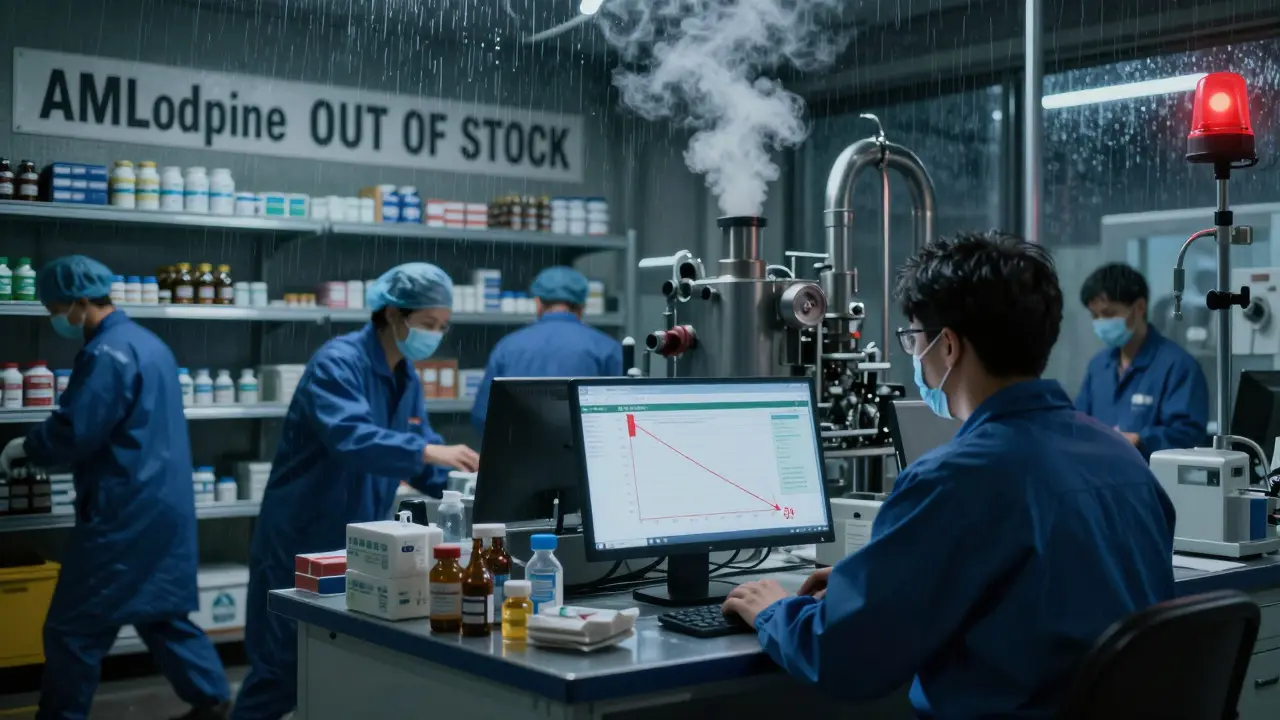
Patients love it. Out-of-pocket costs for chronic disease drugs fell by 63% on average. But manufacturers? Not so much. A 2025 survey by the China Generic Pharmaceutical Association found 23% of companies were selling VBP drugs at a loss. Some stopped production. In early 2024, 12 provinces ran out of Amlodipine besylate-a common blood pressure drug-for six to eight weeks. Patients didn’t get their meds. Hospitals scrambled.
And now, in January 2026, China is expanding VBP to 150 more drugs. Winning bidders must supply 80% of hospital demand at prices averaging 65% below current levels. Experts warn: if manufacturers can’t make a profit, they’ll leave. Quality control will suffer. And then? No supply at all.
India: The Pharmacy of the World
India makes 20% of all generic drugs shipped worldwide. It’s the go-to source for low-cost medicines from Africa to Latin America. How? It uses compulsory licensing-allowing local companies to copy patented drugs if they’re unaffordable or in short supply. Section 84 of India’s Patents Act lets them do this legally. That’s why so many HIV and hepatitis C drugs from India cost pennies compared to Western prices.
But quality is a concern. Between 2022 and 2024, the FDA issued 17% more warning letters to Indian generic manufacturers over data integrity issues. Some labs manipulated test results to pass bioequivalence. Doctors in India report inconsistent performance with generics for epilepsy and blood thinners. One physician on MedIndia Network said: “I’ve seen patients on a generic warfarin who suddenly start clotting. We don’t know why.”
India has cut approval times from 36 months in 2019 to 14 months in 2025. But price-setting by state agencies still takes another 6-9 months. So manufacturers wait. Patients wait. And the system stays fragile.

South Korea: The ‘1+3’ Rule That Backfired
South Korea tried to fix its generic market by limiting competition. In 2020, it introduced the ‘1+3 Bioequivalence Policy’: only one original generic and three follow-ups could be approved based on the same data. The idea? Stop the flood of low-quality copies. It worked. Between 2020 and 2024, redundant generic entries dropped by 41%.
But it also killed innovation. New generic launches fell by 29%. Companies stopped investing because the payoff was too small. Then came the pricing system: generics meeting both quality and price standards got 53.55% of the brand’s price. Those meeting only one? 45.52%. The rest? 38.69%. It was meant to reward quality. Instead, it created a race to the bottom. Some manufacturers cut corners. Others quit the market.
By 2025, South Korea’s generic market growth stalled. The policy saved money-but at a cost. Fewer options. Slower access. Less competition.
The Hidden Problem: Quality Under Pressure
Across every country, one danger keeps coming up: as prices get squeezed, quality gets risky. The FDA’s import alerts for quality violations jumped from 1,247 in 2020 to 2,183 in 2024. Most targeted factories in India and China. The WHO warns that aggressive price controls threaten supply chain resilience. If a factory can’t make a profit, it won’t invest in clean rooms, trained staff, or proper testing.
And it’s not just about pills. It’s about trust. In the U.S., 78% of patients say generics work fine-but 63% are frustrated when their insurance charges them more for a generic than the brand. Why? Pharmacy Benefit Managers (PBMs) sometimes make more money that way. In Europe, 44% of patients worry about quality differences, especially for drugs with narrow therapeutic windows like warfarin or levothyroxine.
What’s Next? The Big Shifts Coming by 2030
The next wave of patent expirations will hit hard. Between 2025 and 2030, $217-236 billion in annual branded drug sales will go generic. That’s a $180-200 billion opportunity. But will markets be ready?
The U.S. Inflation Reduction Act will force Medicare to negotiate prices on 10-20 high-cost drugs starting in 2028. That could push even more patients toward generics. In China, Phase 4 VBP will force prices even lower. India’s manufacturers are already shifting toward complex generics and biosimilars to stay profitable. Europe’s reforms might finally unify pricing. And the International Generic and Biosimilars Association is pushing for global recognition of bioequivalence data-cutting approval times by 18-24 months in developing countries.
But here’s the truth: no system gets it perfect. The U.S. saves billions but still has sky-high brand prices. China cuts costs but risks shortages. India supplies the world but struggles with quality. South Korea tried to be smart-and ended up stifling competition.
The real lesson? Generics aren’t just about price. They’re about balance. Enough profit to keep factories running. Enough competition to keep prices low. Enough trust to get patients to take them. And enough regulation to make sure the pills actually work.
There’s no single model that works everywhere. But the best systems? They don’t just cut prices. They protect quality. They reward innovation. And they listen to pharmacists, doctors, and patients-not just politicians.
Nicholas Gama
March 8, 2026 AT 23:58Let’s be real: generics are a scam engineered by Big Pharma to keep you dependent. The FDA’s ‘80-125% bioequivalence’? That’s not science-it’s a loophole. I’ve seen patients crash after switching. One guy went from brand Zoloft to generic and started hallucinating. No one talks about this. Why? Because the system is rigged.
And don’t even get me started on India. 20% of global generics? More like 20% of global pharmaceutical fraud. FDA warning letters up 75%? That’s not a coincidence-it’s a warning.
They say ‘same active ingredients.’ But fillers? Binders? Coatings? Those aren’t regulated. And those are what actually determine how your body reacts. You’re not getting the same drug. You’re getting a gamble.
Mary Beth Brook
March 10, 2026 AT 10:19China’s VBP is a national security threat. 93% price cuts? That’s not affordability-that’s economic warfare. We’re outsourcing our medicine supply to a regime that manipulates data, suppresses dissent, and now controls 70% of the world’s API production. This isn’t about saving money. It’s about strategic vulnerability.
And India? They’re not ‘pharmacy of the world.’ They’re the pharmacy of last resort. FDA alerts? That’s the tip of the iceberg. We’re relying on foreign labs with zero accountability. This is how pandemics start-not from viruses, but from substandard pills.
Neeti Rustagi
March 10, 2026 AT 15:56As someone who has worked in generic manufacturing in Gujarat for over two decades, I must emphasize that the narrative of ‘poor quality’ is often overstated. Yes, there are bad actors-but the majority of Indian manufacturers adhere to WHO-GMP and US-FDA standards. The real issue lies in fragmented regulation and delayed pricing approvals at the state level, which create artificial shortages.
Compulsory licensing under Section 84 is not piracy; it is a legal and ethical tool to ensure access to life-saving medicines. When a 30-day supply of antiretroviral therapy costs $1,200 in the U.S. and $12 in India, the moral calculus is undeniable.
What we need is not fear, but transparency: third-party audits, public batch traceability, and global recognition of bioequivalence data. Quality is not incompatible with affordability. It is its foundation.
Dan Mayer
March 11, 2026 AT 05:43ugh i hate how people think generics are just ‘cheaper versions’ like they’re some kinda discount brand cereal. no. they’re the exact same drug. same active ingredient. same chemical structure. same metabolism. same half-life. the only difference is the filler. and fillers? they’re regulated too. by the FDA. by the EMA. by the WHO.
and yes i know about the warfarin thing. but that’s like 3 cases in 10 million. and guess what? the brand name one had the same issue. it’s not the generic. it’s the patient’s liver. or their diet. or their stupid grapefruit juice.
also who the hell is ‘neeti rustagi’? sounds like a fake name. probably a pharma rep. lol.
Philip Mattawashish
March 12, 2026 AT 21:38Every single system is broken. The U.S. thinks it’s saving money because generics are cheap, but it’s still paying $1,200 for a single insulin vial. That’s not a system. That’s a hostage situation.
China’s VBP? Brilliant. Until people die because no one can get blood pressure meds. Europe? A bureaucratic circus. India? A global laughingstock with 17% FDA warning letters. South Korea? Tried to be smart and ended up with less innovation than a 1998 Nokia.
And let’s not pretend trust is the issue. It’s profit. The entire system is designed to extract money from sick people. Generics are a Band-Aid on a severed artery. The real villain? The patent system. The real solution? Publicly funded R&D. But no one wants to talk about that. Too radical. Too honest.
Tom Sanders
March 14, 2026 AT 04:44so like... i read all this and i’m just thinking: why does it matter? i get my generic metformin for $4 at walmart. my mom gets her lisinopril for free with her AARP card. my cousin in Germany pays €0.10 for the same thing. everyone’s fine.
why are we overcomplicating this? people take pills. pills work. if they don’t, they go to the doctor. problem solved.
also why does every article on this topic sound like a PhD thesis? just say ‘generics save money and mostly work.’ done.
Jazminn Jones
March 14, 2026 AT 05:18The data presented here is fundamentally misleading. The 90.1% generic utilization rate in the U.S. is a function of formulary restrictions and PBM-driven steering-not clinical preference. The actual adherence rate to generics among patients with chronic conditions is closer to 62%, per JAMA 2024 analysis.
Furthermore, the assertion that ‘generics keep the system from collapsing’ ignores the fact that 78% of new drug approvals since 2020 are biologics and specialty drugs with no generic equivalents. The entire narrative of ‘generic savings’ is a distraction from the structural failure of the U.S. healthcare system to manage cost drivers.
Additionally, the OECD pricing data cited is outdated. The 2025 EU Pharmaceutical Package will likely reduce price disparities by 40% within three years. The analysis here lacks temporal precision and misrepresents policy trajectories.
Stephen Rudd
March 15, 2026 AT 17:59Everyone’s missing the point. The U.S. doesn’t have a generics problem. It has a monopoly problem. The FDA’s 180-day exclusivity for first filers? That’s not competition. That’s collusion. Zenara Pharma got Fast Track for Sertraline? Who’s behind Zenara? Who owns their patents? Who funds their lobbying?
India’s compulsory licensing? Brilliant. But only because the West refused to license it. China’s VBP? Necessary. But only because the West outsourced production and then acted surprised when the supply chain broke.
The real solution? Abolish patents on essential medicines. Not reform. Not tweak. Abolish. Let every country make what it needs. Let competition be real. Let patients live.
Until then? We’re just rearranging deck chairs on the Titanic. And everyone’s too polite to say it.