
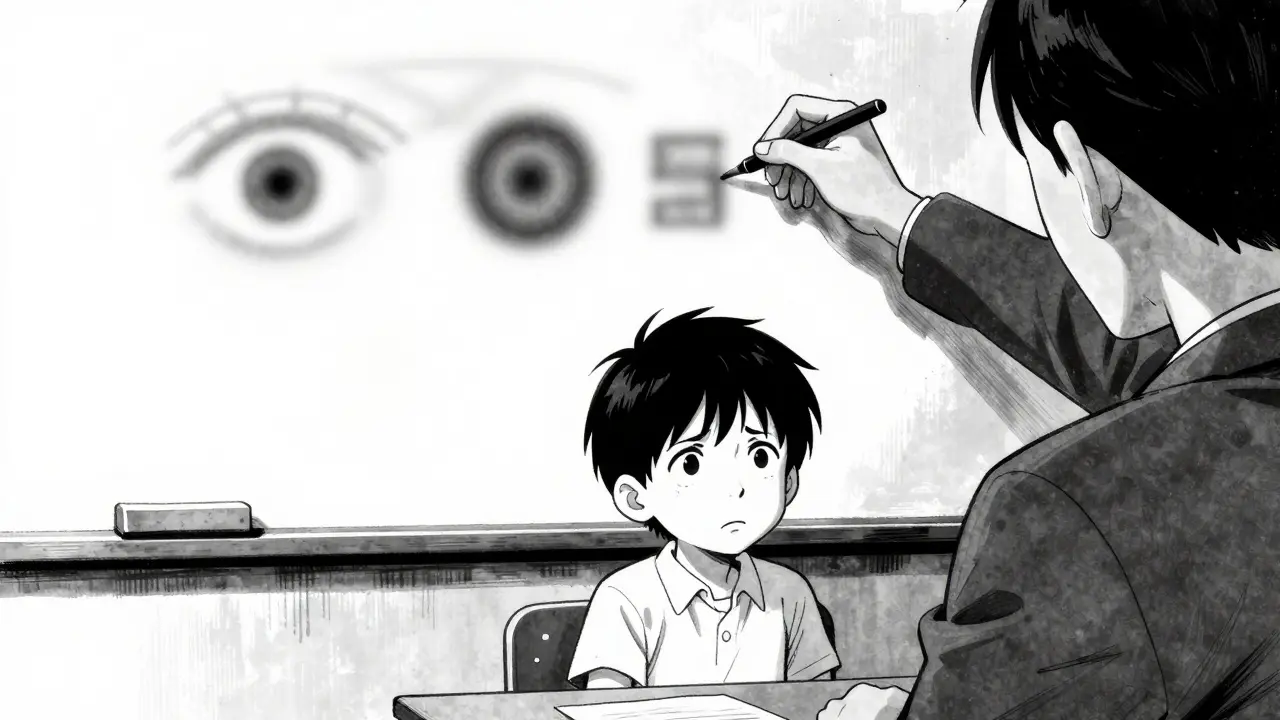
Imagine your child missing out on learning because they can’t see the whiteboard clearly. It’s a scenario that plays out in classrooms every day, often unnoticed by parents and teachers alike. Vision problems in children are not just about blurry eyes; they are critical barriers to development, education, and social interaction. The good news? Most of these issues are preventable or treatable if caught early. This is where pediatric vision screening becomes a vital part of preventive healthcare.
We aren't talking about just getting glasses. We are talking about detecting conditions like amblyopia (lazy eye) and strabismus (crossed eyes) during the critical window when the brain's visual system is still developing. If we miss this window, the damage can be permanent. In this guide, we’ll break down exactly how screening works, when it should happen, and what you need to do if your child fails a test.
Why Early Detection Matters More Than You Think
The human visual system isn't fully developed at birth. It matures rapidly over the first few years of life. During this period, known as the "critical period," the brain learns to process images from both eyes. If one eye sends a weaker signal-due to a refractive error, cataract, or misalignment-the brain starts ignoring it. This leads to amblyopia.
Here is the hard truth: treating amblyopia before age 5 results in an 80-95% success rate in improving visual acuity. After age 8, that success rate drops drastically to between 10-50%. According to data from the Vision in Preschoolers (VIP) study, published in *Ophthalmology*, early intervention is the single most effective factor in preventing lifelong vision impairment. With approximately 1.2-3.6% of children affected by amblyopia and another 1.9-3.4% by strabismus, systematic screening is a high-impact public health necessity, not just an optional check-up.
What happens if I don't screen my child for vision problems?
Without screening, conditions like amblyopia may go undetected until school age. By then, the brain has already learned to ignore the weaker eye, making treatment much harder and less effective. Permanent vision loss in one eye is a real risk.
Screening Guidelines by Age: What to Expect
Vision screening isn't a one-size-fits-all process. The methods change as your child grows and develops the ability to cooperate with testing. Major organizations like the American Academy of Pediatrics (AAP), the American Academy of Ophthalmology (AAO), and the U.S. Preventive Services Task Force (USPSTF) have established clear protocols.
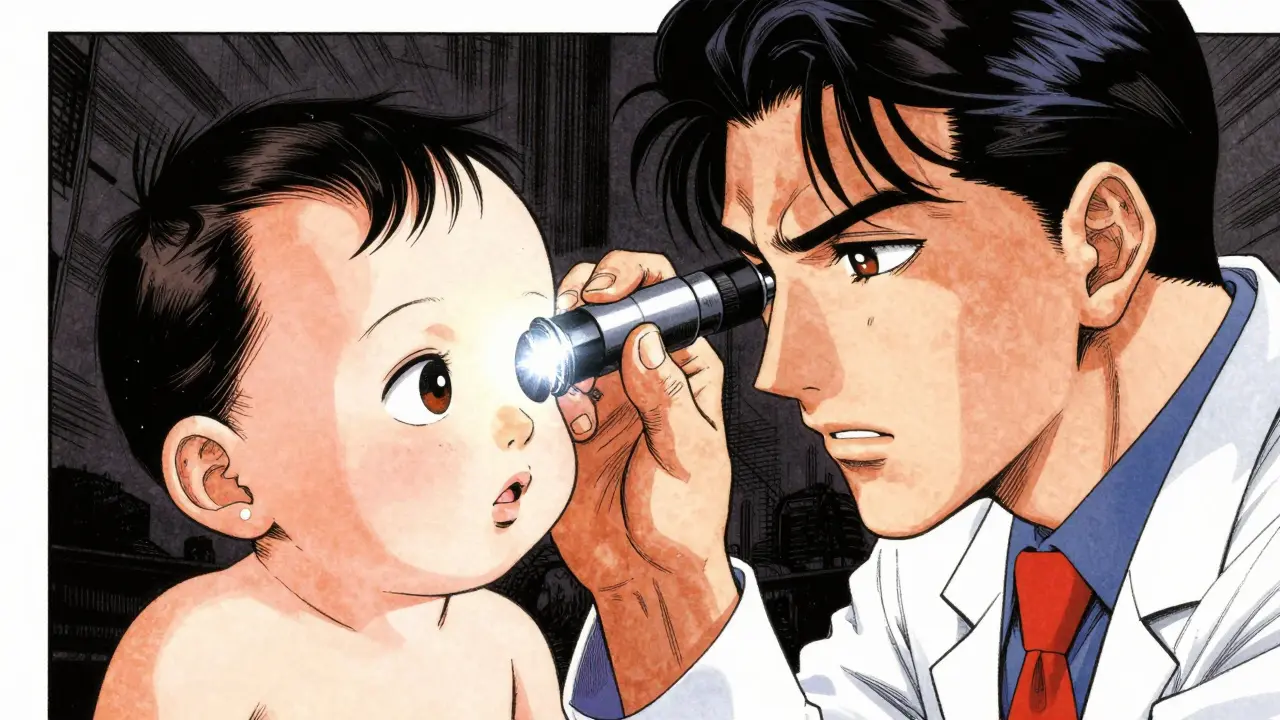
Infants (Newborn to 6 Months): At this stage, babies can't read charts. The primary tool is the red reflex test. A doctor uses a direct ophthalmoscope from a distance of 2-3 feet to look for a bright red reflection in the pupil. This simple check screens for cataracts, retinoblastoma, and other media opacities that block light. It’s quick, non-invasive, and crucial for ruling out serious structural issues.
Toddlers (6 Months to 3 Years): As children grow, screening expands to include external examinations of the eyelids and ocular motility (how well the eyes move together). Instrument-based screening often begins here. Devices like autorefractors measure refractive errors without needing the child to respond verbally. The AAP endorses instrument-based screening starting at age 1 for children who cannot yet read eye charts.
Preschoolers (3 to 5 Years): This is the golden window for detecting amblyopia risk factors. The USPSTF gives a Grade B recommendation for vision screening at least once between ages 3 and 5. At this age, children can start identifying shapes or letters. Visual acuity testing begins, typically using symbols like LEA Symbols or HOTV letters. The goal is to ensure each eye meets specific pass/fail criteria: correctly identifying the majority of optotypes on the 20/50 line at age 3, and the 20/40 line at age 4.
School-Age Children (5+ Years): By age 5, children should be screened using standard eye charts like Sloan Letters. The pass criterion tightens to the 20/32 line. Routine screenings continue through adolescence, with the Bright Futures Periodicity Schedule recommending checks at ages 8, 10, 12, and 15 to catch new issues like myopia progression.
Optotype vs. Instrument-Based Screening: Which Is Better?
You might wonder why there are so many different ways to test vision. The answer lies in balancing accuracy with practicality. There are two main categories: optotype-based (eye charts) and instrument-based (digital devices).
| Feature | Optotype-Based (Eye Charts) | Instrument-Based (Autorefractors/Photoscreeners) |
|---|---|---|
| Best For | Cooperative children aged 5+ | Infants, toddlers, and uncooperative preschoolers |
| Time Required | 3-5 minutes per child | 1-2 minutes per child |
| Sensitivity | High (71-89% for Lea/HOTV) | High (up to 100% for blinq™ scanner) |
| Limitations | Requires cognitive cooperation; 10-25% failure rate in 3-4 year olds | Can produce false positives in small refractive errors |
| Gold Standard Status | Yes, for children 5+ who can read charts | Preferred for initial screening in younger ages |
Instrument-based devices, such as the Welch Allyn SureSight, Plusoptix Power Refractor, and the AI-powered blinq™ scanner, have revolutionized pediatric care. The blinq™ scanner, cleared by the FDA in 2018, demonstrated 100% sensitivity and 91% specificity for detecting referral-warranted conditions in children aged 2-8. These tools are faster and less dependent on a child’s mood or attention span. However, no single test is perfect. Dr. Graham E. Quinn, principal investigator of the VIP study, notes that a combination approach often yields the best results, especially for the tricky 3-to-4-year-old demographic.
Understanding Referral Criteria: When to See a Specialist
Failing a vision screen doesn't mean your child needs glasses immediately. It means they need a comprehensive eye exam by a pediatric ophthalmologist or optometrist. Understanding what triggers a referral helps reduce anxiety and ensures timely action.
Referral is warranted if a child fails the critical line pass criteria. For example, if a 4-year-old cannot identify the majority of symbols on the 20/40 line, they should be referred. Other red flags include:
- Strabismus: Any visible misalignment of the eyes, whether intermittent or constant.
- Amblyopia Risk Factors: Significant difference in refractive error between the two eyes (anisometropia).
- Abnormal Red Reflex: White or black reflex instead of red, which could indicate cataracts or retinal issues.
- Poor Stereoacuity: Failure on depth perception tests like the Random Dot E stereoacuity test.
It is important to note that instrument-based screenings can sometimes yield false positives. A child might have a minor refractive error that doesn't require treatment but still triggers a fail on the device. This is why the referral is to a specialist, not directly to a dispensary for glasses. The specialist will determine if the finding is clinically significant.
Overcoming Barriers to Access and Equity
Despite the clear benefits, disparities in vision screening persist. Data from the National Survey of Children's Health indicates that Hispanic and Black children are 20-30% less likely to receive recommended vision screenings compared to their white peers. Why does this gap exist?
Barriers include lack of insurance coverage in some states, limited access to pediatric specialists in rural areas, and cultural misunderstandings about the importance of vision health. The Affordable Care Act mandates pediatric vision services as an Essential Health Benefit, yet implementation varies. Thirty-eight states have laws requiring school-entry vision screening, but standards differ widely. Some schools only check for 20/20 vision, missing subtle signs of amblyopia or binocular dysfunction.
To combat this, organizations like the National Center for Children's Vision and Eye Health (NCCVEH) offer free online training modules for healthcare providers. Over 15,000 providers have completed these courses since 2016, improving the quality of screening across diverse settings. Parents can advocate by asking their pediatrician specifically about vision screening at every well-child visit, ensuring their child is included in these preventive measures.
The Future of Pediatric Vision Screening
Technology continues to push the boundaries of early detection. Artificial Intelligence (AI) is now integrated into screening devices, allowing for more accurate analysis of eye alignment and refractive status. The National Eye Institute has allocated $2.5 million in funding (2021-2024) to research improving screening accuracy in diverse populations, aiming to close the equity gap.
Research published in *JAMA Pediatrics* in 2022 demonstrated the feasibility of instrument-based screening as early as 9 months of age. If validated further, this could shift guidelines to recommend screening even earlier, potentially catching issues before they impact visual development. As the economic analysis by the USPSTF shows, vision screening programs have a benefit-cost ratio of 3.7:1, preventing an estimated $1.2 billion in lifetime costs associated with untreated amblyopia annually. Investing in early detection is not just medically sound; it’s economically smart.
Is vision screening covered by insurance?
Under the Affordable Care Act, pediatric vision screening is considered an Essential Health Benefit and must be covered without cost-sharing by most private insurance plans and Medicaid. However, always verify with your specific provider, as administrative rules can vary.
Can my child outgrow lazy eye without treatment?
No, amblyopia does not resolve on its own. Without intervention such as patching, atropine drops, or corrective lenses, the brain will continue to suppress the weaker eye, leading to permanent vision loss in that eye.
What is the difference between a vision screening and a comprehensive eye exam?
A screening is a quick check to identify potential problems, usually performed by a pediatrician or school nurse. A comprehensive eye exam is a detailed evaluation by an eye care professional (ophthalmologist or optometrist) that diagnoses specific conditions and prescribes treatment.
How often should my child have their vision checked?
The Bright Futures schedule recommends screening at ages 8, 10, 12, and 15. However, if your child has risk factors like family history of amblyopia or premature birth, more frequent exams may be necessary. Always follow your pediatrician's advice.
What are the signs that my toddler might have a vision problem?
Signs include squinting, tilting the head, closing one eye, sitting too close to the TV, clumsiness, or avoiding activities that require near vision like coloring. If you notice any of these, request a vision screening immediately.