
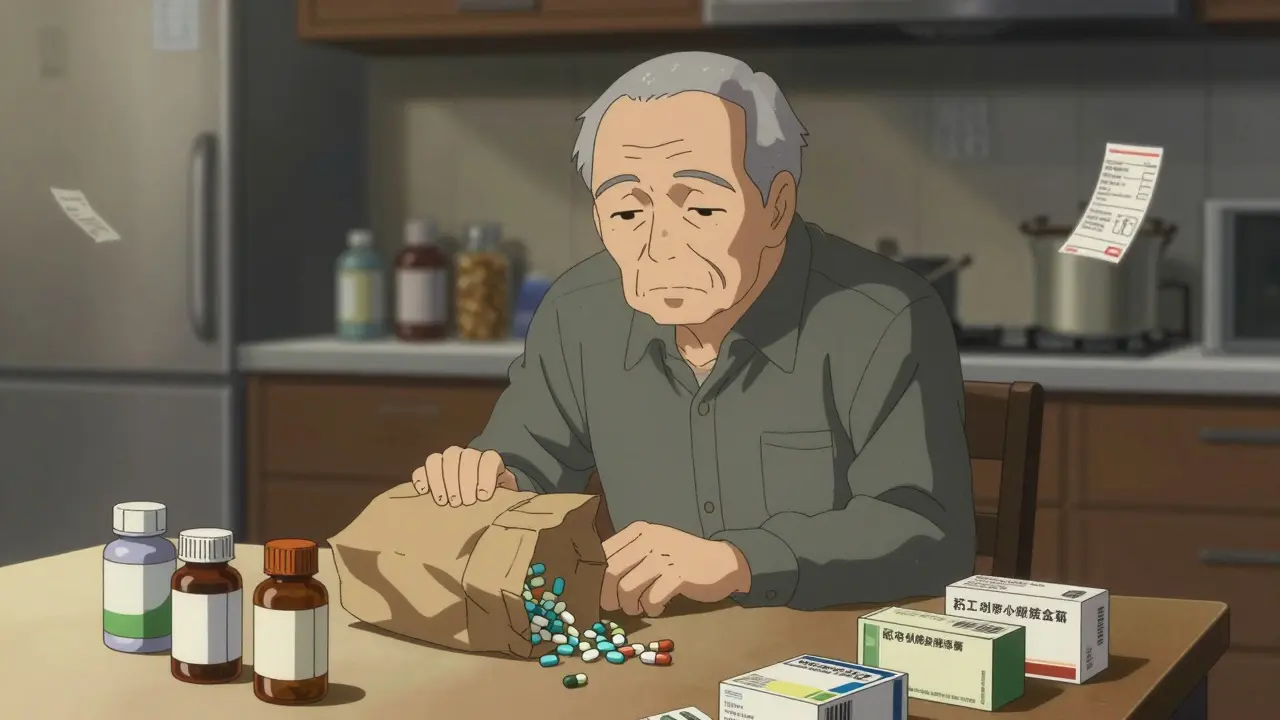
Every year, millions of older adults in the U.S. take five, ten, even fifteen different pills. Some are for blood pressure. Others for arthritis, diabetes, heartburn, sleep, or anxiety. Many of these medications were prescribed years ago - by different doctors, in different settings - and nobody ever sat down to ask: Do you still need all of these?
This isn’t just a numbers game. It’s a silent crisis. Polypharmacy - the regular use of five or more medications - affects about 40% of adults over 65. And it’s not just about taking too many pills. It’s about the hidden dangers: falls, confusion, hospital trips, and even shortened life expectancy. The problem isn’t that doctors are careless. It’s that the system is broken.
Why Polypharmacy Happens
Most seniors don’t start out on a dozen medications. It creeps in. A fall leads to a painkiller. A sleepless night leads to a sedative. A stomach upset leads to an antacid. Then another doctor adds another drug. And another. Before you know it, a patient has a pillbox with more compartments than days in the week.
One study found that 42% of older adults get prescriptions from three or more different specialists. Each doctor sees one piece of the puzzle - high blood pressure, arthritis, depression - and prescribes what they think is best. But rarely do they talk to each other. And almost never do they ask: What’s the goal here?
And then there’s the transition problem. When someone leaves the hospital, goes to rehab, or moves into a nursing home, medication lists get copied, pasted, and added to - without being reviewed. One doctor told a patient, “You’re on 12 medications.” The patient replied, “I don’t even know why I’m taking half of them.” That’s not uncommon.
The Hidden Risks
Your body changes as you age. Your liver doesn’t process drugs like it used to. Your kidneys clear them slower. That means the same dose that was safe at 50 can be toxic at 80. The result? Adverse drug reactions. In fact, 35% of emergency room visits by seniors are tied to medication problems.
The American Geriatrics Society has a list - the Beers Criteria - of 56 medications that are risky for older adults. Some are obvious: benzodiazepines like Valium or Xanax. These increase fall risk by 50%. Others are sneaky. Anticholinergics - found in some allergy pills, bladder meds, and even certain antidepressants - can raise dementia risk by 50% over seven years. Even common drugs like NSAIDs (ibuprofen, naproxen) can cause internal bleeding, especially in people on blood thinners.
And then there’s the financial toll. One in four seniors skips doses because they can’t afford their meds. That’s not laziness. It’s survival. A single month’s supply of five medications can cost over $300. For someone on a fixed income, that’s groceries or pills.
Deprescribing: The Real Solution
The answer isn’t just stopping pills. It’s deprescribing - a careful, step-by-step process of removing medications that do more harm than good. It’s not about cutting corners. It’s about cleaning up.
Studies show that when done right, deprescribing reduces hospital visits by 17% and adverse events by 22%. But it doesn’t happen by accident. It requires planning.
Here’s how it works:
- Start with the brown bag. Ask the patient to bring every pill, capsule, patch, and supplement - even the ones they haven’t taken in months. This simple step reveals duplicates, expired drugs, and over-the-counter meds that interact dangerously with prescriptions.
- Use the STOPP/START criteria. This is a tool doctors use to spot inappropriate prescriptions. STOPP flags drugs that shouldn’t be used (like long-term proton pump inhibitors for heartburn - they raise fracture risk by 26%). START identifies drugs that should be added but often aren’t (like a flu shot or a vitamin D supplement).
- Focus on high-risk meds first. Opioids, benzodiazepines, anticholinergics, and certain diabetes drugs are top priorities. One study found that cutting just one high-risk drug reduced falls by 30% in the next six months.
- Involve the patient. If someone doesn’t understand why they’re taking a pill, they won’t take it - or they’ll stop it on their own. Explain the risks. Ask what they want: to live longer? To sleep better? To walk without pain? Their goals matter more than the disease labels.
A 2022 study from UCI Health’s HAPS program found that during a single consultation, patients had an average of 4.2 unnecessary or harmful medications. After deprescribing, their quality of life scores jumped 37%. That’s not a miracle. It’s a reset.
Who Should Be Involved?
Managing polypharmacy isn’t a solo job. It needs a team.
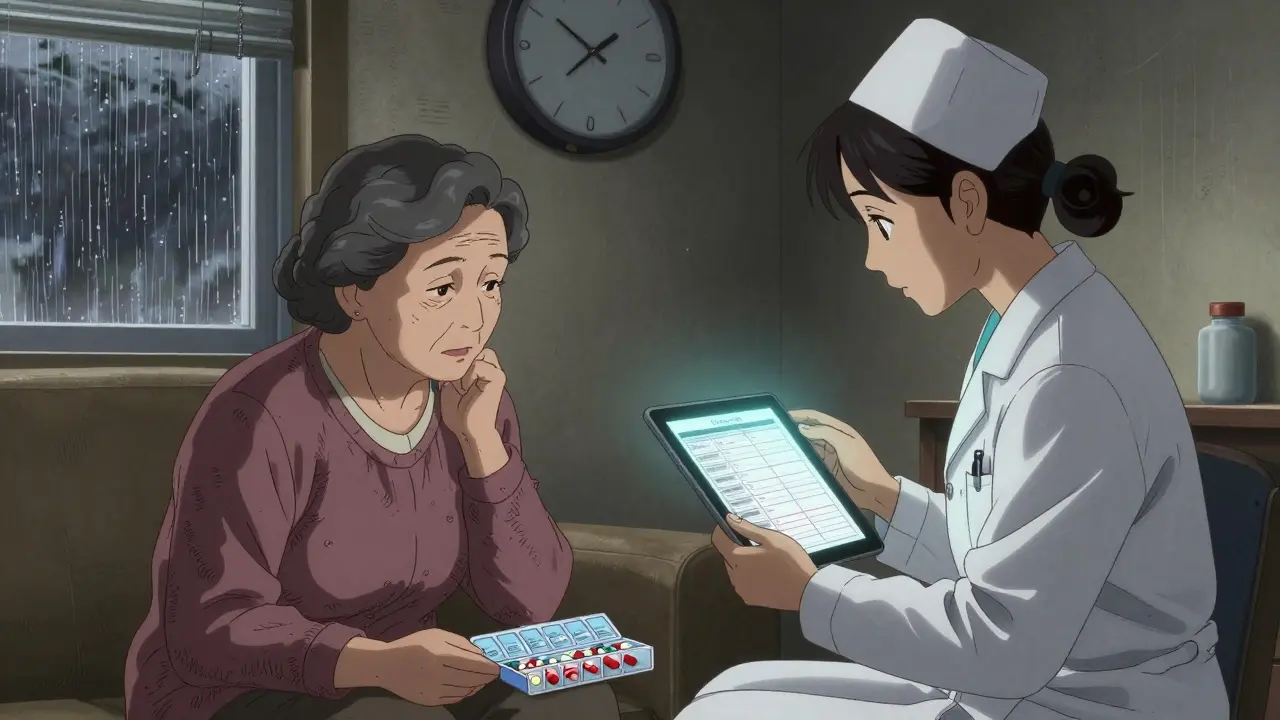
- Pharmacists - They’re the unsung heroes. A 2020 CMS study showed pharmacist-led reviews cut hospital readmissions by 24% in Medicare patients. They spot interactions, check for duplications, and suggest cheaper alternatives.
- Nurses - They’re often the first to notice confusion, dizziness, or missed doses. They can flag red flags before they become emergencies.
- Primary care doctors - They need to be the hub. Not the one adding prescriptions, but the one asking: “What’s the plan?” and “Who else is managing this?”
Teams that include all three see 32% better outcomes than doctors working alone. That’s not a coincidence. It’s system design.
What’s Changing Now?
The tide is turning. In January 2023, the Centers for Medicare & Medicaid Services launched a $15 million initiative to create standardized deprescribing protocols across 15 health systems. The goal? Make it routine - not rare.
New tools are helping too. The FDA-approved MedWise platform uses genetic data to predict how a person’s body will react to a drug. In a 2022 trial, it cut adverse events by 41%. That’s not science fiction. It’s here.
The American Geriatrics Society updated its Beers Criteria in 2023 to include clearer guidance on stopping antipsychotics in dementia patients - a move that reduced mortality risk by 19% in follow-up studies. And the National Institute on Aging is funding $42 million in research to build personalized medication plans based on biological age, not calendar age.

What You Can Do
If you or a loved one is managing multiple medications, here’s what to do now:
- Ask for a full medication review - at least once a year. Don’t wait for a crisis.
- Bring the brown bag to every appointment - even if you think you’re “fine.”
- Ask: “Is this still necessary?” and “What happens if I stop it?”
- Ask who’s coordinating your care. If no one is, become the coordinator.
- Use a pill organizer - but don’t trust it blindly. Check labels. Update it monthly.
There’s no shame in taking fewer pills. In fact, taking only what’s needed is smarter, safer, and often cheaper. The goal isn’t to eliminate all meds. It’s to eliminate the ones that don’t serve you anymore.
What exactly counts as polypharmacy?
Polypharmacy is formally defined as taking five or more medications regularly - including prescription drugs, over-the-counter pills, vitamins, and supplements. It’s not about having multiple conditions; it’s about the number of drugs being taken at once. Even if each medication is prescribed for a valid reason, the combination can become dangerous.
Can deprescribing make someone sicker?
Sometimes, yes - but only if done too quickly or without monitoring. That’s why deprescribing isn’t about stopping pills cold turkey. It’s a slow, planned process. For example, a benzodiazepine might be reduced by 10% every two weeks while monitoring for anxiety or sleep issues. Most patients feel better once unnecessary drugs are removed - less dizziness, clearer thinking, fewer falls. The risks of continuing harmful meds usually outweigh the risks of carefully stopping them.
Are over-the-counter drugs really a problem?
Absolutely. Many seniors don’t realize OTC meds count. Cold pills with diphenhydramine (like Benadryl) are strong anticholinergics. Pain relievers like ibuprofen can cause bleeding, especially if someone is on blood thinners. Even herbal supplements like St. John’s Wort can interfere with heart meds or antidepressants. That’s why the brown bag review includes everything - even the stuff you think doesn’t matter.
Why do doctors keep prescribing if it’s risky?
It’s not always intentional. Many doctors inherit medication lists from other providers and assume they’re still needed. Time constraints, lack of communication between specialists, and outdated electronic records all play a role. Also, prescribing feels like doing something. Stopping feels like doing nothing - even if it’s the right thing. That’s why systematic reviews and tools like the Beers Criteria are so important.
How often should a senior get a medication review?
At least once a year - and every time they see a new specialist, are discharged from the hospital, or move to a new living situation (like a nursing home). If someone is on five or more medications, monthly check-ins with a pharmacist can catch problems before they become emergencies.
Final Thought
Polypharmacy isn’t about being old. It’s about being managed poorly. We’ve built a system that rewards adding more - not removing what’s unnecessary. But the future of geriatric care isn’t more pills. It’s smarter ones. Fewer, but better. And that starts with asking one simple question: “Do I still need this?”


David Robinson
March 17, 2026 AT 17:07Why are we even pretending this is a medical issue? It’s a corporate scam. Pharma companies push pills like candy, and doctors just sign the damn forms. No one’s incentivized to stop prescribing - only to add more. I’ve seen grandmas on 14 meds because some rep gave a doc a free lunch. It’s not broken - it’s designed this way.
Kendrick Heyward
March 18, 2026 AT 03:01This is why I hate modern medicine 😔. My grandma took 11 pills a day and still fell. They didn’t even check if they were working - just kept adding more. I swear, if you’re over 65, they treat you like a vending machine. 💔
Paul Ratliff
March 20, 2026 AT 00:10bro i had this exact thing happen to my pops. he was on 9 meds, turned out 4 were expired, 2 were for stuff he already quit, and one was just for 'general wellness' lol. pharmacist caught it. he's been way better since. just bring the brown bag. it's that simple.
lawanna major
March 20, 2026 AT 14:26There’s something deeply human about this crisis - not just clinical, not just economic, but existential. We’ve turned aging into a problem to be pharmacologically managed, rather than a phase of life to be respectfully supported. The goal shouldn’t be to extend life at all costs, but to honor its quality, clarity, and autonomy. Deprescribing isn’t just about removing drugs - it’s about restoring dignity.
jerome Reverdy
March 22, 2026 AT 13:52Let’s be real - polypharmacy is the default setting in American geriatrics. It’s not negligence, it’s systemic inertia. Doctors are trained to diagnose and prescribe, not to de-prescribe. The system doesn’t reward stopping. It rewards volume. And we wonder why seniors are confused, falling, and broke. The solution isn’t more guidelines - it’s redesigning the workflow. Pharmacists as central coordinators? Yes. Primary care as the hub? Absolutely. But until we change the reimbursement model? Nothing’s gonna shift.
Justin Archuletta
March 22, 2026 AT 23:02My mom stopped 3 meds last year - no more dizziness, sleeps better, saves $200/month. Why isn’t this common knowledge??
Sanjana Rajan
March 23, 2026 AT 00:09Of course they’re pushing deprescribing - it’s cheaper. But what happens when they stop the meds and the person dies? Who gets sued? The doctor? The pharmacist? Nah. They’ll just say ‘natural causes.’ This whole movement feels like a cost-cutting scheme disguised as compassion.
SNEHA GUPTA
March 23, 2026 AT 01:28In India, we don’t have this problem - not because we’re better, but because most elders can’t afford 10 pills a day. They take what’s absolutely necessary, or nothing. Sometimes, poverty forces clarity. Here, we overmedicate because we can - and because we’ve been taught that more means better. Maybe we need to unlearn that.
Kyle Young
March 24, 2026 AT 15:22One must consider the epistemological framework under which polypharmacy is operationalized. The biomedical model, rooted in reductionism, fails to account for the emergent complexity of geriatric physiology. Each pharmacological intervention is treated as an isolated variable, when in fact, the interactions are nonlinear, context-dependent, and often irreversible. The notion of deprescribing, therefore, is not merely clinical - it is a paradigm shift.
Linda Olsson
March 24, 2026 AT 23:46Did you know the FDA’s Beers Criteria were influenced by a pharmaceutical lobbying group in 2019? And now they’re pushing ‘MedWise’? It’s a subscription-based platform. Who owns it? Who profits? This isn’t healthcare - it’s a data harvesting scheme disguised as innovation. They want your genetic info, your pill habits, your habits. Then they sell it. And you think you’re being saved?
Aileen Nasywa Shabira
March 26, 2026 AT 09:11Oh wow, a 37% quality-of-life increase? That’s like saying you feel better after your grandkid stops stealing your meds. And you call that science? Meanwhile, real people are dying because they can’t afford insulin - but we’re worried about grandma’s antihistamine? This whole article is performative concern. Go fix the cost of healthcare before you start playing pharmacist.