

Sertraline Side Effect Tracker
Daily Symptom Tracker
Track your nausea and diarrhea severity to see improvement patterns
Symptom Progression
Nausea
Diarrhea
Starting sertraline can feel like a gamble. You’re hoping it’ll lift your mood, but instead, your stomach starts rebeling. Nausea hits in the morning. Diarrhea shows up out of nowhere. You’re not alone-about sertraline users report these side effects within the first week. For many, it’s not just uncomfortable-it’s enough to make them quit before the medication even has a chance to work.
Why Sertraline Causes Nausea and Diarrhea
Sertraline doesn’t just affect your brain. About 95% of your body’s serotonin is in your gut. When you take sertraline, it boosts serotonin levels everywhere-including your digestive tract. That extra serotonin speeds up how fast food moves through your intestines and triggers fluid secretion, leading to loose stools. It also irritates the stomach lining and slows digestion, which causes nausea, bloating, and even heartburn. This isn’t random. A 2022 analysis of over 5,000 patients found sertraline had the highest chance of GI side effects among all common SSRIs-11.5% more likely than fluoxetine. About 25% of people get nausea. At least 10% get diarrhea. Some studies show up to 30% experience one or both. These aren’t rare side effects. They’re expected.How Long Do These Side Effects Last?
The good news? For most people, they don’t last forever. Around 87% of users see nausea and diarrhea improve within 4 to 6 weeks. Many notice a drop in symptoms after just 10 to 14 days. That’s because your gut slowly adapts to the higher serotonin levels. It’s not magic-it’s biology. But here’s the catch: if symptoms get worse after two weeks, or if diarrhea lasts more than four weeks, you shouldn’t wait it out. Persistent diarrhea could be a sign of microscopic colitis, a rare but serious inflammation of the colon linked to sertraline. That’s not normal. That’s a red flag.What to Do When Nausea Hits
Don’t take sertraline on an empty stomach. That’s the number one mistake. Taking it with food-especially a meal with protein like eggs, chicken, or yogurt-cuts nausea by 35 to 40%. A 2022 study in the Journal of Clinical Psychiatry confirmed this. Bland foods work best: toast, crackers, rice. Skip spicy, greasy, or overly sweet meals. They make it worse. Try ginger. Not just as tea-ginger capsules or candies work too. A 2021 trial showed ginger reduced nausea severity by 27% compared to placebo. Sucking on sugar-free hard candy can also help by stimulating saliva, which soothes the stomach. Eat smaller meals, more often. Five small bites every few hours are easier on your gut than three big ones. If you’re still struggling after two weeks, talk to your doctor. They might lower your dose to 25 or 50 mg and slowly ramp it back up. This gives your body more time to adjust. Many people find relief this way without ever having to quit.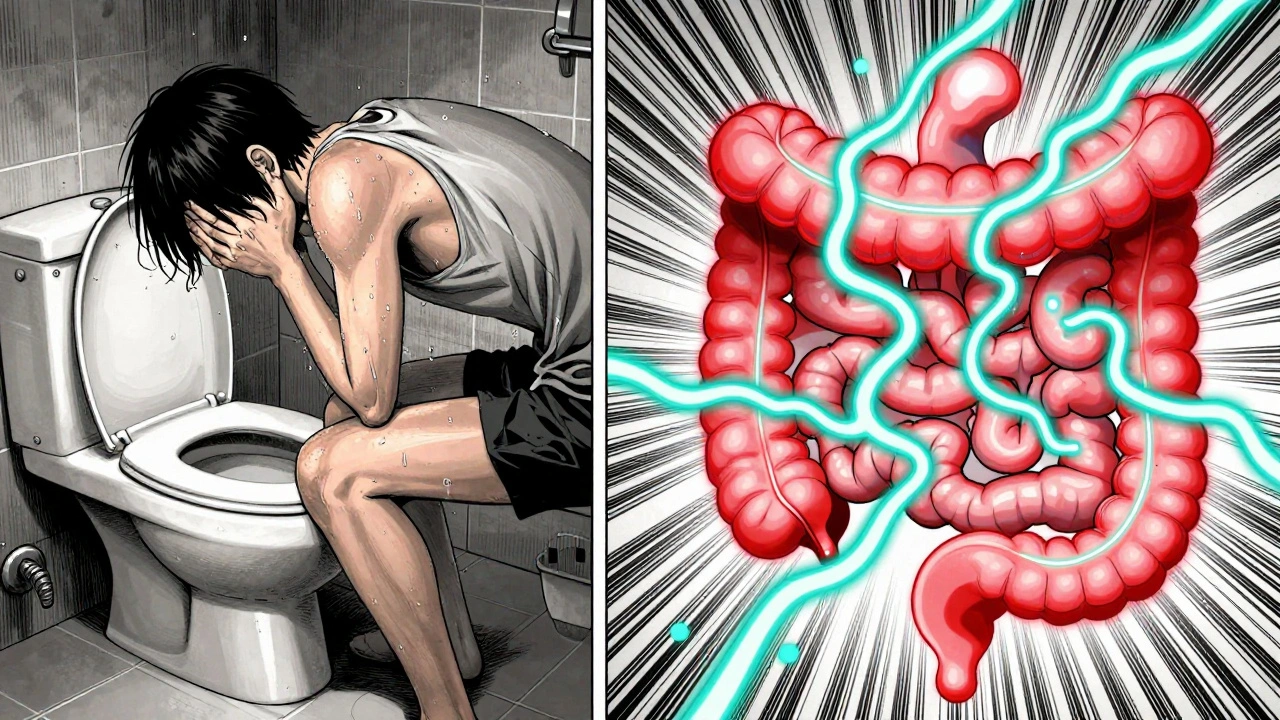
Managing Diarrhea: What Works and What Doesn’t
Diarrhea from sertraline isn’t like a stomach bug. It’s not caused by bacteria. So antibiotics won’t help. In fact, they might make it worse. Instead, focus on what you eat and drink. Cut out caffeine, alcohol, and sugary drinks. These all speed up your bowels. Avoid fried foods, dairy if you’re sensitive, and high-fiber veggies like broccoli or beans for now. Stick to bananas, white rice, applesauce, and toast-the BRAT diet. It’s simple, but it works. Stay hydrated. Diarrhea steals fluids and electrolytes. Drink water, broth, or oral rehydration solutions. Coconut water is a good natural option. Avoid sports drinks-they’re full of sugar, which can worsen diarrhea. If diarrhea lasts more than four weeks, don’t ignore it. Your doctor may need to test for microscopic colitis. This condition is rare, but sertraline is one of the few medications strongly linked to it. If diagnosed, switching antidepressants is often the best solution.When to Consider Switching Antidepressants
Not everyone can tolerate sertraline. That’s okay. There are other options. Escitalopram (Lexapro) is now the top choice for many doctors because it causes significantly fewer GI side effects. A 2023 study showed 34.7% of primary care physicians prefer it as a first-line SSRI-up from just 22% in 2018. Compared to sertraline, escitalopram has about half the odds of causing nausea or diarrhea. Paroxetine is another alternative, though it can cause more drowsiness. Fluoxetine might be better for some, but it takes longer to leave your system if you need to switch later. The National Institute for Health and Care Excellence (NICE) in the UK recommends switching if GI side effects are still bothering you after two weeks. The American Psychiatric Association agrees: don’t suffer unnecessarily. Your mental health matters, but so does your physical comfort.


Ariel Nichole
December 11, 2025 AT 00:21took sertraline with a big protein breakfast and the nausea vanished by day 3. ginger tea helped too. no need to suffer through it if you tweak the routine.
john damon
December 12, 2025 AT 09:12bro i took it on an empty stomach like a dumbass 😭 diarrhea for 3 weeks straight. never again. food is your friend.
matthew dendle
December 13, 2025 AT 21:18so youre telling me the answer is just eat eggs? wow genius i never thought of that
Lisa Stringfellow
December 14, 2025 AT 04:35why do people always act like this is fixable? its not. you just get used to feeling like crap for months. and then the real depression kicks in anyway.
Kristi Pope
December 14, 2025 AT 15:53youre not broken if this doesnt work for you. i switched to escitalopram and my gut finally stopped staging a revolt. its not failure its strategy 💪
Vivian Amadi
December 15, 2025 AT 12:55microscopic colitis? you’re just scared because you don’t know the science. if you had read the study you’d know it’s 0.02% of cases. stop scaring people.
Jimmy Kärnfeldt
December 17, 2025 AT 08:45it’s wild how much our gut and brain are wired together. sertraline messes with serotonin everywhere. it’s not just a pill for your mood-it’s a full-system reset. patience and small changes make all the difference.
Monica Evan
December 18, 2025 AT 11:35took sertraline for 6 weeks with constant nausea. tried ginger candies, ate rice and bananas, switched to taking it at night. by week 4 it was gone. you can do this. dont give up too soon
Taylor Dressler
December 19, 2025 AT 22:49the 2022 study in the Journal of Clinical Psychiatry showed a 38% reduction in nausea when taken with food. that’s not anecdotal-it’s evidence-based. if you’re not eating with it, you’re doing it wrong.
Aidan Stacey
December 20, 2025 AT 21:06my body screamed no to sertraline. i switched to escitalopram and felt like i got my life back. sometimes the best thing you can do for your mental health is listen to your gut. literally.
Katherine Liu-Bevan
December 21, 2025 AT 04:49if diarrhea lasts over four weeks, get checked for microscopic colitis. it’s rare but real. don’t wait. your colon will thank you.
Courtney Blake
December 22, 2025 AT 00:40why are we still using sertraline? it’s a 90s drug with 2020s side effects. escitalopram is clearly better. why do doctors still push this?
Aman deep
December 23, 2025 AT 15:45from india here-my cousin took sertraline with dal and rice every night. no nausea. simple food, simple fix. sometimes the old ways work best 🙏
Eddie Bennett
December 24, 2025 AT 21:13just wanted to say thank you for this post. i was about to quit until i read the part about ginger and protein. tried it yesterday. nausea down 70%. i’m not giving up anymore.