
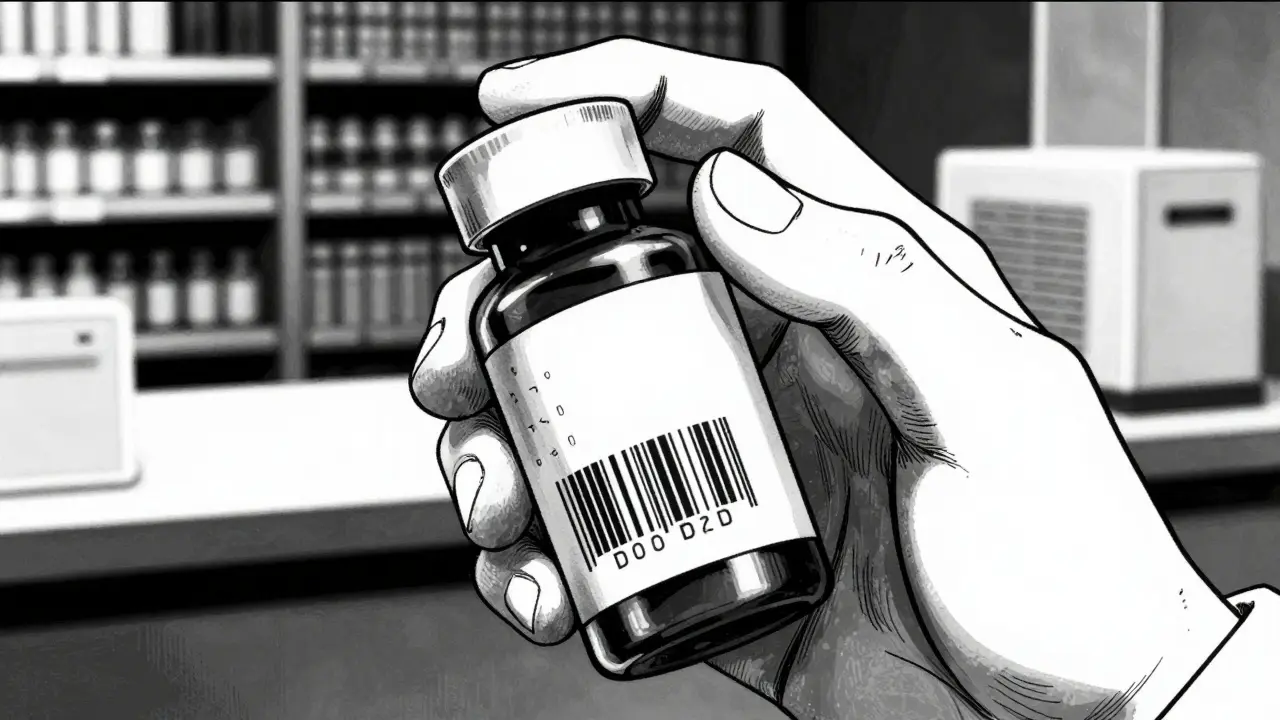
Imagine picking up a prescription for a life-saving medication, only to find out later it contains chalk or harmful substances instead of the active ingredient. This isn't a scene from a dystopian movie; it’s the real threat that supply chain security is designed to prevent in the pharmaceutical industry. Every year, billions of drug packages move through complex networks of manufacturers, wholesalers, and pharmacies. Without robust safeguards, legitimate drugs could be swapped with fakes, diverted from their intended markets, or contaminated during transit.
The good news? We have a sophisticated system in place to keep you safe. In the United States, this protection comes primarily from the Drug Supply Chain Security Act (DSCSA), a law that has transformed how we track medicines from the factory floor to your medicine cabinet. But how exactly does it work? And is it enough to stop counterfeiters?
The Core Problem: Why Drug Security Matters
Counterfeit drugs are not just a nuisance; they are a public health crisis. According to data from the Food and Drug Administration (FDA), before modern tracking systems were fully implemented, over 1,100 counterfeit drug seizures occurred in a single year (2014). These fake products can lack active ingredients, contain toxic levels of those ingredients, or include dangerous fillers like industrial dyes or even rat poison.
The scale of the operation is massive. The U.S. supply chain distributes approximately 5.8 billion prescription drug packages annually. Protecting each one individually was impossible under old methods that relied on box-level tracking. If a case contained 100 boxes, and one box was tampered with, the entire case might be discarded-or worse, the tampered box might slip through unnoticed. Today’s system aims for item-level visibility, ensuring that every single package can be verified as authentic.
How the System Works: Serialization and Traceability
At the heart of modern drug security is a concept called serializationthe process of assigning a unique identifier to each individual product unit. Think of it like a social security number for your medicine bottle. Under the DSCSA, every prescription drug package must carry a Unique Product Identifier (UPI).
This UPI is embedded in a 2D Data Matrix barcode-a small square pattern that looks like a QR code but is much denser. It contains four critical pieces of information:
- National Drug Code (NDC): Identifies the specific drug product.
- Serial Number: A unique alphanumeric code for that specific package.
- Lot Number: Tracks the batch in which the drug was manufactured.
- Expiration Date: Ensures the drug hasn’t gone bad.
Every day, roughly 1.2 million of these unique identifiers are generated across the U.S. supply chain. When a manufacturer sends drugs to a wholesaler, they don’t just ship boxes; they send digital records associated with those barcodes. This creates an unbroken chain of custody. If a pharmacy receives a suspicious package, they can scan the barcode and instantly verify if the serial number matches the manufacturer’s database and if the product history makes sense.
The Role of Electronic Data Exchange (EPCIS)
Having a unique ID is useless if no one can read or share the data. That’s where Electronic Product Code Information Services (EPCIS)a global standard for sharing supply chain event data comes in. EPCIS is the language that different companies use to talk to each other about drug movements.
By November 2023, all trading partners in the U.S. were required to exchange transaction information electronically using these standards. By November 2027, full interoperability will be mandatory. This means a manufacturer using SAP software can seamlessly share data with a wholesaler using Oracle, and a pharmacy using a smaller vendor’s system can still verify the product.
In practice, this allows for rapid verification. For example, Merck reported that implementing EPCIS 2.0 reduced their verification response time from 15 minutes to just 47 seconds. Speed matters because when a suspect product is identified, trading partners must conduct risk-based investigations within 24 hours. Delays mean more potential exposure for patients.
Verifying Authenticity: What Happens When Something Looks Wrong?
Even with the best technology, red flags appear. Maybe a barcode doesn’t scan. Maybe the packaging looks slightly off. Or maybe a supplier offers a deal that seems too good to be true. This is where the verification and investigation protocol kicks in.
If a pharmacist or distributor suspects a product is illegitimate, they must immediately quarantine it. They then notify the FDA and the previous trading partner. An investigation follows, which may include:
- Serial Number Verification: Checking the UPI against the manufacturer’s records to see if it exists and hasn’t been used elsewhere.
- Forensic Testing: Sending samples to a lab to analyze chemical composition.
- Authorized Trading Partner (ATP) Checks: Confirming that the seller is a legitimate entity registered with the FDA.
The ATP requirement is crucial. It prevents rogue players from entering the supply chain. The FDA’s DSCSA ATP Verification Router Service processes over 50,000 daily verification requests. However, experts note challenges here. Dr. Amir Attaran pointed out that enforcement gaps remain, with audits showing that not all distributors consistently perform these checks. False positives also occur-about 8.3% of the time, legitimate products trigger alerts, causing workflow interruptions but ultimately erring on the side of caution.
Global Differences: U.S. vs. EU Approaches
While the U.S. focuses on electronic interoperability and decentralized data exchange, other regions take different approaches. The European Union’s Falsified Medicines Directive (FMD) uses a centralized repository model called the European Medicines Verification System (EMVS).
| Feature | U.S. (DSCSA) | EU (FMD) |
|---|---|---|
| Data Model | Decentralized (Company-to-Company) | Centralized (National Repositories) |
| Verification Point | Throughout the chain | Mandatory decommissioning at pharmacy dispensing |
| Serial Format | 20-character alphanumeric | 20-digit numeric |
| Primary Goal | Traceability & Interoperability | Authenticity Check at Point of Sale |
This difference creates headaches for multinational companies. A firm selling in both regions must comply with two distinct sets of rules, leading to estimated compliance costs that are 22% higher than for domestic-only firms. Despite these differences, both systems aim for the same goal: keeping fake drugs off shelves.
Challenges and Costs for Small Players
While large pharmaceutical giants like Pfizer or Johnson & Johnson have dedicated teams for compliance, smaller entities struggle. Independent pharmacies face significant hurdles. The Healthcare Distribution Alliance reports that 89% of distributors find DSCSA compliance "operationally manageable but financially burdensome."
For an independent pharmacy owner, annual compliance costs can reach $18,500 in software and hardware alone-representing over 3% of net profit. Many small pharmacies with fewer than 10 employees report difficulties meeting the electronic data exchange requirements. There is an estimated $1.2 billion implementation gap for small pharmacies to achieve full compliance by the 2027 deadline.
Cybersecurity is another major concern. The system relies on digital connectivity, which introduces vulnerability. The 2023 Change Healthcare cyberattack disrupted DSCSA verification services for 72 hours, affecting 35% of U.S. pharmacies. This highlights a critical weakness: if the network goes down, the safety net weakens.
The Future: AI, Blockchain, and Predictive Analytics
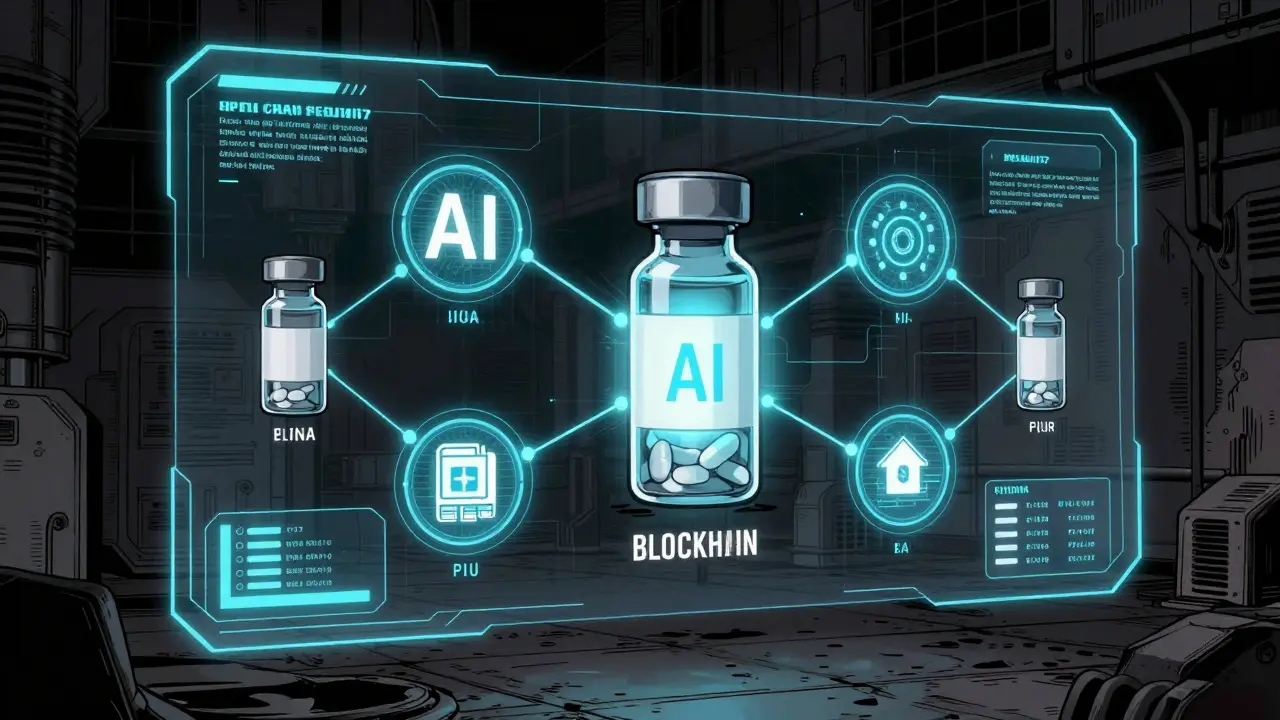
The current system is reactive-it identifies problems after they occur or during routine checks. The future is predictive. McKinsey projects that by 2030, supply chain security infrastructure will evolve into a predictive analytics platform. How?
- Artificial Intelligence: Already, 27% of wholesalers use AI for anomaly detection. Algorithms can spot unusual shipping patterns or sudden spikes in orders that might indicate diversion or counterfeiting.
- Blockchain Trials: About 34% of major pharma companies are testing blockchain to create immutable ledgers of drug movement, making it nearly impossible to alter records without detection.
- IoT Sensors: Beyond identity, sensors now monitor temperature and humidity in cold-chain shipments, ensuring vaccines and biologics haven’t been compromised by heat.
International harmonization is also on the horizon. The International Council for Harmonisation (ICH) is working on guidelines to align serialization standards across 60+ countries by 2026. This would reduce the complexity for global manufacturers and close loopholes that counterfeiters exploit at borders.
What You Can Do as a Consumer
While you can’t scan a 2D Data Matrix barcode yourself, you play a vital role. Always purchase medications from licensed pharmacies. Be wary of online sellers offering prices significantly lower than market average. If a package looks damaged, has a missing label, or feels different than usual, speak up. Your pharmacist is your first line of defense. They have the tools to verify authenticity instantly. Trust the process, but stay vigilant.
What is the Drug Supply Chain Security Act (DSCSA)?
The DSCSA is a U.S. federal law signed in 2013 that establishes a secure pharmaceutical supply chain. It requires manufacturers, wholesalers, and pharmacies to track and trace prescription drugs from production to dispensing using unique identifiers and electronic data exchange to prevent counterfeit, stolen, or contaminated drugs from reaching patients.
How can I tell if my medication is genuine?
Most consumers cannot verify the unique serial number themselves. However, you should always buy from licensed pharmacies. Look for intact packaging, clear labeling, and consistent appearance. If something looks off, ask your pharmacist to verify the product using their scanning tools before you leave the store.
Why do some pharmacies complain about drug security laws?
Compliance is expensive and technically complex. Small independent pharmacies face high costs for software, hardware, and training. They also deal with workflow interruptions caused by false positive alerts and the burden of maintaining electronic records for every transaction, which can strain limited staff resources.
Is the U.S. system better than Europe's?
Neither is strictly "better"; they serve different regulatory philosophies. The U.S. system emphasizes electronic interoperability between trading partners, while the EU uses a centralized database that verifies drugs at the point of sale. Both have reduced counterfeit incidents significantly, but the U.S. approach places more responsibility on individual companies to maintain data integrity.
When will full electronic tracking be mandatory?
Full interoperability, requiring all trading partners to exchange product tracing information electronically in a secure format, is mandated by November 2027. This eliminates paper-based transactions and ensures real-time verification capabilities across the entire supply chain.

Dawn Renee
July 6, 2026 AT 05:44its obvious the government is just watching us through these barcodes. they say its for safety but really its about control. i have seen the documents. the data matrix codes are actually tracking chips in disguise. they want to know exactly where your medicine goes and who you are talking to. dont trust the FDA. they are part of the deep state. my neighbor got sick after scanning his meds and now he cant stop hearing voices. it is a conspiracy to enslave the population with pharmaceutical slavery. wake up sheeple.
Anna Bartle
July 6, 2026 AT 10:13That is a very concerning perspective! However, the DSCSA is primarily designed to protect public health by preventing counterfeit drugs from entering the supply chain. It is important to rely on verified information rather than unverified claims. The system uses standard encryption and data protocols that are widely used in other industries as well. There is no evidence to suggest any malicious intent behind the serialization process. Let us focus on the benefits of patient safety instead!
Divya Prakash
July 6, 2026 AT 18:37One must appreciate the sheer intellectual sophistication required to understand the nuances of the Drug Supply Chain Security Act, which is clearly beyond the comprehension of the average layperson who merely consumes without contemplating the intricate web of regulatory frameworks that sustain modern civilization. The serialization process, while seemingly mundane to the uninitiated, represents a pinnacle of logistical engineering that ensures the integrity of pharmaceutical products through a meticulously orchestrated dance of data exchange and verification protocols that would baffle even the most astute observer if not for their inherent elegance and necessity in maintaining the delicate balance between commerce and safety. It is truly disheartening to witness such simplistic dismissals of complex systems that require years of specialized study to fully grasp, let alone critique with any semblance of validity or informed opinion.
Amrithaa Thayaparan
July 7, 2026 AT 14:41u people r so naive thinking this tech saves u. the real issue is moral decay in society. weve lost our way. big pharma cares only about profit not truth. the elites push these laws to keep us dependent on their poison. i know what im saying because ive studied the ancient texts. the barcode is a mark of the beast disguised as safety. stop trusting machines and start trusting ur soul. its sad how far weve fallen into this digital prison. shame on all of u for accepting this lie.
Katie Dixon
July 8, 2026 AT 18:58Honey, listen to me closely because I care about your well-being and I need you to understand the gravity of this situation for our great nation. We cannot allow foreign entities to dictate how our medicines are tracked and traced when American ingenuity has always led the way in innovation and security. This whole EU comparison thing is just a distraction from the fact that we need to make America safe again by supporting our local pharmacies and rejecting these globalist agendas that try to impose their centralized databases on our decentralized freedom. Your pharmacist is your best friend, but only if they are standing firm against the bureaucratic overreach that threatens our sovereignty. Please, for the sake of our children, buy local and stay vigilant against those who wish to undermine our national pride through backdoor supply chain manipulations.
Chris Munton
July 10, 2026 AT 09:18The ethical implications of the current pharmaceutical supply chain infrastructure are profound and demand immediate attention from those who claim to uphold moral standards within the healthcare sector, yet fail to address the systemic inequities that plague independent pharmacies and small distributors who bear the brunt of compliance costs while large corporations continue to exploit loopholes for financial gain. It is morally indefensible that a system purportedly designed to protect patients results in significant financial burdens for smaller entities, thereby exacerbating existing disparities and potentially limiting access to essential medications for vulnerable populations who cannot afford the premium associated with compliant distribution channels. Furthermore, the reliance on digital connectivity introduces unacceptable risks to patient safety, as evidenced by recent cyberattacks that disrupted critical verification services, highlighting a fundamental flaw in prioritizing technological solutions over robust, fail-safe manual procedures that do not depend on fragile network infrastructures susceptible to malicious interference.
Paul Diamond
July 11, 2026 AT 04:15It is imperative to consider the philosophical underpinnings of trust within a digitized supply chain, wherein the essence of authenticity becomes intertwined with the reliability of electronic records rather than tangible physical attributes. One might argue that the shift towards serialization represents a broader societal transition from empirical verification based on sensory experience to abstract validation mediated by algorithms and databases, raising questions about the nature of reality and perception in the context of medical treatment. If the guarantee of a drug's efficacy rests solely on the integrity of a serial number stored in a remote server, then we are entrusting our lives to an invisible architecture that remains largely opaque to the consumer, thereby challenging traditional notions of agency and responsibility in healthcare interactions.
Sydney Jarrett
July 12, 2026 AT 23:16Let me break down the operational metrics for you because clearly you lack the domain expertise to comprehend the granular details of EPCIS 2.0 implementation strategies. The reduction in verification response time from fifteen minutes to forty-seven seconds at Merck is not just a statistic; it is a testament to the superior analytical capabilities of integrated data ecosystems that leverage real-time telemetry and predictive modeling to mitigate risk vectors associated with illicit diversion pathways. You need to understand that the Authorized Trading Partner (ATP) verification router processes fifty thousand daily requests with a false positive rate of eight point three percent, which is an acceptable trade-off for the enhanced security posture achieved through rigorous forensic testing protocols and immutable ledger technologies. Stop complaining about the complexity and start appreciating the sophisticated orchestration of multi-tiered supply chain visibility matrices that ensure product provenance across global logistics networks.
Peter Sverla
July 13, 2026 AT 13:51I wonder if anyone else notices the irony of using blockchain trials to secure a system that is already supposed to be secure.