

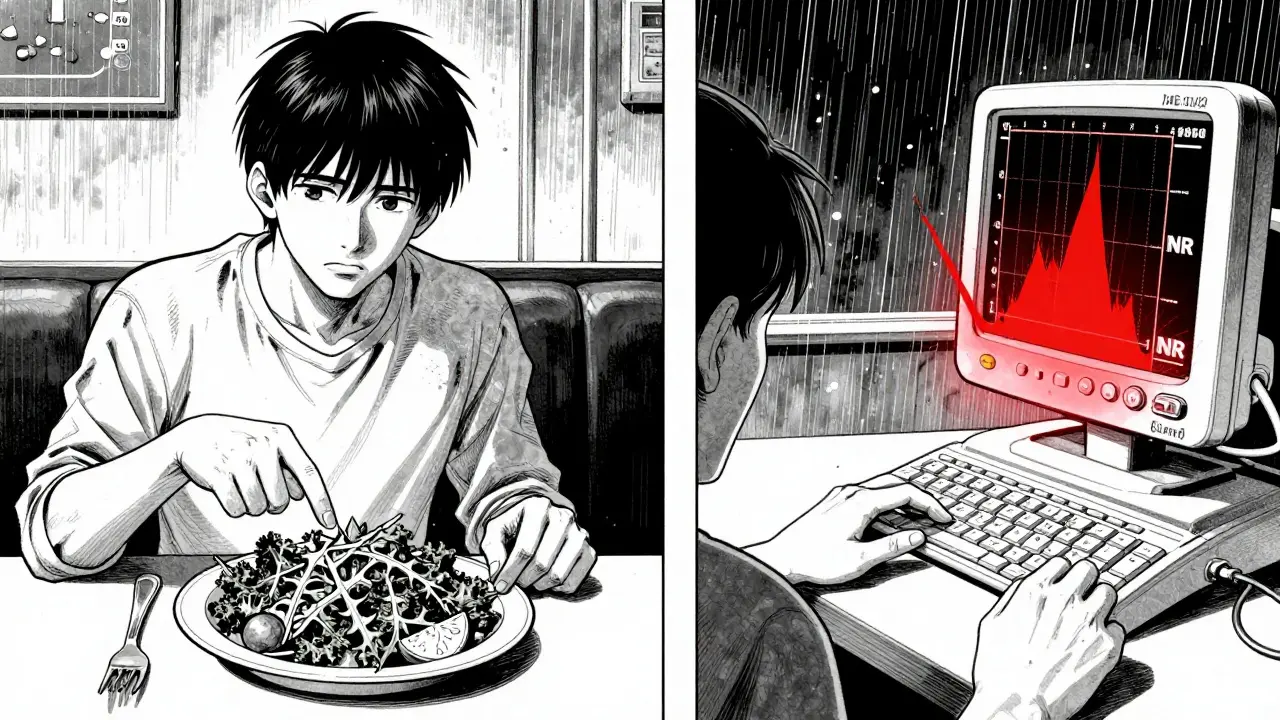
If you're taking warfarin, your INR isn't just a number on a lab report-it's a daily balancing act. One day you eat a big salad, your INR drops. The next day you skip the greens, your INR spikes. It's not random. It's vitamin K. And if you don’t manage it right, you’re at risk for clots or bleeding. This isn’t about avoiding spinach forever. It’s about consistency. Every single day.
How Warfarin and Vitamin K Work Together
Warfarin doesn’t thin your blood. It slows down how fast your blood clots. It does this by blocking vitamin K from doing its job. Vitamin K is what your liver needs to make clotting factors-proteins that stop you from bleeding out after a cut. Without enough active vitamin K, those proteins don’t form properly. That’s the goal: slow clotting enough to prevent strokes or clots, but not so much that you bleed internally.
But here’s the catch: if you suddenly eat a lot of vitamin K-like a big serving of kale or cooked spinach-your body gets enough of the vitamin to override warfarin’s effect. Your clotting factors spring back to life. Your INR drops. Your blood clots faster. That’s dangerous if you’re on warfarin for a mechanical heart valve or atrial fibrillation.
On the flip side, if you go days without vitamin K-rich foods, your body runs low. Warfarin keeps working unchecked. Your INR climbs. You risk bleeding from a minor bump or even a nosebleed that won’t stop. This isn’t theoretical. Studies show 68% of INR fluctuations in people on warfarin are tied directly to changes in vitamin K intake.
Which Foods Are High in Vitamin K?
Not all foods affect warfarin the same way. The key player is vitamin K1 (phylloquinone), found mostly in leafy greens. Here’s what you need to know:
- Kale: 547 mcg per cup, cooked
- Spinach: 889 mcg per cup, cooked
- Broccoli: 220 mcg per cup, cooked
- Brussels sprouts: 219 mcg per cup, cooked
- Collard greens: 772 mcg per cup, cooked
- Green tea: 100-200 mcg per cup (varies by steeping time)
- Canola and soybean oil: 20-30 mcg per tablespoon
These aren’t “bad” foods. They’re nutritious. But if you eat a cup of kale on Monday and only iceberg lettuce on Tuesday, your INR will swing. That’s the problem-not the food itself, but the inconsistency.
Low-vitamin K foods? Think: apples, bananas, potatoes, eggs, chicken, most dairy, white rice, and refined grains. Iceberg lettuce has just 17 mcg per cup. That’s why some people switch to it thinking they’re “being careful.” But that’s a trap. Dropping vitamin K too low can be just as risky as eating too much.
What Does Consistent Look Like?
You don’t need to eat the same exact meal every day. You need to eat about the same amount of vitamin K daily. Experts say staying within 10-15% of your usual intake keeps INR stable.
Here’s how one patient made it work:
- Every morning: 1 cup cooked broccoli (220 mcg)
- Every lunch: ½ cup chopped raw spinach (45 mcg)
- Every dinner: 1 egg and grilled chicken
- Weekly: 1 tablespoon olive oil in salad dressing
That’s about 300 mcg of vitamin K per day-consistent, predictable, and safe. She tracked it for six months. Her time in therapeutic range (TTR) jumped from 52% to 92%. No emergency visits. No dose changes.
That’s the goal. Not restriction. Not fear. Consistency.
What About Vitamin K2?
You might hear about vitamin K2-found in fermented foods like natto, cheese, and egg yolks. It’s different from K1. It’s made by bacteria, not plants. Some studies suggest K2 might not interfere with warfarin as much as K1. But here’s the catch: we don’t have enough evidence to say that for sure.
So don’t assume that eating cheese or sauerkraut is “safe.” If you’re not used to eating them, don’t start suddenly. If you already eat them regularly, keep doing so. But don’t change your habits based on rumors. Stick with what you know.
Why Do Some People Say Vitamin K Doesn’t Matter?
You’ll find conflicting advice online. Some studies say genetics (like CYP2C9 and VKORC1 genes) explain most of how much warfarin you need. Others say vitamin K intake doesn’t matter once you’re on a stable dose.
Here’s the truth: genetics matter. But they’re not the whole story. The American College of Cardiology and the American Heart Association both say: vitamin K intake is the most important modifiable factor for INR stability during maintenance therapy.
Even if your genes make you sensitive to warfarin, if you eat 500 mcg of vitamin K one day and 50 mcg the next, your INR will bounce. Genes don’t fix that. Consistency does.
The EU-PACT trial in 2013 showed vitamin K didn’t predict dose after accounting for genes. But that was in a controlled study with strict monitoring. Real life? People eat out. They skip meals. They get tired of the same salad. That’s where the trouble starts.
What to Do When Your INR Fluctuates
If your INR drops below 2.0 or spikes above 3.5 (or your target range), ask yourself: What did I eat differently this week?
Common triggers:
- Going to a buffet and loading up on greens
- Switching from spinach to romaine lettuce
- Starting a green smoothie every morning
- Skipping vegetables for a week because you were sick
- Drinking a lot of green tea
Don’t panic. Don’t stop your warfarin. Don’t suddenly eat a bunch of kale to “fix” a high INR. Call your anticoagulation clinic. They might adjust your dose, or they might tell you to stick with your normal diet for a few days and retest.
One trick that works: if you’re having trouble keeping your INR stable and you can’t control your diet, your doctor might suggest a daily low-dose vitamin K supplement-100-200 mcg. Yes, you read that right. Taking vitamin K every day can actually stabilize your INR by removing the swings. A 2018 study found 83% of patients returned to their target range within a week using this method.
Tools That Help
You don’t have to guess. There are tools built for this.
- CoumaDiet app: Rates foods by vitamin K content. Users rate it 4.6/5. Tracks daily intake.
- Food logs: Write down what you eat for 3-7 days. Use the American Heart Association’s food guide (updated quarterly).
- Measuring cups: Don’t eyeball your spinach. A cup of cooked spinach is 889 mcg. Half a cup is 445. That’s a big difference.
- Dietitian visits: If your clinic offers one, take it. Structured education reduces INR instability by 37%.
One patient in Bristol started using CoumaDiet after two emergency visits. She logged her meals for two weeks. Found out she was eating 600 mcg on weekends and 150 mcg on weekdays. She switched to 250 mcg every day. Her INR hasn’t been out of range since.

What About Restaurants and Travel?
This is where most people slip up. You’re on vacation. You eat a salad at a fancy restaurant. You have no idea what’s in it. You get home. Your INR is 4.8. You’re in the ER.
Here’s how to avoid it:
- Ask: “Is this salad made with spinach, kale, or arugula?”
- Choose grilled chicken or fish with steamed vegetables (broccoli is safer than greens).
- Stick to your usual portion sizes. If you normally eat ½ cup of greens, don’t double it because it’s “free.”
- Carry a small food log or use your phone app.
63% of patients who had an INR-related ER visit said it happened while traveling or eating out. Planning ahead saves trips to the hospital.
What’s the Bottom Line?
You don’t need to stop eating vitamin K. You need to eat the same amount every day. That’s it.
Whether you’re on warfarin for a mechanical valve, atrial fibrillation, or a past clot, your INR depends on this simple rule: consistency over restriction.
Use an app. Keep a log. Measure your portions. Talk to your doctor about a daily vitamin K supplement if your diet is unpredictable. And if you’re ever unsure-call your anticoagulation clinic before you change your dose.
Warfarin isn’t going away. For people with mechanical valves, it’s still the gold standard. And as long as you’re on it, vitamin K will matter. Not because it’s dangerous. But because it’s powerful. And power needs control.
Can I eat spinach if I’m on warfarin?
Yes, you can eat spinach-but only if you eat about the same amount every day. One cup of cooked spinach has 889 mcg of vitamin K. If you eat that Monday through Friday, but skip it on weekends, your INR will swing. Stick to your usual portion. Don’t start eating a lot more or a lot less.
Does cooking affect vitamin K levels?
Yes. Boiling leafy greens can reduce vitamin K by 30-50%. Steaming or sautéing preserves more. So if you’re used to steamed broccoli and switch to boiled, your vitamin K intake drops. That can raise your INR. Stick to your usual cooking method.
Should I take a vitamin K supplement?
Only if your doctor recommends it. For people with erratic diets, a daily 100-200 mcg supplement can actually stabilize INR. But don’t start one on your own. Too much can make warfarin less effective. Talk to your anticoagulation clinic first.
Is warfarin being replaced by newer blood thinners?
Yes, for many people-but not everyone. DOACs (like apixaban or rivaroxaban) don’t need vitamin K monitoring. But if you have a mechanical heart valve, warfarin is still the only approved option. About 98% of mechanical valve patients stay on warfarin. So for them, vitamin K management isn’t optional-it’s life-saving.
How often should I get my INR checked?
At least once a month if you’re stable. More often if you’ve had recent changes in diet, medication, or health. The American College of Cardiology recommends monthly testing for all warfarin patients. Some clinics use home testing devices-ask your provider if that’s an option.
Can alcohol affect my INR?
Yes. Heavy drinking (more than 3 drinks a day) can raise your INR and increase bleeding risk. Even moderate drinking can interfere with how your liver processes warfarin. Stick to no more than 1-2 drinks on occasion. Don’t binge. Consistency matters here too.
What if I forget to take my warfarin?
If you miss a dose, don’t double up the next day. Call your anticoagulation clinic. They’ll tell you whether to skip, take a reduced dose, or adjust based on your INR. Never guess. A missed dose combined with a high-vitamin K meal can be dangerous.
What Comes Next?
If you’ve struggled with INR swings, you’re not alone. But you don’t have to keep guessing. Start tracking your vitamin K intake for one week. Use an app. Write it down. Talk to your pharmacist or dietitian. Small changes add up.
And remember: this isn’t about perfection. It’s about patterns. Your body doesn’t care if you had broccoli or kale. It cares if you gave it the same amount of vitamin K yesterday, today, and tomorrow.
Brian Furnell
December 20, 2025 AT 13:01Let’s be real: vitamin K isn’t the enemy-it’s the variable we refuse to quantify. Most patients treat this like a diet pill regimen, when it’s actually a pharmacokinetic balancing act. The 68% stat from the literature? That’s not noise-that’s signal. And if you’re not tracking intake to the nearest 50 mcg, you’re flying blind. CoumaDiet isn’t optional; it’s the only thing standing between you and a hemorrhagic stroke.
Siobhan K.
December 20, 2025 AT 21:27So let me get this straight-you’re telling me I can eat a whole pot of kale, as long as I eat the same pot every single day? Brilliant. I’ll just make kale my new breakfast, lunch, and dinner. Oh wait, that’s not consistency-that’s culinary suicide. And yet somehow, the medical community still thinks this is a sustainable solution. Sarcasm aside, this is why people stop taking warfarin. It’s not the clotting risk-it’s the boredom.
Stacey Smith
December 22, 2025 AT 00:29Americans think they can eat kale smoothies and still be healthy. No. You either control your intake or you die. Simple. Stop pretending this is a lifestyle choice. It’s a medical protocol.
Ben Warren
December 22, 2025 AT 13:12While the article correctly identifies vitamin K variability as the primary modifiable factor in INR instability, it fails to address the confounding influence of gut microbiota modulation via antibiotics, proton pump inhibitors, and dietary fiber intake-all of which alter phylloquinone bioavailability independently of consumption volume. The EU-PACT trial’s limitations in real-world generalizability are further compounded by the absence of genetic stratification in the cited patient cohort. Moreover, the recommendation of daily vitamin K supplementation as a stabilizing agent contradicts the fundamental pharmacodynamic principle of warfarin’s mechanism: antagonism of VKORC1. Introducing exogenous K1 may induce compensatory upregulation of clotting factors, thereby creating a pseudo-stable but biologically precarious equilibrium. This is not management-it’s pharmacological appeasement.
Sandy Crux
December 24, 2025 AT 12:24Consistency? How quaint. You’re all pretending this isn’t a colonialist medical imposition on natural dietary diversity. Who decided that broccoli and spinach are the only acceptable sources of K1? What about fermented seaweed, natto, or even grass-fed butter? The real problem isn’t your diet-it’s the pharmaceutical-industrial complex’s obsession with standardized, patentable, one-size-fits-all protocols. You’re not managing INR-you’re being managed.
Hannah Taylor
December 26, 2025 AT 09:23they say vitamin k is the problem but what if its the warfarin that’s broken? i heard the FDA knew it was unstable but kept pushing it because it’s cheap. and now they want us to eat the same salad every day like robots? lmao. also green tea = spy poison. just saying.
Jason Silva
December 27, 2025 AT 11:37Bro this is why I switched to Eliquis 😎 no more salads, no more apps, no more panic at the doctor’s office. Warfarin is a 1950s relic. If your doctor still pushes this, they’re stuck in the past. DOACs are the future. 🚀
mukesh matav
December 28, 2025 AT 02:48I take warfarin. I eat dal and roti every day. No greens. My INR is stable. Maybe consistency doesn’t mean spinach. Maybe it means not changing your routine. Simple.
Peggy Adams
December 28, 2025 AT 22:54Why bother? I just skip my pill when I eat salad. Works fine.
Sarah Williams
December 29, 2025 AT 18:00You got this. Small steps. Log your meals. Use the app. You’re not alone. I’ve been there. Stable INR is possible. 💪
Theo Newbold
December 31, 2025 AT 13:33Consistency is a myth. The real issue is poor patient compliance, inadequate clinician education, and the lack of real-time INR monitoring infrastructure. The reliance on self-reported dietary logs is archaic. We need continuous biomarker feedback loops-wearables that measure vitamin K metabolites, not a damn food journal. This article is well-intentioned but fundamentally misdiagnoses the systemic failure. The problem isn’t spinach. It’s the healthcare system.
Orlando Marquez Jr
December 31, 2025 AT 22:53As a former clinical pharmacist specializing in anticoagulation therapy, I must emphasize that the proposed strategy of daily vitamin K supplementation (100–200 mcg) is supported by peer-reviewed data from the 2018 randomized controlled trial published in the Journal of Thrombosis and Haemostasis. This intervention reduces INR variability by stabilizing the substrate pool against dietary fluctuations, thereby improving Time in Therapeutic Range without increasing bleeding risk. It is not a workaround-it is a physiologically rational, evidence-based adjunct to warfarin therapy. Clinicians should consider this approach for patients with documented dietary inconsistency, particularly those with TTR below 60%. This is not anecdotal. It is standard of care in leading anticoagulation clinics across North America and Western Europe.