
Alcohol Doesn’t Help You Sleep-It Ruins It
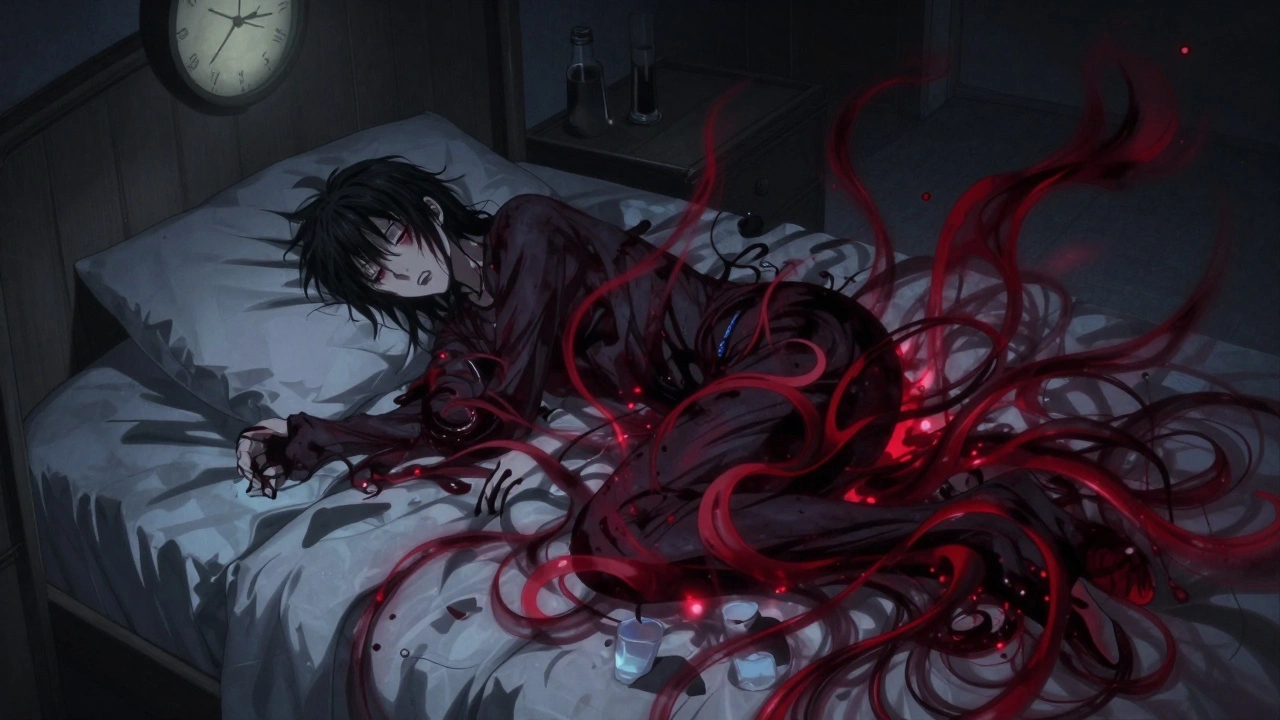
Many people swear by a nightcap. A glass of wine before bed, a beer after dinner-something to help them unwind and drift off. But here’s the truth: alcohol doesn’t improve sleep. It tricks your brain into falling asleep faster, then tears your sleep apart from the inside out. By the time you wake up, you’ve had less restorative sleep than if you’d gone to bed sober.
How Alcohol Changes Your Sleep Architecture
Your sleep isn’t one flat block of rest. It cycles through stages: light sleep, deep sleep, and REM sleep-the stage where dreams happen and your brain processes emotions and memories. Alcohol messes with this cycle in a very specific way.
Right after you drink, alcohol boosts deep sleep (Stage N3), the most physically restorative phase. That’s why you might feel like you’re sleeping deeply right away. But here’s the catch: as your body metabolizes alcohol-about one drink per hour-your brain starts to rebound. Deep sleep drops sharply, and you get stuck in lighter, less restorative stages. By 3 a.m., if you had five drinks at 10 p.m., your alcohol levels are nearly zero. That’s when your brain wakes up, often without you realizing it.
Studies using polysomnography show that even one standard drink reduces REM sleep by 9.3% in the first half of the night. REM sleep is critical. It’s not just about dreaming. It’s how your brain consolidates learning, regulates mood, and repairs neural connections. When you lose REM, you lose emotional balance, creativity, and mental clarity. And because alcohol delays REM early on, your brain tries to make up for it later. That’s why you might wake up in the middle of the night with vivid dreams or nightmares-your brain is desperately trying to catch up on what it missed.
Sleep Fragmentation: Waking Up Without Knowing It
Sleep fragmentation means your sleep is broken into pieces. You don’t necessarily wake up fully-you just shift from deep to light sleep, then back again. Alcohol makes this happen constantly.
Research from the University of Missouri found that after a binge-drinking episode, mice experienced a 40-60% increase in wakefulness during their normal sleep hours. Human studies mirror this: one 2023 trial with 31 participants showed that alcohol reduced sleep efficiency by 4.3% and increased nighttime heart rate by 6.7 beats per minute. That’s your body working overtime to compensate for the chemical chaos.
The National Sleep Foundation reports that 67% of people who drink within two hours of bedtime wake up at least once during the night. Compare that to just 39% of non-drinkers. And it’s not just about tossing and turning. These micro-awakenings prevent your brain from completing full sleep cycles. Even if you sleep eight hours, if half of them are fragmented, you’re not getting rest.
Alcohol Makes Sleep Apnea Worse
If you snore or suspect you have sleep apnea, alcohol is the worst thing you can have before bed. It relaxes the muscles in your throat-exactly the muscles that keep your airway open. When they sag, your airway collapses. That’s when apnea happens: breathing stops for 10 seconds or more, sometimes dozens of times an hour.
A 2021 study from the American Academy of Sleep Medicine found that each standard drink before bed increases your apnea-hypopnea index (AHI) by 20%. That means if you normally have mild apnea, one drink could push you into moderate territory. Two drinks? You’re at risk for severe apnea.
A 2022 meta-analysis in the Chest Journal showed that drinking 2-4 drinks a day increases your risk of moderate-to-severe sleep apnea by 25%. Five or more? That jumps to 51%. The American Thoracic Society recommends avoiding alcohol entirely within three hours of bedtime if you have sleep apnea. Even small amounts can drop your blood oxygen levels by 3-5 percentage points during sleep events-enough to stress your heart and brain.
Next-Day Effects: You’re Not as Fine as You Think
Most people assume that if they slept “long enough,” they’re fine the next day. But sleep quality matters more than quantity.
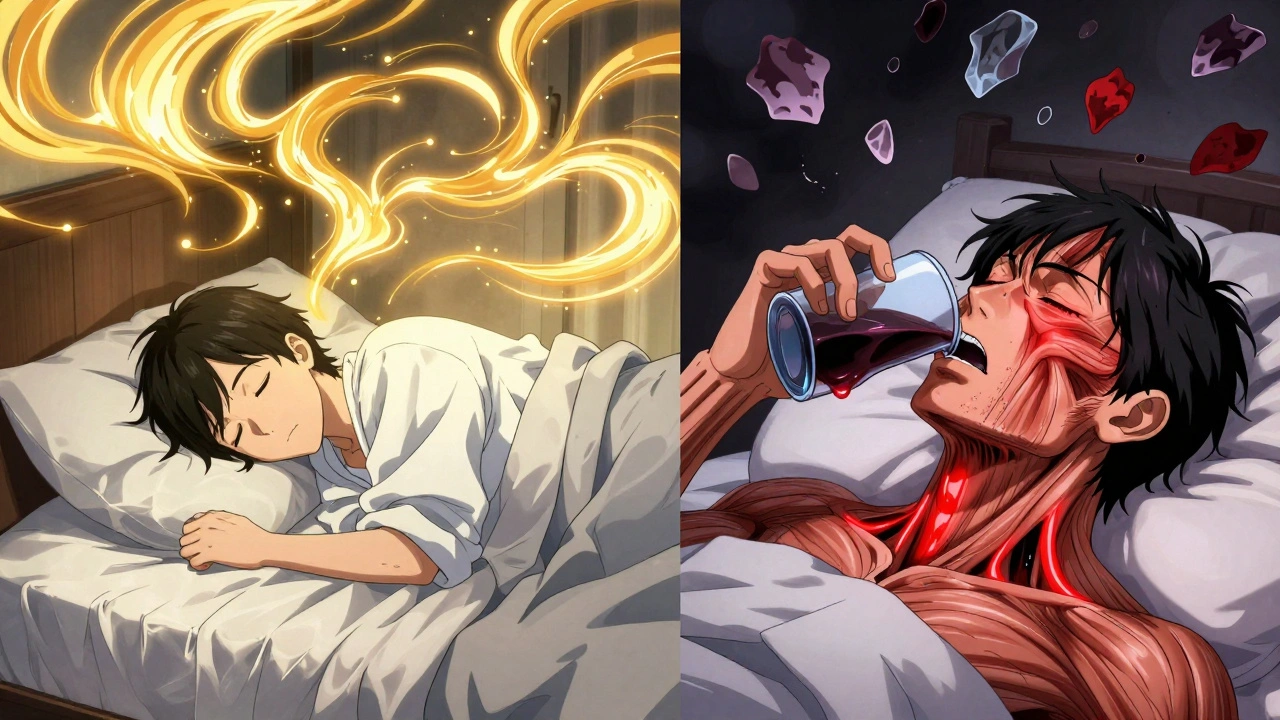
A 2022 study in the Journal of Clinical Sleep Medicine found that alcohol reduces slow-wave sleep (deep sleep) by 15.3%. That’s the stage your body uses to repair tissues, strengthen the immune system, and reset your metabolism. With less of it, your brain doesn’t recover. Participants showed a 12.7% drop in cognitive processing speed and a 9.4% drop in working memory-even when total sleep time was the same as on sober nights.
Emotional control takes a hit, too. Research from the University of Pittsburgh Medical Center showed that after drinking before bed, people had 31.2% more emotional reactivity to negative stimuli the next day. They got angrier, more anxious, and less able to shrug off stress. That’s not just “being grumpy.” That’s your brain operating on damaged wiring.
And here’s the scary part: you probably don’t notice it. The same 2023 study that measured sleep disruption found only an 8.7% drop in cognitive performance-small enough that most people brush it off. But that’s the problem. You think you’re functioning normally. You’re not. You’re operating at a deficit.
The Cycle: Sleep Loss Leads to More Drinking
There’s a dangerous loop here. Alcohol ruins your sleep. Poor sleep makes you tired, irritable, and stressed. So you drink again the next night to help you sleep. It’s a trap.
University of Missouri research found that sleep deprivation after binge drinking actually increases the urge to drink more. Your brain starts associating alcohol with sleep, even though it’s the cause of the problem. This is one reason why people with alcohol use disorder often struggle with chronic insomnia-even after they stop drinking. The National Institute on Alcohol Abuse and Alcoholism reports that 50-70% of people in early recovery experience severe sleep disturbances, and it can take 3-6 months for sleep architecture to normalize.
And it’s not just about addiction. A 36-year longitudinal twin study showed that heavy drinking at age 30 was linked to a 3.37 times higher risk of poor sleep quality. That’s not correlation-it’s a direct, long-term signal that alcohol is rewiring your sleep system.
Is Any Amount Safe?
Some people think, “I only have one glass.” But the European Sleep Research Society reviewed over 50 studies and concluded: no amount of alcohol before bed improves sleep quality. Even one standard drink reduces REM sleep and increases fragmentation. There’s no safe threshold. The idea of the “nightcap” as a sleep aid is a myth backed by anecdote, not science.
And tolerance doesn’t fix it. After 3-7 days of regular use, your body gets used to the sedative effect-you need more to feel drowsy. But the damage to your sleep architecture? That doesn’t go away. It just gets worse.
What Should You Do Instead?
If you’re drinking to sleep, you’re trying to solve a symptom, not the cause. Stress, anxiety, poor sleep hygiene, or an underlying sleep disorder are the real problems.
Try these instead:
- Keep a consistent bedtime-even on weekends
- Turn off screens 60 minutes before bed
- Get natural light in the morning to reset your circadian rhythm
- Try magnesium-rich foods or a warm, non-caffeinated drink like chamomile tea
- If you snore or wake up gasping, get tested for sleep apnea
If you’re trying to quit drinking and struggling with sleep, know this: it’s normal. Your brain is relearning how to sleep without chemicals. Support groups, cognitive behavioral therapy for insomnia (CBT-I), and sometimes short-term medication under a doctor’s care can help. Don’t give up-your sleep will improve.
Bottom Line: Alcohol Is a Sleep Saboteur
Alcohol doesn’t help you sleep. It hijacks your natural sleep process, fragments your rest, worsens breathing disorders, and leaves you tired, emotionally raw, and cognitively dull the next day. The more you drink, the worse it gets. And the more you rely on it, the harder it is to break free.
If you care about your sleep, your brain, and your long-term health, skip the nightcap. Your body will thank you-not tomorrow, but in five years, when your memory is sharp, your mood is steady, and your heart is strong.
Does alcohol help you fall asleep faster?
Yes, alcohol can reduce sleep latency-the time it takes to fall asleep-especially in the first hour after consumption. But this is a false benefit. It doesn’t improve sleep quality. Instead, it disrupts the natural sleep cycle, leading to fragmented sleep and reduced REM sleep later in the night. What feels like falling asleep quickly is actually your brain being chemically sedated, not resting naturally.
Can alcohol cause sleep apnea?
Alcohol doesn’t cause sleep apnea on its own, but it significantly worsens it. It relaxes the muscles in your throat, making your airway more likely to collapse during sleep. Each standard drink before bed increases the apnea-hypopnea index (AHI) by 20%. For people with existing sleep apnea, even one drink can push symptoms into a more severe category. The American Thoracic Society advises avoiding alcohol within three hours of bedtime if you have sleep apnea.
Why do I wake up with vivid dreams after drinking?
Alcohol suppresses REM sleep early in the night. As your body metabolizes it, your brain tries to make up for lost REM time-a phenomenon called REM rebound. This causes intense dreaming, nightmares, or sudden awakenings in the second half of the night. It’s not a sign of good sleep-it’s your brain scrambling to recover from chemical disruption.
How long does alcohol affect sleep?
The effects last as long as alcohol is in your system-about one hour per standard drink. But the disruption to your sleep architecture can linger. Even after alcohol is gone, your body spends the rest of the night in lighter, less restorative stages. For regular drinkers, these changes can become chronic. In recovery, it can take 3-6 months for sleep patterns to fully normalize.
Does alcohol make insomnia worse?
Yes. A 2023 study in Sleep Medicine Reviews found that regular alcohol consumption before bed increases the risk of chronic insomnia by 38%. Alcohol disrupts the natural balance of sleep-regulating chemicals like adenosine. Over time, your brain becomes dependent on alcohol to initiate sleep, making it harder to fall asleep without it. This creates a cycle where insomnia drives more drinking, and drinking worsens insomnia.
Is there a safe amount of alcohol before bed?
No. Even one standard drink reduces REM sleep by 9.3% and increases sleep fragmentation by 11.7%. The European Sleep Research Society reviewed all available evidence and concluded that no level of alcohol consumption before bedtime improves sleep quality. The belief that a small amount is harmless is a myth. If you want restorative sleep, avoid alcohol entirely in the hours before bed.
What to Do Next
If you’re using alcohol to sleep, start by tracking your intake and sleep quality for two weeks. Use a simple journal: note how many drinks you had, what time, and how you felt the next day. You might be surprised how much your energy, focus, and mood improve when you cut back.
If you’re struggling with sleep or suspect sleep apnea, talk to your doctor. A sleep study is simple, non-invasive, and can change your life. And if you’re trying to reduce alcohol use, support is available. You don’t have to fix this alone.
Your sleep is not a luxury. It’s the foundation of your health. Alcohol doesn’t help you rest. It steals from you-quietly, every night.
nina nakamura
December 13, 2025 AT 19:34Hamza Laassili
December 14, 2025 AT 16:01Constantine Vigderman
December 15, 2025 AT 07:10Cole Newman
December 17, 2025 AT 00:10Emily Haworth
December 18, 2025 AT 22:44Tom Zerkoff
December 19, 2025 AT 23:46kevin moranga
December 21, 2025 AT 10:17Alvin Montanez
December 22, 2025 AT 01:33Lara Tobin
December 22, 2025 AT 13:51Webster Bull
December 22, 2025 AT 16:05Deborah Andrich
December 22, 2025 AT 19:28John Fred
December 24, 2025 AT 17:09Harriet Wollaston
December 25, 2025 AT 12:54