
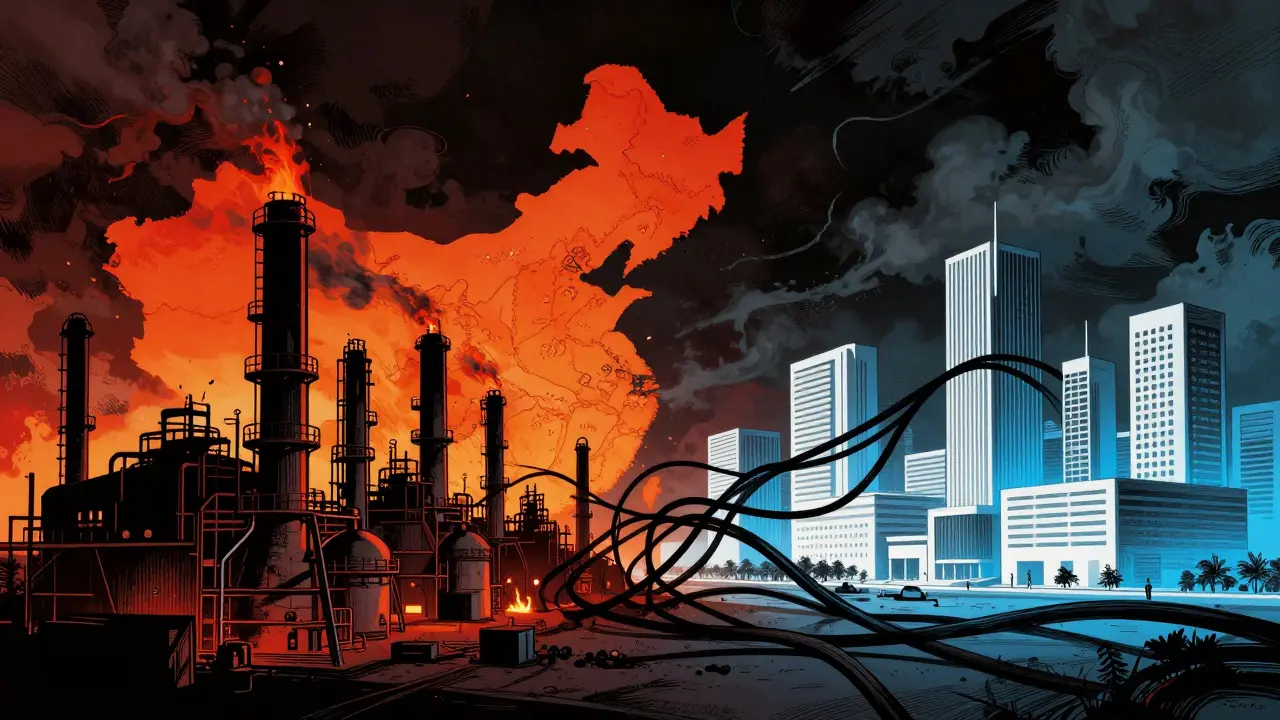
You might think that buying a cheap generic pill is just about saving money at the pharmacy counter. But behind that low price tag is a massive, complex global web of factories, regulators, and geopolitical tensions. For years, the world has relied heavily on China and People's Republic of China, a country that dominates the production of active pharmaceutical ingredients (APIs), and India, known as the 'pharmacy of the world' for its finished generic drugs. However, this reliance comes with significant risks. From quality control failures to sudden supply chain disruptions, understanding how the US Food and Drug Administration (FDA) monitors these two giants is crucial for anyone involved in healthcare procurement, policy, or even just patient safety.
The dynamic between these two nations isn't static. It’s shifting rapidly due to new regulations, rising labor costs, and a push by Western markets to diversify their supply chains. If you are looking to understand where your medications come from, why prices fluctuate, or what keeps the FDA up at night, you need to look beyond the label. This article breaks down the real differences in manufacturing risks, regulatory oversight, and the future of global drug production.
The Core Difference: APIs vs. Finished Generics
To understand the risk, you first have to understand who does what. The pharmaceutical value chain is split into two main parts: making the raw chemical ingredient (the API) and turning that ingredient into the final pill, capsule, or injection (finished dosage forms).
China controls approximately 80% of the global supply of generic APIs. These are the raw materials that make the drug work. Without Chinese APIs, many factories around the world would grind to a halt. China built this dominance through state-led industrial policies starting in the 1980s, focusing on scale and cost efficiency. They produce the bulk chemicals needed for everything from antibiotics to cancer treatments.
On the other hand, India emerged as a powerhouse for finished generic drugs after amending its Patents Act in 1970. This allowed Indian companies to produce generic versions of patented drugs legally within their borders. Today, India is the world’s third-largest pharmaceutical producer by volume. While they make the pills you swallow, they rely heavily on China for the raw ingredients inside them. In fact, about 72% of India’s bulk drug imports come from China. This creates a fragile link: if China stops exporting APIs, India can’t ship finished drugs to the US or Europe.
FDA Monitoring: Who Gets Inspected More?
The US FDA doesn’t just trust manufacturers; it watches them closely. But the level of scrutiny differs significantly between Chinese and Indian facilities. Here is where the numbers tell a stark story.
| Metric | India | China |
|---|---|---|
| FDA-Approved Plants | Over 100 | 28 |
| Import Alert Rate (2023) | 18% | 37% |
| Form 483 Observations (Compliance Issues) | 30% fewer than China | Higher frequency |
| Primary Strength | Regulatory Compliance & Generics | Scale & API Production |
India holds a clear advantage in regulatory standing. With over 100 FDA-approved plants compared to China’s 28, Indian manufacturers are better positioned to sell directly to Western markets. The data shows that Chinese facilities faced import alerts at more than double the rate of Indian facilities in 2023. An import alert means the FDA has blocked products from entering the US due to potential safety violations. This higher alert rate reflects historical compliance issues and stricter scrutiny on Chinese exports.
Why the difference? Indian companies have spent decades aligning their processes with WHO-GMP (Good Manufacturing Practice) and FDA standards. They view compliance not just as a rulebook, but as a competitive asset. As Dr. Renuka Diwan from Bain & Company noted, "compliance remains a key factor to grow pharma exports." Indian firms are actively using digital interventions in their plants to catch errors before they happen. China, while improving, still struggles with consistency across thousands of smaller suppliers who may not meet international quality benchmarks.
The Hidden Risk: API Dependency
Here is the twist that often surprises people: India’s strength is also its weakness. Because India relies so heavily on Chinese APIs, the entire global supply chain is vulnerable to disruptions in China. This is what experts call a "single point of failure."
Imagine a scenario where geopolitical tensions rise, or a natural disaster hits a key industrial region in China. Even if Indian factories are perfectly compliant and ready to ship, they might run out of raw materials. A senior sourcing executive at a major US pharmaceutical company told Bain & Company, "The 72% import dependency on China for bulk drugs creates a single point of failure in our supply chain that we're urgently trying to address."
This dependency forces a difficult choice for Western buyers. You can buy from India for better regulatory safety, but you’re still indirectly exposed to Chinese supply risks. Or you can buy directly from China for lower costs, but face higher regulatory hurdles and potential FDA blocks. Most large pharmaceutical companies are now adopting a "China+1" strategy. This means they keep some business in China for cost reasons but shift a significant portion to India or other countries to balance the risk. India is the primary beneficiary of this shift because of its solid compliance history and English-speaking workforce.
Quality Control: Digital vs. Traditional Methods
How do these countries ensure the drugs they make are safe? The approach is evolving. In India, there is a strong push toward digitalization. Manufacturers are implementing advanced software systems to track every step of the production process. This reduces human error and ensures that if a batch fails, they can trace exactly where it went wrong. This transparency appeals to the FDA, which values data integrity.
China has made progress in meeting global standards like ISO and CE certifications. However, quality consistency can vary widely depending on the size of the supplier. Large, state-backed Chinese pharmaceutical companies often have excellent facilities that rival those in the West. But smaller vendors may cut corners to keep prices low. This variability makes it harder for the FDA to monitor effectively without constant, resource-intensive inspections.
The result is that Indian facilities receive fewer Form 483 observations-official letters from the FDA listing compliance issues found during inspections. Fewer observations mean fewer delays in getting drugs approved and shipped. For a hospital pharmacist or a procurement manager, this reliability is worth paying a premium for.
Future Trends: Biologics and the Shift in Power
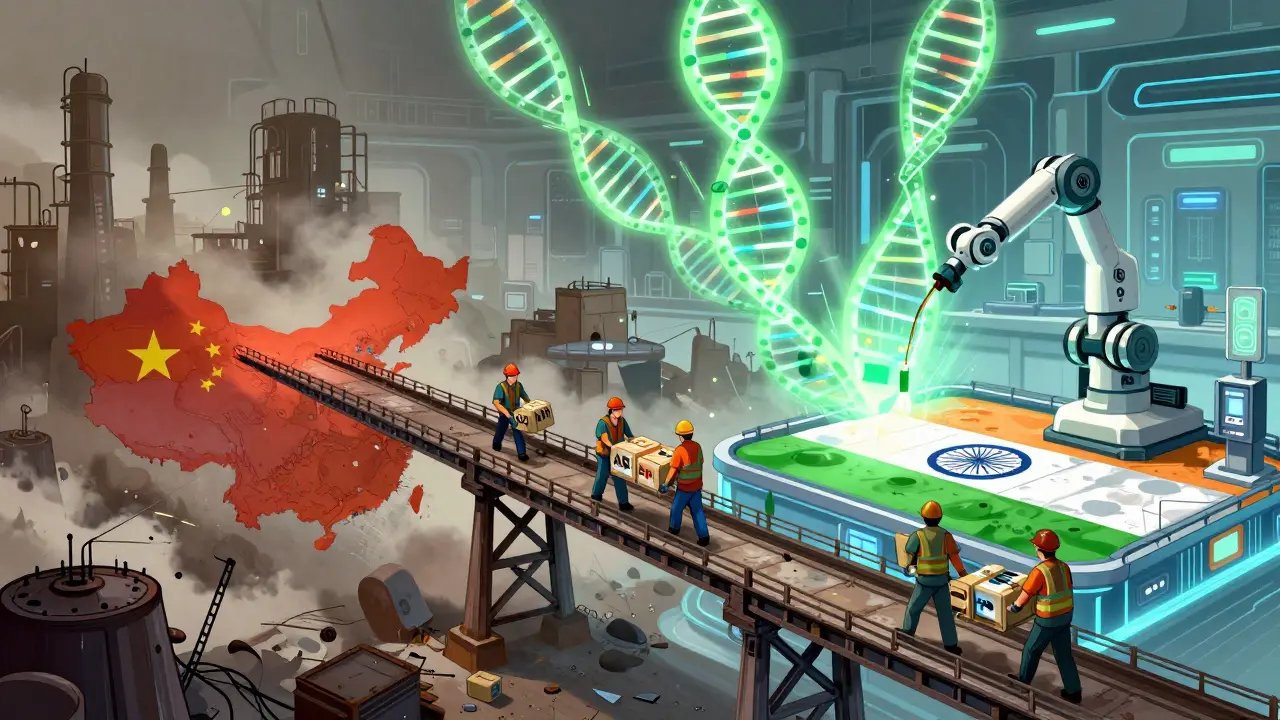
The landscape is changing fast. While generics dominate today, tomorrow’s market belongs to biologics, biosimilars, and cell therapies. These are complex drugs made from living organisms, requiring much higher technical expertise.
China is investing heavily in this area, with its biopharmaceutical market growing at a projected CAGR of 19.3%. They aim to move up the value chain from cheap chemicals to high-tech innovation. India is also growing in this sector, with a 22% CAGR for biosimilars, but from a smaller base. The race is on to see who can lead the next generation of drug manufacturing.
Meanwhile, India’s government is pushing the "Make in India" initiative, allocating nearly $3 billion in incentives to boost domestic production. The goal is to reduce dependence on Chinese APIs and attract foreign investment. If successful, India could become a fully integrated hub, producing both raw materials and finished drugs. This would drastically reduce the supply chain risks we discussed earlier.
Practical Advice for Stakeholders
If you are involved in pharmaceutical procurement or policy, here are three actionable steps to manage risk:
- Diversify Suppliers: Don’t rely on a single country for critical APIs. Use the "China+1" model to spread risk across India, Europe, and other emerging hubs.
- Prioritize Compliance Data: When choosing a manufacturer, look beyond price. Check their FDA inspection history. A facility with no recent Form 483 observations is safer in the long run, even if the upfront cost is slightly higher.
- Monitor Geopolitical News: Trade tensions between the US, China, and India can impact shipping and tariffs overnight. Stay informed on political developments that could disrupt supply chains.
Understanding these dynamics helps you make smarter decisions. Whether you are a doctor concerned about drug availability, a student studying global health, or a business leader managing inventory, knowing the source of your medications is power. The era of blind reliance on the cheapest option is ending. Transparency, compliance, and resilience are becoming the new currencies of trust in pharmaceutical manufacturing.
Why does the FDA inspect Chinese facilities more strictly than Indian ones?
The FDA inspects Chinese facilities more strictly due to a history of higher compliance issues and a greater number of import alerts. In 2023, 37% of Chinese pharmaceutical facilities faced import alerts compared to only 18% of Indian facilities. This higher risk profile necessitates closer monitoring to ensure drug safety for US consumers.
What is the "China+1" strategy in pharmaceuticals?
The "China+1" strategy involves reducing reliance on China for manufacturing by adding an alternative supplier, typically in India. This approach mitigates risks associated with geopolitical tensions, supply chain disruptions, and regulatory inconsistencies in China while maintaining cost competitiveness.
How dependent is India on China for drug ingredients?
India is highly dependent on China for active pharmaceutical ingredients (APIs). Approximately 72% of India's bulk drug and intermediates imports come from China. This dependency creates a vulnerability in the global supply chain, as disruptions in China can affect India's ability to export finished generic drugs.
Which country has more FDA-approved manufacturing plants?
India has significantly more FDA-approved manufacturing plants than China. As of recent data, India operates over 100 FDA-approved facilities, while China has only 28. This gives India a stronger position in accessing Western regulatory markets.
Are drugs manufactured in India safer than those from China?
Indian facilities generally demonstrate higher regulatory compliance and receive fewer FDA observation notices (Form 483) compared to Chinese facilities. However, safety depends on specific manufacturers and their adherence to Good Manufacturing Practices (GMP). Both countries have reputable producers, but India's overall track record with the FDA is currently stronger.
What are Active Pharmaceutical Ingredients (APIs)?
APIs are the biologically active components in a medication that produce the intended therapeutic effect. They are the raw chemical substances used to create finished drugs like tablets or capsules. China dominates the global supply of generic APIs, controlling about 80% of the market.

Sinead Doyle
July 17, 2026 AT 22:30The FDA is a puppet of big pharma, plain and simple. They don'they ignore the real toxins in Chinese APIs because the profits are too high to regulate properly. You think they care about your health? No, they care about keeping the stock market happy while we all ingest industrial waste wrapped in colorful foil. The 'compliance' metrics are just PR stunts designed to lull you into a false sense of security while the supply chain remains a ticking time bomb of geopolitical manipulation. Wake up sheeple.
Emily Schor
July 19, 2026 AT 21:59That's an interesting perspective, though I think it might be a bit extreme to call the entire regulatory framework a conspiracy. The data on import alerts does show a clear disparity between Indian and Chinese facilities, which suggests that compliance standards are genuinely being enforced differently based on performance rather than just political bias. It seems like the 'China+1' strategy mentioned in the post is a practical risk management tool for procurement teams rather than a cover-up. I appreciate how the article breaks down the specific numbers regarding Form 483 observations.
Arun Krishnan
July 21, 2026 AT 12:51It is really good to see people talking about this because it affects everyone. In India we work hard to meet these standards and it is not easy but we want to help the world stay healthy. The dependency on China is a big challenge for us too so we are trying to make more raw materials here. We hope that other countries will support our efforts to build better factories and create jobs for our people. Together we can make the supply chain stronger and safer for all patients everywhere.
Bobby Christiansen
July 23, 2026 AT 11:35You guys are missing the point entirely! It is morally bankrupt that Westerners get cheap drugs while ignoring the environmental disaster caused by API manufacturing in China. We should be boycotting everything until they clean up their act. It is disgusting how we prioritize profit over planet and people. 😡
anna arifiana
July 25, 2026 AT 05:43I have to disagree with the notion that India is simply a victim here; they are complicit in maintaining this fragile ecosystem because it benefits their own economic interests immensely. The article presents a very sanitized view of what is essentially a race to the bottom in terms of labor rights and environmental protections, regardless of which country you look at. Furthermore, the idea that digitalization solves quality control is naive, as software can be manipulated just as easily as physical records if the intent to deceive exists. We need to stop pretending that adding another layer of bureaucracy or technology fixes the fundamental ethical rot in global pharmaceutical outsourcing.
Marie-Gladys Darcelin
July 27, 2026 AT 03:01One must consider the profound implications of such negligence in regulatory oversight. It is truly lamentable that stakeholders continue to rely on cost-cutting measures that compromise patient safety. The data presented clearly indicates that Indian facilities adhere to higher standards of Good Manufacturing Practice, and thus, any deviation from sourcing from compliant regions is ethically indefensible. We must demand excellence and integrity in our healthcare systems.
Kyle Bonnette-Lykens
July 28, 2026 AT 08:34the whole thing is rigged anyway. prices go up no matter where it comes from. china or india same difference to me. just pay the bill.
Jasmine Agito
July 28, 2026 AT 13:12I understand why this topic feels overwhelming, especially when looking at the complex web of dependencies described. However, focusing on the 'China+1' strategy offers a tangible path forward that balances economic reality with safety needs. By diversifying suppliers, companies aren't just avoiding risk; they are fostering competition that can drive innovation and improve standards globally. It's encouraging to see initiatives like 'Make in India' gaining traction, as they address the root cause of API dependency. Let's keep the conversation focused on constructive solutions rather than fear-mongering, as collaboration between nations is key to securing our health futures.