

When you're on long-term opioids for chronic pain, nausea isn't just an inconvenience-it can make you stop taking your medication altogether. About 1 in 5 people on opioids for more than a few weeks keep feeling sick, even after their body should have adjusted. This isn't just "feeling queasy." It's persistent, often daily nausea that messes with sleep, eating, and your ability to manage pain. And here's the hard truth: most doctors don't talk about it until you bring it up. But there are real, evidence-backed ways to handle it-without giving up your pain relief.
Why Opioids Make You Nauseous (Even After Tolerance)
Opioids don’t just block pain signals. They also hit receptors in your brain and gut that control nausea. Three main pathways are involved:
- The chemoreceptor trigger zone (CTZ) in your brainstem gets activated by opioids, especially morphine and oxymorphone. It’s like a nausea alarm that doesn’t need input from your stomach.
- The vestibular system (your inner ear balance sensors) gets thrown off by opioids, especially when you move your head. This is why turning over in bed or walking can make nausea worse-even if you haven’t eaten anything.
- Your gut receptors slow down digestion, which leads to bloating, gas, and a feeling of fullness that tricks your brain into thinking you’re sick.
Most people develop tolerance within 3-7 days. But 15-20% don’t. That’s chronic opioid-induced nausea (OINV). It’s not your fault. It’s not "all in your head." It’s biology. And if you’re one of them, you need a smarter plan than just "wait it out."
Medication Options: What Actually Helps (and What Doesn’t)
Not all antiemetics work the same for opioid nausea. Here’s what the data shows:
| Medication | Efficacy | Pros | Cons |
|---|---|---|---|
| Prochlorperazine | 65-70% | Low cost, works on CTZ, fast-acting | Can cause drowsiness, muscle stiffness |
| Metoclopramide | ~60% | Speeds up stomach emptying | High risk of restlessness, parkinsonism with long-term use |
| Ondansetron | 50-60% | Good for breakthrough nausea, few sedative effects | Expensive ($35/dose), not always covered by insurance |
| Promethazine | 60-65% | Helps with dizziness and sleep | Can cause low blood pressure, drowsiness |
| Dexamethasone | 40-50% | Useful if inflammation is involved | Mild effect on OINV, long-term side effects |
Prochlorperazine is often the first choice-not because it’s flashy, but because it targets the CTZ directly, where opioids trigger nausea. Metoclopramide helps if your stomach is sluggish, but if you’ve been on it more than 12 weeks, you risk developing involuntary movements (tardive dyskinesia). Ondansetron works well for sudden spikes in nausea, but it’s not practical for daily use unless you’re covered by insurance. And don’t waste time on ginger supplements alone-they help some people, but they’re not a standalone fix.
Opioid Rotation: The Most Underused Tool
If nausea won’t go away, switching opioids isn’t a last resort-it’s a first-line strategy. Not all opioids are created equal. Here’s the reality:
- Oxymorphone is one of the worst offenders for nausea-60 times more likely to cause it than oxycodone.
- Oxycodone is moderate. Still causes nausea in many, but better than morphine.
- Tapentadol has about 3-4 times lower nausea risk than oxycodone. It’s a hidden gem.
- Fentanyl patches are often better tolerated than oral opioids. In one study, 52% of patients who switched to fentanyl patches saw their nausea drop significantly.
- Methadone can be tricky. It requires a 50-75% dose reduction when switching because it doesn’t cross-tolerate the same way. But for some, it’s the only thing that works.
Doctors often hesitate to rotate because of dosing complexity. But for chronic OINV, it’s often the most effective move. If you’ve been on morphine for months and still feel sick, ask about switching to tapentadol or fentanyl. It could change your life.
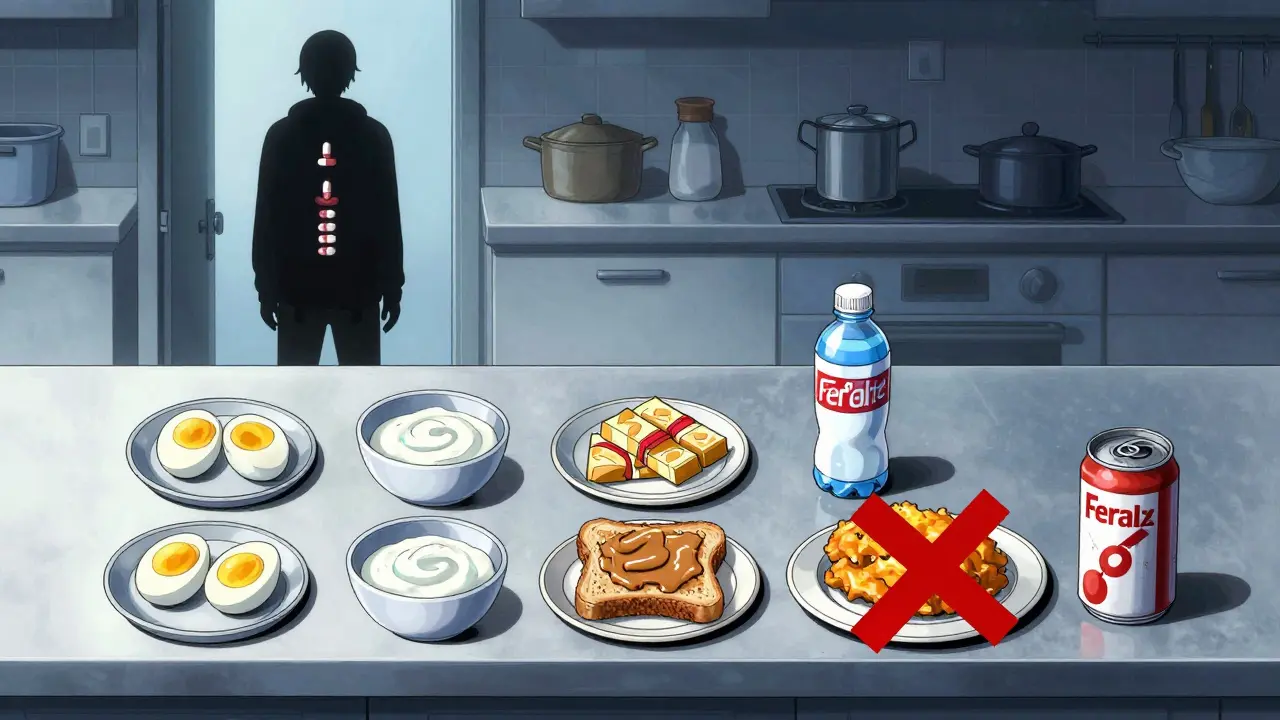
Diet: What to Eat (and What to Avoid)
Forget the old advice to eat bland crackers. Real patients report better results with different strategies:
- Small, frequent meals-6-8 per day, 150-200 calories each. This keeps your stomach from getting too full or too empty. A 2022 survey at the University of Washington found 55% of patients improved with this approach.
- Protein-rich snacks-like hard-boiled eggs, Greek yogurt, or peanut butter on toast. Surprisingly, 63% of patients on PatientsLikeMe said they felt better with protein than carbs.
- Low-fat foods-fatty meals slow digestion and worsen bloating. Skip the fried food, heavy cream, and butter.
- Ginger-not as a tea, but as chews. The brand Briess Ginger Chews was mentioned by 78% of users on PainNewsNetwork.org as helpful. Look for real ginger root, not just flavoring.
- Avoid large meals-eating big dinners often leads to nighttime nausea. Try your main meal at lunchtime instead.
There’s no one-size-fits-all diet. But if you’re stuck in a cycle of nausea after eating, try cutting back to smaller portions and see what happens.
Hydration: Sip Smart, Don’t Chug
Drinking eight glasses of water a day sounds good-but it might be making your nausea worse.
- Sip small amounts-2-4 ounces every 15-20 minutes. This avoids stretching your stomach and keeps your body hydrated without triggering nausea.
- Electrolytes matter-51% of patients in a 2020 study found relief with Pedialyte or oral rehydration solutions. Sodium and potassium help your body absorb water better.
- Avoid sugary drinks-sodas and juice can spike blood sugar and worsen stomach upset.
- Try cold fluids-warm drinks can trigger nausea more easily. Ice water or chilled electrolyte drinks work better.
If you’re dehydrated, your nausea gets worse. But chugging water won’t fix it. Slow, steady sipping is the key.

Non-Drug Strategies That Actually Help
Some of the simplest fixes are the most overlooked:
- Keep your head still-Heuser’s 2017 study showed that keeping your head upright and avoiding sudden movements reduces nausea by 35-40%. Don’t lie flat. Sit up. Use pillows to prop your head.
- Don’t close your eyes-this sounds weird, but closing your eyes adds sensory confusion. Keep your eyes open and focus on a fixed point. It helps your brain reconcile the balance signals.
- Get fresh air-a short walk outside, even just 10 minutes, can reset your nausea. Oxygen helps your brain reset.
- Reduce anxiety-fear of nausea can make it worse. If you start dreading meals or movement, you’re stuck in a cycle. Mindfulness or breathing exercises help break it.
These aren’t "alternative" fixes. They’re based on how your brain processes nausea. Use them alongside meds, not instead of them.
When to Ask for Help
You shouldn’t have to live with this. If you’ve been on opioids for more than 14 days and still feel nauseous daily, it’s time to reassess. Ask your doctor:
- Can we try switching to a different opioid?
- Should I start prochlorperazine or another antiemetic?
- Is my dose too high? Could we lower it slightly?
- Have you considered the new research on low-dose naltrexone?
And if your doctor dismisses it? Get a second opinion. This isn’t normal. It’s a treatable side effect. And you deserve to feel better while managing your pain.
What’s Next: Emerging Options
The future is getting brighter. Researchers are testing:
- Low-dose naltrexone (0.5-1 mg daily)-early results show a 45% drop in nausea severity without reducing pain relief.
- Kappa-opioid receptor blockers-a new drug in Phase III trials (expected 2025) targets only the balance system, leaving pain relief untouched.
- Microbiome tweaks-studies are looking at probiotics and gut bacteria changes to reduce nausea. Early data shows promise.
For now, the tools we have are enough. You don’t have to wait for the future. Start with rotation, small meals, sipping fluids, and prochlorperazine. Many people see improvement within days.
Why does my nausea get worse when I move my head?
Opioids affect the inner ear’s balance system (vestibular apparatus), creating a mismatch between what your inner ear feels and what your eyes see. This confuses your brain and triggers nausea. Keeping your head still and keeping your eyes open on a fixed point can reduce this by 35-40%.
Can I just stop my opioid if I’m nauseous?
Stopping suddenly can cause withdrawal and make pain worse. Instead, talk to your doctor about rotating to a different opioid, lowering your dose slightly, or adding an antiemetic. You don’t have to choose between pain relief and feeling sick.
Is metoclopramide safe for long-term use?
No. The FDA has a boxed warning for metoclopramide because long-term use (over 12 weeks) can cause irreversible movement disorders like tardive dyskinesia. It’s best for short-term use only. If you’ve been on it for months, ask your doctor about switching to prochlorperazine or another option.
Why do some people tolerate opioids better than others?
Genetics play a big role. People with CYP2D6 poor metabolizer status process drugs like codeine and tramadol differently, leading to higher levels of active compounds and worse side effects. Also, your gut microbiome and vestibular sensitivity vary naturally. There’s no "right" way to respond-it’s individual.
Can ginger or peppermint tea cure opioid nausea?
They can help a little, but not on their own. Ginger chews (with real ginger) helped 78% of users in one survey, but only as a supplement to other strategies. Peppermint tea may soothe the stomach, but it doesn’t target the brainstem pathways that opioids activate. Use them as support, not as your main treatment.
How long should I try an antiemetic before deciding it doesn’t work?
Give it 5-7 days at a full dose. Antiemetics like prochlorperazine often take a few days to build up in your system. If you haven’t noticed any change after a week, talk to your doctor about switching or combining with another strategy-like opioid rotation or dietary changes.
If you're managing chronic pain and still fighting nausea every day, you're not alone-and you’re not failing. This is a known, measurable problem with real solutions. Start with one change: try switching your opioid, or start sipping fluids slowly, or ask for prochlorperazine. One small step can break the cycle. You don’t have to suffer to stay pain-free.

Alex Brad
March 2, 2026 AT 20:05Prochlorperazine saved my life. Took me three months to convince my doctor to prescribe it. Within five days, the nausea dropped from constant to manageable. No more vomiting before breakfast. No more skipping doses. Just steady pain control and actual meals.
Zacharia Reda
March 3, 2026 AT 05:09Wow. This is the most useful thing I’ve read in years. I’ve been on oxymorphone for 18 months and thought I was just weak. Turns out I was just misinformed. Switched to tapentadol last week. Nausea cut by 80%. Why isn’t this common knowledge?
Ivan Viktor
March 4, 2026 AT 18:56So you’re telling me the solution to opioid nausea is to stop being a dumbass and switch meds? Groundbreaking. I’m shocked this isn’t in every damn prescriber’s handbook.
John Smith
March 4, 2026 AT 19:51Y’all act like this is some secret society thing. Nah. Docs don’t talk about it because they’re lazy. They’d rather you suffer than look up a fucking protocol. I’ve been on methadone for 6 years. Switched from morphine. Nausea vanished. Don’t be afraid to push back. You’re not being difficult-you’re being smart.
marjorie arsenault
March 5, 2026 AT 13:19I’ve been using ginger chews daily since last winter. Not a cure, but they help. Combine it with sipping water slowly and sitting upright after meals. I’ve gone from barely eating to having dinner with my family again. Small changes, big difference.
Diane Croft
March 5, 2026 AT 18:15This is the kind of post that reminds me why I come here. Not every answer is in a pill. Sometimes it’s how you hold your head, what you eat at noon, or how you sip your water. Thank you for laying it all out. So many people need this.
Betsy Silverman
March 6, 2026 AT 08:12As someone who’s been managing chronic pain for over a decade, I can say this: the most powerful tool isn’t a drug-it’s persistence. Keep asking. Keep researching. Keep advocating. You’re not a burden. You’re a patient who deserves better than silence.
Stephen Vassilev
March 8, 2026 AT 03:55...and yet, despite all this, the FDA still hasn’t mandated opioid manufacturers to include nausea risk profiles on packaging... and the pharmaceutical industry continues to fund studies that downplay gastrointestinal side effects... and doctors are trained to prioritize pain scores over quality-of-life metrics... this system is broken... and it’s not just about medication-it’s about institutional neglect...
John Cyrus
March 9, 2026 AT 11:42Stop whining about nausea. Just take your meds. Everyone gets sick at first. You think the military guy on the front lines is crying about nausea? No. He takes his pain pills and keeps moving. You’re not special. You’re just soft.
Renee Jackson
March 9, 2026 AT 13:22Thank you for writing this with such clarity and compassion. I’ve shared this with my care team, and we’ve already begun implementing the dietary and hydration strategies. I’m hopeful-and I’m not alone. This is a roadmap, not a rumor.
Deborah Dennis
March 10, 2026 AT 04:09Ugh. Another ‘I’m a victim of Big Pharma’ post. Did you even try not eating? Or maybe just stop taking opioids? There’s always a way out if you’re willing to do the hard work. This is just another excuse to stay on drugs.
Shivam Pawa
March 10, 2026 AT 09:33Based on my clinical experience in India, opioid-induced nausea is often underreported due to cultural stigma around chronic pain. Many patients endure it silently. The strategies mentioned here are universally applicable. Especially the head positioning and small frequent meals. Simple. Effective. Underutilized.
Richard Elric5111
March 12, 2026 AT 02:45One must contemplate the ontological paradox of pain relief: if the mechanism that alleviates suffering simultaneously induces another form of suffering, is the net effect truly beneficial? Or are we merely exchanging one existential burden for another? The body, in its wisdom, resists domination. Perhaps the answer lies not in pharmacology, but in redefining the relationship between control and surrender.
Sharon Lammas
March 12, 2026 AT 22:50I’ve been on opioids for 12 years. I didn’t know any of this. I thought I was just broken. Thank you for saying what no one else has. I’m going to ask my doctor about prochlorperazine tomorrow. I’m tired of feeling like I’m failing.