
Medication Savings Calculator
Calculate Your Potential Savings
Estimate how much your hospital or organization could save by implementing evidence-based medication safety strategies. Based on real-world data from hospitals nationwide.
Estimated Savings
Based on implementing evidence-based strategies:
How these numbers are calculated:
- Readmission reduction: 40% reduction in readmissions (based on clinical pharmacist review data)
- Waste reduction: 35% reduction in medication waste (from RTA product implementation)
- Generic savings: $200/month average savings per patient (based on common blood pressure medications)
How to Save Money on Medications Without Putting Patients at Risk
Every year, hospitals in the U.S. spend over $20 billion fixing medication errors. That’s not just a number-it’s lives lost, extended hospital stays, and families drained by avoidable costs. But here’s the truth: you don’t have to choose between saving money and keeping patients safe. In fact, the safest approaches are often the cheapest.
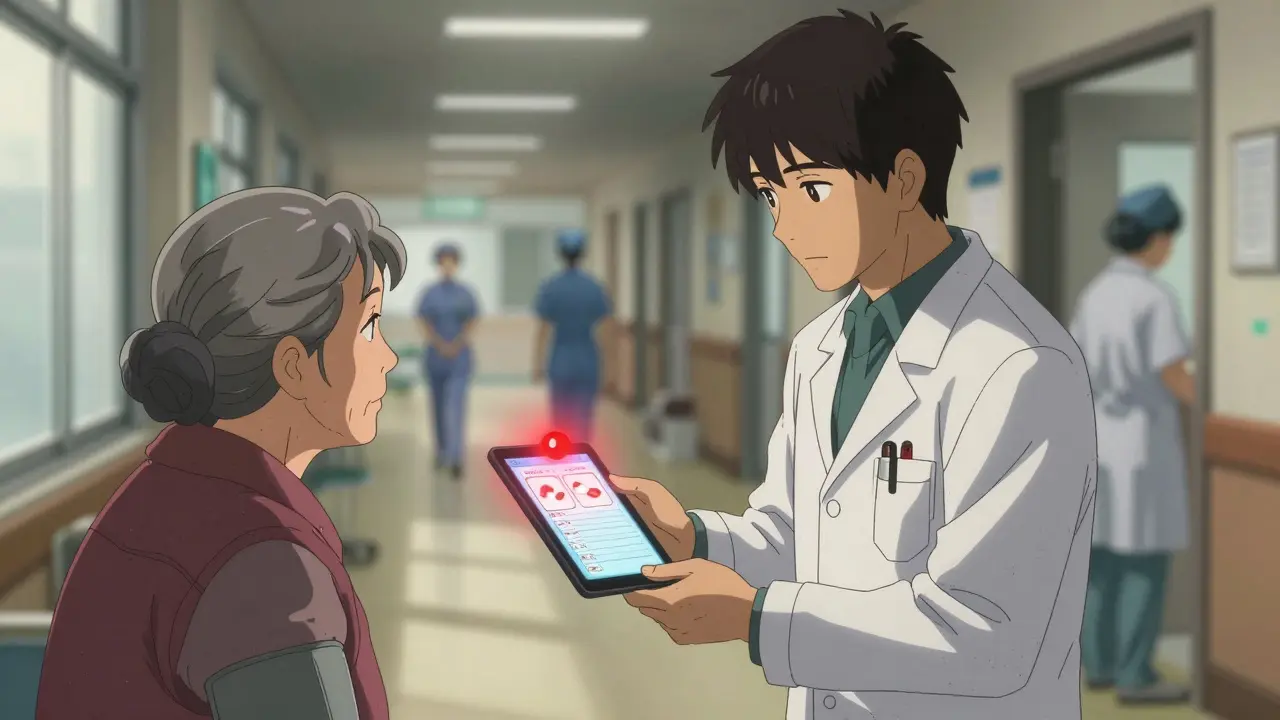
Take the case of a 72-year-old woman with heart failure. She was readmitted three times in six months because her meds weren’t reviewed after discharge. Each stay cost over $15,000. Then her hospital added a clinical pharmacist to her care team. The pharmacist caught she was taking two conflicting blood pressure drugs, switched her to a generic combo pill, and set up a simple phone check-in. Result? No more readmissions. Savings: over $5,600 per patient. And she’s still alive and well.
This isn’t luck. It’s science. And it’s happening in hospitals from Bristol to Boston.
Pharmacists Are Your Secret Weapon
Most people think pharmacists just count pills. They’re wrong. The best cost-savers in healthcare aren’t new software or bulk discounts-they’re pharmacists who sit with doctors, talk to nurses, and ask patients, “What are you actually taking?”
Studies show pharmacist-led medication reviews cut 30-day readmissions by up to 40%. Why? Because they spot things computers miss. Like when a patient is taking two drugs that cancel each other out. Or when they’re paying $300 for a brand-name pill that’s available as a $12 generic. Or when they stopped taking their blood thinner because they couldn’t afford it.
Hospitals that embed pharmacists on daily rounds see 28% fewer medication errors. At Walter Reed Army Medical Center, every dollar spent on pharmacist-led care returned over $6 in savings. That’s not a guess-it’s a published result from over 3,000 patients.
And yet, nearly half of U.S. hospitals still have open pharmacist positions. Why? Because some administrators still think of pharmacists as a cost-not a return on investment.
Generic Drugs Work-When They’re Used Right
Over 80% of Americans who save on meds use generics. And for good reason. A 2023 FDA review found that 98% of generic drugs are just as effective as their brand-name versions. But here’s the catch: not all generics are created equal.
Some drugs have a narrow therapeutic index-meaning the difference between a helpful dose and a dangerous one is tiny. Think warfarin, lithium, or certain seizure meds. Switching brands here can cause real harm. That’s why experts warn against automatic substitutions without clinical oversight.
The fix? Let pharmacists decide. Not algorithms. Not cost managers. Pharmacists. They know when a generic is safe and when it’s not. When a patient’s cholesterol drops too low after switching brands, it’s the pharmacist who catches it before they end up in the ER.
And the savings? A single generic switch for a common blood pressure med can save $200 a month per patient. Multiply that across a hospital’s patient list, and you’re talking millions.
Stop Wasting Meds Before They’re Even Given
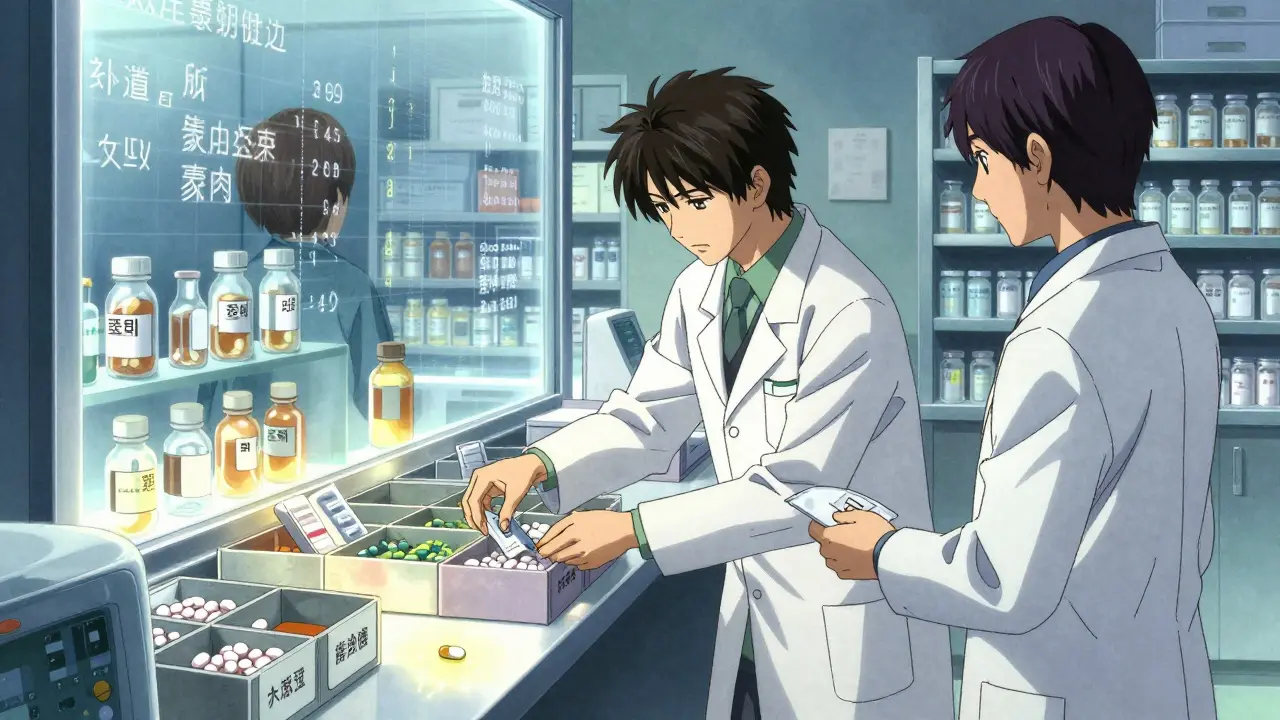
How many times have you seen a nurse open a vial of expensive antibiotic, give half the dose, and toss the rest? It happens every day. And it’s expensive.
Ready-to-Administer (RTA) products-pre-measured, pre-labeled doses delivered straight to the unit-are changing that. One hospital cut medication waste by 35% after switching to RTA for IV antibiotics. The catch? RTA costs 15-20% more upfront. So why do it?
Because when you avoid a single wrong dose, you avoid a hospital-acquired infection, a 7-day extended stay, and a $12,000 bill. RTA doesn’t just save money-it saves lives.
And it’s not just for IV meds. Pre-packaged oral meds for elderly patients reduce confusion, missed doses, and dangerous double-dosing. One study found that patients on pre-packaged meds were 50% less likely to be readmitted within 30 days.
Simple Communication Saves Lives (and Money)
You don’t need fancy tech to prevent errors. Sometimes, all you need is a better way to talk.
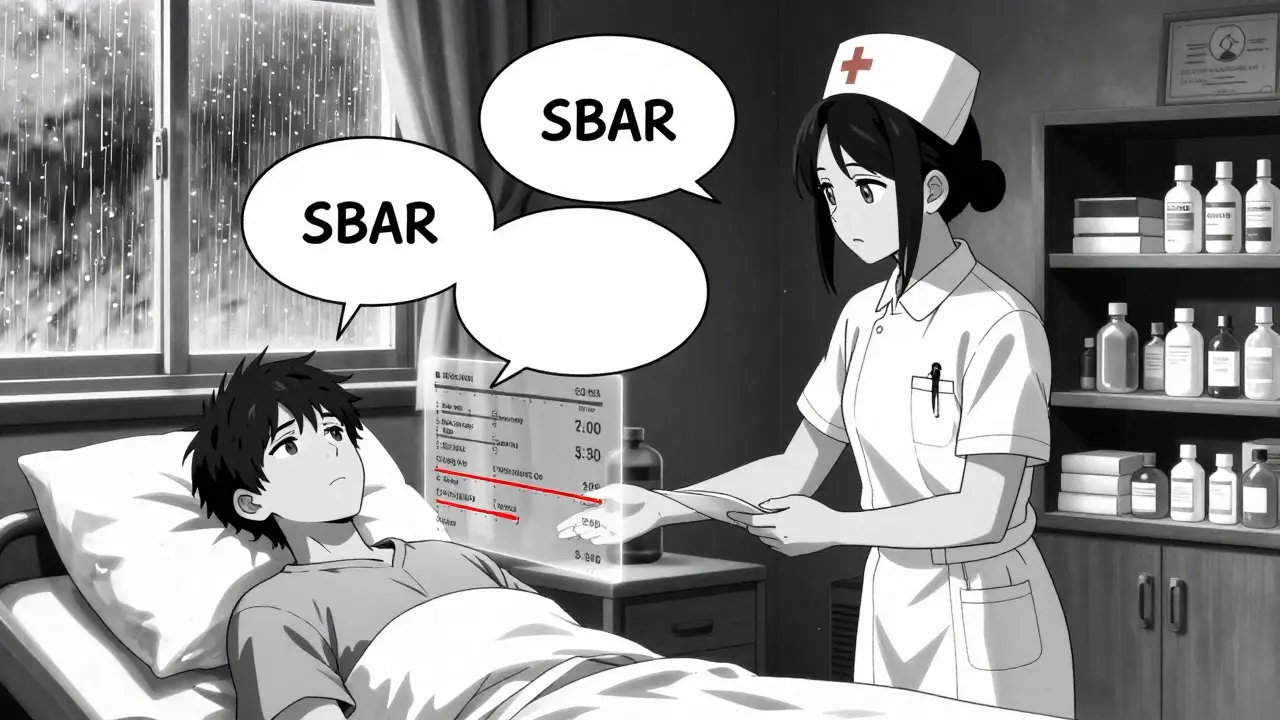
SBAR-Situation, Background, Assessment, Recommendation-is a simple tool nurses and pharmacists use to hand off patient info. Before SBAR, a nurse might say, “Mr. Jones is acting funny.” After SBAR, she says: “Mr. Jones, 68, admitted for pneumonia, started on vancomycin yesterday. He’s now confused and trembling. His vancomycin level is 28 (toxic range). I recommend holding the next dose and checking renal function.”
One hospital system saw a 50% drop in adverse drug events after training all staff in SBAR. No new software. No new hires. Just better communication.
And it’s not just SBAR. The WHO Surgical Safety Checklist-a 19-item list used before surgery-cut deaths by 62% and complications by 37%. It takes two minutes. It costs nothing. And it saves over $55,000 per 100 patients.
Don’t Cut Staff to Save Money
Here’s a hard truth: when hospitals cut pharmacy techs or reduce pharmacist hours to save money, they end up spending more.
One hospital in Ohio cut 4 pharmacy technician positions to save $250,000 a year. Three months later, medication errors jumped 22%. Extended stays. Litigation. A $1.2 million bill. They hired the techs back. The errors dropped. The savings? Gone.
Same thing happened in a Michigan hospital that reduced pharmacist coverage from 24/7 to 8-5. Within a year, medication-related readmissions rose 19%. Patient satisfaction scores fell. The hospital lost CMS funding.
It’s not that staff are expensive. It’s that mistakes are more expensive.
Patients Can Help Too
Patients aren’t just passive recipients of care-they’re part of the solution.
Over a third use mail-order pharmacies to save on prescriptions. Nearly 30% get free samples from doctors. Almost 85% choose generics when available. These aren’t just cost-cutting tricks-they’re safety tools. When people can afford their meds, they take them. When they take them, they don’t end up back in the hospital.
But here’s the problem: many patients don’t know they can ask. A doctor might say, “This is your only option,” when a cheaper, equally effective alternative exists. That’s why patient education matters.
Simple tools-like a printed list of generic names, or a pharmacist-led discharge talk-can turn confusion into confidence. And confidence into adherence.
The Future Is Integrated
By 2027, 75% of U.S. health systems will have pharmacists embedded in care teams. That’s not a prediction-it’s a forecast from the American Society of Health-System Pharmacists. And it’s happening because the math is undeniable.
Medication safety isn’t a department. It’s a system. And the system works best when people, processes, and technology work together.
Technology helps-barcode scanners cut administration errors by 41%. E-prescribing cuts mistakes by 55%. But neither can replace a pharmacist who asks, “Why are you on this drug?” or “Can we switch to the $5 version?”
Meanwhile, the cost of drugs keeps rising-10.2% a year. And the penalties for errors? Getting steeper. CMS now fines hospitals for preventable medication complications. The Joint Commission requires medication reconciliation at every transition of care.
The hospitals that survive won’t be the ones that cut the most. They’ll be the ones that invest wisely-in people, in training, in systems that catch errors before they happen.
What You Can Do Today
You don’t need a $5 million budget to start saving money safely. Here’s where to begin:
- Ask your pharmacist if your meds have cheaper, equally effective generics.
- Request a medication review after every hospital discharge or doctor visit.
- Use mail-order pharmacies for long-term meds-many save 30-50%.
- Speak up if you’re skipping doses because of cost. There are often patient assistance programs.
- Support pharmacist-led care in your community. Ask your hospital if they have clinical pharmacists on staff.
Medication safety isn’t about spending more. It’s about spending smarter. And the best part? The people who do it right don’t just save money-they save lives.
Can I switch to generic medications without risking my health?
For most medications, yes-generics are just as safe and effective as brand-name drugs. The FDA requires them to meet the same standards. But for drugs with a narrow therapeutic index-like warfarin, lithium, or certain seizure meds-switching brands without clinical oversight can be risky. Always talk to your pharmacist before making a switch. They can tell you if your drug is safe to substitute.
Do pharmacist-led programs really save money?
Yes, and the data is clear. A study at Walter Reed Army Medical Center found every dollar spent on pharmacist-led care returned $6.03 in savings. Other studies show pharmacist involvement reduces 30-day readmissions by up to 40%, saving $2,000-$5,600 per patient. These aren’t theoretical numbers-they’re real savings from real hospitals.
Are ready-to-administer (RTA) meds worth the higher cost?
RTA products cost more upfront, but they prevent costly mistakes. One hospital saved over $1.2 million in one year by reducing IV medication errors and waste after switching to RTA. When you avoid a single wrong dose, you avoid a hospital-acquired infection, a longer stay, and a $10,000+ bill. The math adds up.
What’s the biggest mistake hospitals make when trying to cut drug costs?
Cutting staff. Reducing pharmacy technicians or pharmacist hours might save money short-term, but it leads to more errors, more readmissions, and higher litigation costs. One hospital cut 4 techs to save $250,000-then paid $1.2 million in penalties and extended stays within three months. Safety isn’t an expense. It’s an investment.
How can I, as a patient, help reduce medication costs and errors?
Ask three simple questions: Is there a generic version? Can I get this through mail-order? Do I really need all these meds? Bring a list of everything you take to every appointment-even supplements. If you can’t afford a prescription, ask your doctor about patient assistance programs. Most are free and easy to access. Your involvement cuts errors and saves money-for you and the system.


Alex Flores Gomez
January 28, 2026 AT 20:23Jasneet Minhas
January 30, 2026 AT 09:08Megan Brooks
January 31, 2026 AT 03:00Robin Keith
January 31, 2026 AT 10:02Sheryl Dhlamini
January 31, 2026 AT 16:49Doug Gray
February 2, 2026 AT 06:32Kristie Horst
February 3, 2026 AT 09:04LOUIS YOUANES
February 4, 2026 AT 15:23Laia Freeman
February 5, 2026 AT 15:47