Medication & Food Interaction Checker
Select a medication category or specific condition to see critical food interaction warnings and safety guidelines.
Avoid These Foods
Timing Protocol
Why does this happen?
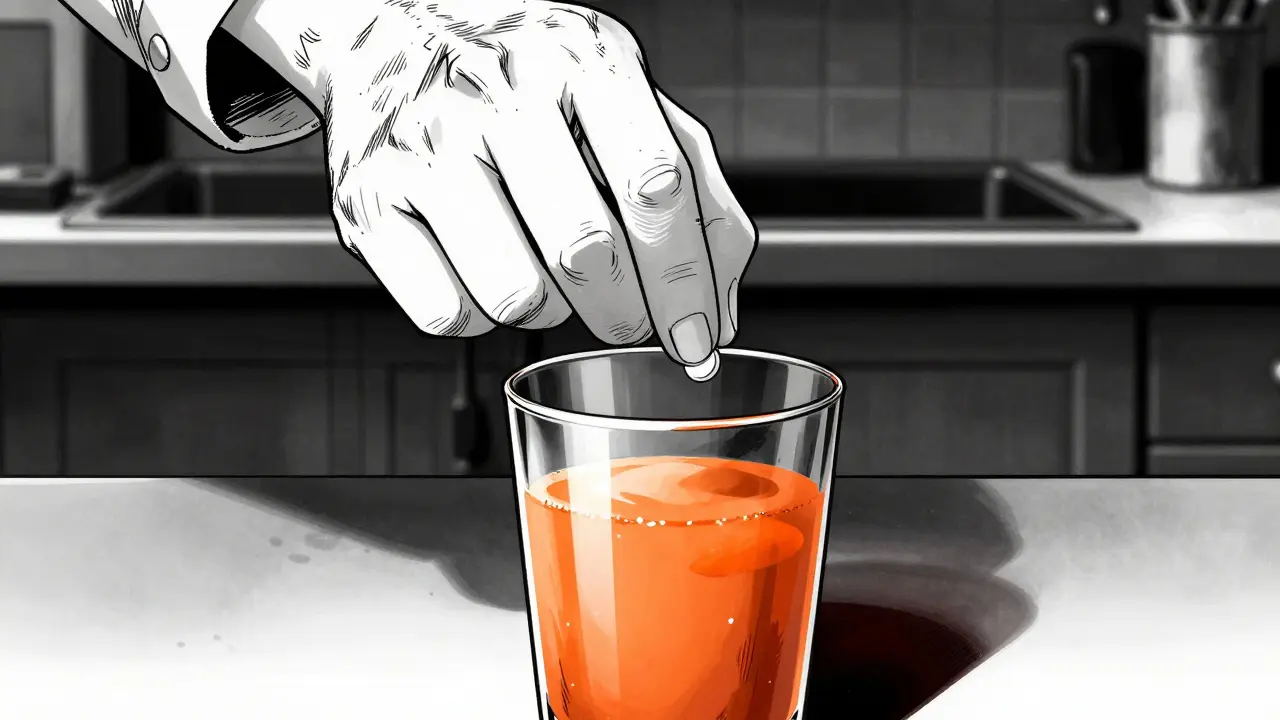
Imagine swallowing your morning pill with a glass of orange juice, only to find out later that you just turned your heart medication into a potential hazard. It sounds like something from a medical thriller, but it happens every day in kitchens across the country. We often think of food and medicine as separate worlds-one fuels us, the other heals us. In reality, they collide constantly inside our bodies, sometimes with messy results.
You might have heard vague warnings like 'take with food' or 'avoid grapefruit,' but do you actually know why? Understanding these rules isn't about memorizing a textbook; it's about keeping yourself safe. Food doesn't just sit in your stomach while a pill dissolves nearby. It changes the chemistry of your gut, alters how fast your liver works, and can even bind to drugs before they ever enter your bloodstream. When we get this wrong, medications stop working, or worse, they cause severe side effects that land people in the hospital.
How Food Changes How Drugs Work
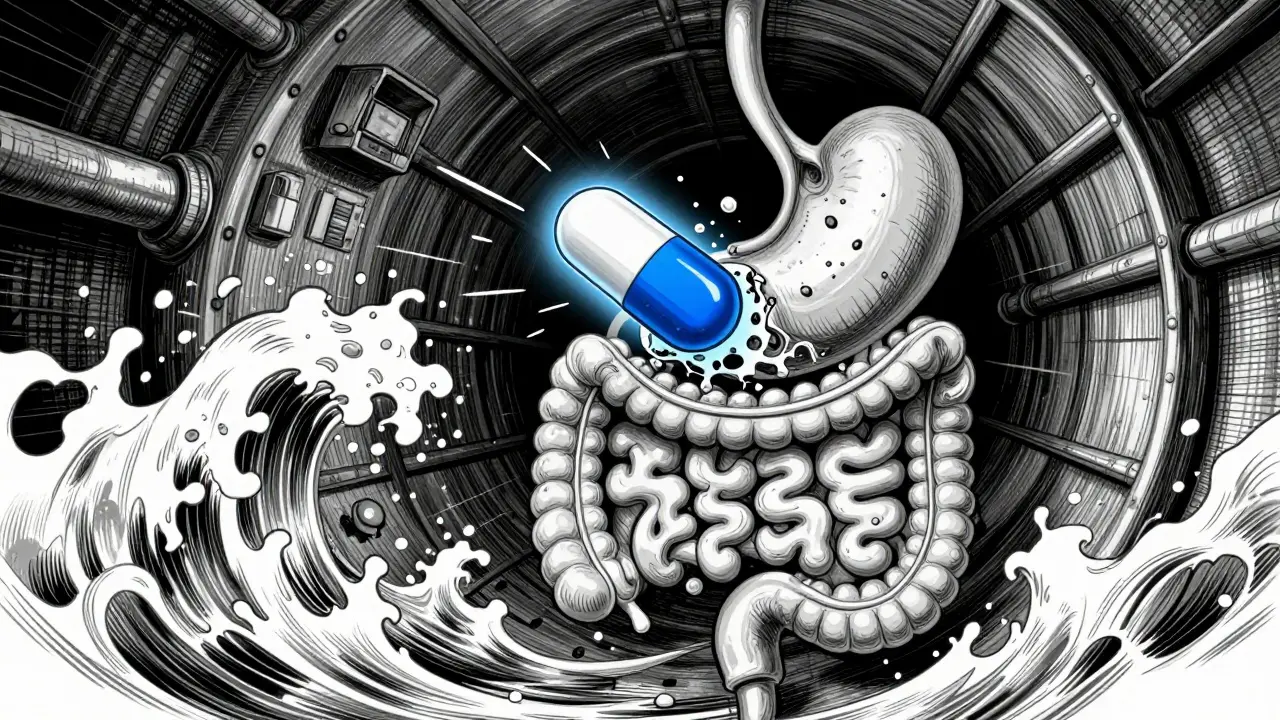
To understand why your breakfast matters, you need to look at what happens inside your body. There are three main ways food messes with your meds. First, there is absorption. Think of your stomach and intestines as a gatekeeper. If you eat a heavy meal, that gatekeeper gets busy digesting fat and protein, which can slow down or block a drug from getting into your blood. Second, there is metabolism. Your liver uses enzymes to break down drugs. Some foods, like grapefruit, act like a jam on those enzymes, causing drug levels to spike dangerously high. Third, there are direct chemical reactions. Certain nutrients bind to drugs like magnets, locking them together so neither can do their job.
Pharmacokinetics is the study of how the body absorbs, distributes, metabolizes, and excretes drugs. This process determines how much of a medication actually reaches your target cells. When food interferes with pharmacokinetics, you might take a full dose but receive only half the effect, or conversely, receive a toxic overdose because the drug wasn't broken down properly.
For example, acid-labile drugs like penicillin G lose 40-60% of their effectiveness when taken with meals because stomach acid breaks them down before they can be absorbed. On the flip side, some drugs love fat. Fat-soluble medications like griseofulvin (an antifungal) and diazepam (a sedative) absorb 25-35% better when eaten with a high-fat meal. Without that fat, your body simply flushes most of the drug out before it helps you.
The Empty Stomach Rule: Timing Is Everything
If your prescription says 'take on an empty stomach,' it means exactly that. But what does 'empty' mean? Most patients guess 30 minutes before eating, but research shows that’s not enough. The gold standard is one hour before or two hours after a meal. A clinical trial from the University of Connecticut found that sticking to this wider window increased drug bioavailability by 22% compared to tighter schedules.
Why such a strict rule? Because food slows down gastric emptying. If you eat a sandwich and then pop a pill, that pill sits in your acidic stomach longer than intended. For drugs like levothyroxine, used to treat thyroid issues, this delay is catastrophic. A 2022 study in JAMA Internal Medicine showed that taking levothyroxine with food reduced its efficacy by 34%. That means millions of patients who drink coffee or eat toast with their thyroid med are essentially under-dosing themselves daily, leading to fatigue and weight gain they blame on aging rather than bad timing.
- One hour before: Ideal for antibiotics like amoxicillin and thyroid meds.
- Two hours after: Necessary if you forgot the morning window.
- Avoid: Dairy, calcium supplements, and antacids within this window, as they also block absorption.
The Grapefruit Juice Danger Zone
Let’s talk about the most famous dietary villain: grapefruit juice. It’s not just a minor annoyance; it’s a potent inhibitor of the CYP3A4 enzyme in your intestines. This enzyme normally breaks down many common drugs. When grapefruit blocks it, the drug stays in your system at much higher levels. Drinking just one glass of grapefruit juice can increase blood concentrations of statins like simvastatin by 330%. Yes, three times the normal dose.
| Medication Class | Specific Drug Examples | Risk Level |
|---|---|---|
| Statins (Cholesterol) | Simvastatin, Atorvastatin, Lovastatin | High (Muscle damage risk) |
| Blood Pressure | Felodipine, Nifedipine | High (Low blood pressure/dizziness) |
| Anti-anxiety | Buspirone, Diazepam | Moderate (Excessive sedation) |
| Immunosuppressants | Cyclosporine, Tacrolimus | Critical (Organ rejection/toxicity) |
The FDA reports that grapefruit interactions alone cause over 1,100 emergency room visits every year. Many patients don’t realize that the effect lasts for days. You can’t just skip grapefruit on the day you take your pill; you need to avoid it entirely while on these medications. Even seville oranges (often used in marmalade) and pomelos contain similar compounds that trigger this reaction.
Vitamin K and Blood Thinners: Consistency Over Avoidance
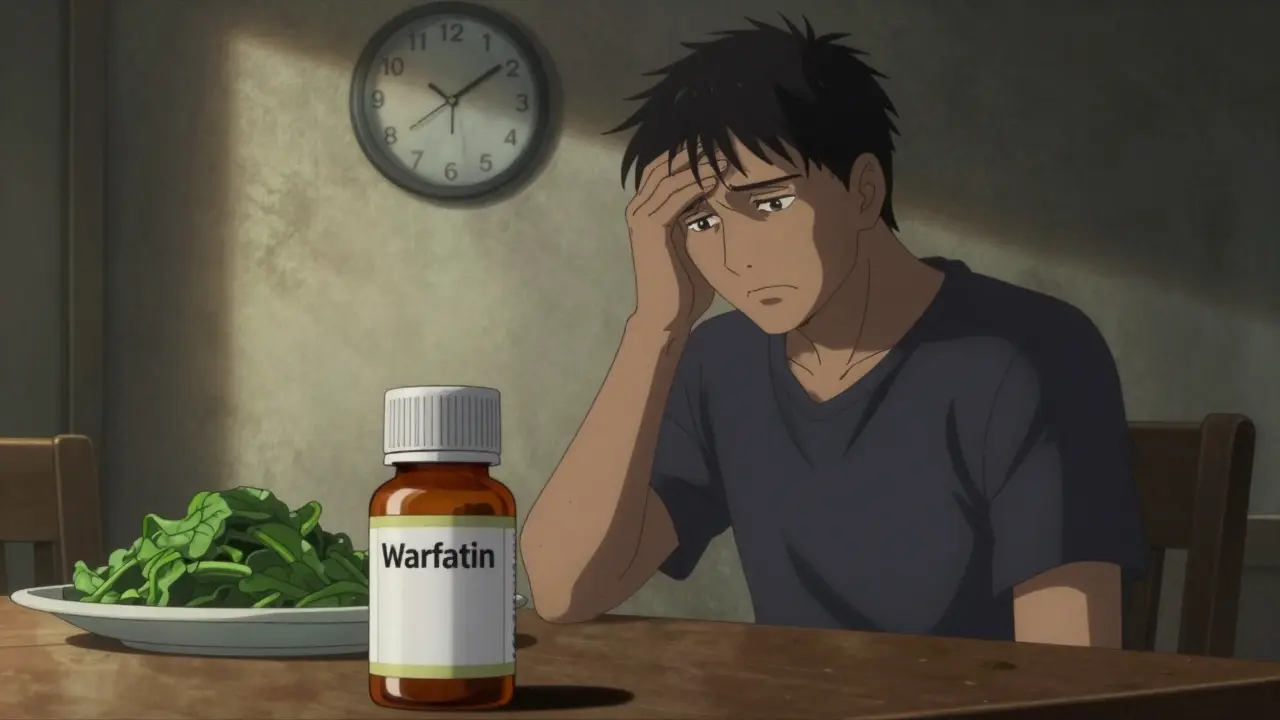
If you take warfarin (Coumadin), you’ve likely been told to watch your green leafy vegetables. Here is where most advice goes wrong. Doctors don’t want you to stop eating spinach or kale; they want you to eat the same amount every single day. Warfarin works by blocking vitamin K, which helps blood clot. If you suddenly eat a huge salad, you flood your system with vitamin K, counteracting the drug and risking a stroke. If you cut out greens entirely, your vitamin K drops, and you risk bleeding internally.
The goal is stability. Research from Johns Hopkins Hospital shows that patients who keep their vitamin K intake within a 10-15% daily variation have 32% fewer fluctuations in their INR scores (a measure of blood clotting time). One cup of cooked spinach contains about 483 micrograms of vitamin K. You don’t need to weigh your food, but you should avoid bingeing on salads one week and skipping them the next. Keep it boring. Keep it consistent.
Calcium, Iron, and Antibiotics
Antibiotics are lifesavers, but they are picky eaters. Specifically, they hate minerals. Calcium, iron, magnesium, and aluminum bind to certain antibiotics in the gut, forming a solid clump that your body cannot absorb. This is particularly true for tetracyclines (like doxycycline) and fluoroquinolones (like ciprofloxacin).
Here is the trap: patients often take calcium supplements or antacids for heartburn, thinking they are helping their digestion. Instead, they are neutralizing their infection-fighting drugs. Studies show that taking ciprofloxacin with calcium-rich foods can reduce absorption by 75-90%. To fix this, you must separate these substances. Take your antibiotic two hours before or four hours after any dairy products, calcium supplements, or multivitamins containing iron or magnesium. This simple spacing ensures your body gets the full therapeutic dose.
When Food Helps: Reducing Stomach Upset
Not all food-drug interactions are bad. Sometimes, food is the shield you need. Non-steroidal anti-inflammatory drugs (NSAIDs) like ibuprofen and naproxen are notorious for irritating the stomach lining. A five-year study by the Mayo Clinic found that taking ibuprofen without food caused gastric ulcers in 15% of patients, whereas taking it with food dropped that risk to just 4%.
Similarly, proton pump inhibitors (PPIs) like omeprazole work best when taken 30-60 minutes before a meal. Why? Because they need to be present in the stomach lining *before* the acid pumps turn on after eating. Taking them with food renders them largely useless. So, while NSAIDs need food to protect your stomach, PPIs need an empty stomach to prepare for the meal. Always check the label: 'Take with food' usually means protection, while 'Take before meals' usually means preparation.
Practical Steps for Patients
So, how do you manage this without becoming obsessed? Start by asking your pharmacist one question: "Does my medication interact with food, and if so, what specific foods should I avoid?" Don’t assume. Many patients believe all pills should be taken with food to prevent upset, but 41% of people hold this incorrect belief according to the American Pharmacists Association. This misconception leads to reduced efficacy for drugs that require empty stomachs.
- Read the Leaflet: Look for sections titled 'Administration' or 'Dietary Advice.' These often contain specific timing instructions.
- Use a Visual Schedule: Write down your meals and pill times. Visual cues reduce interaction errors by 47% in elderly patients.
- Stick to Water: Unless instructed otherwise, swallow pills with plain water. Avoid alcohol, caffeine, and fruit juices unless cleared by your doctor.
- Track Supplements: Treat vitamins and minerals like drugs. Space them out from your prescriptions by at least two hours.
New tools are also emerging. Apps like MyMedSchedule use AI to generate personalized schedules based on your diet, reducing interaction errors by 35% in trials. Additionally, new FDA labeling requirements starting in 2024 mandate clearer food interaction warnings on new drugs, making it easier for you to stay informed.
Can I take my medication with milk instead of water?
It depends on the medication. Milk contains calcium, which binds to certain antibiotics like tetracyclines and fluoroquinolones, preventing absorption. For most other drugs, milk is fine, but water is always the safest bet to avoid unexpected interactions. If you have a sensitive stomach, a small snack with milk might help, but check your specific drug label first.
Does grapefruit juice affect all medications?
No, it does not affect all medications, but it impacts a significant number of common drugs, including statins, blood pressure meds, and some anti-anxiety drugs. It specifically inhibits the CYP3A4 enzyme. If you are unsure, ask your pharmacist. Generally, if your drug name ends in '-statin' or '-pine,' you should avoid grapefruit.
What does 'take with food' actually mean?
'Take with food' usually means you should take the pill during or immediately after a meal to prevent stomach irritation or to enhance absorption. It does not necessarily mean a large meal; a few crackers or a piece of toast is often sufficient. However, for fat-soluble drugs, a meal with some fat content is required for proper absorption.
How long should I wait after eating to take an empty-stomach pill?
You should wait at least one hour before eating or two hours after eating. This ensures your stomach is mostly empty and allows the drug to pass quickly into the intestines for optimal absorption. Waiting only 30 minutes may not be enough for the stomach to clear completely.
Do herbal supplements interact with food and drugs?
Yes, absolutely. Herbal supplements like St. John's Wort can induce liver enzymes, speeding up the breakdown of drugs and making them less effective. Others, like garlic or ginkgo biloba, can thin the blood, increasing bleeding risks when combined with anticoagulants. Always treat supplements with the same caution as prescription drugs regarding food and timing.