
Quick Summary: What You Need to Know
- About 5% of patients globally experience harm from medication errors.
- Preventable harm occurs in 3% of patients, with a quarter of those cases being severe.
- High-risk medications include antibiotics, antipsychotics, and IV-administered drugs.
- Simple steps, like keeping a current med list, can significantly lower your personal risk.
The Hard Numbers: How Often Do Mistakes Happen?
When we talk about medication safety, we're talking about a global crisis. According to a 2024 report from the World Health Organization (WHO), roughly 1 in 20 patients worldwide suffer from medication-related harm. To put that in perspective, if you're in a waiting room with 20 people, there's a statistically high chance that one of you has been harmed by a medicine that was supposed to help.
In the United States, the scale is even more staggering. The Academy of Managed Care Pharmacy (AMCP) notes that over 1.5 million people are harmed annually by medication errors. Some of these are minor, but others are fatal. In U.S. hospitals, these mistakes cause about 7,000 deaths every year. Why is this happening? Experts like Dr. Donald Berwick argue that these aren't usually the fault of one "bad" nurse or doctor, but rather system failures-broken processes that allow a mistake to reach the patient.
Which Medications Carry the Most Risk?
Not all drugs are created equal when it comes to error rates. Some delivery methods and chemical classes are simply more prone to mistakes. For instance, drugs given intravenously (IV) are notorious for high error rates, with some reports showing failures in 48% to 53% of cases in long-term care settings. Because IV drugs hit the bloodstream instantly, there is no "buffer time" to catch a mistake before it affects the patient.
If we look at the types of drugs, antibiotics lead the pack, accounting for about 20% of medication-related harm events. They are closely followed by antipsychotics (19%) and drugs targeting the central nervous system (16%). This is often due to complex dosing schedules or the way these drugs interact with other medications the patient might already be taking.
| Medication Class | Estimated Harm Proportion | Common Risk Factor |
|---|---|---|
| Antibiotics | 20% | Allergic reactions, dosing errors |
| Antipsychotics | 19% | Side effect mismanagement, elderly dosing |
| CNS Drugs | 16% | Sedation, interaction with alcohol |
| Cardiovascular Drugs | 15% | Blood pressure swings, complex regimens |
The Hidden Danger: Counterfeit and Falsified Drugs
While hospital errors are a major concern, there is a growing threat outside the clinic: substandard and falsified (SF) medications. This isn't just about "fake" pills from a street dealer; it's about professional-looking packaging that contains the wrong ingredient or none at all. In North America, roughly 32% of fake drug seizures occur, making it a massive problem for patients buying meds online from unregulated sources.
The most lethal example is fentanyl-laced counterfeit tablets. In 2023, the DEA seized over 80 million of these pills. Many people think they are buying oxycodone or anxiety medication, but they are actually taking a lethal dose of a synthetic opioid. This has turned a medication safety issue into a public health epidemic, with fentanyl now a leading cause of death for Americans aged 18 to 45.
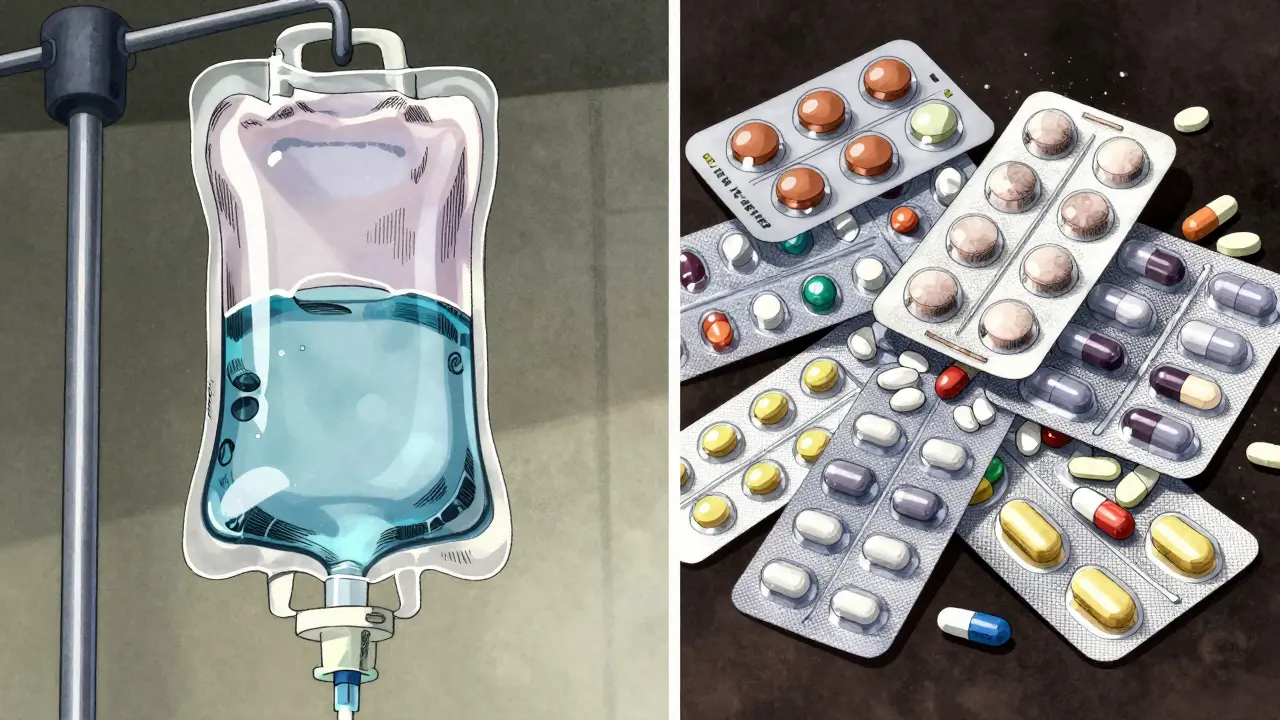
Danger at Home: Where Patients Make Mistakes
We often blame the pharmacy or the doctor, but a huge chunk of errors happen after we leave the building. Analysis shows that patient medication errors at home occur between 2% and 33% of the time. Why does this happen? It's usually not due to negligence, but confusion. A study of online patient communities found that 68% of posts about medication involved confusion over dosage instructions. Was it "one pill twice a day" or "two pills once a day"? That small misunderstanding can lead to an Adverse Drug Event (ADE), which causes 1.5 million emergency room visits annually in the U.S. alone.
Older adults are at an even higher risk. Managing five or six different prescriptions-known as polypharmacy-makes it incredibly easy to skip a dose or double up. This is why initiatives in places like Australia have focused on reducing inappropriate antipsychotic dispensing for people over 65, resulting in an 11% drop in those specific errors.
How to Be Your Own Best Advocate
You don't have to be a medical professional to keep yourself safe. The goal is to move from being a passive recipient of care to an active participant. The Australian Commission on Safety and Quality in Health Care suggests a "5 Moments for Medication Safety" approach. You should be extra vigilant when:
- Starting a brand new treatment.
- Adding a second or third medication to your current routine.
- Moving from a hospital to a nursing home or back to your own house (transitions of care).
- Handling high-risk drugs like insulin or warfarin.
- Doing your regular medication review with your doctor.
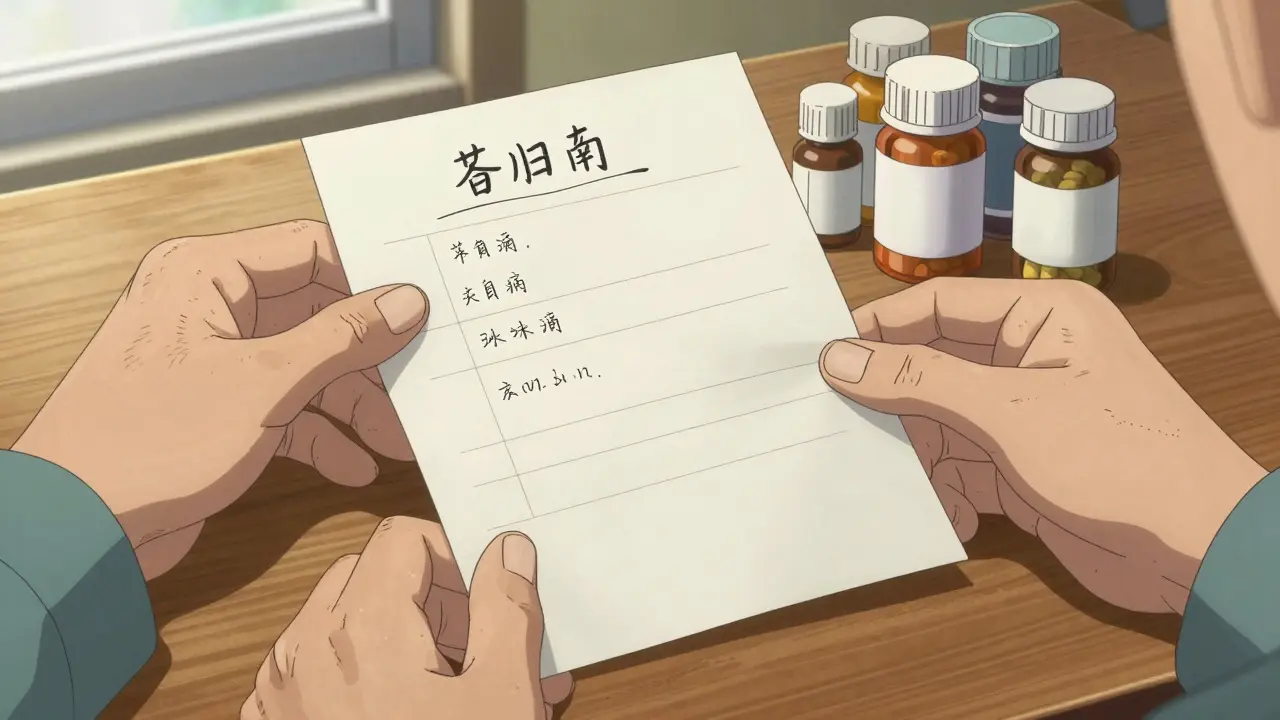
Beyond those moments, there are a few concrete habits that can save your life. First, use a single pharmacy for all your prescriptions. This allows the pharmacist's software to flag dangerous interactions between a drug prescribed by your cardiologist and one from your primary care doctor. Second, always keep an updated, written list of every supplement and medication you take. Don't rely on your memory during a stressful doctor's visit.
The Future: Can Tech Fix the Problem?
The industry is pouring money into solving these issues. The global patient safety market is expected to hit $14.3 billion by 2029. We are seeing a shift toward "smart" systems, such as real-time prescription monitoring, which helped Australia slash unintentional opioid deaths by 37% since 2018.
Looking ahead, artificial intelligence (AI) might be the biggest game-changer. Some experts predict that AI-powered medication reconciliation tools-software that automatically compares what a doctor ordered versus what was actually administered-could reduce errors by 30% by 2027. While we aren't there yet, the move toward digital health records is slowly closing the gaps where humans typically make mistakes.
What exactly is a medication error?
A medication error is any preventable event that may cause or lead to inappropriate medication use or patient harm. This includes the wrong drug, the wrong dose, the wrong patient, or the wrong timing. It can happen during the prescribing, transcribing, dispensing, or administering phase.
Which drugs are the most dangerous if a mistake is made?
Statistically, antibiotics and antipsychotics are associated with the highest rates of harm. Additionally, any drug delivered via an IV (intravenous) line has a higher risk of immediate error because it bypasses the digestive system and enters the blood directly.
How can I tell if a medication is counterfeit?
It is increasingly difficult to tell by sight alone, but red flags include unusual spelling on the packaging, a lack of a pharmacy label, or prices that seem "too good to be true." The best protection is to only buy medications from licensed, reputable pharmacies and avoid unregulated online marketplaces.
What should I do if I think I've taken the wrong dose?
Immediately contact your prescribing doctor or a pharmacist. If you are experiencing severe symptoms like difficulty breathing, dizziness, or swelling, call emergency services or head to the nearest emergency department. Have the medication bottle with you so the medical team knows exactly what was taken.
Why do so many errors happen in hospitals?
Many errors are caused by "system failures." This includes things like look-alike/sound-alike drug names, interruptions during the dosing process, or poor communication during shift changes between nurses. It is rarely a lack of knowledge and more often a failure of the process.
Next Steps for Your Safety
If you are currently taking multiple medications, your first step should be a "brown bag review." Put every single bottle-including vitamins and herbal supplements-into a bag and take them to your doctor or pharmacist. Ask them to review each one for necessity and potential interactions.
If you are a caregiver for an older adult, look into automated pill dispensers or medication tracking apps. Reducing the cognitive load of remembering doses can eliminate the 2-33% error rate seen in home care settings. Stay curious, ask questions, and remember that it is always okay to ask your nurse to double-check a dose before it's administered.

Jon Moss
April 23, 2026 AT 17:03This is a heavy reminder of why it's so important to stay on top of our own health. It's scary to think how much relies on the system just working correctly.
Hayley Redemption
April 25, 2026 AT 05:13The statistics provided are basic at best. Anyone with a shred of medical literacy knows that 'system failure' is just a sanitized term for sheer incompetence in understaffed wards. It's honestly laughable that people are surprised by a 5% error rate when the administrative overhead in US hospitals is practically a circus.
Gauri Parab
April 25, 2026 AT 20:28Why is the focus always on the US and Australia? It's so typical to ignore the systemic collapse in other regions just to push a few 'smart' AI tools that will probably just glitch and kill more people. The obsession with digital records is just a way for insurance companies to track us better while the actual quality of care continues to plummet globally.
Jaclyn Vo
April 25, 2026 AT 22:14OMG I literally had this happen to me two years ago! 😱 They almost gave me something I was allergic to and I had to scream at the nurse to stop her! It was a total nightmare and I'm still traumatized by how close I came to a disaster! 😭
Eric Mwiti
April 27, 2026 AT 04:49Sure, because expecting a human to not make a mistake in a high-stress environment is totally realistic. I'm sure a fancy AI app will solve everything and definitely not create a brand new set of catastrophic bugs.
Michael Chukwuma
April 28, 2026 AT 23:38I really appreciate the tip about the brown bag review. It sounds like a simple way to make sure everyone is on the same page without feeling like you're being a bother to the doctor.
suresh kumar
April 30, 2026 AT 13:22This whole thing is a chaotic mess of pills and greed! You go to the clinic and they treat you like a number in a ledger while some clumsy intern is shaking like a leaf with your IV drip. Absolute madness in the pharmacy lines every single day!
Majestic Blue Band
April 30, 2026 AT 21:49It's all far too convenient that they're pushing these 'smart systems' and AI reconciliation tools right as the public starts waking up to the dangers, because if you actually look into who funds these AI developments, you'll find the same pharmaceutical giants who profit from the 'errors' that force patients onto more expensive, 'safer' alternative drugs, and it's all just a giant loop of control designed to make us dependent on a digital tether that can be switched off the moment we stop complying with their pharmaceutical mandates, which is honestly just a precursor to a full social credit system based on your medical compliance and the sheer audacity of suggesting that a piece of software is the solution to a problem created by the very people selling the software is just peak dystopian theater.
Edwin Perez
May 1, 2026 AT 09:15The pharmaceutical companies aren't making 'errors'. They're just testing dosages on us in real time. The stats are probably skewed anyway to keep us from panicking while they refine the formula.