
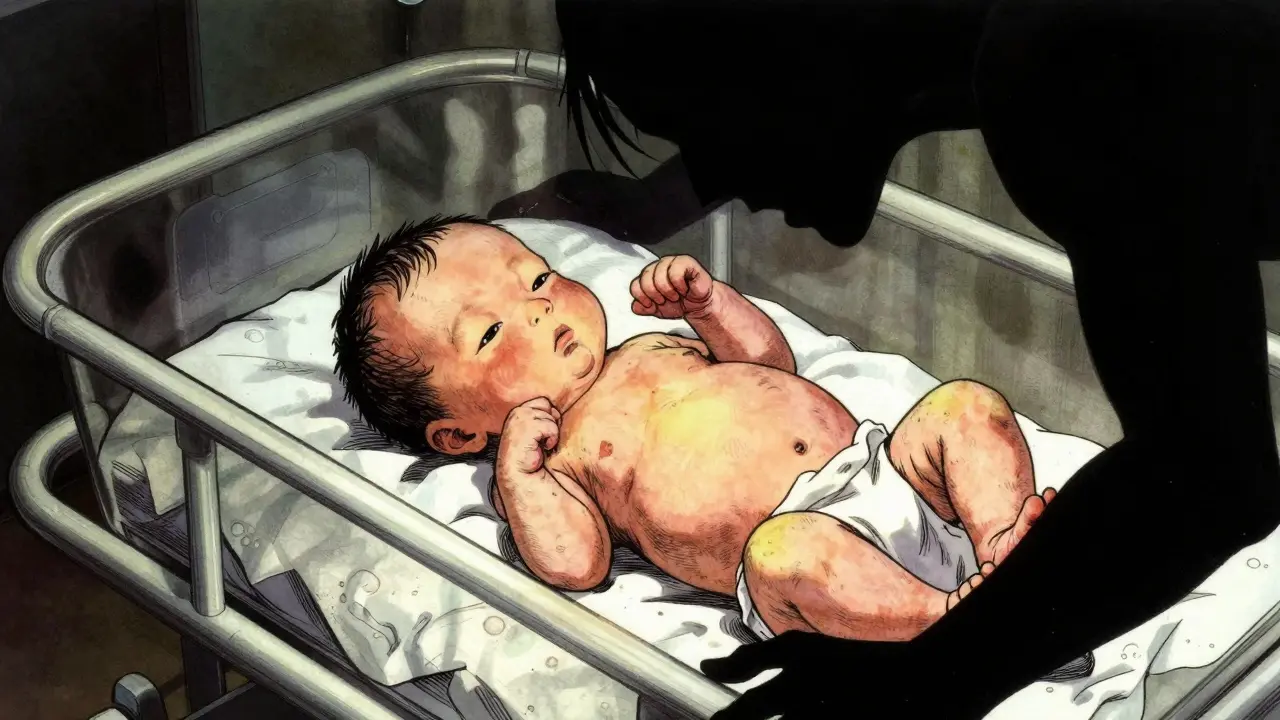
Newborn jaundice feels common, but what happens when treatment gets complicated? Imagine a scenario where a baby is already slightly yellow from normal liver adjustments, and then receives a routine antibiotic dose. In some cases, this combination turns dangerous very quickly. The condition we call Neonatal Kernicterus, also known as Chronic Bilirubin Encephalopathy, represents a rare but devastating outcome where high unconjugated bilirubin deposits into brain tissue. While it is preventable, understanding exactly how specific medications interfere with a newborn's chemistry is the key to prevention.
We need to talk about the mechanics first. Why does this happen? Your baby's blood carries bilirubin, a byproduct of breaking down red blood cells, bound tightly to a protein called Albumin, which acts like a protective cage. When certain drugs enter the bloodstream, they don't just sit quietly. They actively push bilirubin off these albumin binding sites. Think of it like a crowded bus where someone stands up and forces passengers off to take their place. Once bilirubin is free-floating, it crosses the blood-brain barrier and causes permanent damage. This displacement effect is the primary reason why some seemingly harmless drugs become contraindicated in the neonatal period.
Understanding the Drug Mechanism
The risk isn't theoretical; it is backed by decades of pharmacological data. We have known since the 1950s that Sulfonamides, particularly agents like sulfisoxazole, possess a chemical structure that binds more strongly to albumin than bilirubin does. Studies show this displacement rate can hit between 25% and 30% of available binding sites at therapeutic doses. For a newborn with borderline jaundice, losing that much protection means toxic levels of bilirubin suddenly flood the system. It is a direct biochemical competition where the drug always wins.
This interaction changes drastically depending on the baby's health status. If an infant has acidosis, low albumin levels, or an immature liver, the risk skyrockets. The Free Bilirubin Index becomes critical here. Doctors measure how much bilirubin is actually "free" versus bound. If you administer a displacing drug when this index is already trending high, you essentially trigger a neurotoxic event. That is why guidelines warn against even single therapeutic doses in infants approaching treatment thresholds.
High-Risk Medication Categories
While Sulfonamides are the classic warning, they are not the only culprits. We must look at the full list of agents that pose a displacement threat.
| Medication Class | Displacement Rate | Risk Level | Clinical Recommendation |
|---|---|---|---|
| Sulfonamides (e.g., Sulfisoxazole) | 25-30% | High | Avoid entirely in infants under 2 months |
| Ceftriaxone | 15-20% | Moderate-High | Avoid if TSB > 75% of threshold |
| Aspirin (Salicylates) | Variable | Moderate | Monitor closely |
| Furosemide | Low-Moderate | Contextual | Use caution in preterm infants |
Look at Ceftriaxone, often used for serious infections. It carries a lower displacement rate compared to sulfonamides but still poses significant risk if the patient has compromised renal function or G6PD deficiency. The difference lies in the margin of safety. With amoxicillin-clavulanate, there is almost zero interference with bilirubin binding, making it a safer first-line choice for many indications. Yet, cost sometimes dictates usage in resource-limited settings, forcing providers to balance financial reality against neurotoxicity risk.

Clinical Thresholds and Monitoring
You might wonder where the line is drawn. The American Academy of Pediatrics (AAP) provides the clearest road map. In their updated 2022 guidelines, they explicitly state that these medications should be avoided when total serum bilirubin exceeds 75% of the phototherapy threshold. This isn't a vague suggestion; it is a hard stop based on postnatal age charts. For a baby who is 4 days old, the threshold might be around 15 mg/dL. If their levels are sitting at 11 mg/dL, you are already in the danger zone for adding any displacing agent.
Beyond just looking at the total number, experienced clinicians know to check serum albumin levels. If albumin falls below 3.0 g/dL, the capacity to hold bilirubin drops sharply. You could have a baby with a "normal" total bilirubin reading but dangerously high free bilirubin because they simply lack enough albumin to protect them. Monitoring requires checking both numbers simultaneously. Additionally, screening for G6PD deficiency is vital, especially in populations where the genetic trait is common, as hemolysis from the drug could dump even more bilirubin into the mix.
Prevention Protocols
Preventing this condition starts long before a prescription is written. Hospitals with robust safety cultures implement order sets that flag these interactions automatically. Electronic health records now have built-in checks-if you type a sulfonamide name for a 1-week-old with documented jaundice, the system should block the order. However, technology isn't perfect. Human oversight remains the final defense. Nurses play a huge role here. A case report from Texas described a scenario where a 5-day-old had a bilirubin of 14.2 mg/dL. After receiving sulfisoxazole for UTI prophylaxis, levels spiked to 22.7 mg/dL within 12 hours. The rapid rise was caught, and intensive phototherapy saved the child from exchange transfusion.
Parents and families have a role too. Transparency helps. Always ask the pediatrician, "Is this medicine safe for my baby's jaundice level?" Many families are unaware that vitamins or over-the-counter remedies can also interact. Even breastfeeding supplements containing herbal extracts have been linked to displacement in rare reports. The safest path is sticking to approved antibiotics with known neutral profiles until the bilirubin stabilizes.

Current Trends in Safety
The industry is shifting toward better automated safety nets. Major systems like Epic are integrating alerts directly into their neonatal modules. Academic centers are seeing fewer errors because of this digital guardrail, yet community hospitals still lag behind. The gap matters because small hospitals handle a large volume of deliveries where resources for rapid bilirubin testing might be limited. National initiatives aim to close this gap, including grants for point-of-care testing devices that give instant results for free bilirubin indices right at the bedside.
Long-term outlook depends on how we view the trade-off. Antibiotic resistance is rising globally. Some worry we will run out of safe options if bacteria become resistant to alternatives like amoxicillin. Currently, evidence shows safer alternatives remain effective for roughly 92% of cases where sulfonamides were once standard care. Until proven otherwise, the risk of permanent brain damage outweighs the convenience of older, cheaper drugs.
Summary of Action Points
- Always verify total serum bilirubin before administering potential displacing drugs.
- Check albumin levels if bilirubin is near the treatment threshold.
- Avoid sulfonamides and ceftriaxone in infants younger than 2 months unless absolutely necessary.
- Screen for G6PD deficiency in at-risk ethnic groups before prescribing.
- Prioritize alternative antibiotics like penicillins or cephalosporins with lower affinity for albumin.
Can a healthy baby develop kernicterus from medication?
Yes, even babies without underlying illness are at risk if their bilirubin levels are naturally high due to breast milk jaundice or early feeding issues. Medication displacement reduces the safety margin significantly.
Which antibiotic is safest for a jaundiced newborn?
Amoxicillin-clavulanate is generally considered the safest option. It does not bind to albumin in a way that displaces bilirubin, unlike sulfonamides or ceftriaxone.
Does breastfeeding increase the risk of kernicterus?
Breastfeeding itself is protective, but breast milk jaundice can raise bilirubin levels. Combined with high-risk medications, the cumulative effect increases the likelihood of neurotoxicity.
How long does kernicterus take to develop after exposure?
Symptoms can appear rapidly, often within 12 to 24 hours of exposure to displacing drugs in vulnerable infants. Early signs include lethargy, poor feeding, and high-pitched crying.
Are vaccines a risk for triggering kernicterus?
No, standard newborn vaccinations like Hepatitis B do not cause bilirubin displacement. The risk is strictly associated with specific classes of pharmaceutical drugs affecting protein binding.


Callie Bartley
April 1, 2026 AT 07:56Parents are left guessing while hospitals push dangerous antibiotics blindly. This negligence leads to permanent damage in fragile nervous systems. We demand stricter protocols for infant care standards now.
Eleanor Black
April 1, 2026 AT 18:13Strict monitoring in neonatal care remains essential today. We cannot overlook the biochemical pathways involved when treating infants. The albumin binding issue is quite significant indeed for patient safety. Displacement rates often exceed safe margins too easily under pressure. Clinicians must remain vigilant regarding dosage schedules during administration. Even minor deviations could lead to severe outcomes later on in development. Parents need education on what signs to watch closely at home. Lethargy often manifests before other symptoms appear clearly visible. Feeding issues can mask the underlying toxicity problems sometimes. Phototherapy remains the primary intervention for prevention effectively in most cases. Exchange transfusion becomes necessary if levels climb higher than expected. G6PD deficiency screening is absolutely vital before administration of any drug. Many providers forget to check the free bilirubin index daily. Cost constraints sometimes drive decisions away from safer options unfortunately. System errors in electronic health records do happen occasionally despite training. Human oversight acts as the final barrier against tragedy always.
Rod Farren
April 2, 2026 AT 12:01Pharmacokinetics dictates the serum albumin binding affinity here. Bilirubinemia requires precise therapeutic thresholds to avoid neurotoxicity.
Molly O'Donnell
April 2, 2026 AT 19:38Sulfisoxazole displaces bilirubin directly and causes kernicterus risks immediately.
Rocky Pabillore
April 3, 2026 AT 04:48Average parents lack the capacity to understand these complex metabolic interactions properly. Only trained professionals grasp the nuances of bilirubin displacement.
Russel Sarong
April 3, 2026 AT 12:33The risk is huge!!! Doctors must know!!! It affects the brain!!!
Owen Barnes
April 4, 2026 AT 07:39Making medicatin choices for babis is harrd. Jaundice is scarry if we mess up. Safe drugs are better for health.
James DeZego
April 5, 2026 AT 07:06It is beneficial to share info like this :) Thanks for highlighting the danger zones.
Cara Duncan
April 5, 2026 AT 17:36We need to keep babies safe from harm 😢 Medicine interactions are scary stuff 👍
Arun Kumar
April 6, 2026 AT 19:45Every culture needs to learn about these risks for our children. Community health workers can help prevent these tragic outcomes.
Julian Soro
April 7, 2026 AT 15:08I hope everyone reads this to stay informed about baby safety measures. It makes me feel good knowing we are learning more every day.
Cullen Zelenka
April 8, 2026 AT 00:13New guidelines help us avoid these mistakes entirely. Progress is being made in hospital systems daily.
Christopher Beeson
April 9, 2026 AT 03:52Modern medicine creates new vulnerabilities in the pursuit of curing disease. We sacrifice immediate safety for long term survival rates often.
Sharon Munger
April 10, 2026 AT 05:51We work together to stop these errors from happening again soon. Collaboration is key for patient safety
Jenny Gardner
April 12, 2026 AT 00:19Indeed, the data supports these findings unequivocally!! The evidence is clear.