
FDA Priority Review: What It Means for Faster Access to Critical Medications
When the FDA priority review, a faster approval pathway the U.S. Food and Drug Administration uses for drugs that offer significant improvements in treating serious conditions. Also known as priority designation, it cuts the review time from the standard 10 months to just 6 months—giving patients quicker access to life-changing treatments. This isn’t just bureaucracy—it’s a lifeline for people with cancer, rare diseases, or conditions with no good options.
Drugs get this status when they show clear advantages over existing treatments. Think of a new cancer drug that shrinks tumors better, or a medicine that stops seizures in kids who don’t respond to anything else. The breakthrough therapy designation, a separate but related FDA program for drugs with early evidence of substantial improvement often leads to priority review. And if a drug treats a rare disease affecting fewer than 200,000 Americans, it might also qualify under the orphan drug, a category that gives incentives to companies developing treatments for rare conditions pathway. These aren’t just labels—they’re triggers that push the FDA to move faster, work closer with drugmakers, and prioritize reviews.
What does this mean for you? If you’re dealing with a serious illness, FDA priority review could mean getting a new treatment months or even years sooner. It’s why drugs like new Alzheimer’s therapies, rare disease gene treatments, or next-gen antibiotics reach patients faster. But it’s not magic—these drugs still need solid proof of safety and effectiveness. The FDA doesn’t lower the bar; it just clears the path. And because these drugs often target high-need areas, you’ll see them covered in posts about medications that save lives, off-label uses, and real-world outcomes.
Looking at the posts here, you’ll find plenty of examples. From how allopurinol helps prevent gout flares to how dexamethasone fights inflammation in critical cases, many of these drugs went through the same fast-track system. Others, like chlorambucil for rare cancers or ivermectin for parasitic infections, show how priority review can affect even older drugs when new uses emerge. You’ll also see how side effects like orthostatic hypotension or photosensitivity are monitored closely during these accelerated reviews—because speed doesn’t mean skipping safety.
This collection doesn’t just list drugs. It shows how the system works behind the scenes. Whether you’re a patient wondering why a new treatment arrived so fast, a caregiver tracking options, or just someone trying to understand how medicine gets to market—this is the context you need. Below, you’ll find real, practical guides on the medications, conditions, and safety tips tied to this fast-track process. No fluff. Just what matters.
17
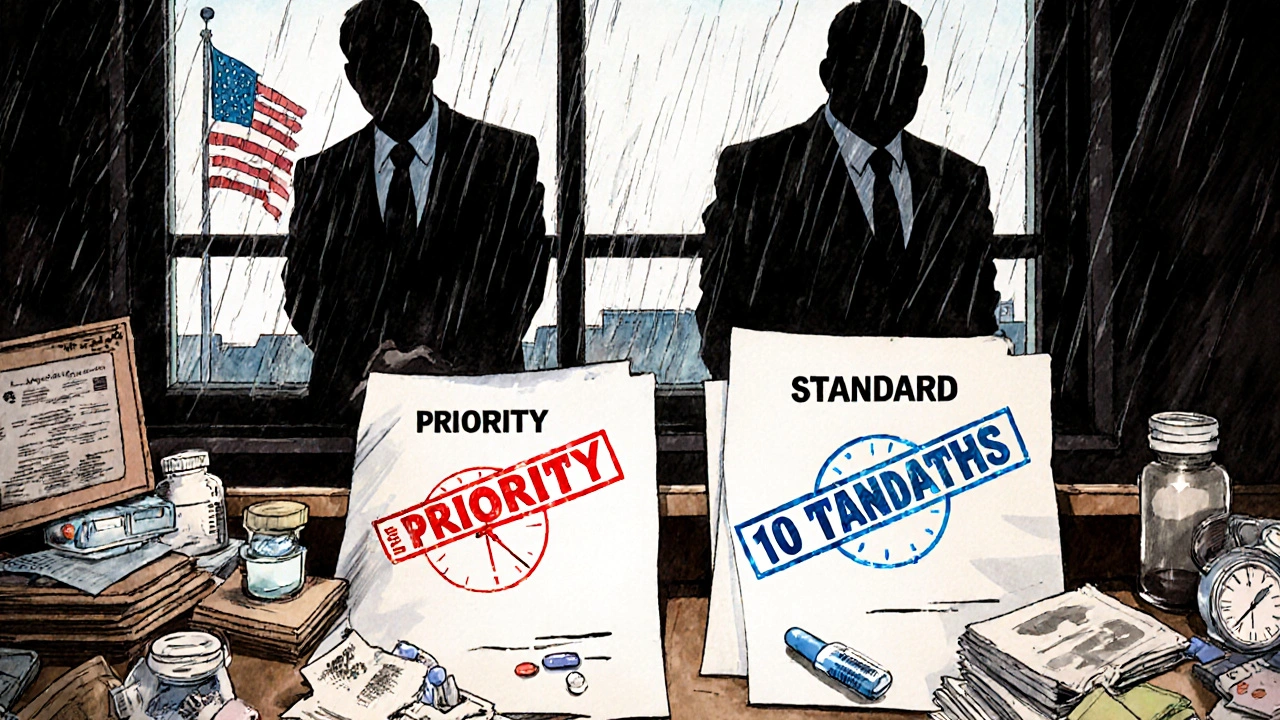
Priority vs Standard Review: How FDA Prioritizes Generic Drug Applications
The FDA uses priority and standard review tracks for generic drugs. Priority review, at 8 months, is reserved for first generics, drugs in shortage, or those with clinical advantages. A new pilot rewards U.S. manufacturing. Understanding these rules helps companies get approvals faster and patients get affordable drugs sooner.