
| Method | Detection Rate | Primary Strength | Main Weakness |
|---|---|---|---|
| Barcode Scanning | ~53% | Speed and consistency | Misses wrong-drug/right-barcode errors |
| Pharmacist Double-Check | ~67% | Clinical expertise | Prone to fatigue/human error |
| Patient Counseling | ~83% | Verifies patient expectations | Dependent on patient engagement |
Turning Conversations into Safety Checks
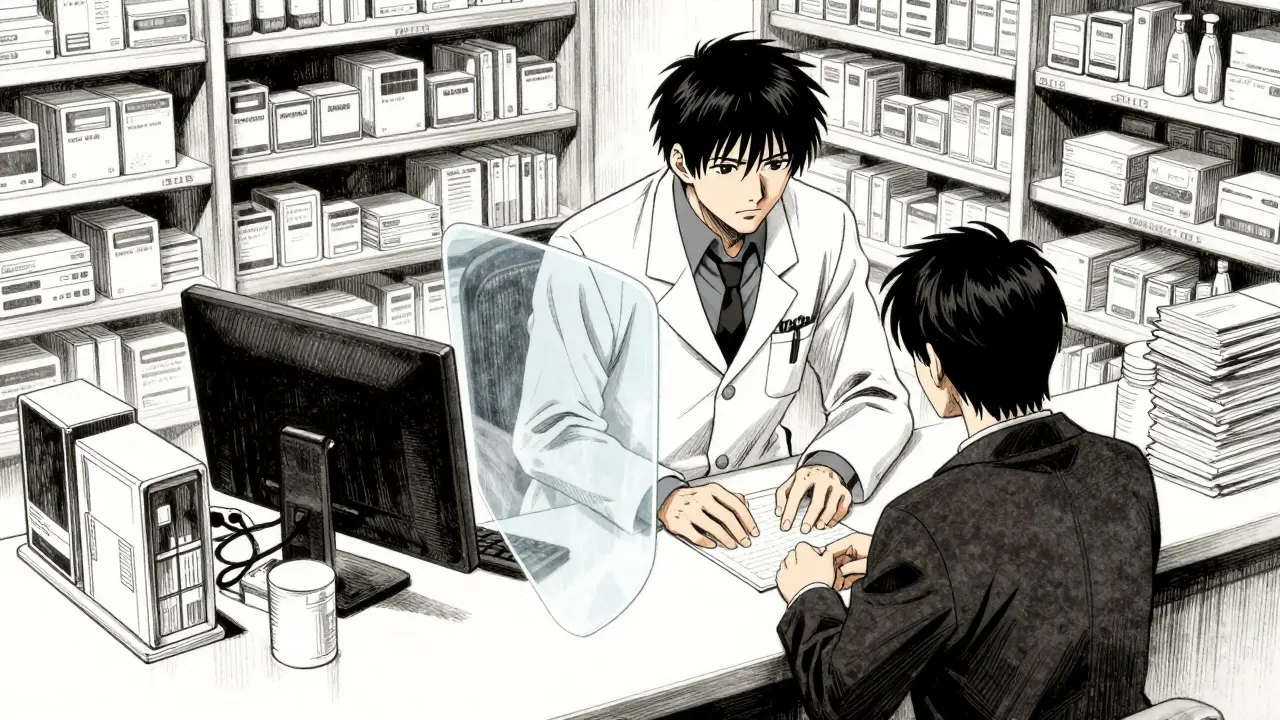
To catch dispensing errors, you can't just talk *at* the patient. You have to engage them in a way that forces a verification of the medication. The goal is to see if the drug in the bottle matches what the patient expects and what the doctor intended. One of the best ways to do this is through the Teach-Back Method, which is a communication technique where patients explain instructions back to the provider in their own words. Instead of asking, "Do you know how to take this?" (which usually gets a "yes" even if they are confused), ask, "Just so I'm sure I explained this clearly, can you tell me how you'll be taking this medication at home?" This simple shift increases error detection rates by 68%. When a patient tries to explain the dose or purpose, they often realize something doesn't sound right, or you'll notice a gap in their understanding that signals a potential dispensing mistake.The Four Pillars of Error-Catching Counseling
If you want to be systematic about it, focus on these four critical elements during every interaction. Research suggests that spending about 2.3 minutes per patient is the "sweet spot" for effective verification.- Confirm the Purpose: Ask, "What condition is this medication for?" If they say "my blood pressure" but you've dispensed a cholesterol med, you've just caught a major error. Open-ended questions like this are 3.2 times more effective than closed "yes/no" questions.
- Verify Administration: Ask them to describe the process. "Can you show me how you'll take this?" This catches dosing errors, especially with complex devices like insulin pens.
- Check Physical Appearance: This is a huge win for catching "look-alike" errors. Ask, "Does this look like the medication you've taken before?" Reviewing the physical tablet or capsule catches nearly 30% of errors that barcodes miss.
- Cross-Reference History: Quickly validate the new prescription against their known history. If a patient is suddenly on a drug they've never used and they aren't aware of a new diagnosis, it's a red flag.

Who Needs the Most Attention?
Not every prescription carries the same risk. While you should counsel everyone, some groups require a more rigorous "safety net" approach. The American Society of Consultant Pharmacists highlights that certain populations are more vulnerable to errors that cause significant harm. First, prioritize patients over 65. Dosing errors in seniors are 3.7 times more likely to lead to adverse events due to changes in kidney or liver function. Second, focus on those with low health literacy; these patients account for 42% of undetected errors because they may not question a mistake if it's presented confidently by a professional. Finally, always double-down on High-Alert Medications. These are drugs like opioids, anticoagulants, or insulin where a small mistake in dosage can be fatal. In fact, 1 in 5 dispensing errors involves these high-alert classes, making them the highest priority for the "human firewall" check.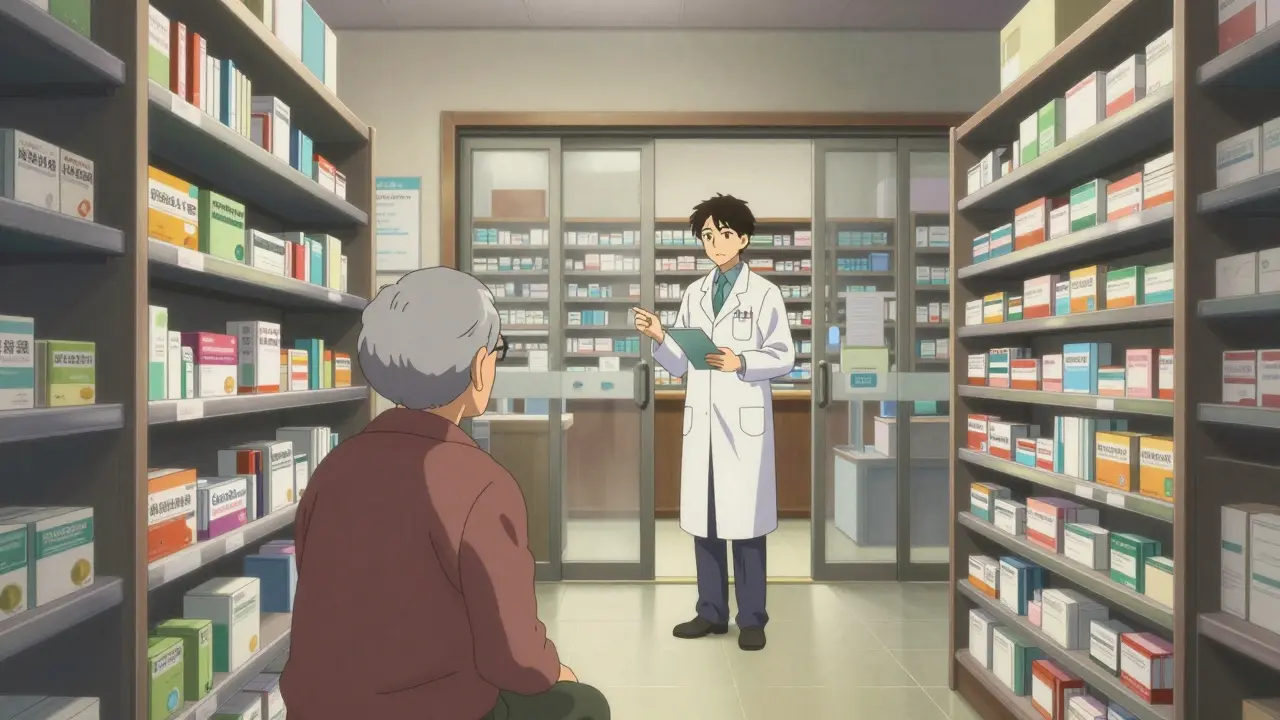
Overcoming the "Too Busy" Barrier
Let's be honest: the biggest hurdle is the clock. Many pharmacists report spending barely a minute per patient because of corporate productivity demands. However, the cost of a mistake is far higher than the cost of a few extra seconds. Independent pharmacies have found a silver lining here. While structured counseling can add about 2.4 minutes to the wait time per prescription, it has been shown to reduce malpractice insurance premiums by up to 19% because there are simply fewer claims. It's a trade-off: a slightly slower line for a significantly safer practice. If you're drowning in scripts, consider utilizing pharmacy technicians for preliminary counseling where state law allows. In many areas, technicians can handle the initial identity and appearance checks, which can increase the actual effective counseling time by 37%.
Integrating Counseling into Your Workflow
To make this a habit rather than a chore, you need a repeatable protocol. A successful framework involves breaking the session into timed segments:- Identity Verification (approx. 27 seconds): Confirm the patient's name and date of birth.
- Purpose Confirmation (approx. 43 seconds): Confirm why they are taking the med.
- Appearance and Administration Check (approx. 52 seconds): Show the drug and verify how it's taken.
- Interaction and Allergy Review (approx. 38 seconds): Quick check for known triggers.
Is counseling really better than barcode scanning for catching errors?
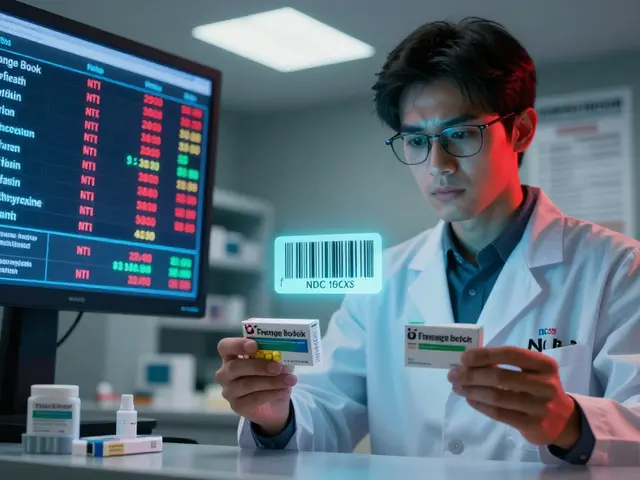
Yes, in terms of the final catch rate. While barcode scanning catches about 53% of errors, patient counseling identifies around 83%. This is because counseling verifies the *intent* and *understanding*-it catches errors where the wrong drug was put in the wrong bottle, but both had the correct barcodes, or when the dose is clinically inappropriate for that specific patient.
What is the most effective question to ask a patient to catch a mistake?
Open-ended questions are far superior. Instead of asking "Is this for your heart?" (closed), ask "What do you understand this medication is for?" (open). These types of questions identify 3.2 times more errors because they require the patient to retrieve information from memory rather than just agreeing with the pharmacist.
Does counseling help with routine refills?
It is less effective for refills than for new prescriptions. While counseling catches 91% of errors on new meds, it only catches about 33% on refills. This is because patients often stop paying attention to the medication's appearance or instructions once they are used to it. For refills, you must be more proactive in asking them to specifically check if anything looks different.
How long should a counseling session actually take to be effective?
Research suggests a minimum of 2.3 minutes per patient. Interestingly, there is a linear benefit to spending more time: every additional 30 seconds of focused counseling has been shown to reduce the error rate by approximately 12.7%.
Can I rely solely on counseling to prevent errors?
No. Counseling should be the "final net," not the only net. It is a critical last line of defense, but it must be supported by internal verification systems like double-checks and barcode scanning. Relying only on the patient is dangerous because some patients decline counseling or may not notice a mistake themselves.

mimi clouet
April 13, 2026 AT 21:33Totally agree! The Teach-Back method is literally a game changer in any clinical setting 🌟 it's all about ensuring that cognitive load isn't too high for the patient so they actually retain the info 💊✨
Billy Wood
April 14, 2026 AT 03:32LETS GET THIS DONE!!! SAFETY FIRST!!!
Catherine Mailum
April 15, 2026 AT 03:04oh sure because corporate actually cares about us spending three minutes per person instead of just breathing down our necks about metrics... what a joke
Mark Dueben
April 17, 2026 AT 02:34It's a bit unfortunate that we've reached a point where we have to treat a basic conversation as a 'firewall' just to keep people safe, but I suppose it's a necessary step in the current climate.
Sam Dyer
April 18, 2026 AT 11:17Barcode scanners are basically fancy toys for people who can't think for themselves :-D Real pros use their eyes and their brains, not some beep-boop machine from a warehouse
S.A. Reid
April 19, 2026 AT 19:18One must ponder if these statistics are merely curated to encourage a specific behavioral shift among practitioners. It is quite fascinating how the industry insists on these 'metrics' while ignoring the systemic failures of the pharmaceutical supply chain itself, which is likely managed by a shadow committee of bureaucrats interested in mediocrity.
rupa das
April 20, 2026 AT 02:41counseling is overrated for refills
Randy Ryder
April 21, 2026 AT 22:52The integration of high-alert medication protocols into the final verification stage is crucial to mitigate iatrogenic harm. We need to ensure the pharmacokinetic profile is understood by the patient to avoid catastrophic dosing errors in the home environment.
Jasmin Stowers
April 23, 2026 AT 04:59this is such a good way to look at it. working together with patients really does make everything feel smoother
Clare Elizabeth
April 24, 2026 AT 18:00YES!! Just imagine how many lives we can save by just being a bit more present with our patients!! its all about that human connection and making sure everyone feels safe and cared for!! lets do this!!
Ikram Khan
April 25, 2026 AT 21:26Omg the 2.3 minute sweet spot is so specific! I love how data is used here!! 😲 it really helps us focus our energy where it counts most!!
David Snyder
April 27, 2026 AT 03:17I've found that if you just smile and stay positive, patients are way more likely to actually engage in the teach-back process. It makes the whole thing feel less like an exam and more like a helpful chat.
Anurag Moitra
April 28, 2026 AT 07:26It is imperative that we guide our junior staff to implement these open-ended questions. The transition from a closed-ended query to an open one represents a significant shift in clinical quality.
Becca Suttmiller
April 28, 2026 AT 14:14Setting a clear structure for the interaction helps keep the conversation professional and efficient without compromising the safety of the patient.
Brooke Mowat
April 29, 2026 AT 03:53it is a beautiful dance of empathy and science really
just imagine the cosmic ripples of a tiny mistake avoided by a simple chat!! we are like guardian angels in white coats protecting the flock from the chaos of the world!! lets keep our spirits high and our hearts open to every single soul that walks thru that door even if they are in a rush!! it is all about the energy we bring to the space and making sure every human feels seen and heard while they get their meds!! just luv the vibez of this approach honestly!!