Prescription Label Translation: Why Accurate Drug Instructions Matter
When a prescription label translation, the process of converting drug instructions from one language to another for patient safety. Also known as medication labeling translation, it’s not just about words—it’s about preventing overdoses, missed doses, and deadly mix-ups. A Spanish-speaking patient might take their blood thinner twice a day because the label said ‘dos veces al día’ but was mistranslated as ‘una vez al día.’ A Vietnamese elder might skip their diabetes pill because ‘take with food’ became ‘take after eating meat.’ These aren’t hypotheticals. They happen every day in clinics, pharmacies, and homes across the U.S. and beyond.
Medication safety, the practice of ensuring drugs are used correctly to avoid harm depends heavily on clear, accurate labeling. But translation isn’t just about swapping words. It’s about cultural context, dosage units, timing cues, and even how warnings are understood. A label that says ‘avoid alcohol’ might be translated literally, but in some cultures, the concept of ‘alcohol’ doesn’t include beer or wine—only hard liquor. That gap can cost lives. Drug instructions, the written guidance that tells patients how, when, and why to take their medicine must be precise. Even small errors—like confusing ‘every 8 hours’ with ‘three times a day’—can throw off blood levels of critical drugs like warfarin or lithium, leading to hospitalizations.
And it’s not just about non-English speakers. Immigrant families, elderly patients with limited literacy, and even native speakers who rely on family members to interpret labels all face risks. Pharmacies often use automated translation tools that miss nuance. Clinicians assume the label is clear. But if the person taking the pill doesn’t understand it, the drug might as well be a candy. Language barriers in healthcare, the challenges patients face when medical information isn’t available in their primary language aren’t just inconvenient—they’re a public health issue. Studies show patients with poor language access are twice as likely to have adverse drug events.
What you’ll find here are real stories and practical insights from people who’ve been caught in these gaps. From how generic pills with hidden allergens can confuse non-native speakers to why INR monitoring gets skipped when instructions aren’t clear, these posts show how translation failures ripple through health systems. You’ll learn how formularies, batch testing, and clinician portals all tie into this—because safe medication use doesn’t start at the pharmacy counter. It starts with a label someone can actually read.
6
Common Translation Issues on Prescription Labels and How to Fix Them
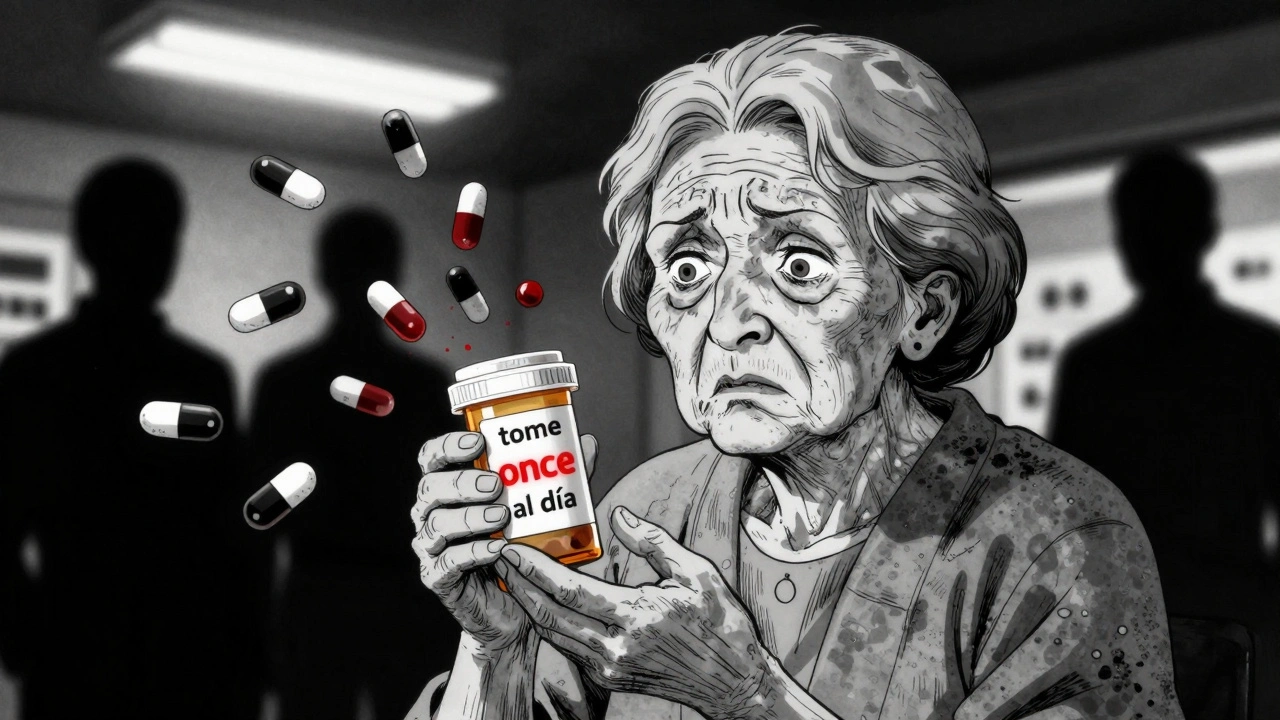
Poorly translated prescription labels put millions at risk. From deadly mistranslations like 'once' meaning 'eleven' to inconsistent instructions, these errors cause real harm. Learn how to spot them and demand better.