Spanish Prescription Labels: What You Need to Know About Medication Safety and Translation
When a pharmacy in the U.S. gives you a Spanish prescription labels, translated medication instructions required by law for limited English proficiency patients. Also known as bilingual drug labels, they’re not just a courtesy—they’re a critical safety tool. Misunderstanding a dosage, timing, or warning can lead to overdose, missed doses, or dangerous interactions. In states with large Spanish-speaking populations, like California or Texas, pharmacies are legally required to provide these labels under civil rights laws. But not all translations are equal. A poorly worded label might say "take once daily" when it should say "take at bedtime," and that small difference can change everything.
These labels connect directly to medication safety, the system of practices that prevent harm from drugs. Think about prescription translation, the process of converting drug instructions from English to another language while preserving medical accuracy. It’s not just swapping words—it’s adapting units (mg vs. cc), cultural references ("take with food" might mean something different in rural Mexico vs. urban Miami), and even punctuation. A study by the National Institutes of Health found that patients who received properly translated labels were 40% less likely to make dosing errors than those who didn’t. That’s not a small number. It’s the difference between staying out of the ER and ending up there.
And it’s not just about the words on the bottle. drug labeling, the full set of printed and digital information accompanying a medication includes warnings, storage instructions, and expiration dates—all of which must be clear in the patient’s language. Pharmacies that outsource translation to low-cost vendors often end up with robotic, inaccurate labels. Some use Google Translate. Others hire translators who don’t know medical terms like "anticoagulant" or "narrow therapeutic index." That’s why the FDA and Joint Commission stress that translation must be done by certified medical linguists, not just bilingual staff.
Then there’s pharmacy compliance, the legal and ethical standards pharmacies must meet to avoid penalties and protect patients. Failing to provide accurate Spanish labels isn’t just bad service—it’s a violation of Title VI of the Civil Rights Act. Pharmacies have been fined, sued, and forced to overhaul their systems after incidents where patients took too much medication because the label said "take every 8 hours" instead of "take every 12 hours."
You’ll find posts here that dig into how generic drugs can have different inactive ingredients that trigger reactions, how warfarin requires close monitoring after switching brands, and how even something as simple as a pill’s color can confuse non-English speakers. We cover what happens when labels are rushed, what tools pharmacies use to get it right, and why a single mistranslated word can cost someone their health. This isn’t about language—it’s about trust, safety, and making sure no one has to guess what their medicine is supposed to do.
6
Common Translation Issues on Prescription Labels and How to Fix Them
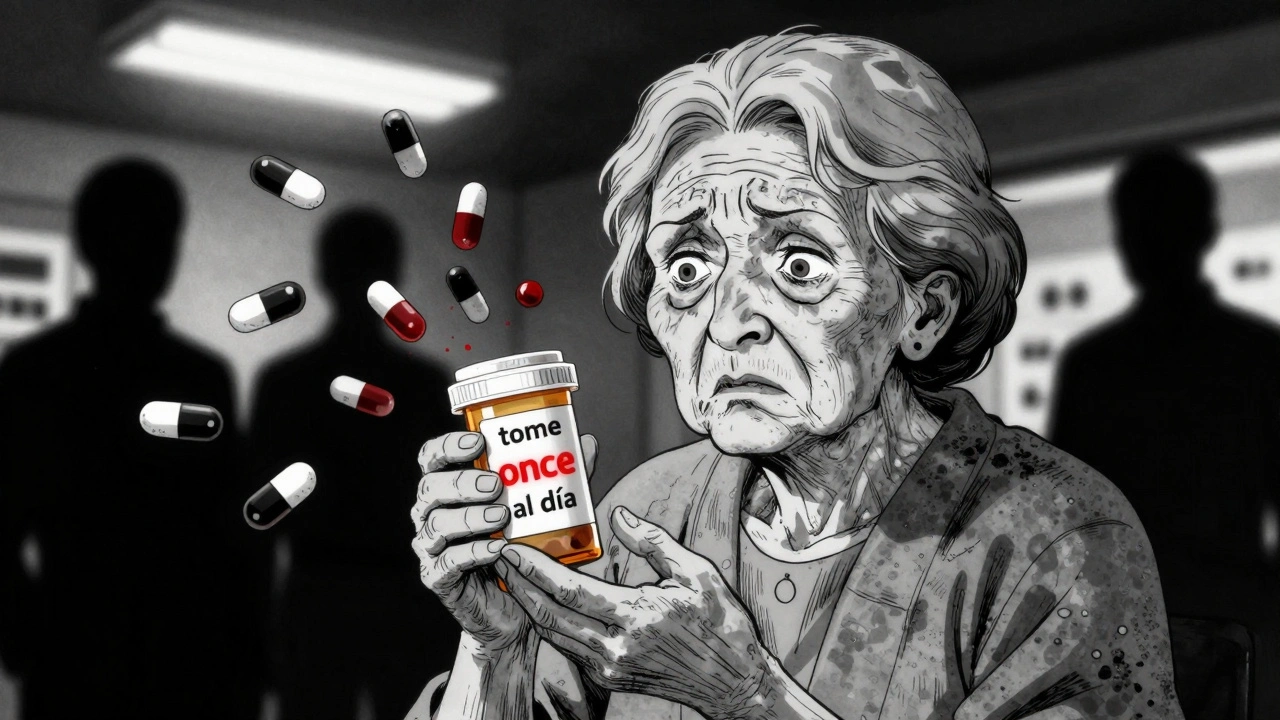
Poorly translated prescription labels put millions at risk. From deadly mistranslations like 'once' meaning 'eleven' to inconsistent instructions, these errors cause real harm. Learn how to spot them and demand better.