Generic Drug Approval: What It Means and Why It Matters
When you hear generic drug approval, the official process that lets a drug company sell a copy of a brand-name medicine after the patent expires. Also known as drug equivalence certification, it’s not just paperwork—it’s what keeps millions of people able to afford their prescriptions. The FDA doesn’t just accept any copycat pill. A generic must prove it delivers the same active ingredient, in the same strength, the same way, and works the same way in your body. No guesswork. No shortcuts. Just science.
That’s why generic medications, lower-cost versions of brand-name drugs that meet strict FDA standards for safety and effectiveness. Also known as non-brand drugs, they are not inferior—they’re identical in action. You’ll find them in prescriptions for blood pressure, depression, infections, and even gout. Take generic drug approval seriously: if a generic passed it, it’s as reliable as the original. The only difference? Price. A 30-day supply of a brand-name statin might cost $200. The generic? Often under $10. That’s not marketing. That’s the result of a transparent, science-backed system.
Behind every approved generic is a mountain of data. Companies must prove their version dissolves the same way in your stomach, gets absorbed at the same rate, and produces the same blood levels as the brand. They test it in healthy volunteers. They compare it head-to-head. They monitor for side effects. It’s not enough to look the same. It has to act the same. That’s why FDA approval, the regulatory process that ensures drugs are safe, effective, and manufactured to consistent quality standards. Also known as drug licensing, it’s the gatekeeper that stops unsafe or ineffective copies from reaching shelves matters so much. Without it, you’d be guessing whether your pill works—or if it’s just a placebo in fancy packaging.
And it’s not just about saving money. It’s about access. People skip doses because they can’t afford their meds. Generics fix that. Studies show when generics become available, adherence improves by 20% or more. That means fewer hospital visits, fewer complications, and better outcomes. This isn’t theoretical. It’s happening every day in pharmacies across the country. From drug equivalence, the scientific proof that a generic drug performs the same as its brand-name counterpart in the body. Also known as bioequivalence, it’s the core requirement for approval to the way pharmacies stock them, the system is built to put effective treatment within reach.
What you’ll find in the posts below are real-world examples of how this plays out. You’ll see how generic versions of drugs like ciprofloxacin, ivermectin, and azithromycin are used safely. You’ll learn about side effects, interactions, and how to spot a fake online pharmacy selling counterfeit pills. You’ll even see how some generics—like aspirin or propranolol—have unexpected benefits beyond their original use. These aren’t abstract rules. They’re stories of people who saved money, stayed healthy, and avoided dangerous imitations. Whether you’re switching to a generic for the first time or just want to know it’s safe, this collection gives you the facts you need—no fluff, no jargon, just what works.
17
Priority vs Standard Review: How FDA Prioritizes Generic Drug Applications
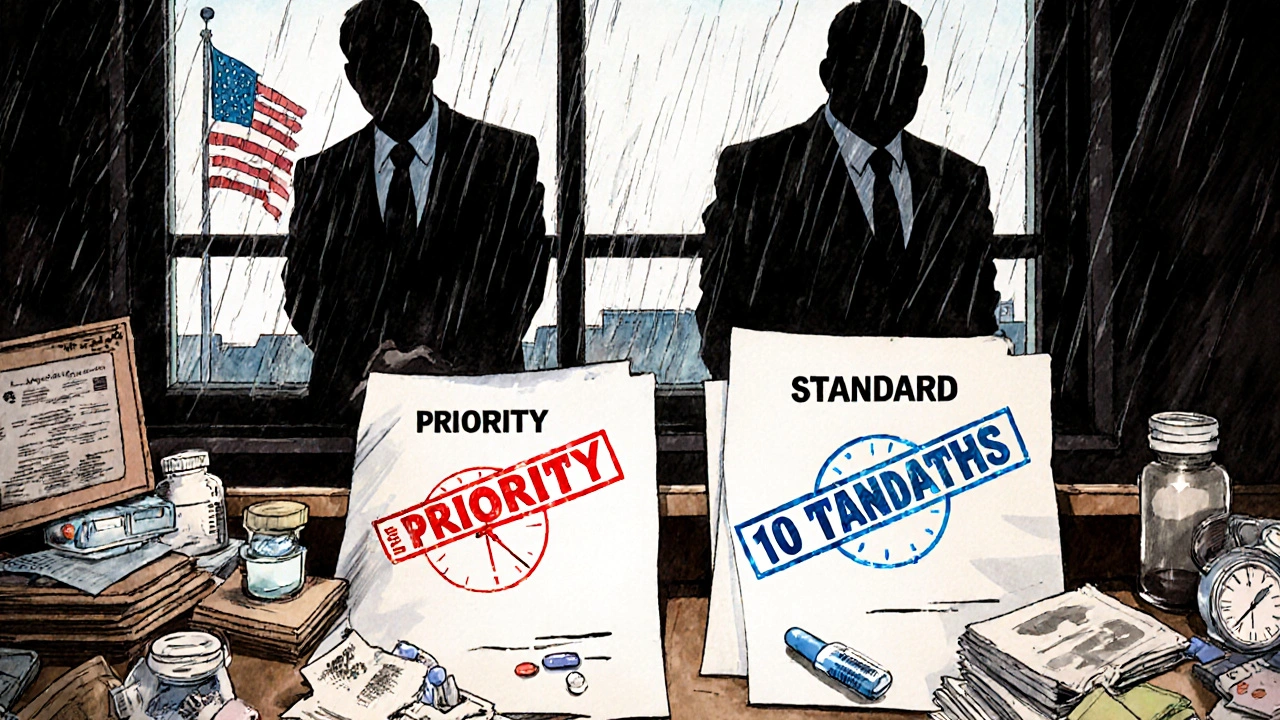
The FDA uses priority and standard review tracks for generic drugs. Priority review, at 8 months, is reserved for first generics, drugs in shortage, or those with clinical advantages. A new pilot rewards U.S. manufacturing. Understanding these rules helps companies get approvals faster and patients get affordable drugs sooner.