Translation Mistakes in Drugs: How Errors Can Harm Patients
When a drug label is mistranslated, it’s not just a typo—it’s a translation mistake in drugs, an error in the wording of medication instructions, labels, or packaging that leads to misuse, overdose, or life-threatening reactions. Also known as pharmaceutical translation error, it happens when critical details like dosage, frequency, or warnings get lost or twisted in translation—often because the person doing the translation isn’t trained in medical terminology. This isn’t rare. In one study, over 25% of medication errors in non-English-speaking countries were linked to poor translation of drug labels. Imagine taking a pill labeled "take once daily" when it actually says "take every hour"—that’s not a misunderstanding, that’s a medical emergency.
These mistakes don’t just happen in foreign countries. In the U.S., patients who speak Spanish, Chinese, or Arabic often get prescriptions with translated inserts that are either inaccurate or incomplete. A pill labeled "avoid alcohol" might become "drink with caution"—a huge difference. drug labeling, the printed text on medicine packaging that tells patients how to use the drug safely. Also known as medication instructions, it’s the last line of defense before someone takes a pill. If that defense is broken by bad translation, the risk skyrockets. And it’s not just about language—it’s about context. Words like "as needed" or "with food" can mean very different things in different cultures or dialects. One study found that Spanish-speaking patients misinterpreted "take as directed" as "take whenever you feel pain," leading to dangerous overuse.
Another hidden problem is language barriers in healthcare, the gap between what a patient understands and what a provider or label communicates, often due to poor translation or lack of interpreter support. Also known as communication gaps in medicine, it’s a major reason why patients miss doses, double up, or stop taking meds altogether. A patient might not know they’re supposed to take a drug on an empty stomach because the word "fasting" wasn’t translated clearly. Or they might think a side effect like "dizziness" is normal because the translation made it sound harmless. These aren’t minor issues—they lead to hospital visits, drug interactions, and sometimes death.
And it’s not just the patient who’s at risk. Pharmacists, nurses, and doctors rely on translated materials too. If a pharmacist in a multilingual clinic reads a mistranslated warning about a drug interaction, they might not catch a deadly combo. A nurse might give the wrong dose because the label said "0.5 mg" but was printed as "5 mg" due to a decimal point error in translation. These aren’t hypotheticals—they’ve happened. In 2019, a child died after being given a tenfold overdose because the label was mistranslated from English to Spanish.
That’s why the posts below matter. They don’t just talk about drugs—they talk about how small errors, like a wrong word on a label or a misunderstood instruction, can turn safe medicine into a danger. You’ll find real cases where generic pills caused allergic reactions because the inactive ingredients weren’t clearly labeled in the right language. You’ll see how patients switched from brand to generic and ended up with side effects because the instructions were unclear. You’ll learn how clinicians use portals to catch these mistakes before they hurt someone. And you’ll find out how to protect yourself—whether you’re taking a pill, helping a family member, or working in healthcare. These aren’t just stories. They’re warnings. And they’re all connected to one thing: getting the words right.
6
Common Translation Issues on Prescription Labels and How to Fix Them
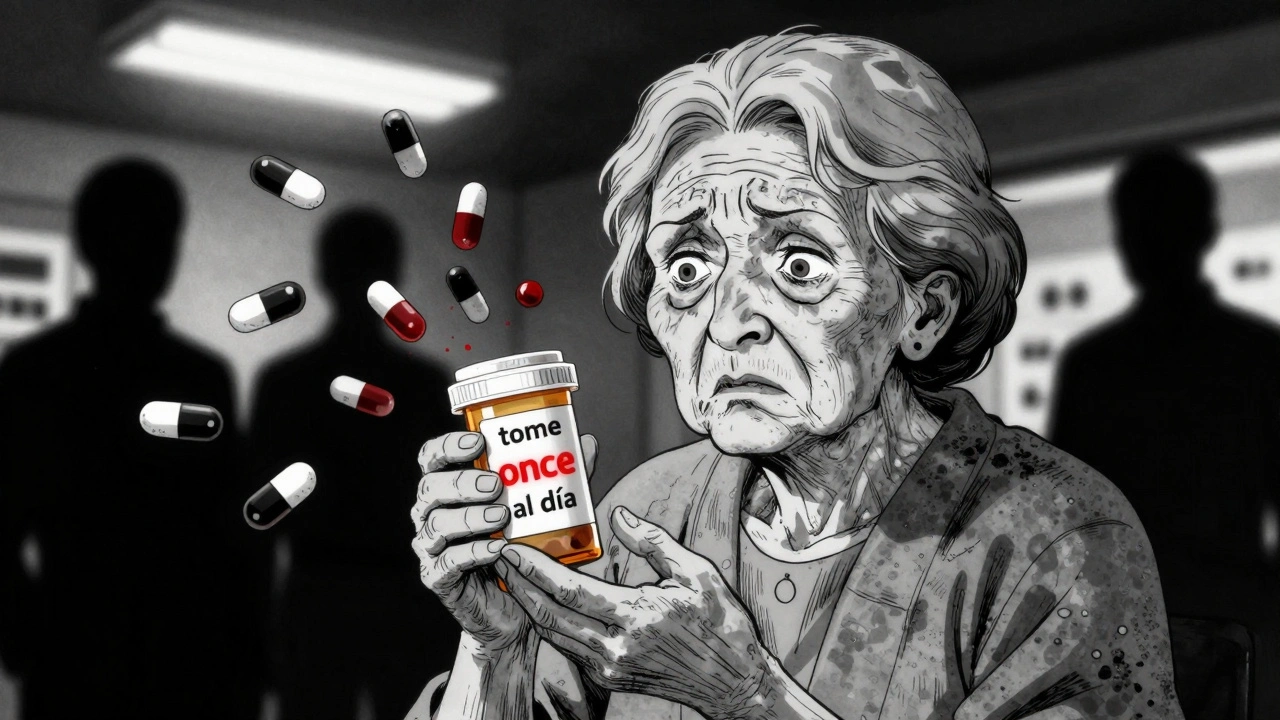
Poorly translated prescription labels put millions at risk. From deadly mistranslations like 'once' meaning 'eleven' to inconsistent instructions, these errors cause real harm. Learn how to spot them and demand better.