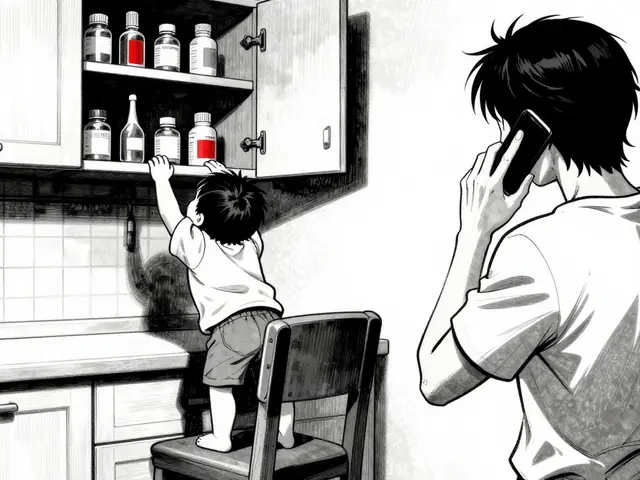

Why Your Report Matters More Than You Think
You dispense billions of prescriptions every year. Most of them are generic drugs, which are medications that contain the same active ingredient as a brand-name drug but cost less and have different inactive ingredients. They are supposed to work exactly like the original. But sometimes, they don't. Maybe a patient feels dizzy after switching from a brand-name blood pressure pill to its generic version. Maybe an antibiotic doesn't clear an infection as quickly as it used to.
As a pharmacist, you are the first line of defense in catching these issues. Yet, despite being on the front lines, pharmacists submit fewer than 3% of all adverse event reports to the U.S. Food and Drug Administration (FDA). That number is startlingly low given that we dispense about 75% of all prescriptions as generics. The gap between what we see and what we report is where patient safety risks hide.
This isn't just about filling out forms. It's about closing a critical loop in medication safety. When you notice a pattern-say, three patients complaining of stomach upset with the same generic manufacturer's product-you hold a piece of evidence that could trigger a recall or a warning. This article breaks down your responsibility, the legal landscape, and how to report effectively without letting it bog down your workflow.
The Legal Landscape: Encouraged, Not Mandated
Let's clear up a common misconception right away: federal law does not force you to report adverse drug events (ADEs). According to the FDA, while healthcare professionals are strongly encouraged to report serious adverse events through the MedWatch program, which is the FDA's safety information and adverse event reporting program, there is no federal legal requirement compelling pharmacists to do so. This voluntary nature stems from the Federal Food, Drug, and Cosmetic Act and was reinforced by the 2013 FDA Safety and Innovation Act (FDASIA).
However, "voluntary" doesn't mean "optional" in a professional sense. The American Society of Health-System Pharmacists (ASHP) Guidelines on the Pharmacist's Role in Providing Drug Information explicitly state that medication safety monitoring and adverse event reporting are fundamental professional responsibilities. In fact, some states have taken matters into their own hands. As of 2022, 28 states have incorporated specific adverse event reporting expectations into their board of pharmacy regulations. Four states-California, Illinois, Massachusetts, and New York-have made reporting serious adverse events mandatory.
If you practice in one of those states, failing to report can have professional consequences. Even if you're elsewhere, ignoring potential safety signals goes against the standard of care expected of a licensed pharmacist. The California State Board of Pharmacy, for instance, requires pharmacists to maintain a system for identifying, documenting, and reporting adverse drug reactions. Treating this as a core duty, rather than a bureaucratic hurdle, protects both your patients and your license.
What Counts as a Reportable Problem?
Not every minor complaint needs to go to the FDA. Knowing what to report saves time and ensures that significant safety signals aren't lost in the noise. The FDA specifically requests reports for serious adverse events. These are defined as events that are:
- Fatal
- Life-threatening
- Permanently or significantly disabling
- Require hospitalization or prolong existing hospitalization
- Cause congenital anomalies
- Necessitate intervention to prevent permanent impairment
But serious events aren't the only thing that matters. Non-serious but unexpected adverse events also warrant submission. Why? Because they help uncover previously unidentified drug effects. If a patient experiences a rare side effect that isn't listed in the prescribing information, that's valuable data.
There's another category that is particularly relevant to generic drugs: therapeutic inequivalence. This occurs when a generic product fails to demonstrate bioequivalence in clinical practice, even though it met regulatory standards during approval. The FDA's MedWatch program explicitly lists therapeutic inequivalence/failure as a reportable issue since its 2015 update. If a patient switches from a brand-name drug to a generic and their condition worsens, or if they experience new side effects that resolve when they switch back, that's a red flag.
Dr. Jerry Phillips, former Associate Director of the FDA's Division of Medication Error Prevention and Analysis, has noted that pharmacist reports of therapeutic inequivalence are "particularly valuable." They represent real-world evidence of potential bioequivalence issues that may not have been detected during the abbreviated new drug application (ANDA) review process. You are seeing the drug in action, not just in a controlled trial setting.
The Attribution Challenge: Who Made the Drug?
Here is where things get tricky. One of the biggest barriers pharmacists face is accurately attributing adverse events to specific generic manufacturers. Under the 1984 Hatch-Waxman Amendments, generic manufacturers must maintain labeling identical to the reference listed drug (the brand-name drug). This means the package insert often doesn't clearly identify the actual manufacturer of the generic tablet you dispensed.
Furthermore, brand manufacturers frequently receive and subsequently report to the FDA adverse event reports for products actually dispensed as generic equivalents. This creates data attribution problems that complicate safety signal detection. The Supreme Court's 2011 PLIVA v. Mensing decision added another layer of complexity. It established that generic manufacturers cannot be held liable in state courts for failure to warn due to federal preemption. This legal shield has been linked to a decrease in adverse event reports for generic drugs following the decision.
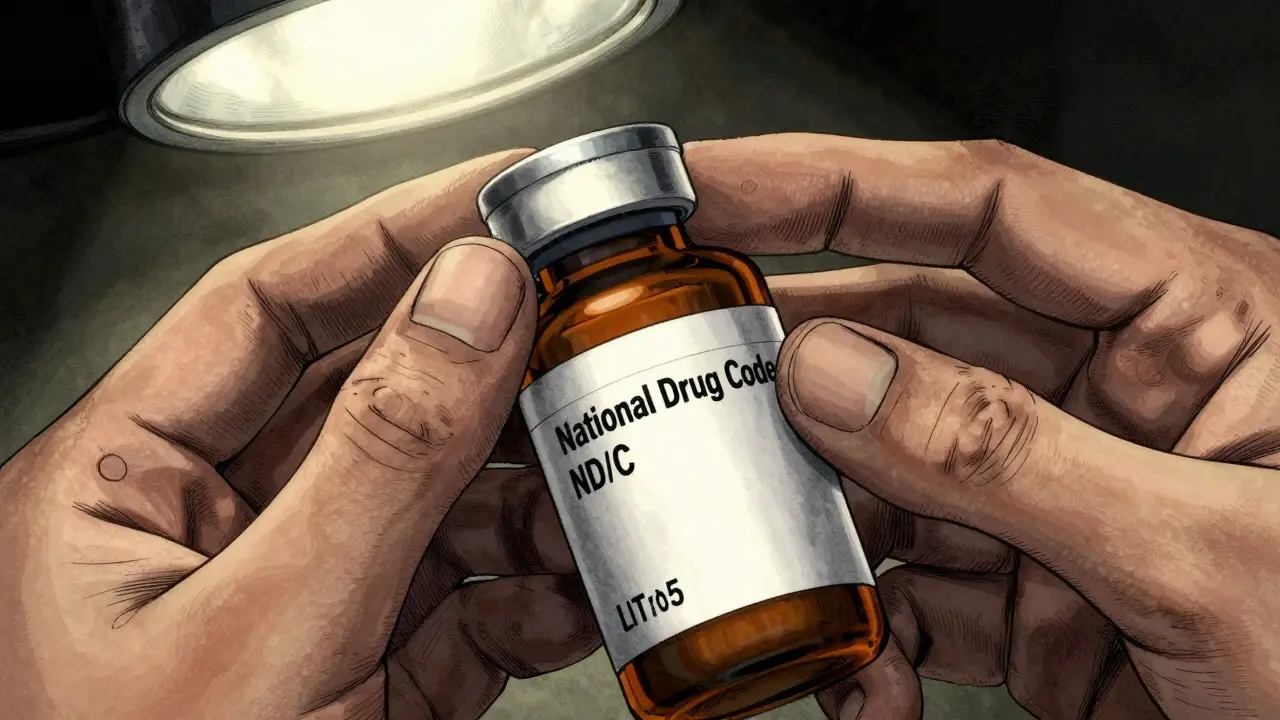
So, how do you pinpoint the culprit? You need the National Drug Code (NDC). The NDC is a unique identifier for each drug product. It includes the labeler code, which identifies the manufacturer. When you document an adverse event, always record the NDC and the lot number from the bottle or box. Without this information, your report might be dismissed as lacking specificity. The FDA emphasizes that reports stating only that "a patient experienced an injury" without further details are not specific enough for reporting purposes.
How to Report: A Step-by-Step Guide
Reporting doesn't have to be a massive time sink. The FDA has streamlined the process, but you still need to provide the right data elements. A valid report requires four things: an identifiable patient, a suspect drug, an adverse event, and an identifiable reporter. Here is how to do it efficiently using the MedWatch Form 3500, which is the official form used by healthcare professionals to report adverse events and product problems to the FDA.
- Gather the Basics: Get the patient's age, sex, and weight. Note the onset date of the adverse event.
- Identify the Drug: Record the drug name, dose, route, frequency, and duration. Crucially, include the NDC and lot number. If you suspect therapeutic inequivalence, note the brand-name drug the patient was previously taking.
- Describe the Event: Be specific. Instead of "patient felt bad," write "patient reported severe dizziness and nausea within two hours of taking the generic lisinopril." Include any dechallenge/rechallenge information if available (i.e., did symptoms improve when the drug was stopped? Did they return when restarted?).
- Submit Online: Use the FDA's online MedWatch portal. It was updated in April 2023 to include a specific "generic drug concern" category. This allows you to indicate whether the issue relates to therapeutic inequivalence, manufacturing quality, or labeling discrepancies. This categorization helps the FDA's Office of Generic Drugs prioritize and investigate your report.
For serious adverse events, the FDA recommends submission within 15 calendar days of initial receipt of information. While not legally mandated for most pharmacists, timely reporting ensures the data is fresh and actionable.

Overcoming Barriers to Reporting
We know why many pharmacists hesitate. A 2023 Pharmacy Times reader survey revealed that lack of time is the primary barrier, cited by 68.4% of respondents. Uncertainty about whether an event meets reporting criteria followed at 52.1%, and difficulty determining whether a brand or generic product was involved came in at 41.7%. These are valid concerns.
To tackle the time issue, integrate reporting into your workflow. If you use an electronic health record (EHR) or dispensing software, check if it has built-in tools for adverse event documentation. Some systems allow you to draft a report directly from the patient's profile. If not, keep a standardized template handy. Pre-filling static fields like your contact information and pharmacy details can shave minutes off each submission.
For uncertainty about criteria, remember this rule of thumb: if you wouldn't want your mother to take that drug based on what you saw, it's worth reporting. You don't need to be certain that the drug caused the event. The FDA's July 2023 guidance clarifies that reports should be submitted even where the healthcare provider is not certain the product caused the event. Your role is to report the suspicion; the FDA's role is to analyze the data for patterns.
| Challenge | Impact | Practical Solution |
|---|---|---|
| Lack of Time | Delays or prevents submission | Use EHR integration or pre-filled templates; batch reports weekly |
| Uncertainty About Criteria | Underreporting of non-serious but unexpected events | Report if unsure; FDA filters data later. Focus on unexpected outcomes. |
| Manufacturer Attribution | Reports lack specificity | Always record NDC and lot number from the dispensed product |
| Therapeutic Inequivalence Definition | Hesitation to report subjective patient feedback | Document specific clinical changes vs. brand drug; use MedWatch "generic concern" category |
The Impact of Your Reports
Your efforts matter more than the statistics suggest. The FDA's Adverse Event Reporting System (FAERS) database contains over 25 million reports. Between 2015 and 2022, reports specifically mentioning generic drug issues increased by 131%. While pharmacists remain underrepresented among reporters, the quality of our reports is high. A 2023 analysis in JAMA Internal Medicine found that 63% of potential safety signals for generic drugs were initially identified through reports submitted by pharmacists who noticed patterns across multiple patients.
The FDA's Office of Generic Drugs has a Therapeutic Equivalence Working Group that analyzes these reports. In 2022 alone, they subjected 147 generic drug products to additional review based on pharmacist reports. This led to 12 product-specific communications to healthcare providers. Imagine being part of the chain that triggered one of those warnings. That is the tangible impact of your vigilance.
Moreover, the Institute for Safe Medication Practices (ISMP) includes adverse event reporting as a core component of their Medication Safety Self Assessment for Community Pharmacies. Pharmacies scoring below 75% on reporting practices are flagged for significant safety concerns. Regular reporting isn't just good ethics; it's a marker of a high-functioning pharmacy practice.
Next Steps for Your Practice
Start small. Pick one month to focus on improving your reporting habits. Train your staff on the importance of capturing NDCs and lot numbers for every dispensed generic. Create a quick-reference guide for what constitutes a serious adverse event versus a therapeutic inequivalence concern. Bookmark the MedWatch portal and familiarize yourself with the new "generic drug concern" category.
If you encounter a complex case, don't hesitate to reach out to your local health-system pharmacy network or professional organizations like ASHP for guidance. Remember, you are not just a dispenser of medications; you are a critical node in the national medication safety network. Your observations fill the gaps that clinical trials and manufacturer data leave behind. By reporting generic drug problems, you ensure that the promise of affordable, equivalent care remains true for every patient who walks through your door.
Is it mandatory for pharmacists to report adverse drug events?
At the federal level in the United States, no. The FDA encourages reporting through the MedWatch program, but it is not legally required for most healthcare professionals. However, professional guidelines from organizations like ASHP consider it a fundamental responsibility. Additionally, some states, including California, Illinois, Massachusetts, and New York, have implemented mandatory reporting requirements for serious adverse events. Always check your state board of pharmacy regulations.
What is therapeutic inequivalence in generic drugs?
Therapeutic inequivalence occurs when a generic drug fails to perform clinically equivalently to its brand-name counterpart, despite meeting regulatory bioequivalence standards. This might manifest as reduced efficacy, new side effects, or different onset times. It is a reportable issue under the FDA's MedWatch program and is critical for post-market surveillance.
How do I identify the manufacturer of a generic drug for reporting?
You need the National Drug Code (NDC) from the dispensed product. The NDC includes a labeler code that identifies the specific manufacturer. Always record the NDC and the lot number when documenting an adverse event. This information is crucial for the FDA to attribute the problem correctly, especially since brand manufacturers often handle reporting for generic equivalents.
Do I need to be sure the drug caused the adverse event before reporting?
No. The FDA explicitly states that reports should be submitted even if you are not certain the product caused the event. Your role is to report reasonable suspicion. The FDA uses aggregated data to detect safety signals, so individual uncertainty does not invalidate the report.
Where can I find training on adverse event reporting?
The FDA offers free training modules through the MedWatch Training Portal. Specifically, Module 4: "Reporting for Healthcare Professionals" addresses generic drug reporting considerations. These resources are updated regularly to reflect current guidelines and best practices.