Language Access Pharmacy: Ensuring Clear Communication in Medication Care
When a patient doesn’t understand their prescription instructions, it’s not just a misunderstanding—it’s a safety risk. Language access pharmacy, the practice of providing medication information in a patient’s native language through trained interpreters or translated materials. Also known as pharmaceutical language services, it’s not optional—it’s essential for preventing errors, avoiding hospital visits, and building trust. Every year, thousands of people in the U.S. end up in emergency rooms because they misunderstood dosage instructions, drug interactions, or side effects. This isn’t about poor education—it’s about poor communication.
Many pharmacies still rely on family members or untrained staff to translate, which leads to dangerous mistakes. A Spanish-speaking patient told to take "una pastilla cada ocho horas" might hear "una pastilla cada hora"—a tenfold overdose. Or a Vietnamese patient given a pill labeled "take with food" might not know what counts as food in a medical context. These aren’t hypotheticals. Studies from the CDC and JAMA show that patients with limited English proficiency are 30% more likely to have adverse drug events. Pharmacy interpretation, the use of certified medical interpreters during consultations, cuts those risks by more than half. And language barriers in healthcare, the systemic failure to provide timely, accurate language support in clinical settings isn’t just a patient problem—it’s a legal one. Federal law requires it under Title VI of the Civil Rights Act.
Good language access isn’t just about translation—it’s about cultural context. A pill that says "take at bedtime" means nothing to someone who works night shifts. A warning about "alcohol" might not register if the patient’s culture doesn’t consider wine or beer as "alcohol" in the medical sense. That’s why the best programs use trained bilingual pharmacists or certified interpreters who understand both language and medical terminology. It’s also why printed materials need to be more than just translated—they need to be adapted. Simple icons, visual guides, and audio instructions help bridge gaps that text alone can’t.
What you’ll find in this collection are real stories and practical tools that show how language access pharmacy works—or fails—in everyday settings. From how a single misheard instruction led to a hospital stay, to how clinics are using AI-powered translation apps safely, to why some generic meds come with language-specific warning labels. These posts don’t just talk about the problem. They show you how to fix it—for yourself, your family, or the people you care for.
6
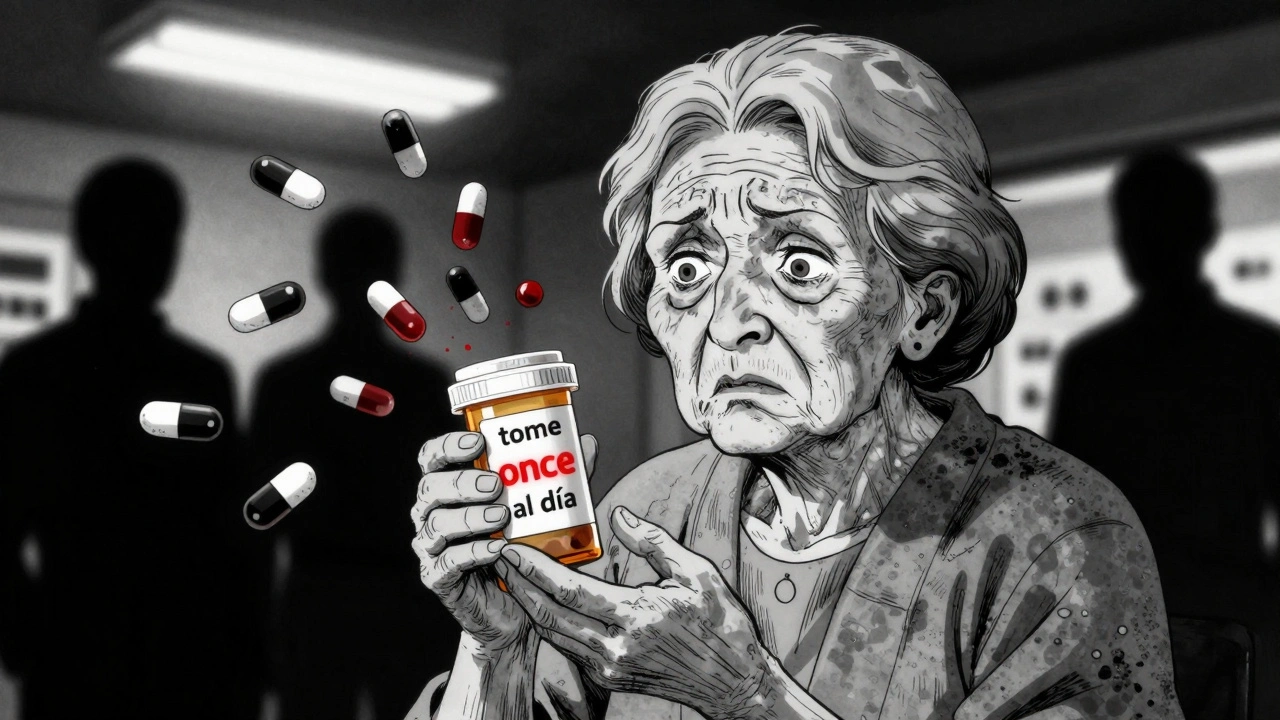
Common Translation Issues on Prescription Labels and How to Fix Them
Poorly translated prescription labels put millions at risk. From deadly mistranslations like 'once' meaning 'eleven' to inconsistent instructions, these errors cause real harm. Learn how to spot them and demand better.